
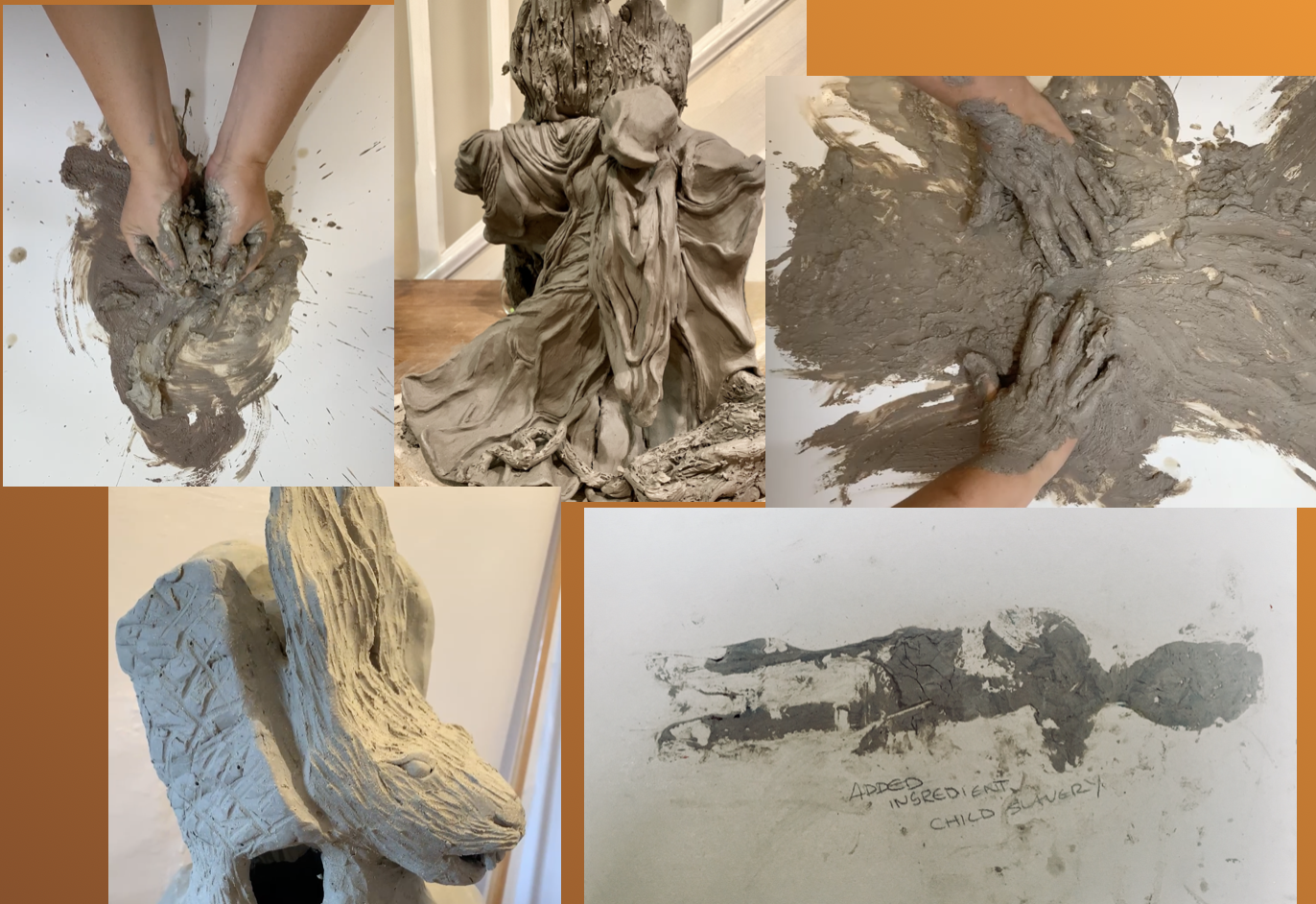
Clay is one of humanity's oldest creative companions. It records fingerprints, holds memory, cracks under pressure, hardens through fire, and can return to the earth. It exists somewhere between permanence and impermanence, control and chance, utility and expression...
For this issue of HAUS-A-REST, we invited artists to explore Clay Every Which Way.
We are interested in clay beyond the pot, beyond tradition, beyond expectation.
We selected work that embraces ceramics, sculpture, installation or functional objects.
The clay appears only as an idea, a metaphor for transformation, identity, labour, geology, archaeology, ritual, play, memory, or the body itself.
The work spans the use of unfired clay, clay slips, earth pigments, digital clay simulation, or explores landscapes where clay is found.
This issue also explores repetition, touch, repair, fragility, resilience, or the relationship between maker and material.
Artist: Evelyn Baker
@evelynbakerart / website - https://www.evelynbaker.art
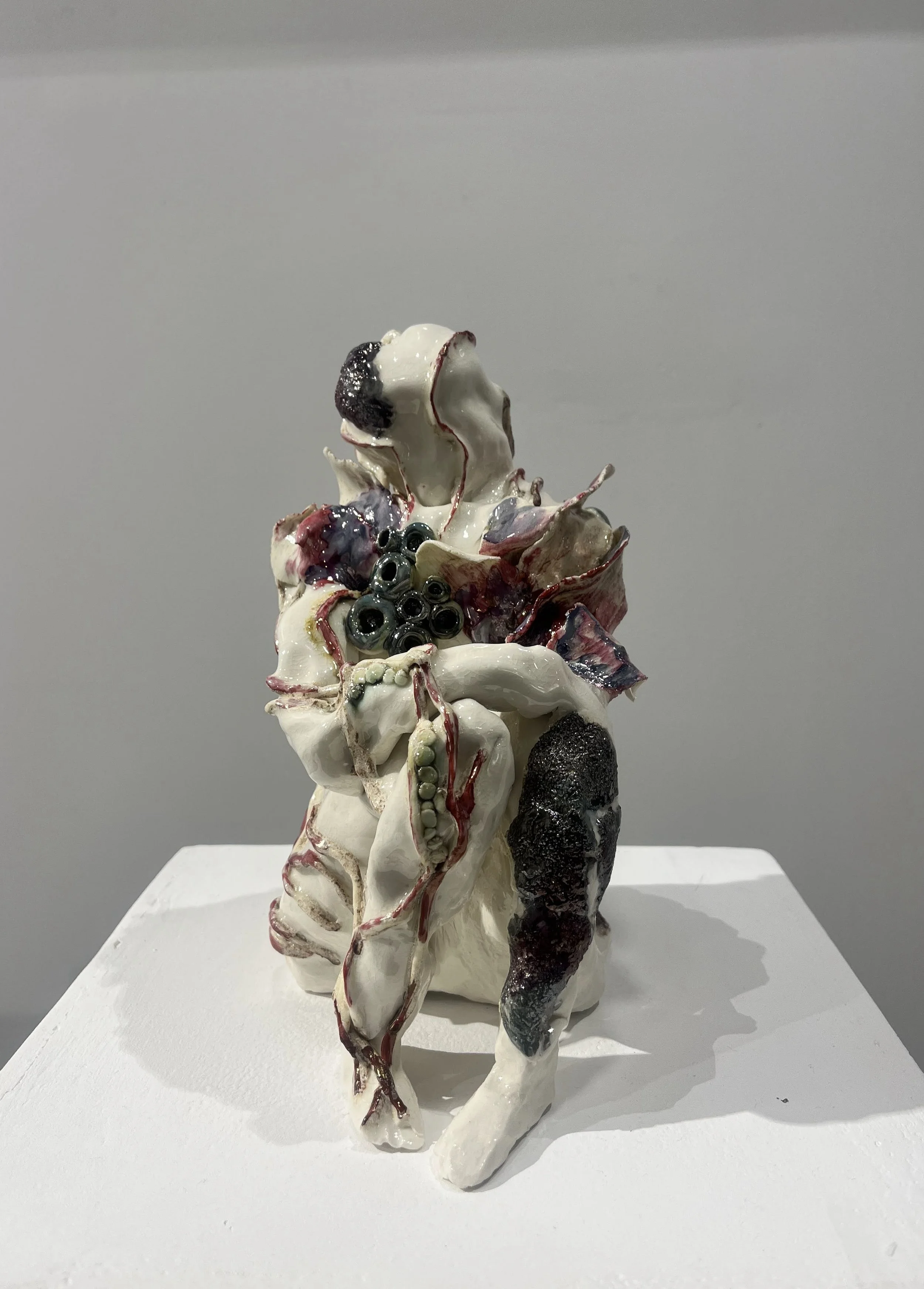
“The Four Seasons Collection (Winter)”
Winter reflects the quieter stage of nature’s cycle. Its colder palette and enclosed posture suggest a landscape withdrawing into itself, embracing stillness before renewal can begin.
Organic forms envelop the figure, blurring the boundary between body and environment until it becomes a guardian of the season rather than an individual. The sculpture explores the spiritual presence within nature, suggesting that decay is not an ending but a necessary part of life’s continual transformation.
Artist: Mel Jahr
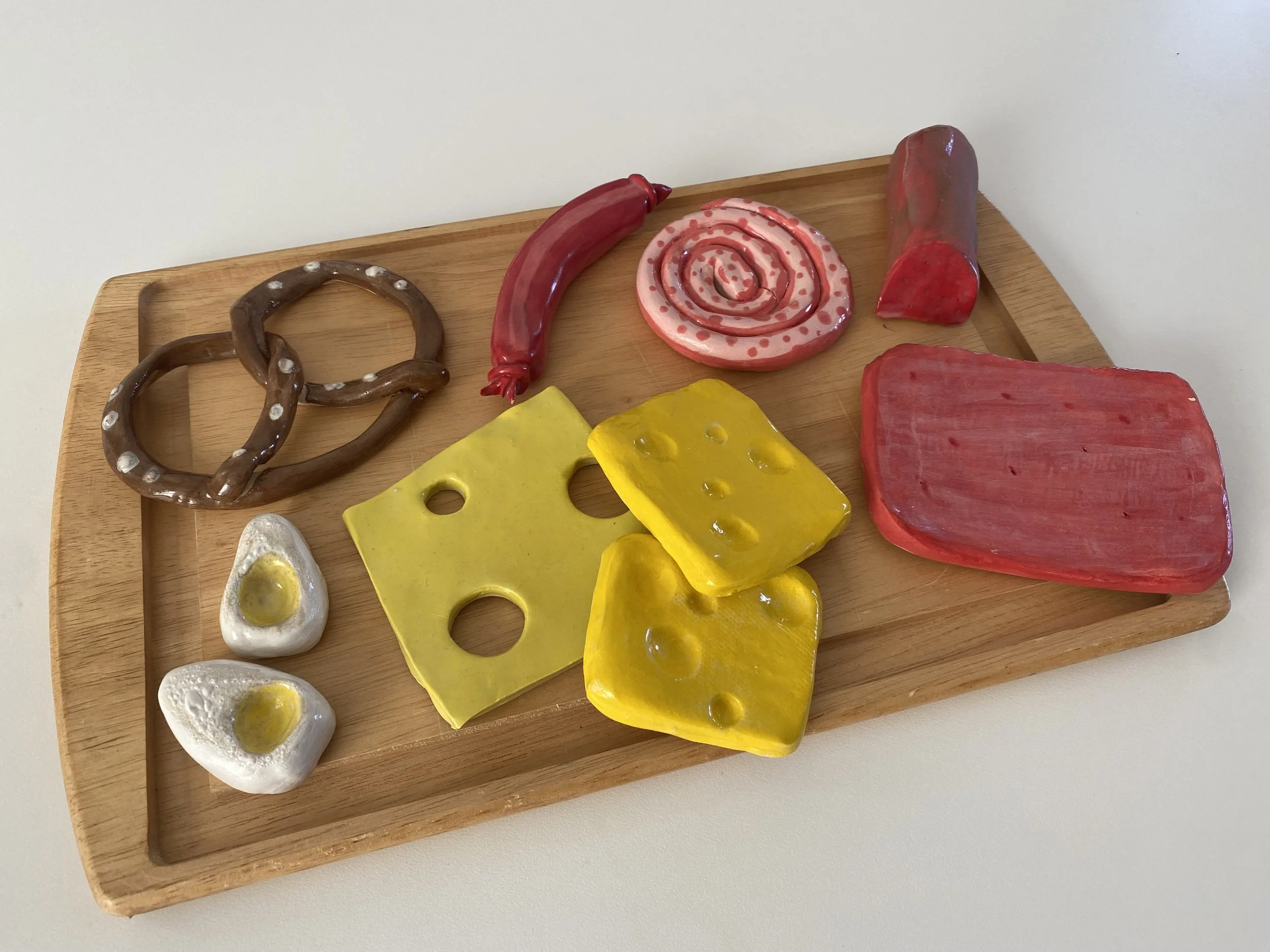
“Abendbrot”, literally “evening bread,” is a traditional German dinner of fresh bread, cured meats, cheeses and simple toppings shared around the table. For me, it holds memories of family, conversation and a home that no longer exists in the same form. I recreated these foods in clay as a way of preserving those ordinary, intimate moments. This piece connects to Clay Every Which Way through clay’s ability to transform everyday objects and memories into something tangible. Food itself is temporary, consumed and quickly disappears. Through this artwork it becomes permanent. Clay is a material for memory: By creating food items I deliberately blur the boundary between functional object, sculpture and ritual. Abendbrot uses clay not simply to imitate food, but to explore how a material can carry personal history and emotions.
Artist: Lorna Jewitt
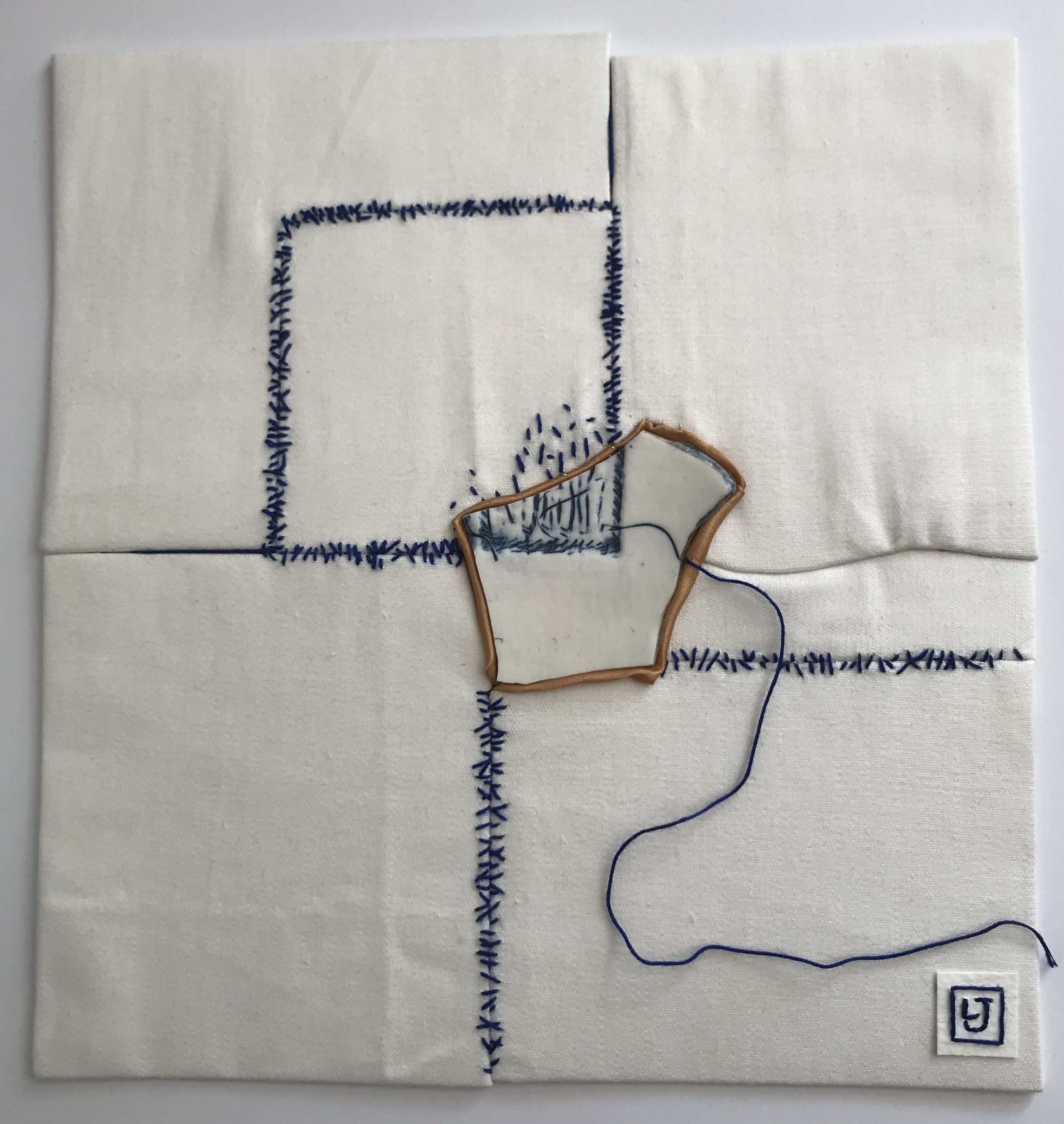
'Tethered' is about connecting methods of mending and preserving - patchwork, kintsugi & stitching - with vintage cloth, porcelain and embroidery. The glazed clay shard is imprinted with a section of a piece of my own embroidery, which in turn was part of a decades-old, long-forgotten unfinished project. The porcelain has preserved a section of the embroidery, reminiscent of marks in a fossil. The cushion of gold cloth around it hints at the Japanese method of mending broken ceramics, both useful, practical and decorative - preserving and valuing what might otherwise be discarded, thrown away. The loose thread appears to be part of a thread mark on the clay shard, as if it is a continuation of the still unfinished stitches on sturdy white cloth - chosen for its similarity to smooth white porcelain.
Artist: Blinky Bellas
Blinkybellas.com
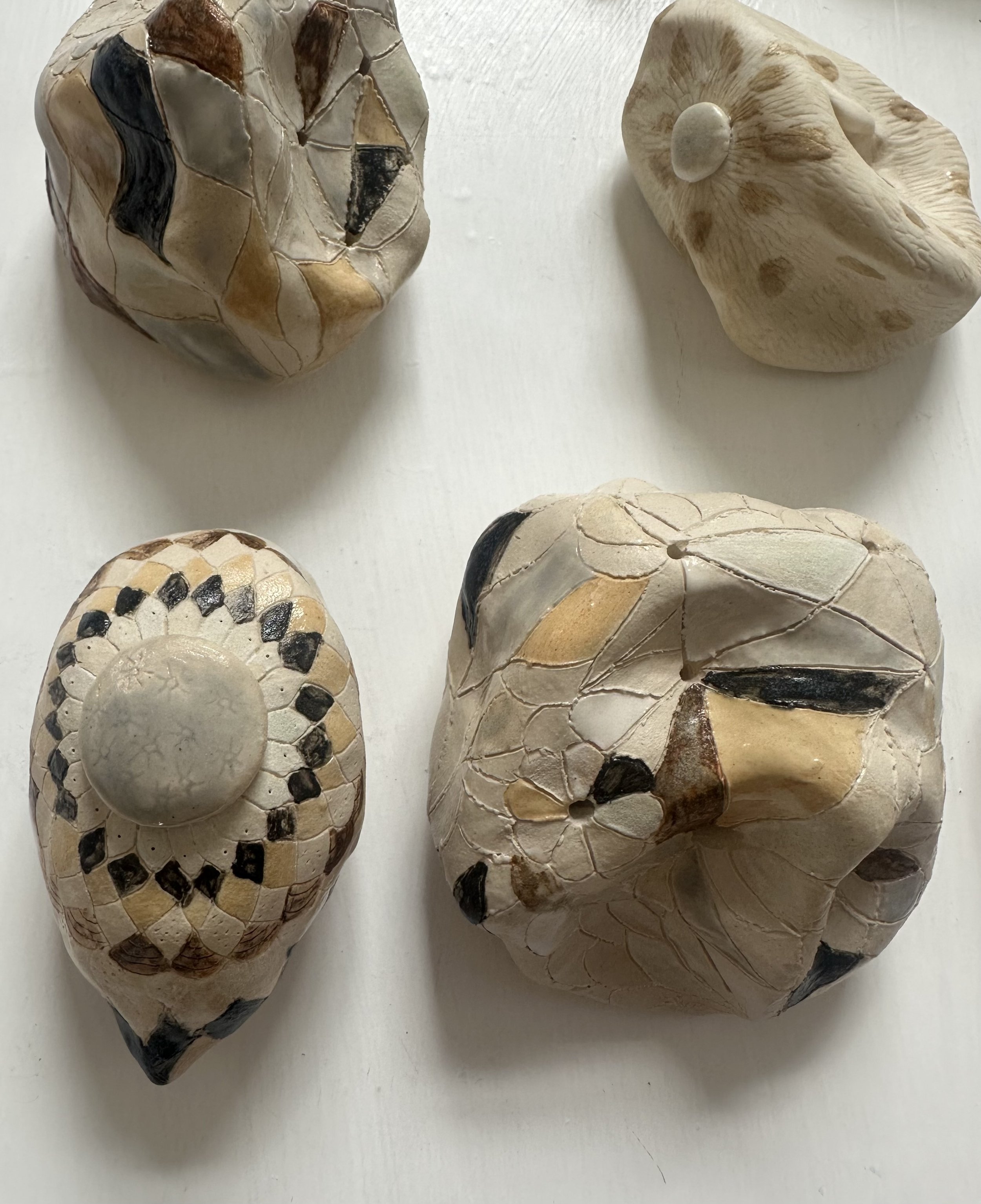
Sculptural assemblages of stoneware and porcelain ceramics. The sculptures are handmade using the ‘pinch pot’ method, humble in scale; the haptic and therapeutic nature of their construction, as well as the connection of the clay to the earth, makes their creation meditative, primal and healing in line with the ideas that underpin them.
The sculptures that look like corms or playful malformed ornaments symbolise antidotes, balms and salves to our current conditions in late capitalism. They emerged out of ideas around the power of play, how violent systems can be interrupted through softness and small acts, of "flipping" and "undoing" the dominant narrative; whereby those who are most societally vulnerable- animals and plants are from whom we should seek wisdom.
The sculptures act as small totems to these ideas and, as well as referring to the body bear coded symbols that migrated from drawn diagrams exploring concepts around the sovereignty of care, of queering the home, matriarchal structures, and of unconditional love, which is a main touchstone within the work. The works act as protective talismans or amulets, symbolic of that which nourishes and protects, is gathered or stored in order to replenish and with which to care.
Artist: Mia Sage
https://www.etsy.com/uk/shop/AllMyLoveMia
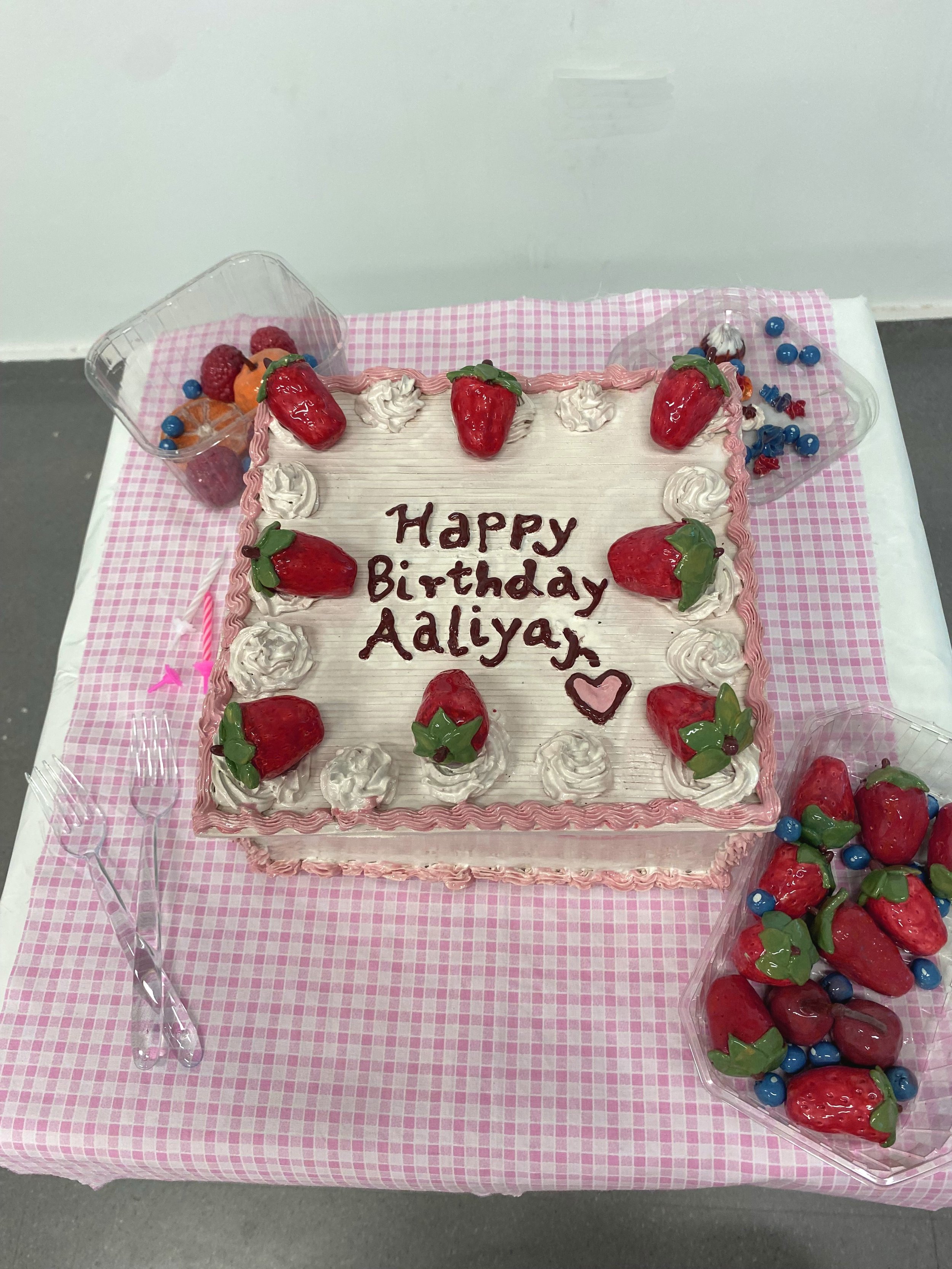
'Happy Birthday Aaliyah', 2026, Ceramics, 35cm x 35cm
Have you ever had a memory so dear to you, that if you forgot a single second of it, your heart would ache from the loss? This is how I felt about my best friend, Aaliyah’s 20th birthday picnic. This ended up being her last birthday celebration before she passed from Ewing’s Sarcoma: an aggressive type of bone and tissue cancer that affects children and young adults. The day consisted of cards, tears, cake, games and an unspoken undercurrent of sadness, and overwhelming unfairness that our friend was the one to get sick. I knew I wanted to commemorate this day artistically, but as a predominately textile artist, I originally had plans for a picnic quilt, which over time evolved into ceramics fruits and the cake. I created a memory box that can be filled with treasured memories of Aaliyah and I, and this quickly became one of the art pieces I am most proud of to date.
Artist: Jessica Swift
https://www.jessicaswiftfineart.com/
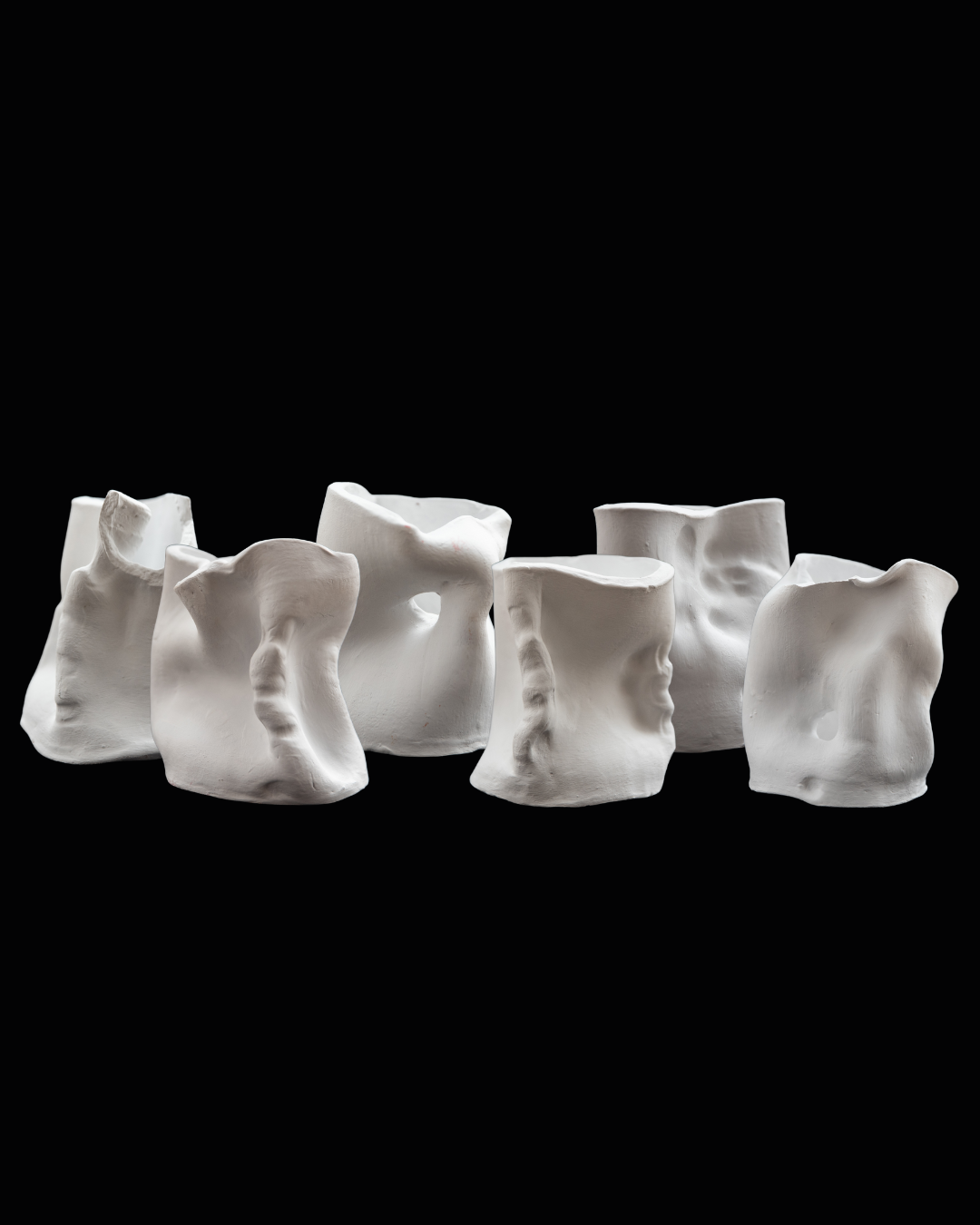
“Held Differently”. As a neurodiverse artist, my practice is shaped by the way I experience place, fragmentation, layers and textures. The sculptures refuse single readings, instead becoming spaces that are held differently when they're encountered. Their surfaces highlight thought and sensation, honouring a practice that does not seek resolution but embraces multiplicity.
Artist: C L Davies
www.cldaviesartist.com
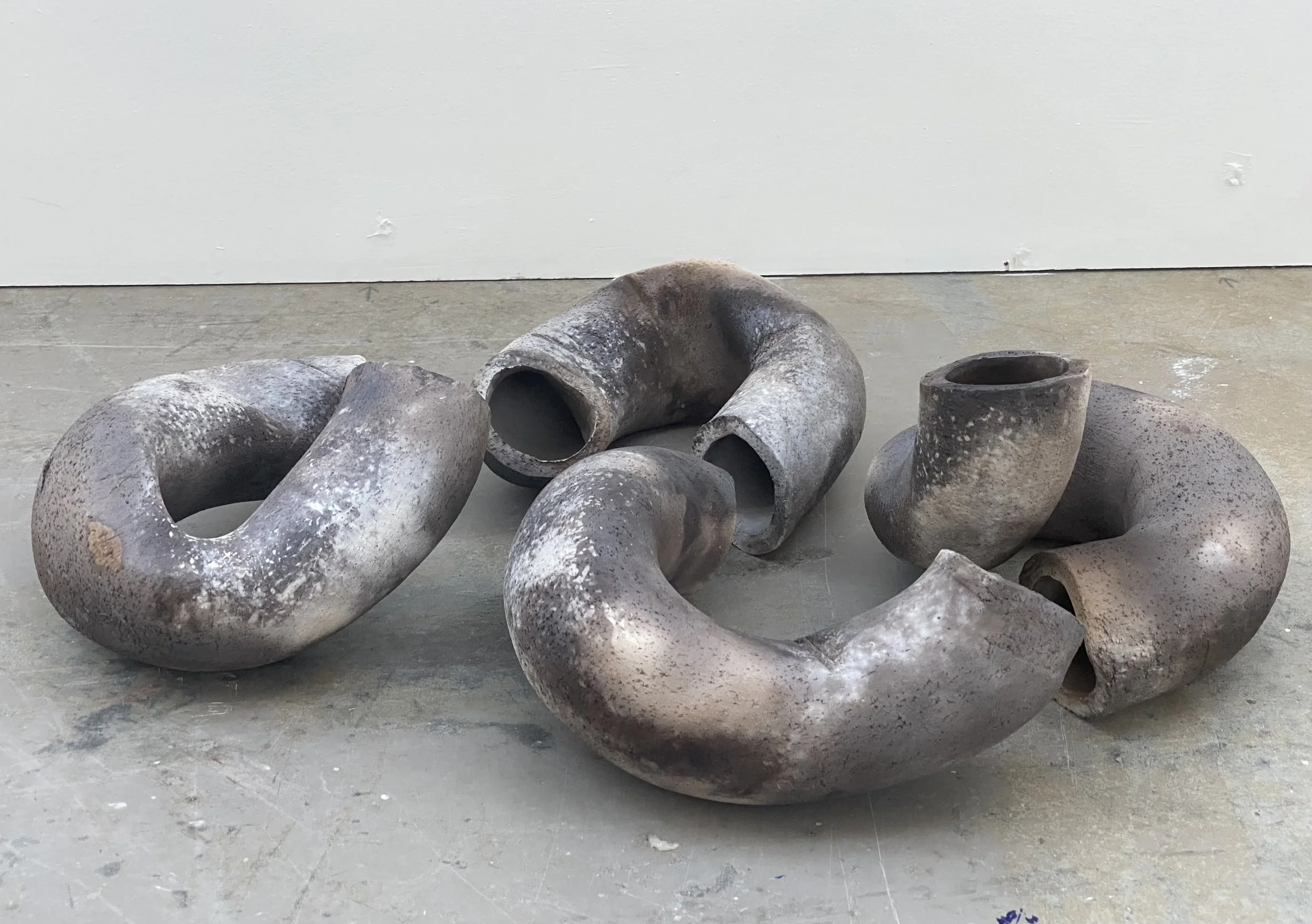
Inside Spaces II (2024)
Smoke-fired ceramic forms. 'Inside Spaces' explores the boundary between enclosure and exposure, solidity and void. Composed of four looping tubular forms, the sculptures capture a state of arrested motion, their extruded bodies shaped by hand to expose dark, partially concealed interiors. Through atmospheric firing, fire and ash leave behind a mottled skin of greys, whites, and charred browns—a tactile record of heat, time, and transformation. Both visceral and mechanical, these forms evoke roots and intestines as readily as cave formations and conduits, occupying an in-between space where the organic, the engineered, and the subterranean converge.
Artist: Charmaine Twidale
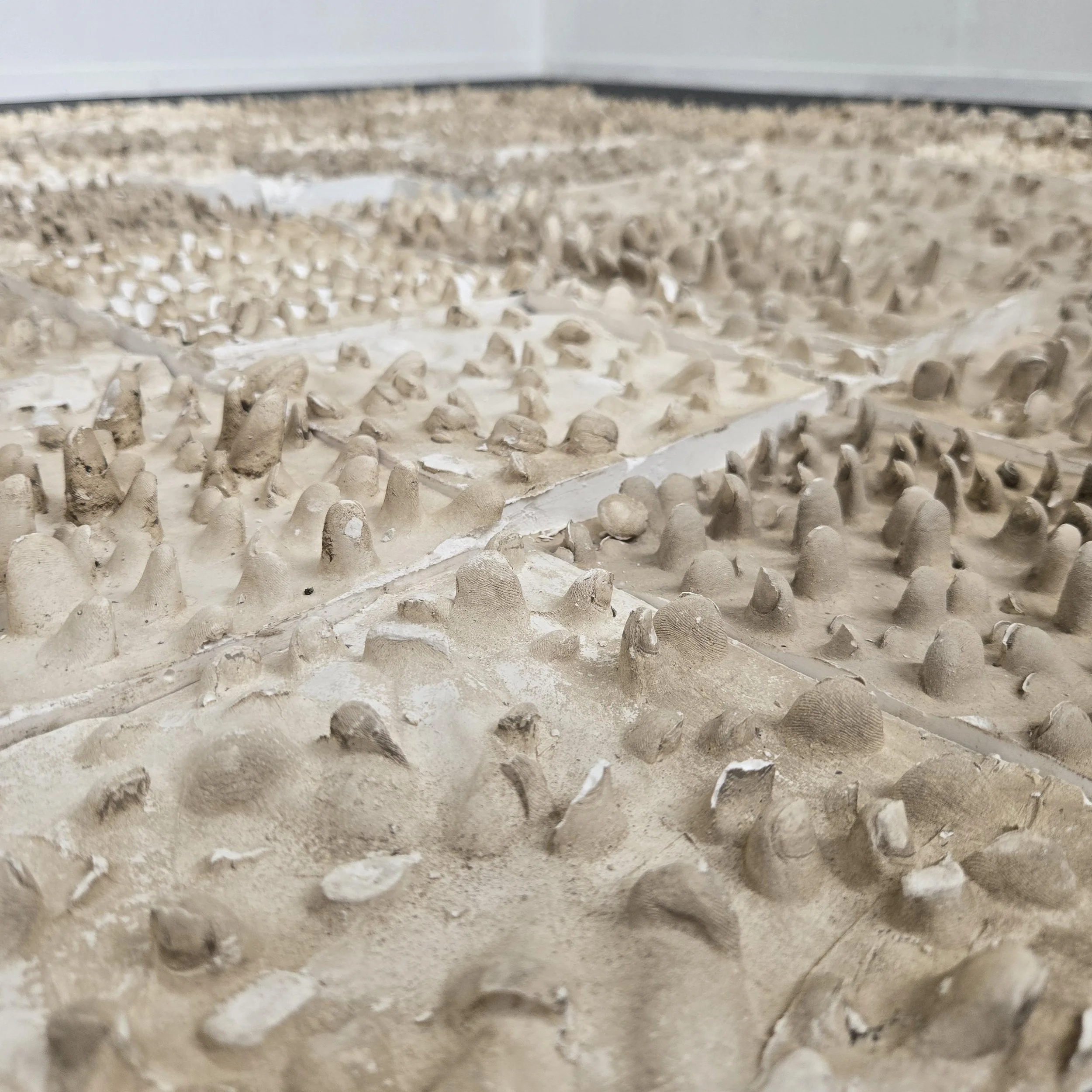
“Emotional Residue”. My work explores my emotions, anxiety and emotional processing. I have created plaster tiles that act as a record of a single moment in time, functioning similarly to a journal entry. Instead of writing my thoughts or feelings down, I physically document them through repetitive handmade forms. The protruding shapes emerging from each tile are created through direct hand gestures, pressing and shaping clay. This repetitive process mirrors the way my anxiety can manifest physically through restless movement, fidgeting or the need to use my hands as a form of release. The act of making becomes both a coping mechanism and a method of recording my emotional states. Each tile represents a day or event, capturing subtle shifts in feeling, tension, and vulnerability. When placed together, they form a timeline of my accumulated experiences, mapping the ongoing presence of anxiety within everyday life no matter how positive or negative. Through texture, repetition, and touch, my work transforms private emotional moments into a tactile landscape of memory and endurance.
Artist : Rosie Gunn
Rosie is an artist, academic and activist, working with photography, film, music, dance, performance and, most recently, experimenting with textiles, metalwork and clay. She campaigns for environmental and social justice and believes creative practice is key to the resilience and wellbeing of individuals and communities, both locally and globally. Former course leader and senior lecturer at UCA Farnham.
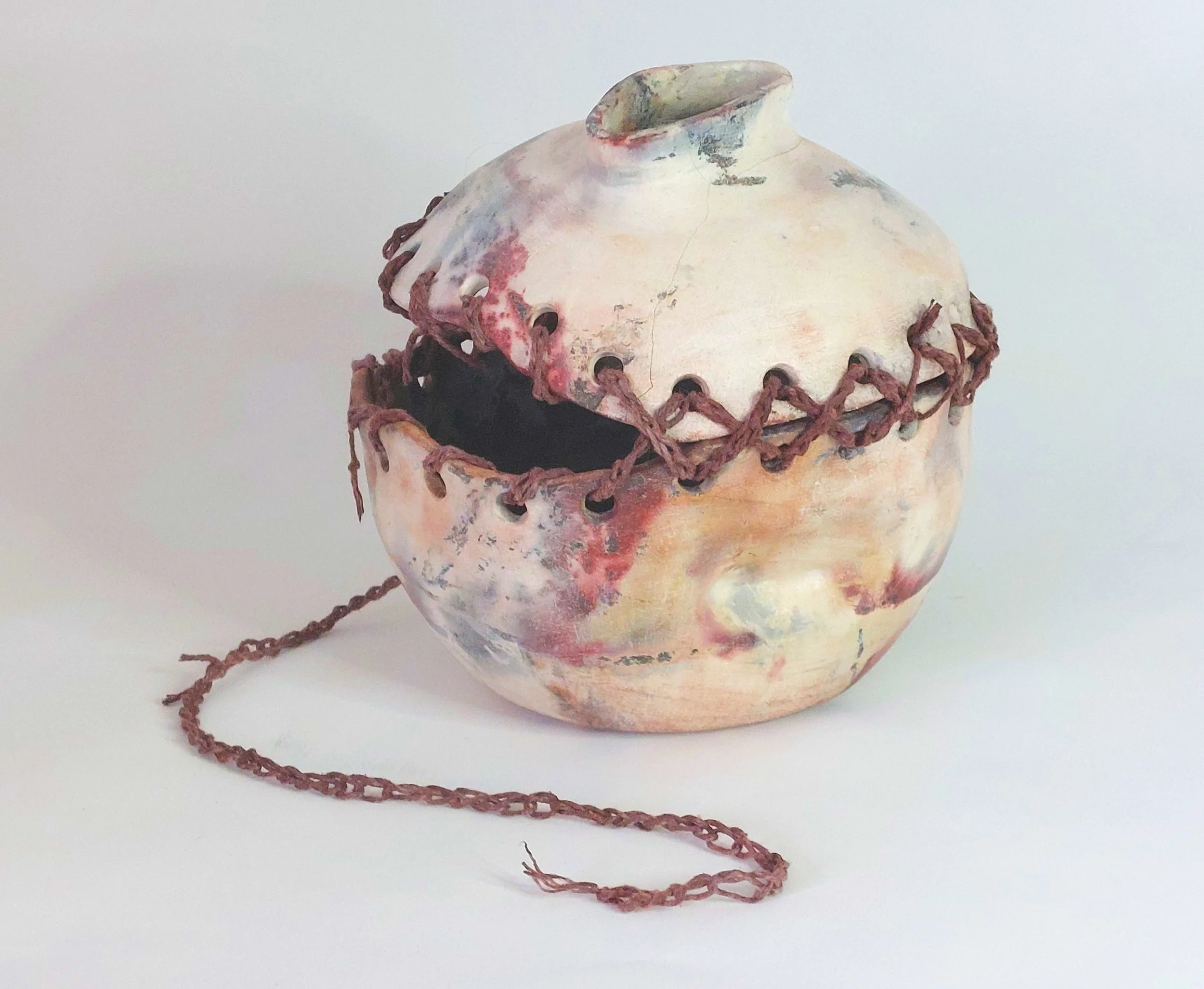
Rupture & Repair is a series of abject pot-like sculptural experiments that I have been making for just over a year. Artist Mary Branson opens her studio to artists from other disciplines to explore new ideas through clay. I have a well-established background in photography, film and digital art but have almost abandoned these in preference for forms that give me a direct, tactile experience by engaging my hands and senses with real physical materials and to avoid the constant glare of gadgets and screens. I wanted to combine my interest in stitching and crochet by sewing into clay forms and as a conceptual reference to things in the world seeming to be breaking down and my need to try to fix things.
Artist: Siyu Zhao
https://siyuzhao.art/
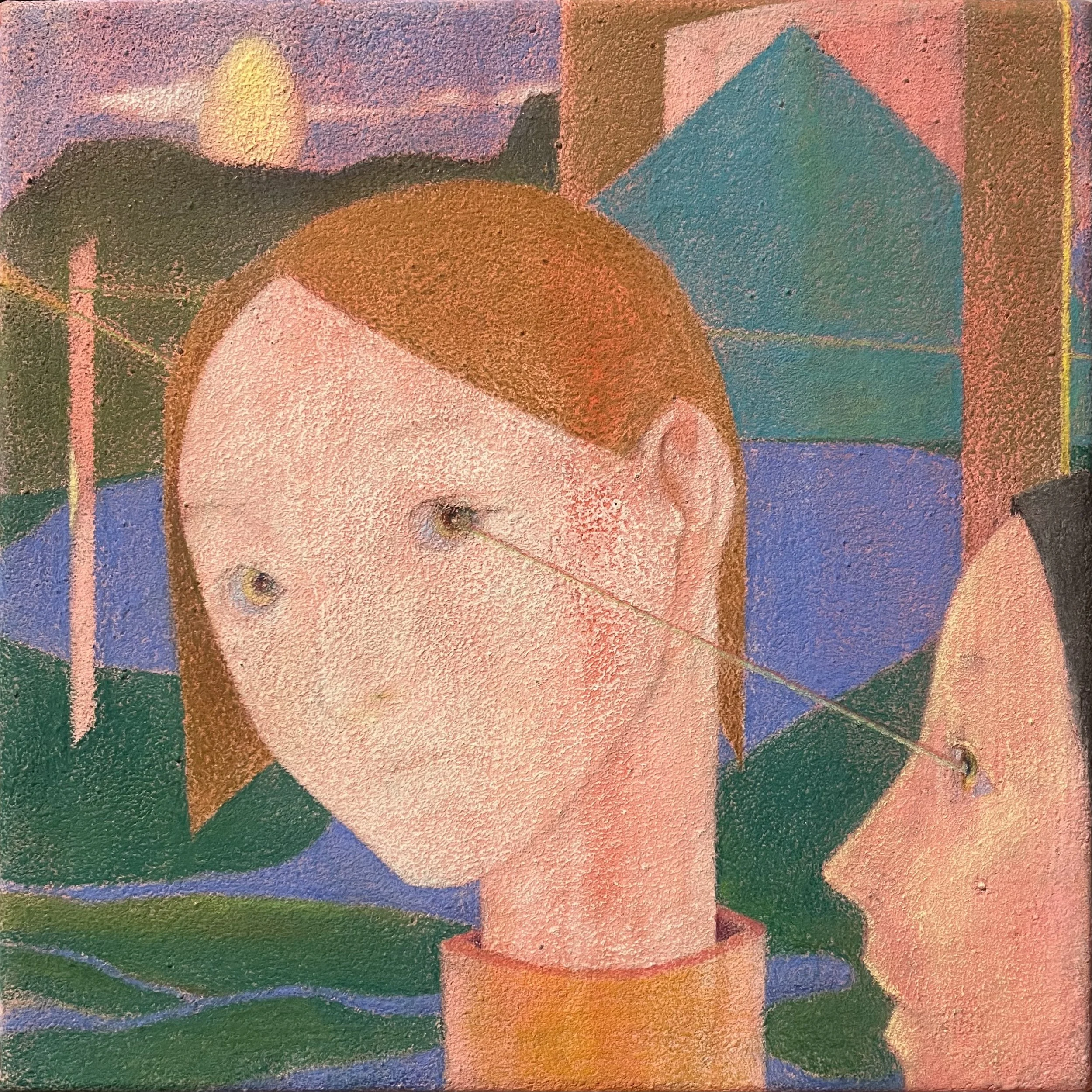
Line of Sight / A Stone Waiting to Hatch / Chamber of Becoming. 2026,
30 × 30 cm,
Sediment collected from a Dutch canal forms the ground, with oil-based coloured pencil and acrylic on canvas. The uneven surface affects how the image can be drawn, so the material becomes an active collaborator. The work considers perception, distance and the unstable relation between seeing and understanding.
Artist: Li Feng
https://xujiehuazang.com
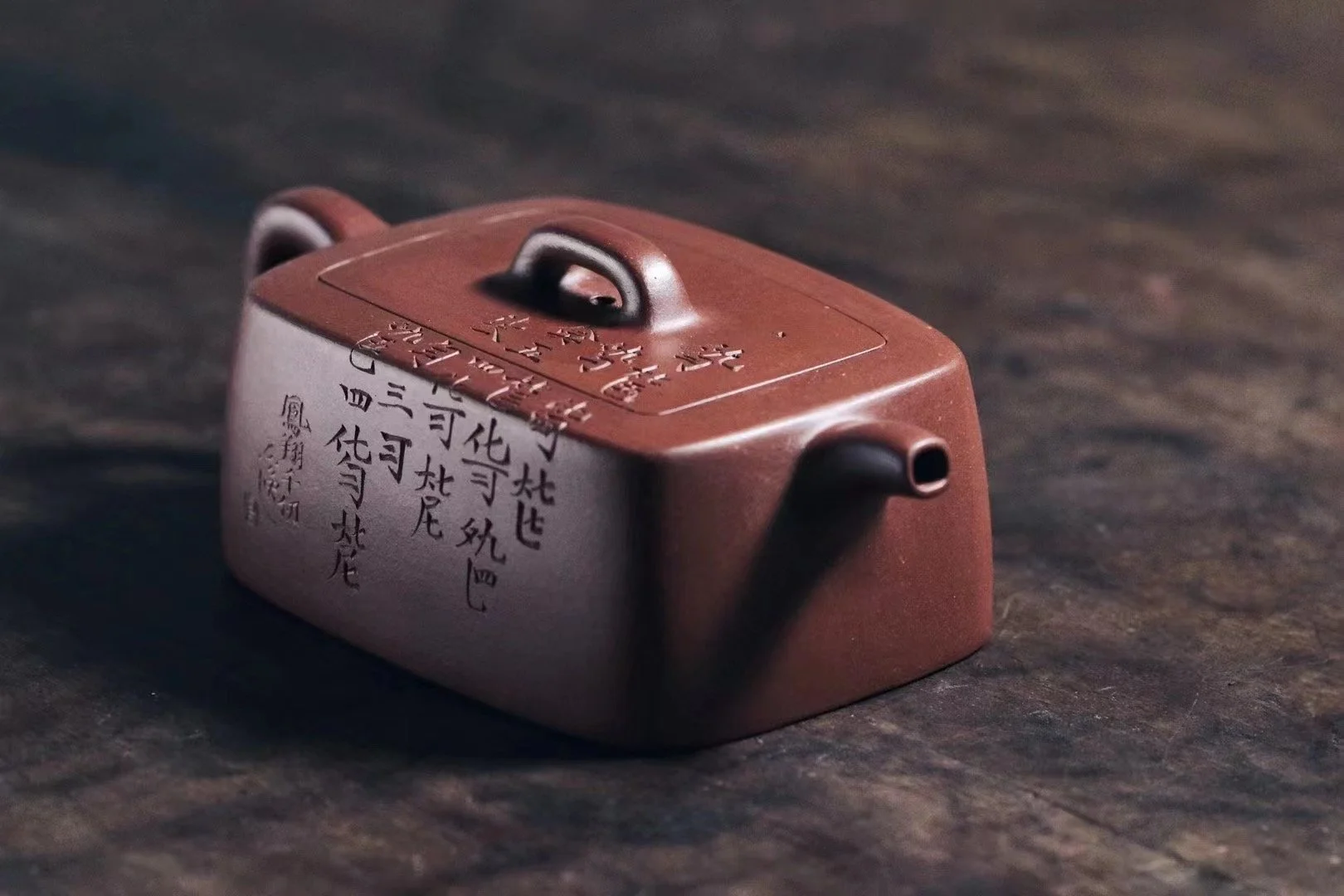
Mingzheng (明正) / Suifang Zhuyuan (随方逐圆) / Mingyuan Sifang (鸣远四方)
For thirty years, my practice has focused on the tectonic possibilities of unglazed Yixing clay through the archaic method of all-handmade slab construction (Xiangjie). Rather than shaping clay on a potter’s wheel, I beat raw aged Zini into dense, uniform planar slabs with wooden mallets, miter the edges by hand, and assemble them without plaster molds.
This process directly addresses the violent physical transformation of clay: unglazed native purple clay undergoes a severe 10–12% volumetric thermal shrinkage in the kiln. To create a crisp, functional square vessel, every plane must be calculated to counter internal tension and gravitational sag. In Mingzheng, rectilinear walls curve almost imperceptibly outward to generate internal pressure. In Suifang Zhuyuan, rigid square planes soften into continuous curves, capturing a dynamic structural mutation in raw earth.
These vessels are micro-architectures for the hand. Touch is essential: the velvety, dual-pore mineral surface and the deliberate balance of knuckles against clay reveal the honest dialogue between human discipline and the unpredictable geology of fire.
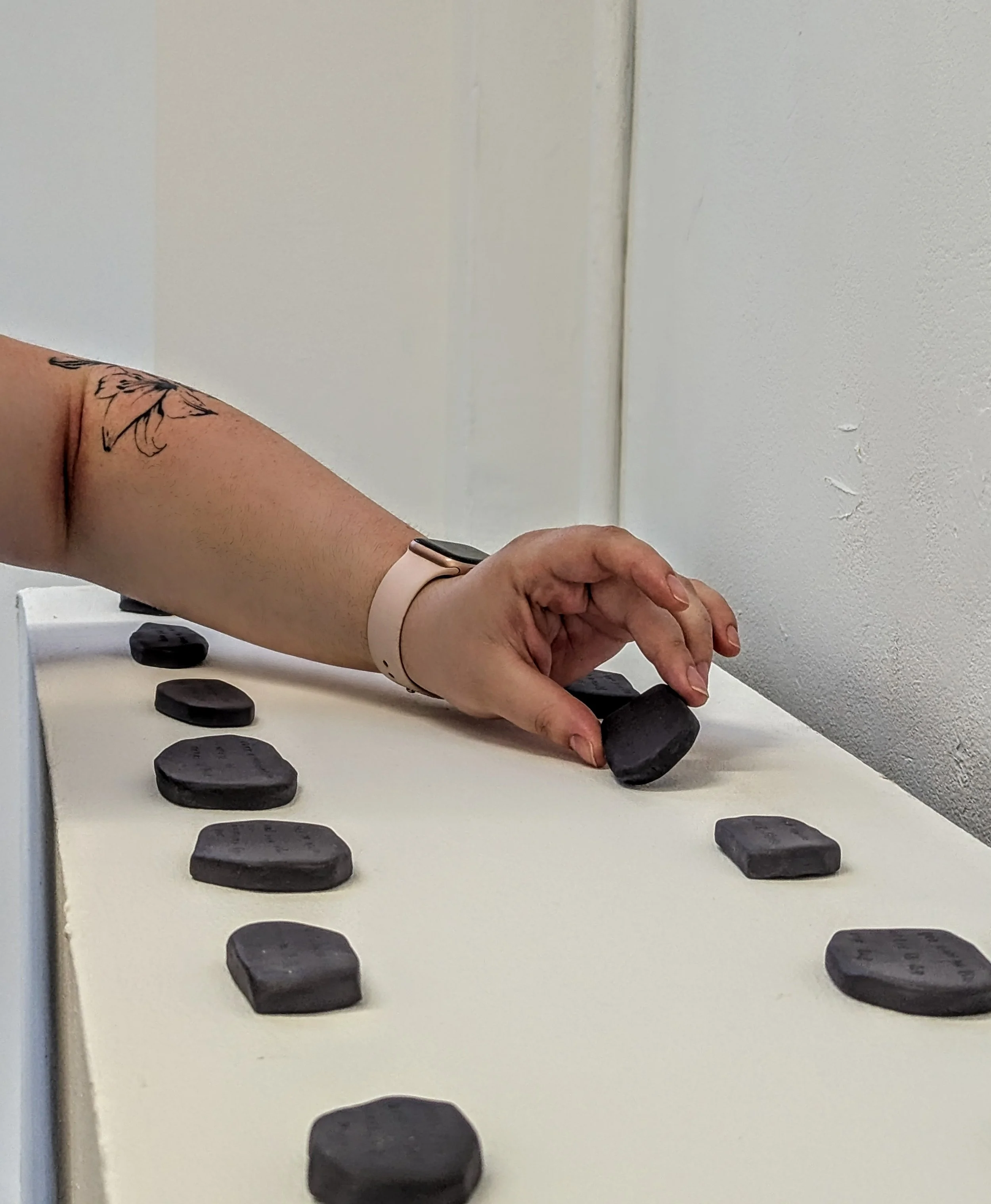
Artist: Mel Graham
“An Hour” is an interactive installation comprising 120 individually hand-sculpted black porcelain tablets, each imprinted with phrases associated with coercive, manipulative and abusive language, drawn from survivors’ and my own lived experience. The tablets are arranged across white plinths and invite visitors to pick up, handle and move them. Through this interaction, language that can be psychologically damaging becomes something tangible that can be held and physically encountered. The repetitive process of forming each tablet and hand-punching each letter embeds time, labour and physical pressure into the clay. Black porcelain challenges conventional associations of porcelain with delicacy and fragility, instead emphasising its strength and permanence once fired. An Hour explores the relationship between language, memory, touch and control, while allowing audience interaction to become an integral part of the work.
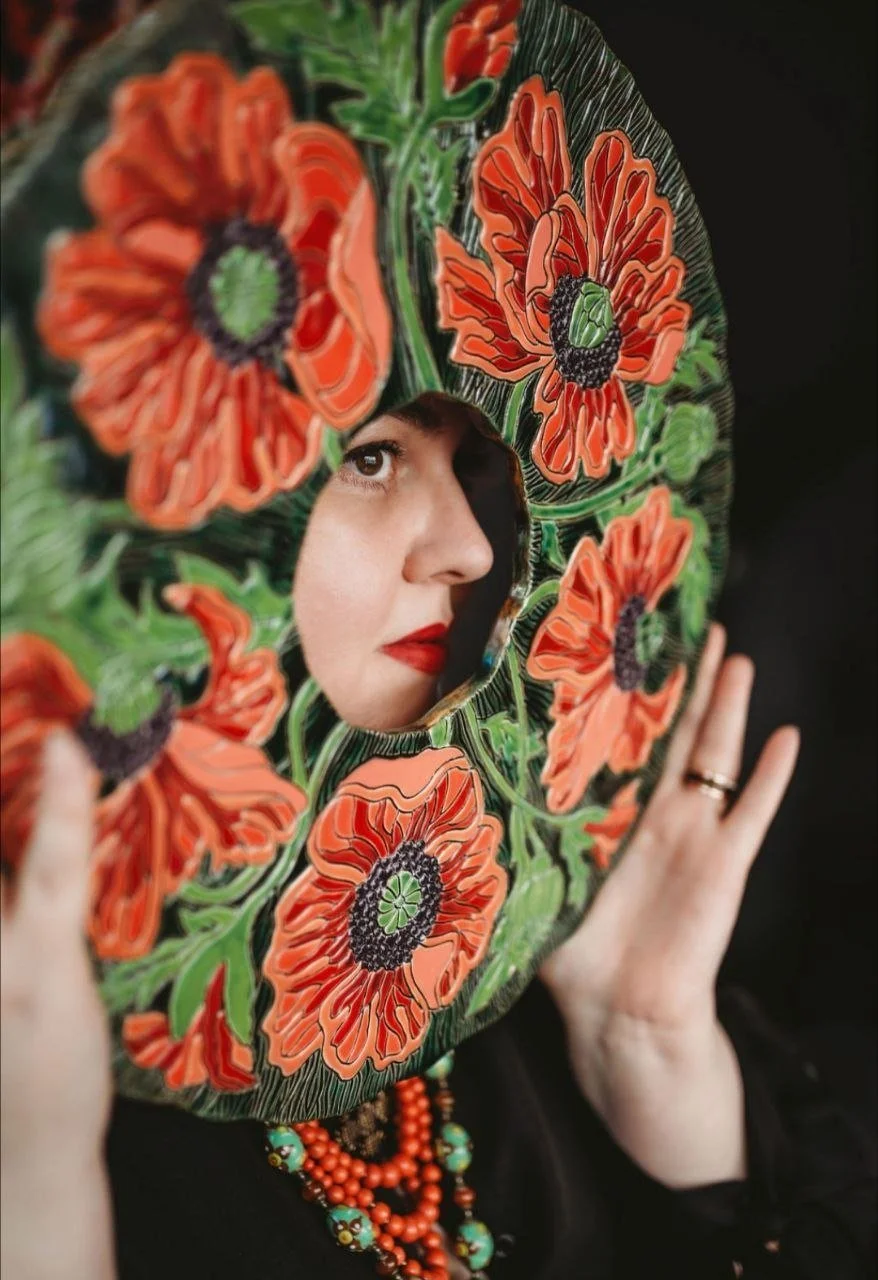
Artist name
Galina Panov Kreymer
Poppy Mirror
I create functional and decorative ceramics where colour and ornament are my main means of expression. I am drawn to rich, sometimes excessive decoration, its rhythm and many visual layers.
The garden is my greatest source of inspiration, but these works are about more than botany and changing seasons. I carry with me craft traditions, textiles, embroidery, ornament, and fragments of cultures from places where I have lived or travelled. These memories, patterns, and colours find their way into clay and become something new. I build and paint every piece by hand. I fire it, paint it again, and fire it again, continuing until it becomes what I imagined. My work began with functional objects, but lately it has been growing larger, almost eager to escape the boundaries of functional ceramics. The same flowers and ornament that cover a platter can move onto a mirror and begin to surround the reflection. I am fascinated by what we can see in mirrors and through them. Clay becomes more than an object to look at: it enters the reflection itself. A mirror can surround us with greenery, crown us with bright flowers, or, for a moment, transport us into a fairy tale with magical birds.