Haus-A-Rest
A zine shaped by artists, for the bold, the curious, and the uncompromising.
Haus-a-rest exists for the creatives who notice what others miss, who translate lived experience into striking images and fearless words. This is a space for the daring, the different, and the deeply authentic.
Each issue brings together work that resists the obvious, fresh perspectives, quiet rebellions, and art that moves without asking permission. We’re drawn to the unseen, the unfiltered, and the moments that linger. Our Open Calls remain free and open to all.
They’re an invitation to share what’s been forming, to test new ideas, and to connect with a community rooted in curiosity and creative risk.
Step into the zine.
Let’s carry forward the voices that refuse to fade into the background.
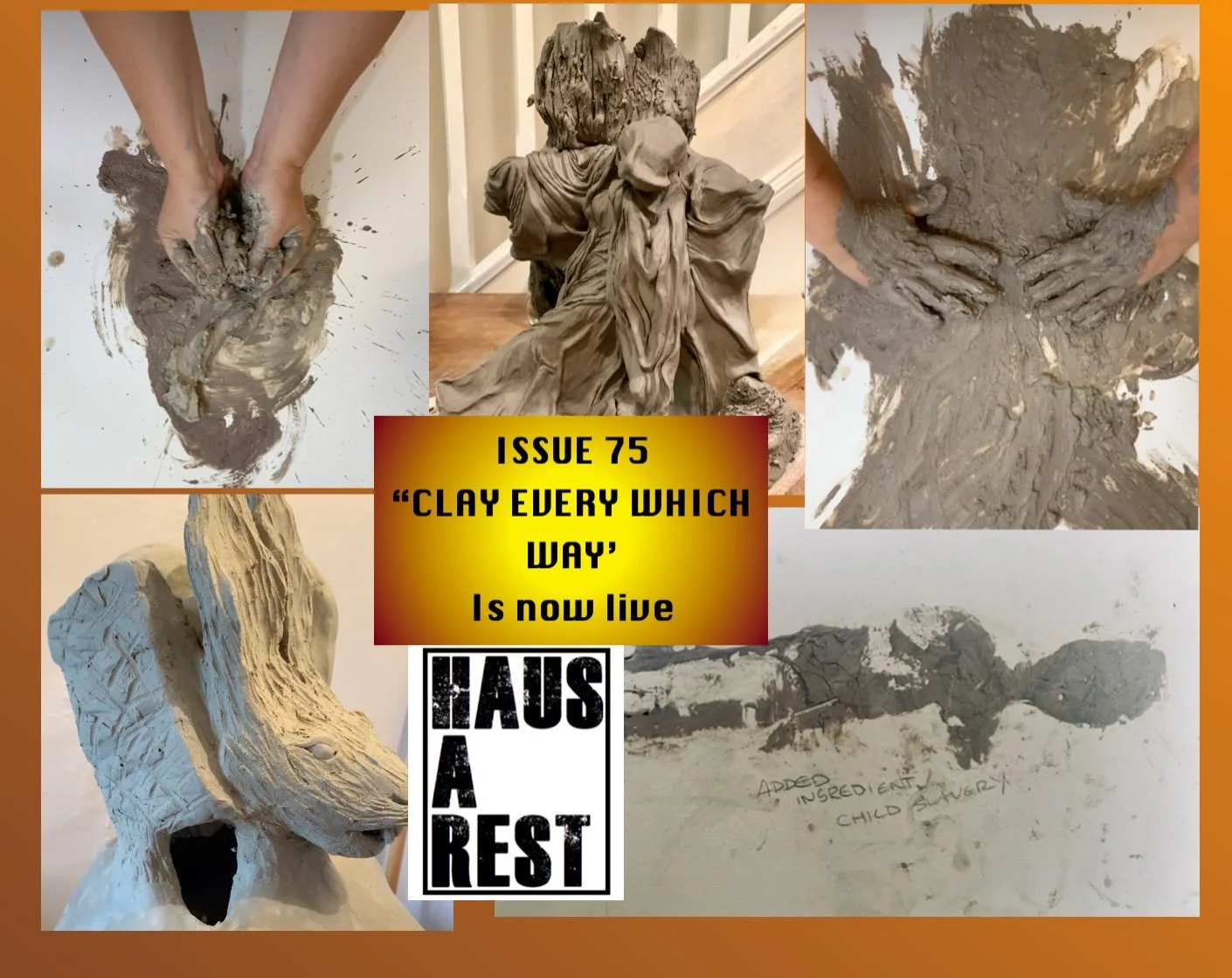
Issue 75
Clay Every Which Way
What is clay?
A material.
A substance.
A piece of the earth.
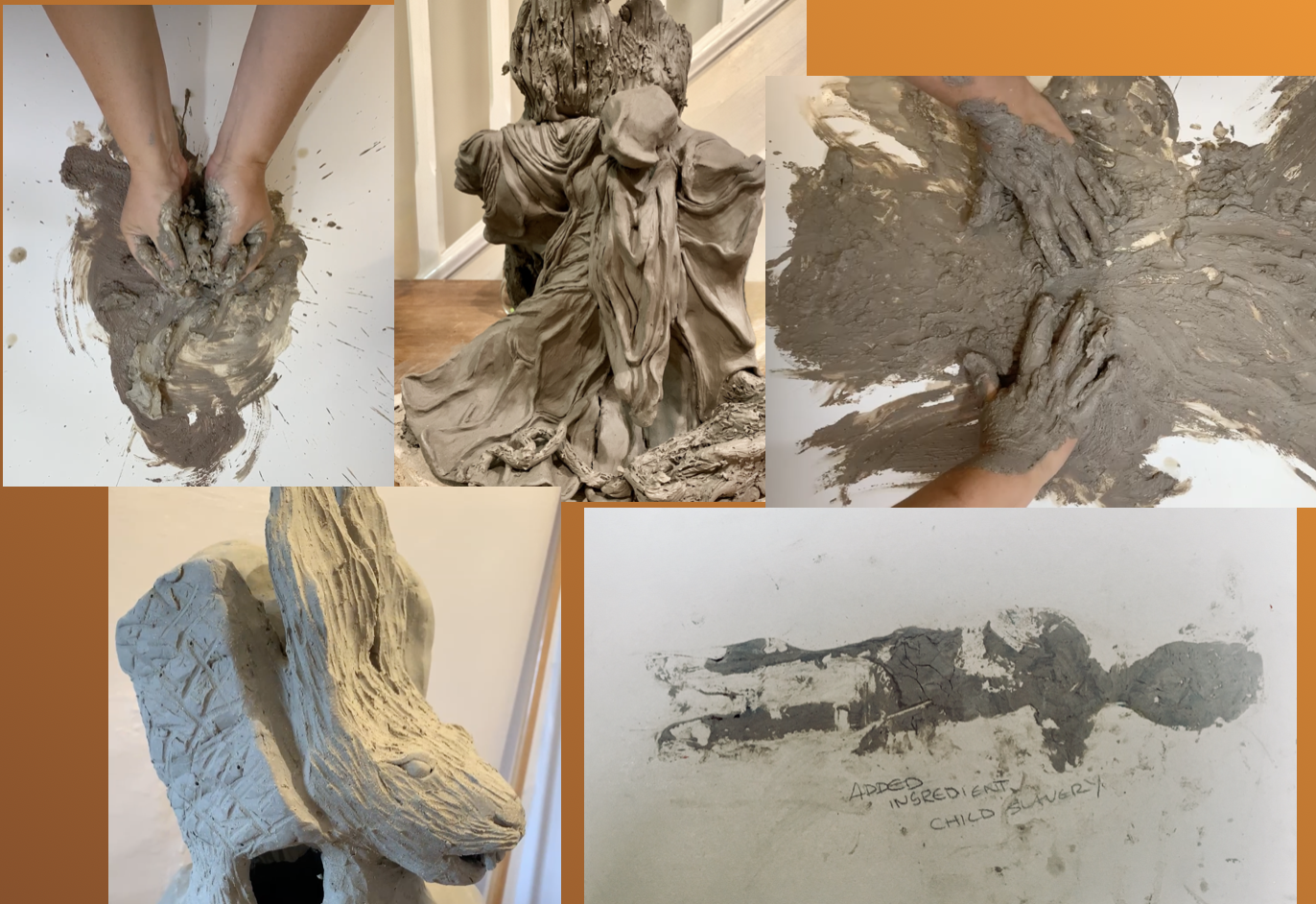
Something we dig up, get our hands into, shape, fire, break and sometimes throw away. But clay has never really been just clay. It has been a vessel, a building, a body, a brick, a toy, a tool, a ritual object, a record. It has carried food and water, held the imprint of a hand, recorded a moment, and survived long after the person who made it has gone. It can be ancient and completely new at the same time.
For this issue of HAUS-A-REST, we asked artists and writers to take clay every which way.
Not simply ceramics, or pots or something that must go into a kiln and come out as a finished object. We wanted to see where clay might lead, and to know what happens when artists push at the edges of a material we think we already know. What happens when clay is left raw, when it cracks, when it breaks, when it is returned to the earth? What happens when the process becomes more important than the finished thing, when clay becomes more than a material, it becomes a way of thinking?
There is something wonderfully democratic about clay. It doesn't require perfection. It can be picked up and squeezed, it can be pushed too far and started again. It allows for accidents, marks, fingerprints, mistakes and changes of mind.
Perhaps this is why it has travelled with us for so long.
We shape it, but it also shapes us. It connects the hand to the ground and the body to the earth. The present to everything that came before.
And maybe this is where Clay Every Which Way really begins.
So this issue is deliberately open.
There are no rules about where clay should sit, what it should look like, or what it should become.
Only a material, a starting point, and a whole lot of possibilities.
Explore the results here One line Gallery to see the full range of visual work submitted, and who the artists are. There is a rich and varied collection of great work.
Step into the Writers' Corner for the words that come to surface, where contributors have reached into the spaces between sentences to share what usually stays unwritten.
Alongside the submitted work, we are delighted to share writing from some our brilliant poet Peter Devonald, and resident writer Michaela Hall
Editors,Dr Jenna Fox, and Nichola Rodgers have been busy with exhibitions, commissions, and setting up workshops, see their News and updates in the blog.

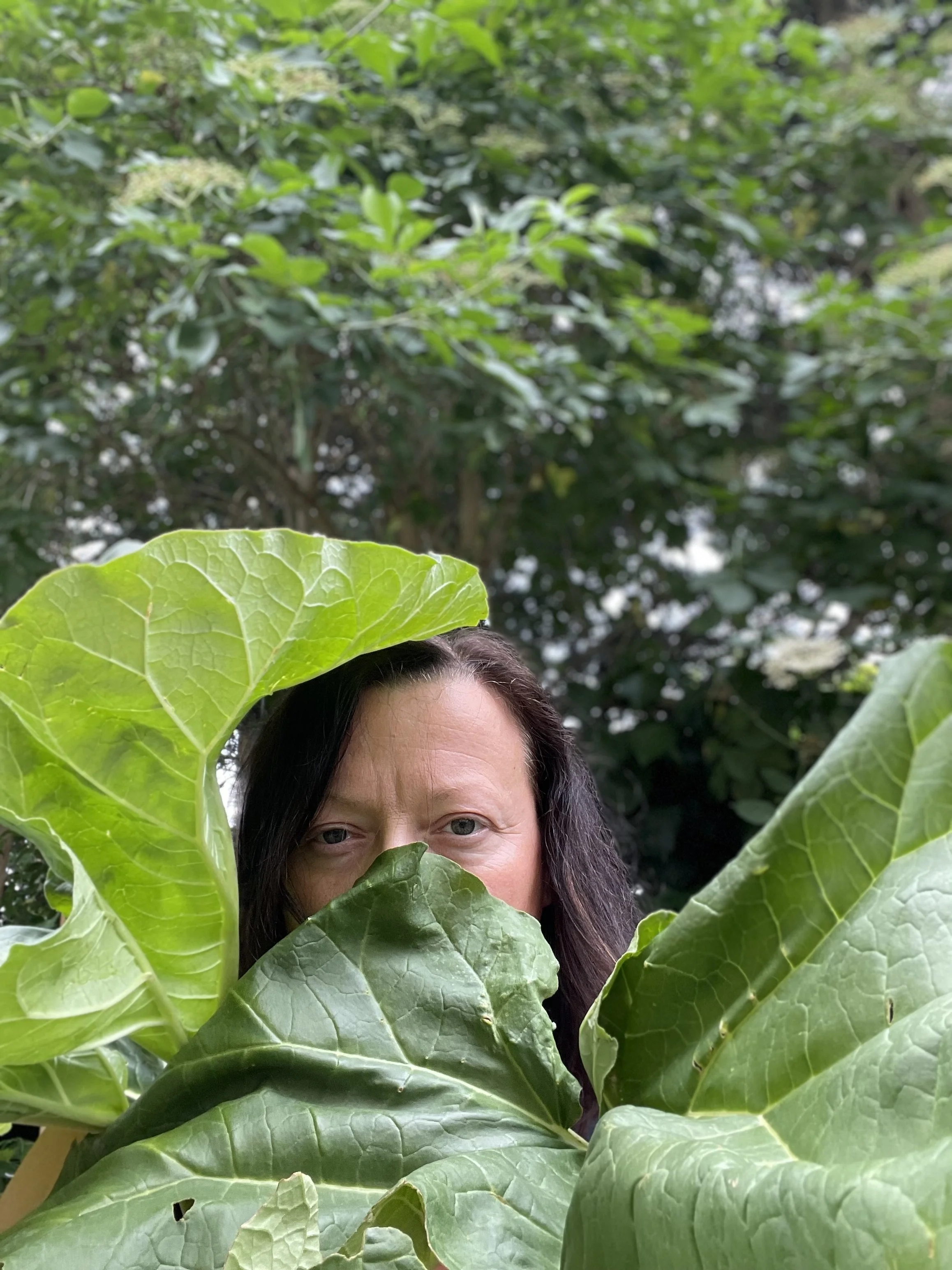
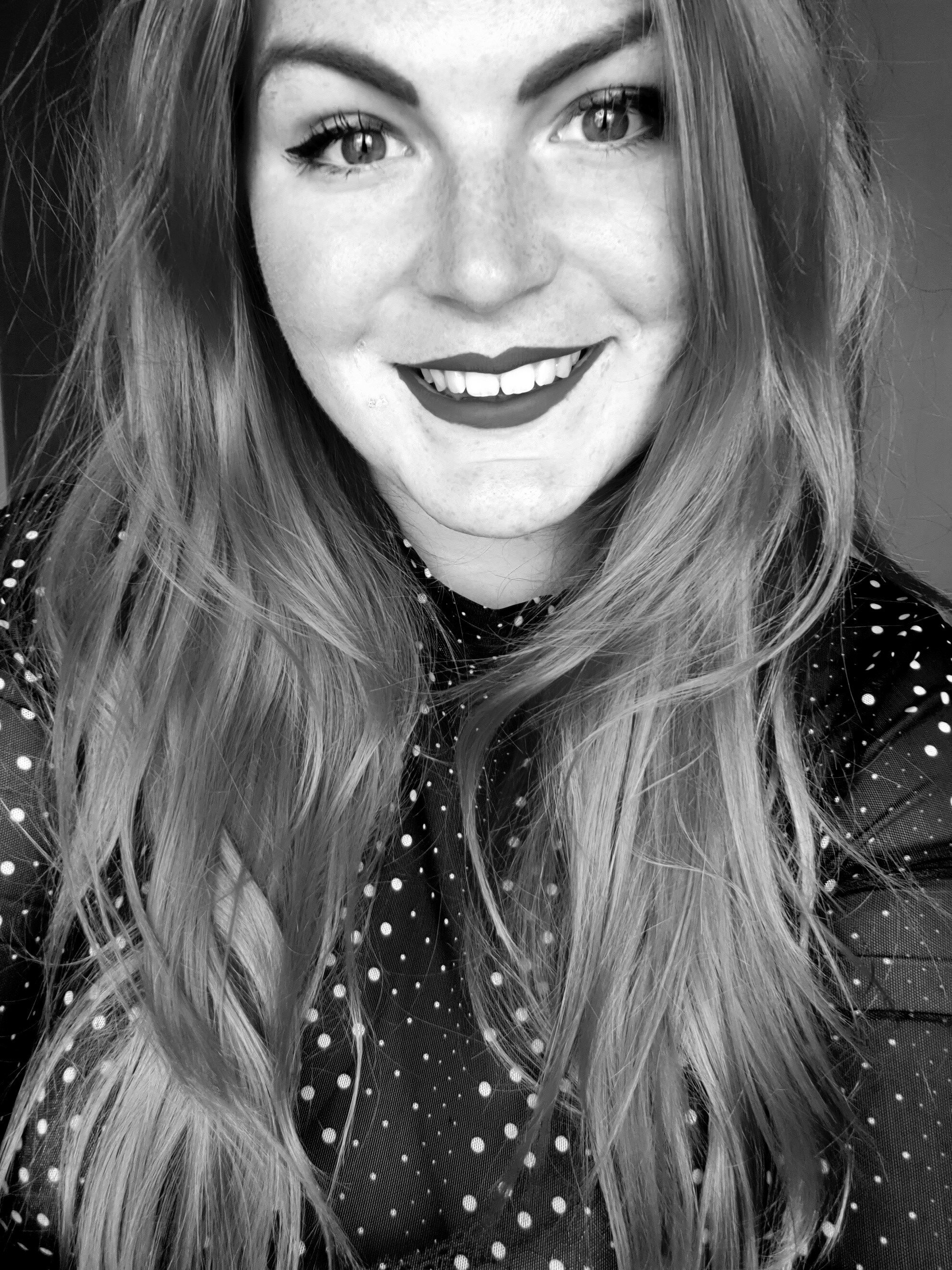

You can also find the collection rolling out across Instagram and Facebook, where we're sharing work, stories, and a closer look at the artists and writers behind the pieces. Follow along and join the conversation.
Thank you to everyone who submitted, who shared, and who trusted us with their work.
As always, HAUS-A-REST remains a platform for experimental, independent, and boundary-pushing work. If you have an idea that fits this brief then get in touch.
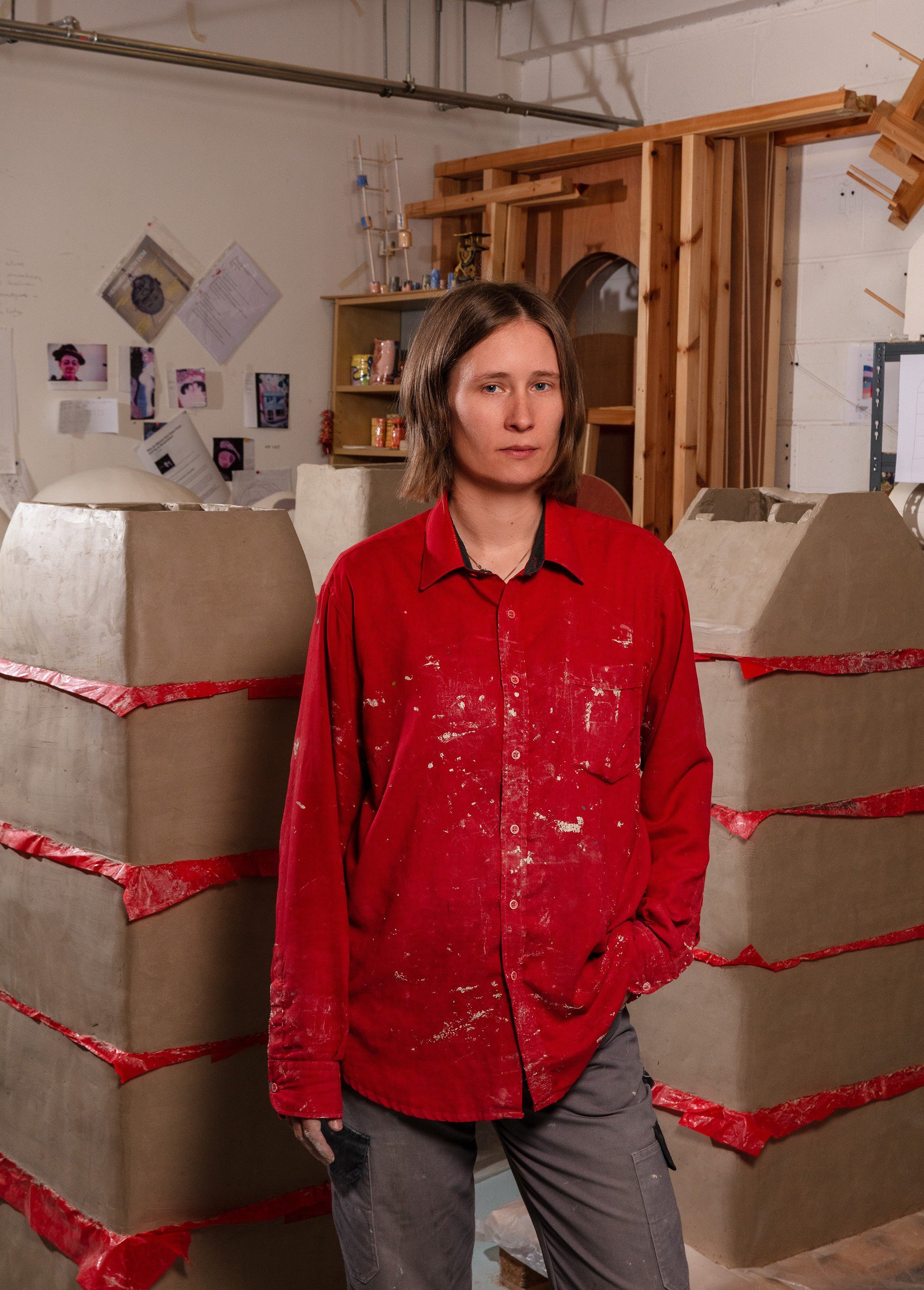
THE FEATURED ARTIST THIS ISSUE is oktavia schreiner find out more below
Oktavia schreiner
Discover Oktavia Schreiner's ceramic and wood sculptures and installations, shown in Glasgow, Salzburg and Linz.
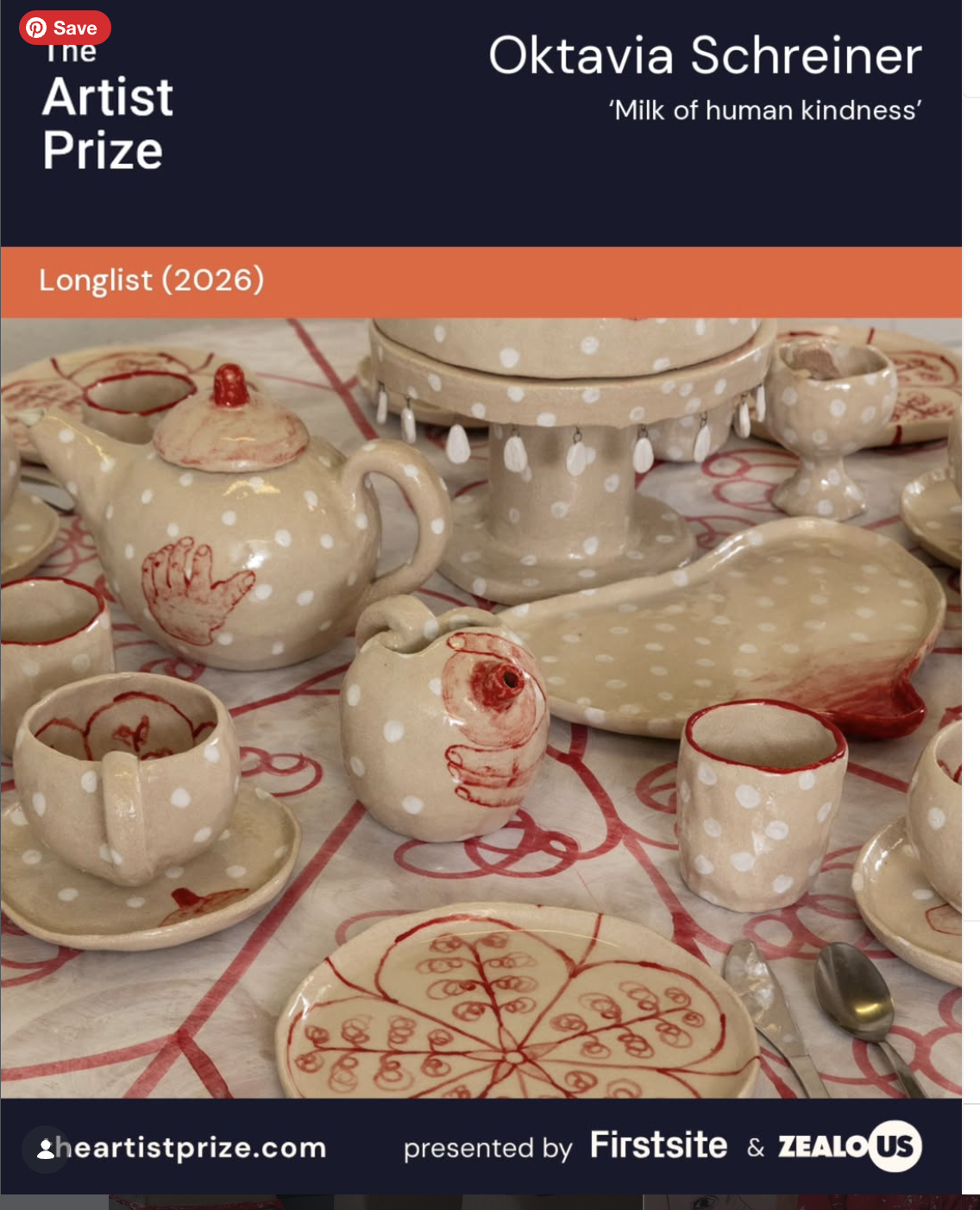
Oktavia is a visual artist working primarily with ceramics, often combined with wood or metal. The sculptures are symmetrical, creating a sense of calm and order. In contrast, the images they paint on the ceramics with glazes are full of tension and strangeness. They depict architectural structures that have fallen out of balance and landscapes and natural forms that take on a peculiar life of their own. They draw inspiration from scientific, literary, or mythological texts, as well as from dreams and memories.
Oktavia has also been long-listed for The Art Prize which is a great achievement
+++++++++++++++
Micro Residency Open Call
We’re excited to continue these Micro-Residencies, a small but intentional space for artists, writers, and creative thinkers who want to deepen their practice, expand their ideas, and receive thoughtful guidance along the way.
The HAUS-A-REST Micro-Residency is built on the belief that artists don’t always need grand studios, vast budgets, or months away from the world, they often need attention, exchange, and a context in which their ideas can breathe.
In a time of constant accumulation, of information, pressure, expectation, this residency offers a moment to sift, sharpen, and reimagine. It’s a place to sort through your creative overflow, to cultivate clarity, or to find excitement in the mess.
you can apply on our opportunities page.
Stay tuned, stay curious, and keep making.
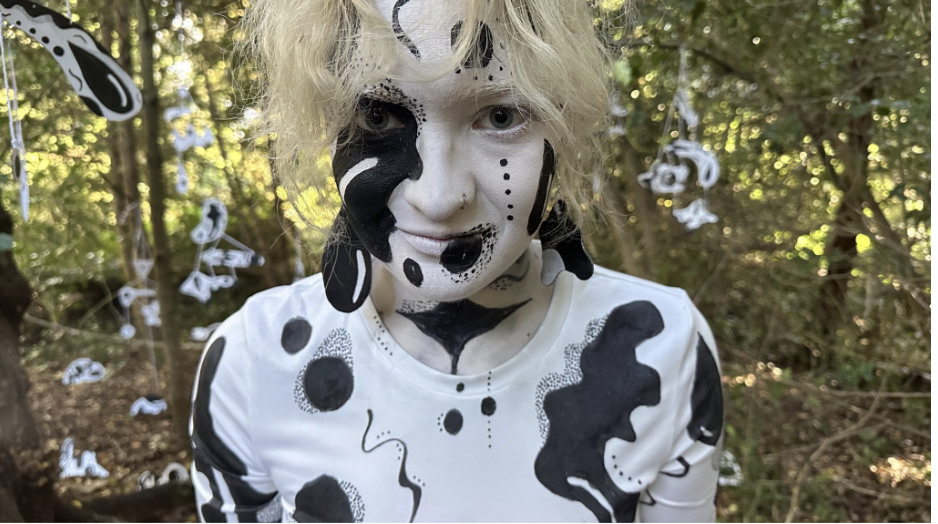
Meet our Next Micro resident artist this will be thier last month with us
NEWS IS NOW ON THE BLOG
🎨
links to exhibitions
🎨
book workshops
🎨
NEWS IS NOW ON THE BLOG 🎨 links to exhibitions 🎨 book workshops 🎨
******************************************************************
!! Calling Artists & Writers!!
****************