

Memorabilia are not only objects, concert tickets, photographs, letters, keepsakes, but also fragments of memory, gestures, words, and feelings that we cling to, reimagine, or transform. For artists and creative thinkers, memorabilia often becomes raw material: the ephemera that bridges past and present, personal and collective history, lived experience and artistic practice.
In times of constant digital turnover, memorabilia challenges us to think about what we hold onto, what we archive, and how we reframe personal or cultural histories through creative practice. From nostalgia to critical reflection, from intimate souvenirs to ironic collectables, this theme opens a wide space for interpretation.
We have had a lot of submissions this month for our writers corner, a good mix of poems and text, We do hope you enjoy them.
>>>>>>>>>>>>>>><<<<<<<<<<<<<<<
Our resident Poet Peter devonald has a fab selection of poems this month and he has been selcted to be a judge for https://www.whisperingwisdom.co.uk/competitions … you can find more of what he’s up to on our blog pages…
>>>>>>>>>>>>>><<<<<<<<<<<<<<<
Artist name - Lynn White
Website - https://lynnwhitepoetry.blogspot.com
Description
Beach Combings and The Vase are both about how objects can carry memories to another time.


>>>>>>>>>>>>>><<<<<<<<<<<<<<<
Artist name- Simon Williams
Instagram - @kormeleon
Description
Poem concerning the relics of a relationship
Relics
My T-shirt which you used to wear
On which
(I think)
your scent still lingers
Your belt you left behind
I sit here running through my fingers
The tape I borrowed from you
I can no longer bear to hear
These things still hold your memory
And serve to keep you near
>>>>>>>>>>>><<<<<<<<<<<<<<<<<
Artist name - Joshua Walker, The Last Bard
Instagram - @bigjosh84thelastbard
Description
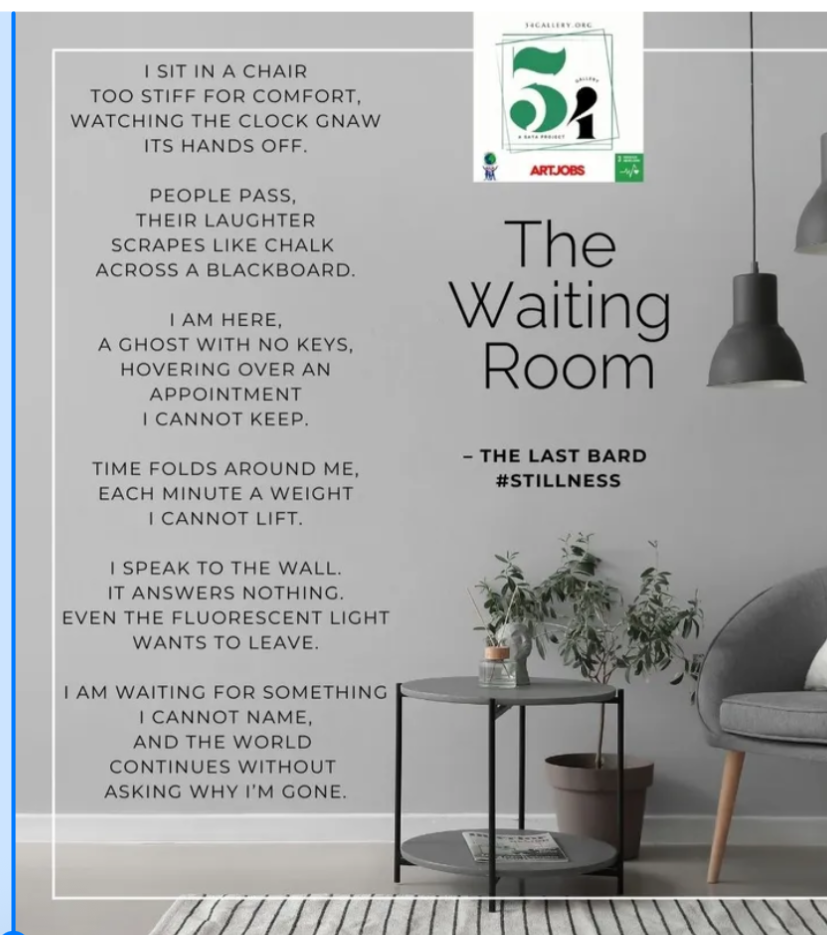
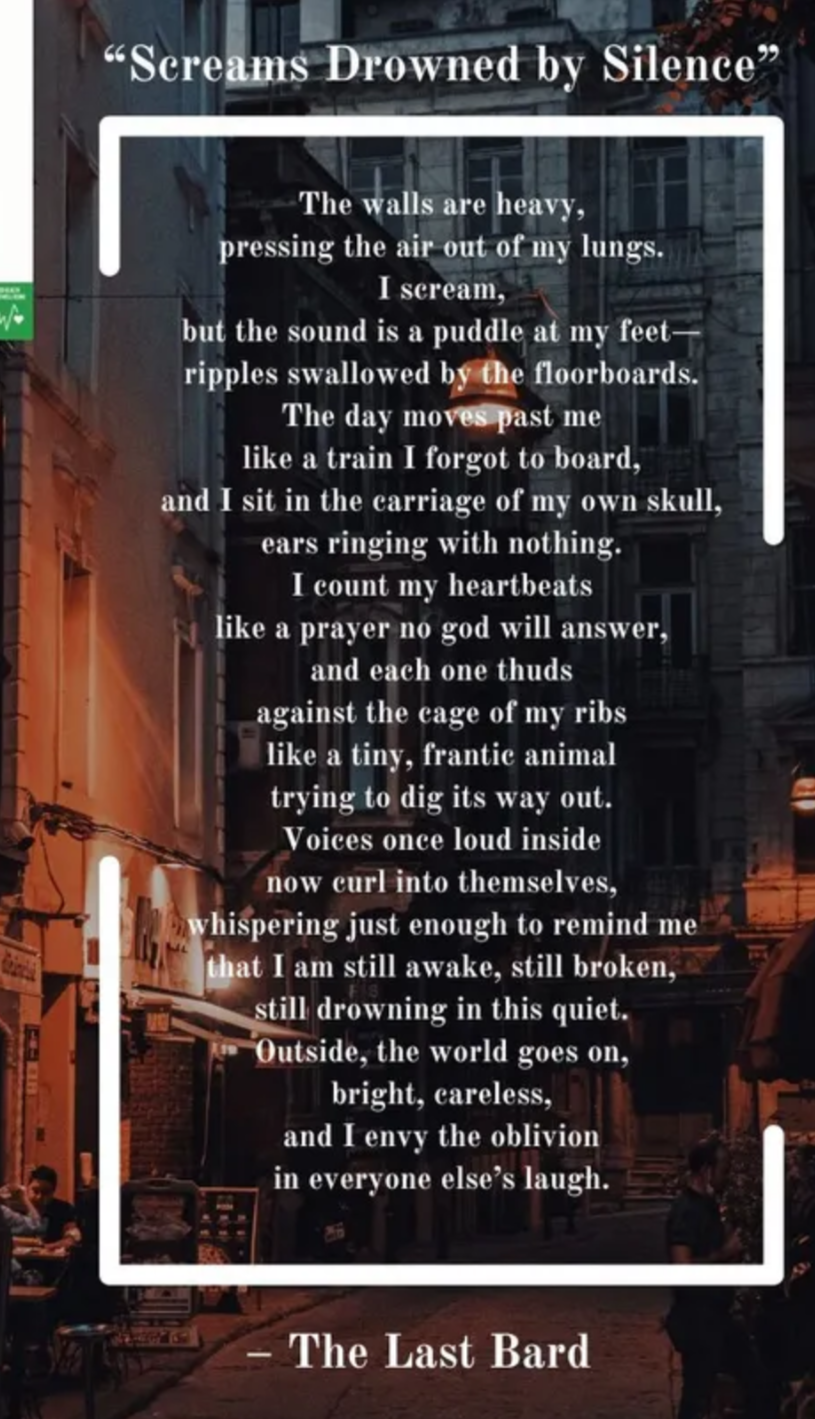
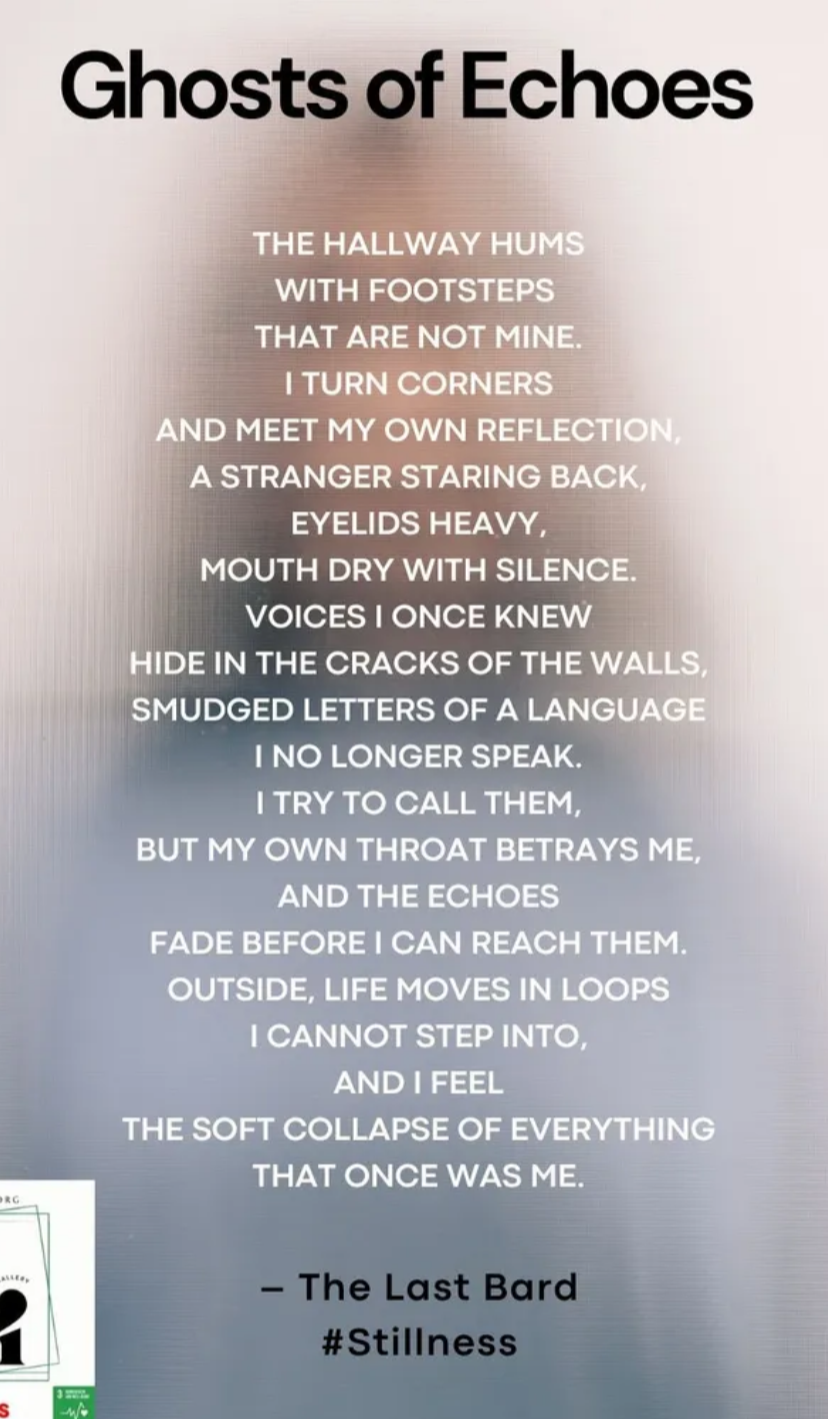
My work explores memory, loss, and the artifacts we carry from the lives we inhabit and the lives we witness. I write from the perspective of The Last Bard, using myth, intimacy, and raw emotional truth to render objects, letters, photographs, and fragments of the world as relics. Each poem in this submission engages memorabilia—a dying god’s apology, a photograph of a young grandfather, a cigarette left by a lover—as vessels of memory, longing, and survival. My writing confronts absence and presence, fullness and emptiness, finding resonance in the tangible traces life leaves behind.
The Cigarette
Sometimes I press it in the dark,
as if rubbing the paper and ash could summon her smile,
the heat of her hand,
the truth of what I was never meant to possess.
It is tiny, fragile, unremarkable—
and yet it is everything:
an artifact of love lost,
a talisman of heartbreak,
proof that she lived,
proof that she belonged to someone else,
proof that some love leaves its fingerprints
on the smallest, most unlikely things.
She left with him.
No glance back. No word that could have saved me.
Her laughter hung in the air like smoke,
thick, curling, impossible to grasp.
Later, on the porch, I found it:
a cigarette butt, not my brand,
pressed into the ashtray like proof.
I picked it up.
Kept it.
It smelled of her, of him, of everything I would never hold.
I carried it like a relic,
a monument to absence,
to joy that bloomed elsewhere,
leaving my hands empty
but my chest full of memory.
The Letter
I found it in the gutter, folded once,
no envelope, no return address.
The paper smelled of ash and salt,
edges ragged, as if it had been pulled
from a fire that wanted to finish the job.
It began without greeting—
only an apology,
scrawled in a hand trembling between
scripture and seizure.
The voice was neither man nor woman,
but something exhausted,
older than the silence between stars.
They wrote:
I am sorry for rivers that run dry,
for cities cracked open like skulls,
for the hunger that grows teeth in children’s bellies.
I am sorry for thunder that never arrives,
for prayers that rot in air before reaching heaven.
I am sorry for making a world too heavy
for its own bones to carry.
The letter was signed—
*A dying god.*
I kept it, pressed between books,
a secret heirloom.
Through the years I returned to it,
as if to confirm the handwriting had not changed,
as if to prove the apology
was still meant for me.
Each reading sent a pulse
through my chest,
like the ink itself remembered
the hand that bled it.
I carried that pulse
through every ruin I built,
every silence I tried to outsing,
every grave I passed without bowing.
Now the paper is brittle,
edges breaking into dust.
The words are fading,
but the scar lingers.
I keep it still,
a keepsake of failure,
a relic of a god too human to survive
and too stubborn to vanish.
When I die,
bury it with me—
a final souvenir,
proof that even heaven
once confessed.

>>>>>>>>>>>>>>>><<<<<<<<<<<<<<<<
Artist name - The Poetry Beast
Instagram -@the_poetry_beast
Website -https://thepoetrybeast.bandcamp.com/
Description
Artist Statement
My work treats memorabilia as a verb—an action of holding, re-naming, and re-sounding the ordinary. I’m interested in the small archives we carry: pockets, browsers, drawers that stick, photo rolls that repeat the same sky.
In poems, fragments, and micro-fiction, I try to make the overlooked item ring again: a ticket stub as liturgy, a voice memo as inheritance, a jar as a temporary cathedral for air. Formally, I move between list, instruction, and narrative to mimic how memory actually behaves—looping, misfiling, returning at odd hours with perfect detail and missing dates.
The pieces sit between nostalgia and inventory: not romanticising the past so much as noticing the present tense hidden inside it. Memorabilia, to me, is less about objects than about attention—the keepsake is simply where attention decided to sleep.
Poem — “Ticket Stub Theology”
The priest of the turnstile tore my evening in half
and handed me the smaller faith.
I kept it warm in a pocket—
a winter of lint, a cathedral of keys.
Inside, the band tuned the dark.
Someone’s shoulder became a shoreline,
and the drum kit practised weather.
I learnt applause the way cities learn rivers:
by letting go a little, by naming the bridges.
After, I pressed the stub in a book,
a leaf from the brief tree of noise.
Years later, I open to it like a door
that remembers every shoe.
Nothing happens—then everything does:
sweat rising like handwriting,
a chord smudged with rain,
the singer tipping the microphone
into our open mouths.
What survives isn’t sound,
but the thin receipt of having been there,
paper that still glows in the dark
if you cup your hands around it—
a moth that believes in lamps,
a date that keeps arriving
without checking the calendar.
>>>>>>>>>>>>>>>><<<<<<<<<<<<<<<<<
Artist name - George Lang
Instagram - @xerxeswxerxes
Website - https://alteritas.net

>>>>>>>>>>>>>>><<<<<<<<<<<<<<<<
Artist name
Roger David Smith
@roger.david.smith
Description
A poem for your "memorabilia" issue, about a shoebox of memories of the person you used to be. (We all have one somewhere..)
shoebox
spring cleaning on this winter’s day
I find a summer
boxed
in a drawer, forgotten like homework under socks and dust
I drag out my training shoe treasure chest
and find an unfinished book, a sere sycamore leaf
marking a place long forgotten, a story halfway told
I put it to the side and leaf through
postcards, train tickets
ideas in rough drafts
letters making plans for a future already passed
badges, guitar picks, stickers still unstuck
coloured friendship bracelets under crumpled concert stubs
back then these things mattered
friendship and music
they still matter, of course, but not as much as the bills and the child support
under a flier for a gig I missed,
I find a pile of dog-eared photos, colours still fresh
real physical photos, not selfies on a screen
still remember sending them off, waiting for weeks
to find a finger blocking that shot, that one shot
of everyone together, that one sunrise that we welcomed together with smiles and cigarettes
the moment smudged forever
can we retake it now?
>>>>>>>>>>>>>>><<<<<<<<<<<<<<<<<<
Artist name - Alexandra Le Rossignol
Instagram @the_apothecary_prescription
Description
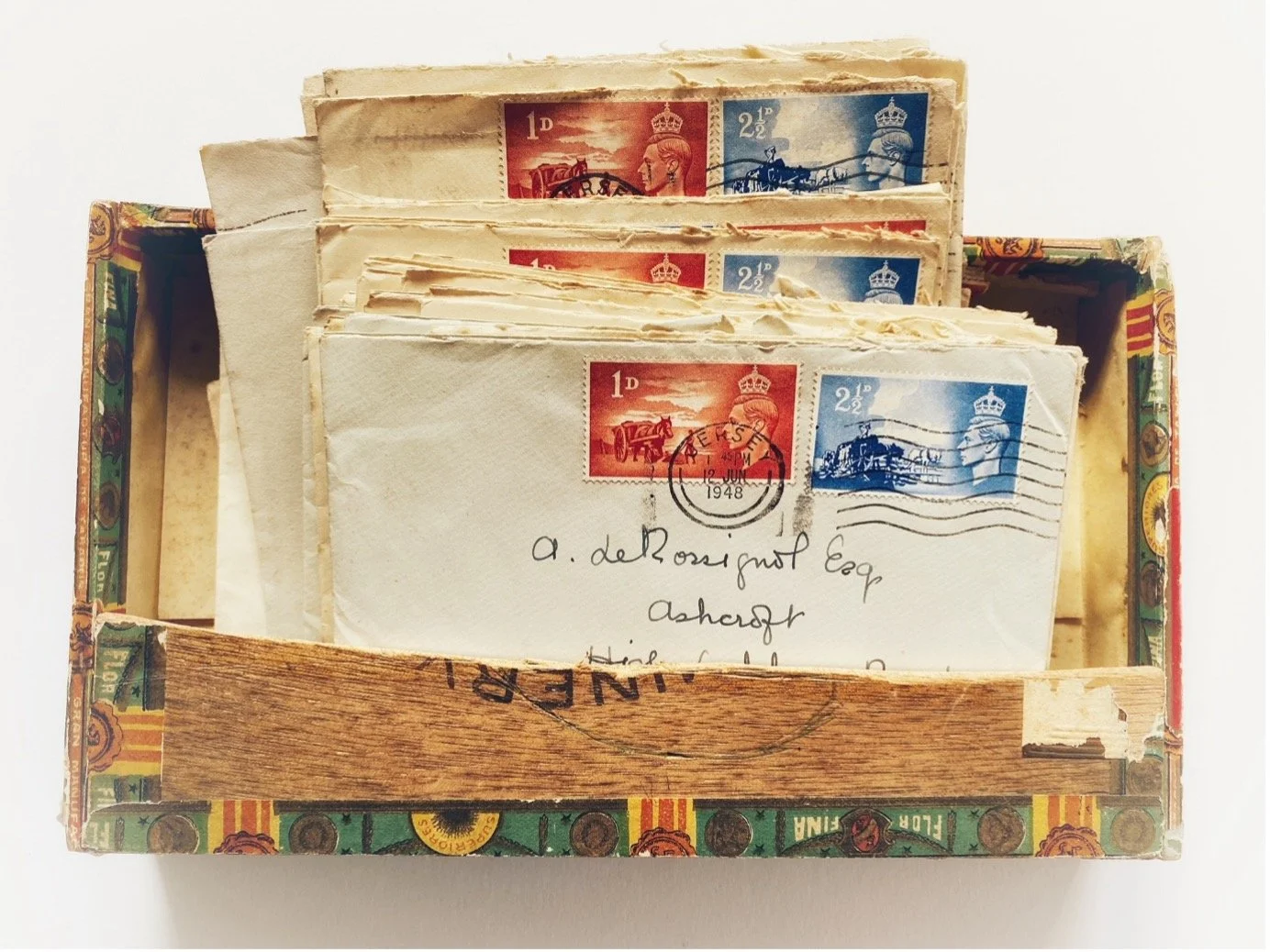
The Cigar Box began as a piece of creative writing for my MA. I was fascinated with the empty envelopes and why the letters had vanished. I knew the writer, my husband's grandmother, had left Jersey late in life because of dementia, and wanted to link the missing letters with her missing memories. I looked through family memorabilia and the stories that had been handed down.
The Cigar Box
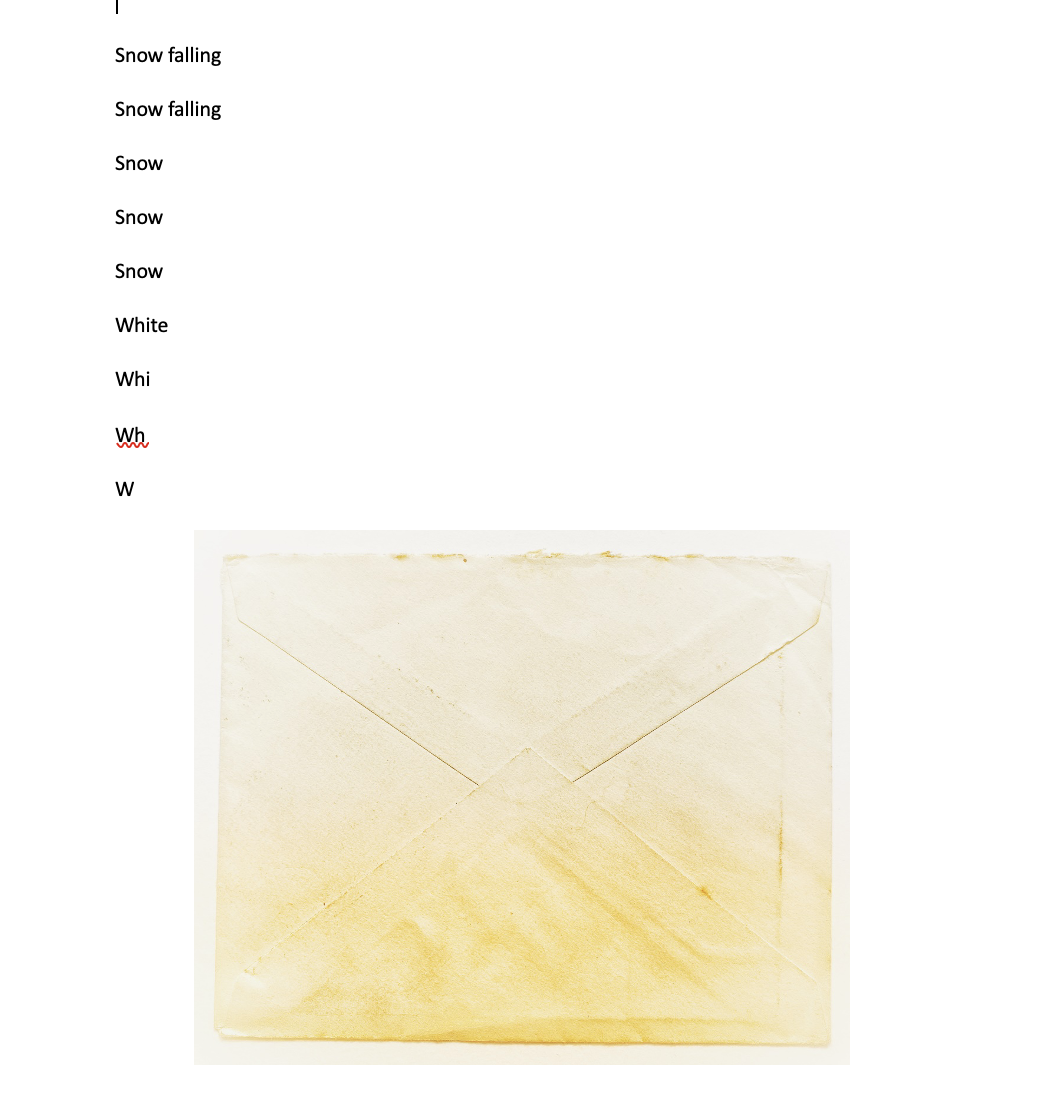
The lid of the cigar box has been snapped off in an irregular line above the hinge, revealing
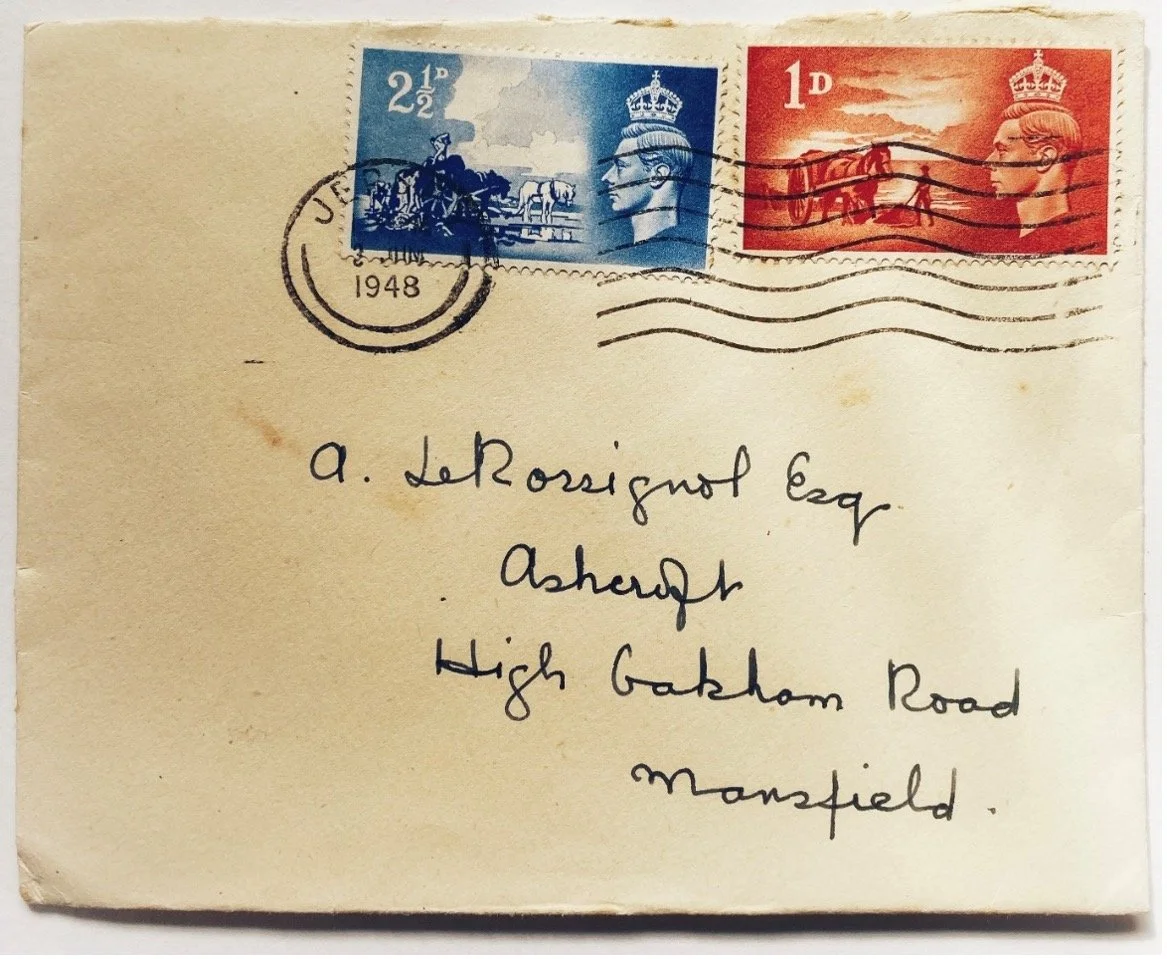
the pile of envelopes inside. Each envelope has been carefully opened with a paper knife, softening the edges with a tear. All except one, have been posted from the Channel Island of Jersey and thirty-three were sent to the same recipient, A Le Rossignol Esq. They are a gift from a mother to a son. The cursive writing flows along the envelope under the stamps featuring George V1, each letter connected to the next. All are post marked between May and July 1948, three years after the German occupation, almost a letter a day. I stare at the empty envelopes. Why weren’t the letters kept? I think of the writer. This is a conversation held in silence, only the empty husks of her thoughts remain. Was this a way of ordering her days: marking each day with a new page, the rhythm of filling the pen then sending the words across the paper. She seals the envelope and sticks on the stamps using a damp sponge as it wouldn’t seem right to lick the back of the King. I think of her walking to the post box with the letter in a gloved hand. She posts it carefully through the slot, listening as it falls to join others, then turns and heads home. She will wait for a reply, the deep hunger for knowledge of another’s life, her son does visit sometimes, crosses the short stretch of sea but she fears leaving the Island. She is contained by its beaches and headlands. I am faced by an empty space. What did she write, what news did she share? Can I find her voice, find stories to fill the empty envelopes. I search through family albums and keepsakes and gather fragments to piece together.
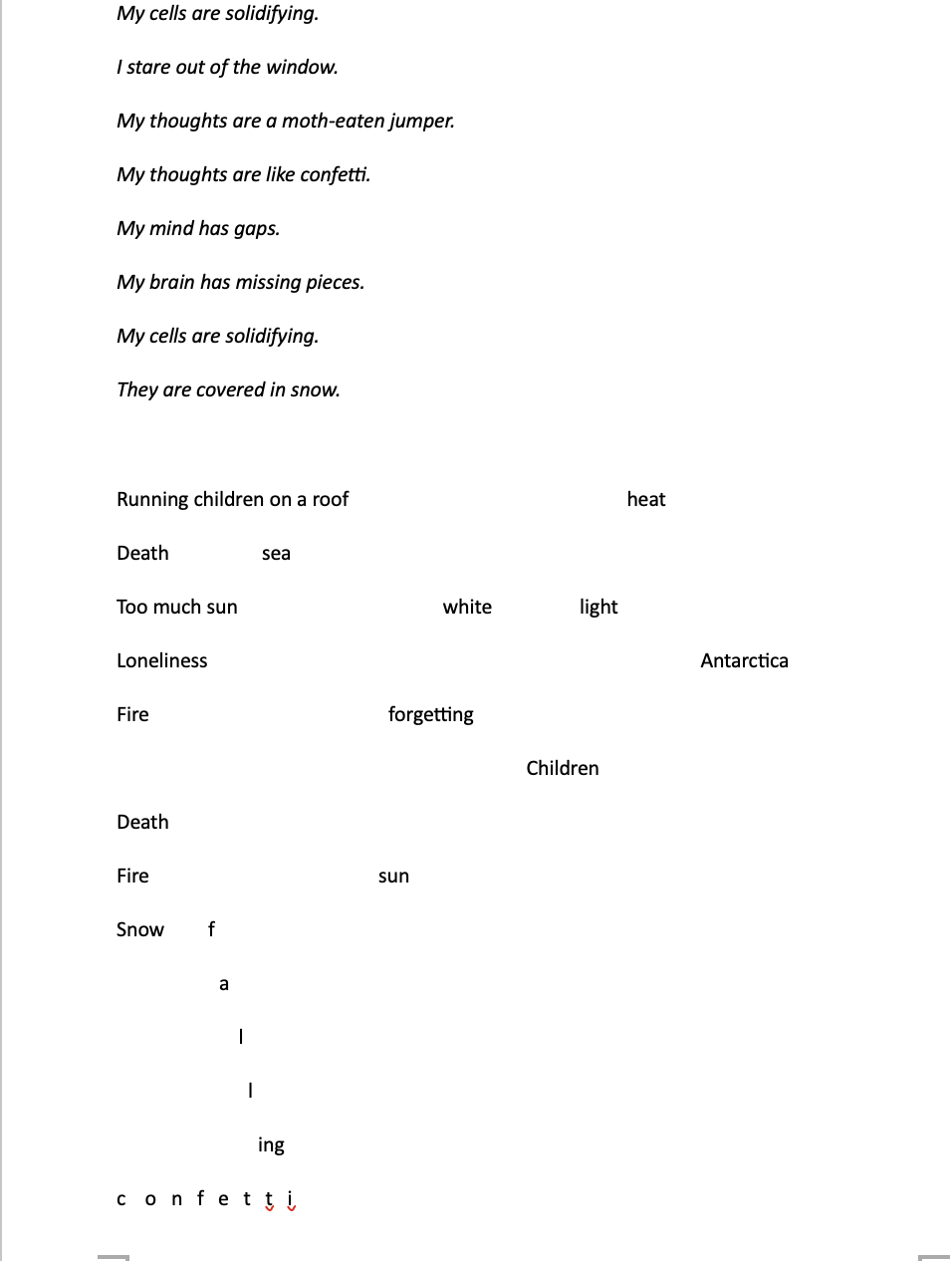
I had always thought that I would never leave the island. Too many memories of love and pain. I am not the same now, my thoughts are more like the moth-eaten jumpers I used to wear in the war, bits missing, and I don’t know how to repair them. I have moved to the mainland to be near my son. Devon is green and pleasant, but it is not home. I get confused and have ended up in a care home. Sometimes a tall thin man with receding hair visits me. He says he is my son. I say, but Philip you are dead. He replies that Philip was his brother. I think I used to write letters, if I could only find them, I would regain my memory. I find an old slip of paper in a coat pocket, but it is blank.
Letter One- The Beach
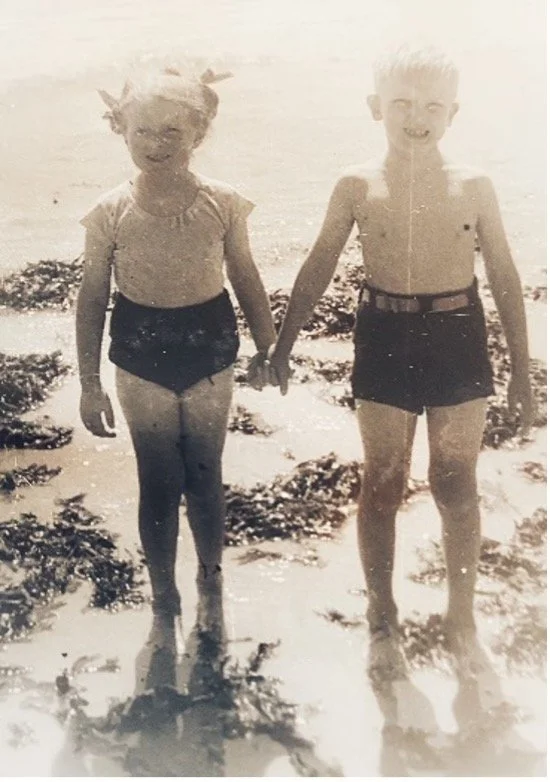
You stand holding hands like the butterfly shells that you have been collecting on the beach. You don’t want to break the connection. You are unfocussed outlines against a bright seascape, fizzing with joy, popping and sliding on the slimy Vraic seaweed on the beach at St. Ouens. Like all children you are seen through the veil of my adult understanding. Have I dressed you the same, you are both wearing knitted or ruched trunks that lose their shape once wet. But one is a boy and one a girl. You were playing hide and seek and as I watched you head for the waves, the breeze lifted the sand, and it formed eddies round your ankles. You turned briefly for this photograph to be taken, then continued seaward. Long shadows lengthening across the wet sand as you run across worm casts and mini estuaries. The sunlight was so strong that your images were burned to nothing the further away you went, unaware of your futures.
I used to have a mouse back in Belvedere Terrace. It nibbled through newspapers and food packets leaving a confetti of words and crumbs in the pantry. It was a little terraced house with a red and cream stripey chimney. Three domed- shaped windows on the top floor and a bay window below, I loved it and my family grew.
Letter Two- Philip
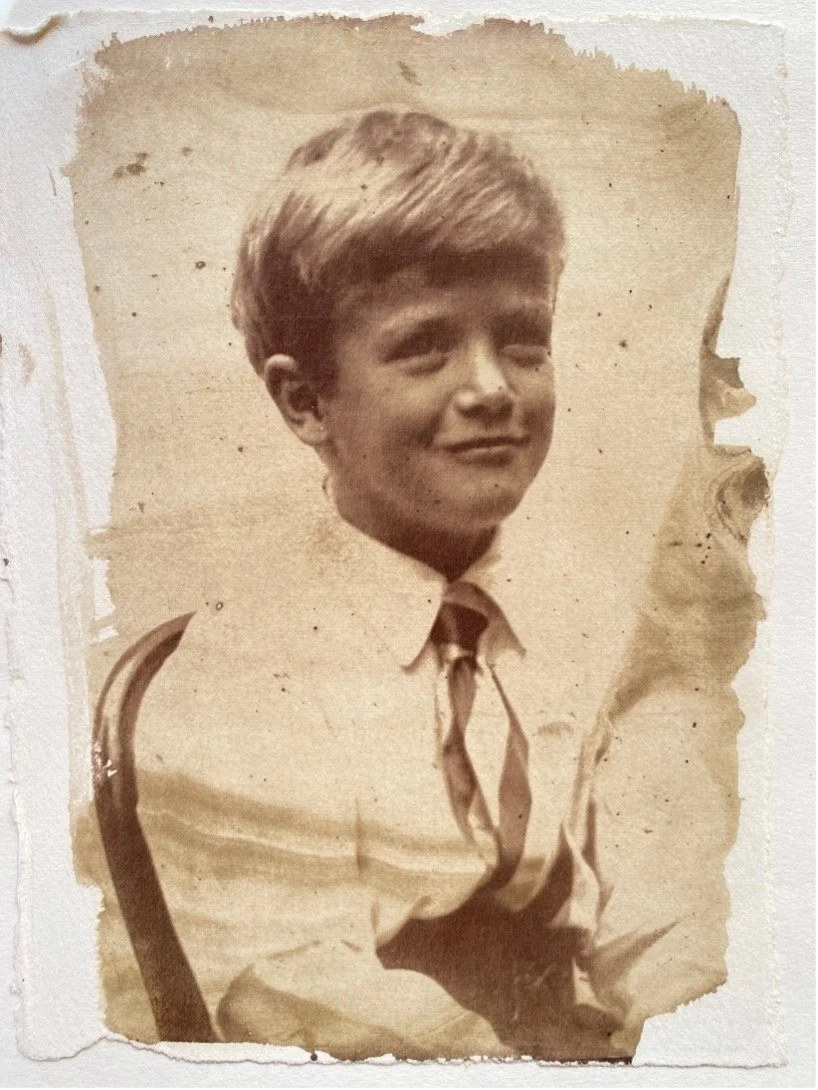
He is running, the warm air slip streaming over his naked body.
- Catch me if you can-
I hear him calling to his younger brother as he dares him to run around the roof parapet which he knows I forbid. He keeps running, and they race back to the beginning and repeat again and again until their lungs burn and their legs give out and they collapse onto the roof tiles. The tiles feel warm and the sun has bleached their hair and turned their skins golden. There is a taste of salt and sweat in the air.
Now the bedroom curtains are drawn to prevent this same sun from hurting his eyes.We take turns watching over him. Through a crack in the curtains a shaft of light illuminates the blue and white jug and bowl and the pile of flannels we dampen to cool you. To one side I can see your paint box. The last picture you painted was of a long tree lined road disappearing into a dot. There are spindly trees on either side and a russet coloured roof. Two figures walk into the distance. Are you walking away from me? You are finding it hard to breathe. I can feel your heart racing as you strain and cough , only able to take in small sips of air as your throat narrows. I hear you calling – Catch me if you can- but I can’t. A door is closing and I don’t have the key.
I am unable to think in sequence. Memories pass by like a ticker tape parade or the poppies that fall silently in the Albert Hall on Remembrance. I find an old newspaper, The Park Mall Gazette of 1905. It talks of a family death from diptheria. A young Doctor giving his life in a London Hospital to save a boy. I crumble the paper into an angry ball. You didn’t save my Philip


Snow Falling
I remember the post card coming just after my little girl was born. It was a long road for the postman, and he came by bicycle. My friend didn’t know we would name her after myself, so she wrote ‘Welcome little girl’. It was stamped Sydenham and had a famous photograph on the front of Ernest Shackleton, her brother. It was the furthest south he got to in Antartica with the Queen’s flag hoisted at 88 degrees 23’S longitude, 162 degrees E. All very patriotic. I can remember the feel of the card and the baby being so small, but I can’t remember what I ate for breakfast today. I can feel snow falling silently, covering words and memories and faces and places. It forms ice that spreads across my mind like on a windowpane.
With no warning I am back on the island. It is cold and I’m looking for wood. It is war time and we are living through the German Occupation.
Letter Three – 1945
The whole island is suffering after years of the German Occupation. I am on my own after the death of my husband. A red cross letter has been sent to the mainland to inform my son. People are dying of malnutrition and the cold. I am going to the nearest beach by foot. There is no heating at home and I need to find some wood. The plywood containers which house red cross parcels have all been distributed to the poor but I am not on the list. It has been ordered by German Command that illicit cutting and gathering of wood is forbidden to all even if it is on your own land. I am taking a risk as I walk down the slope through the dunes hoping to find burnable debris after last night’s storm.
The soles of my shoes are wearing through, and I can feel damp cold sand wriggling with my toes. I have got old gloves on and have put layer after layer of worn jumpers under my coat to stop the wind cutting me to the bone. I have found a sailor’s duffle bag at home and have slung it over my shoulder to carry kindling. I have a rope in my other hand, curled around my forearm. The beach is thankfully deserted and the bag fills. I see a large pine branch, whitened with salt, all its protective bark stripped off by the sea. It is as tall as I am and ungainly. I didn’t bring tools as they could be confiscated. I loop the rope around the middle under the side branches and tie knots I learnt when sailing. I begin the long drag home.
I’ve made it through the dunes and onto the track when I hear the engine. I keep my eyes to the ground as only Germans and a few essential workers have access to fuel. My chest feels tight as the truck stops beside me.


- Where is your home?-
The young driver reminds me of the my son who died, the same floppy blonde hair over the eyes. I am honest as he can demand to see my papers.
Hop in –
He helps me into the cab and puts my bag and the branch into the back. There is silence between us until we turn into my road, and he jumps out to help me. He is very thin as he too has very little food and his uniform hangs off him.
- Next Wednesday evening we will be doing a radio check here –
He bows with a slight click of his heels, softened by the caked mud on them. I watch him reverse and go on his way. My daughter comes out shaken at what she thinks she has seen. Together we drag the wood into the back garden for privacy.
My mind has gaps. I have missing pieces in my family too. My son died of diptheria, my husband died in the war and the little girl on the postcard became a mother herself. Tragically she died after a hospital fire.They had not realised when they moved her to safety that she had a blod clot after the birth of her second child.The new baby was looked after by the Father and I brought up the older sibling. I never wanted to leave the island but the granddaughter I helped bring up, left for Australia as soon as she was twenty one. So many holes in my life, like those in my war time jumpers.
Shackleton never reached the south pole. He was remembered for how he lead his men and looked after them when his ship Endurance was trapped in ice. I feel trapped too, more and more of my cells are freezing.
XXXXXXXXXXXXXXXXXXX