Bio
Born and brought up in Kenya, Fiona Campbell is now based in Cranmore, Somerset, UK. After graduation from Byam School of Art (Fine Art: sculpture, distinction), London in the ‘80s, Fiona worked from her studios in London, later doing a PGCE (secondary, art) at Exeter University. She spent years teaching and subsequently raising her son as a single mum.

In 2018, Fiona gained a Masters in Fine Art (distinction) at Bath Spa University. She was an Ingram Prize finalist 2021, recipient of a Royal Society of Sculptors Gilbert Bayes Award 2019, and received the Red Line Art Works Award 2020 for her environmental sculptural installations Glut, Accretion, Snakes and Ladders. She exhibits throughout UK and internationally and is a Member of Royal Society of Sculptors. Fiona is a Member of the Royal Society of Sculptors, Fiona was shortlisted for Cass Art Prize’25; received a Gilbert Bayes award ‘19; was an Ingram Prize finalist ’21; and gained an ACE DYCP grant ’22/‘23. Recent exhibitions: WAC Installations (Chapter House, Wells Cathedral); Cass Art Prize, London; As Old as the Hills, Somerset; PADA, Portugal; Wander_Land, Tremenheere Sculpture Gardens, Cornwall; Together We Rise, Chichester Cathedral; International Biennale, NCTRI Taiwan.
Exhibitions:
One Island - Many Visions, Tout Quarry Sculpture Park & Nature Reserve & Drill Hall Gallery, Portland, 6 Sept-31 Oct
Wells Art Contemporary, Wells Cathedral, 8 Oct-1 Nov
Cass Art Prize 2025, Copeland Gallery, London, 24 Oct-1 Nov
Bath Society of Artists Open Exhibition, Victoria Art Gallery, Bath, 18 Oct-10th January
1 - Could you explain your practice?
I’ve always had a love for nature, especially fellow creatures, who were my companions growing up in Kenya. After raising my son as a single mum, and teaching, I returned to my art practice, and completed an MFA in 2018.
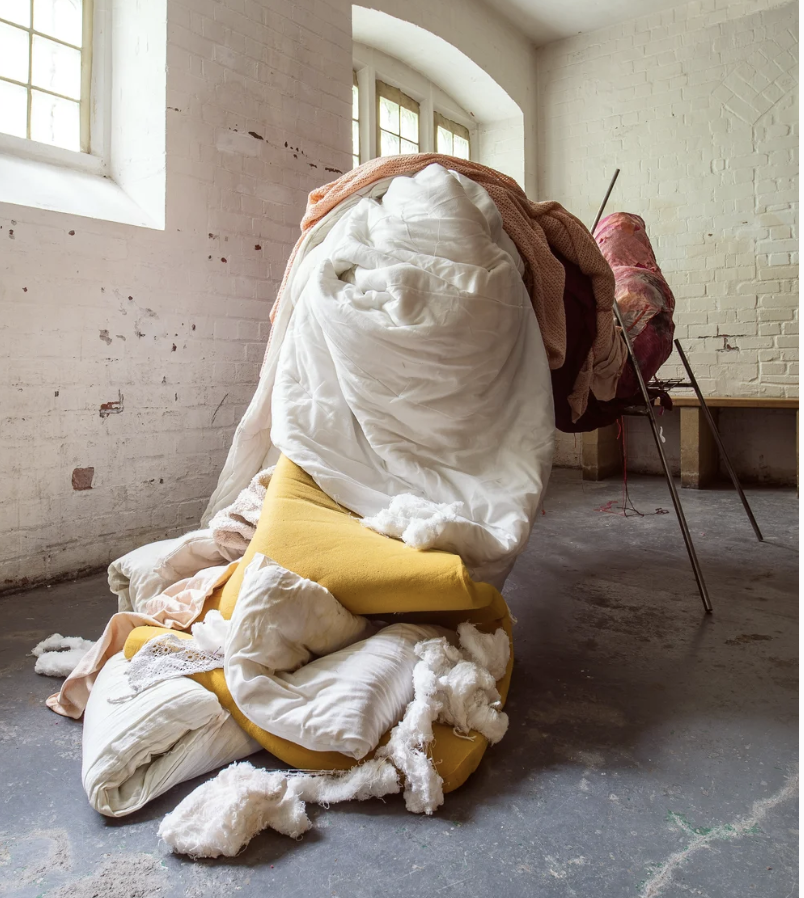
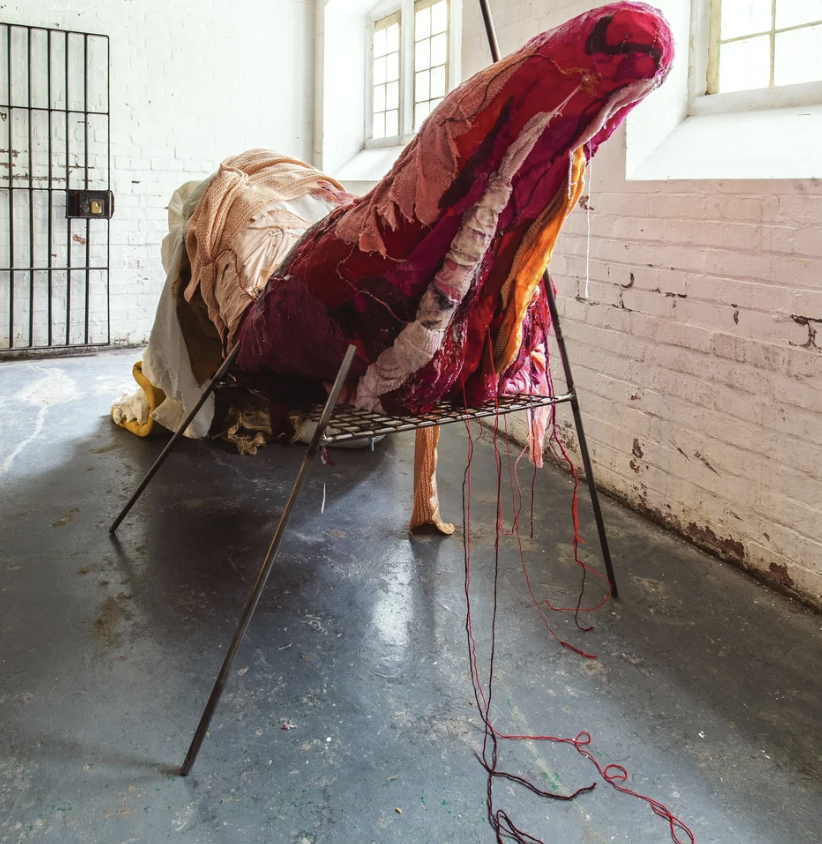
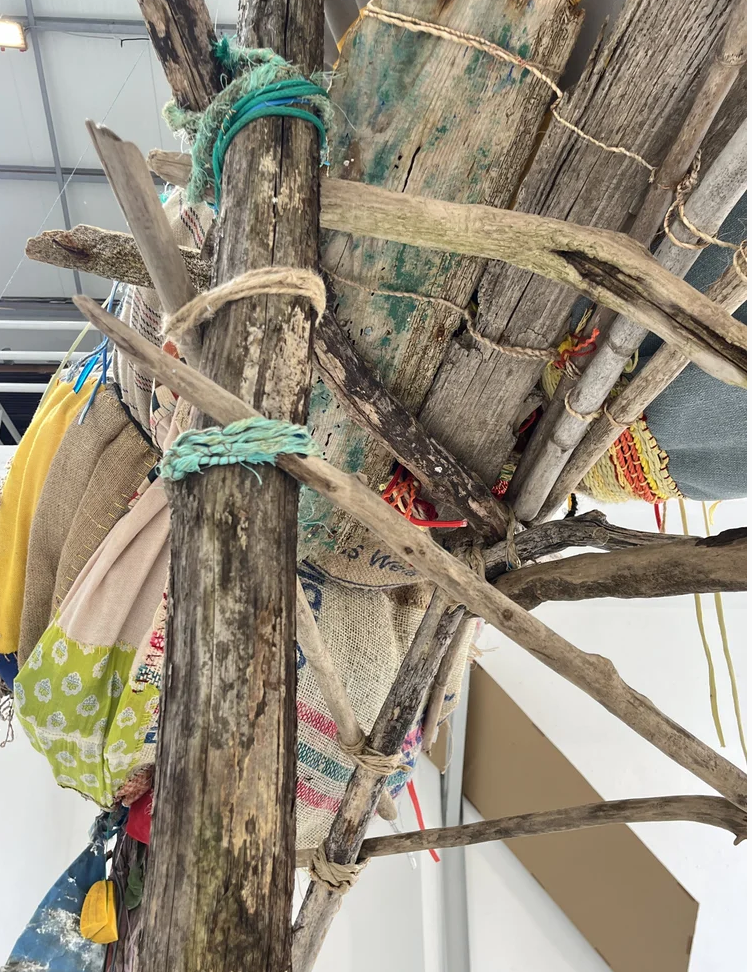
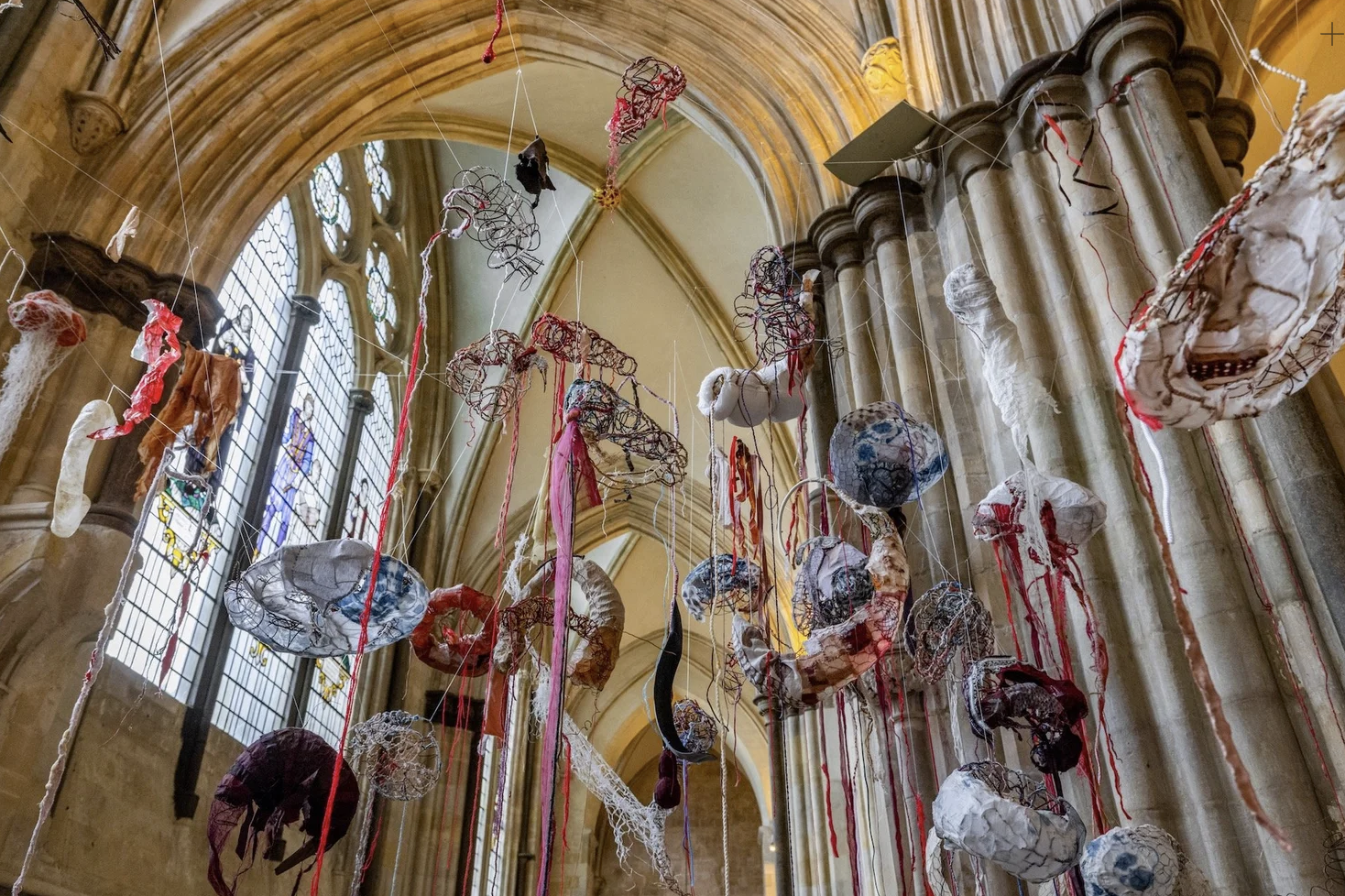
I merge sculpture, drawing, installation and textiles. Rooted in the notion of life’s persistence, interconnectedness, and transformation, my work focuses on climate breakdown, human exploitation of nature and over-consumption, which have led to mass animal/plant extinctions. Materiality and process are key. My emphasis on re-appropriating found, discarded, reclaimed items relates to waste, our relationship with matter, nature, and ourselves. I regard materials as non-hierarchical, questioning value systems. Labour-intensive processes (weaving, wrapping, hand-stitching…) are forms of 3d mark-making, drawings in space. They refer to line as energy, threads through all things. My approach is a form of suturing, artivism, care and repair, giving abandoned objects new life.
I enjoy creating site-responsive work in interesting spaces. I work with community, teach and curate large-scale art projects and exhibitions, involving collaboration and public engagement programmes for diverse audiences.
2 - Is art relevant today?
More than ever. The arts have a tradition of sparking cultural change, disrupting the status quo and creating space for new ideas. Art is political. Art can effect change through responses celebrating the environment and inspiring urgent action on climate change.
Art can be transformative for audiences and makers, by altering perspectives, fostering empathy, providing catharsis, and challenging established norms.A growing body of research, including a major review by the World Health Organization, increasingly provides strong evidence that art is beneficial for health and mental well-being
Art is essential.
3 – We are always asked what other artists influence us, we want to know what art you don’t like and which influences you?
I’m not so keen on generic anime or fantasy digital art. I veer away from cutesy art, unless it has an underlying irony.
Brought up in Kenya, I’ve been influenced by African art, using and transforming found/to-hand materials. Artists who have influenced me: Hieronymus Bosch, Louise Bourgeois, Eva Hesse, Alberto Giacometti, Graham Sutherland, Phyllida Barlow, Paul Klee, Berlinde de Bruyckere, Leonardo Drew, Wangechi Mutu, Sarah Sze, Cornelia Parker, Judy Pfaff, Hew Locke and many more.
I like contemporary art that bridges different disciplines. And materiality - seeing the hand of maker. Art that resonates with me usually has emotion in it, or care, or utilises space in an interesting way. When looking at art I’m influenced by the space/architecture surrounding the work; how/where it’s displayed. I loved seeing Sonia Gomes’s work at Pace Gallery last week - trailing torsions against a deep crimson wall.
4 - If you could go back 10-20 years what would you tell your younger self?
I think the main things would be: be kinder to yourself and others. Know your strengths, be confident with who you are. 10/20 years is a little too recent for me. I would go back a lot further and tell myself to work harder at what I love doing, go out of my way to experience more art, don’t fritter away time, or money.
5 – If you could go forward 10-20 years what do you hope to have done or not done?
I like the mystery and surprise of what life brings to us. In the near future I’d love to have a solo show in a fabulously interesting space. Later perhaps show in Regents Park for Frieze Sculpture, YSP’s 18th-century Chapel, Tate Hyundai or Duveen commission. Then represent Britain in the Venice Biennale!
Being more realistic: I’d like to see more of the world, make and show art in more unusual places. And be represented by a caring but high profile gallery. I want to inspire, provoke conversations and present positive alternative future imaginings to engage people and promote conscious living.
I hope to live to be a grandmother.