
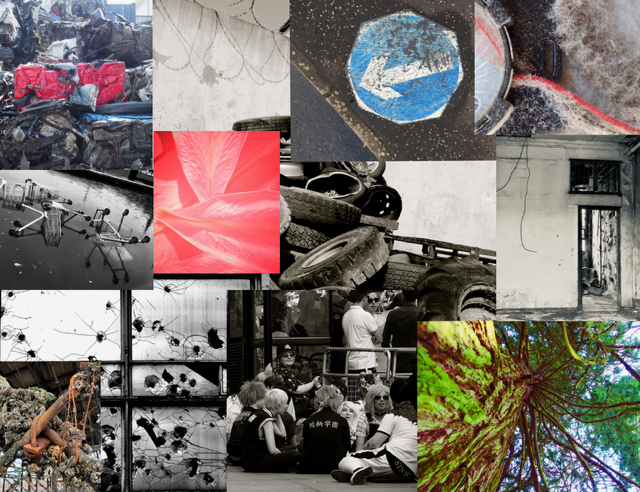
In this issue, the focus is on Photography and how the photographer can reveal unseen perspectives. In a world saturated with images and stories, we sought work that shifts the angle—literally or metaphorically with images that challenge the viewer to look again, to question what they think they know, or to see something that usually goes unnoticed.
This issue asks:
What becomes visible when we change our vantage point? What truths or fictions emerge from the margins, the shadows, the overlooked, or the unspoken?
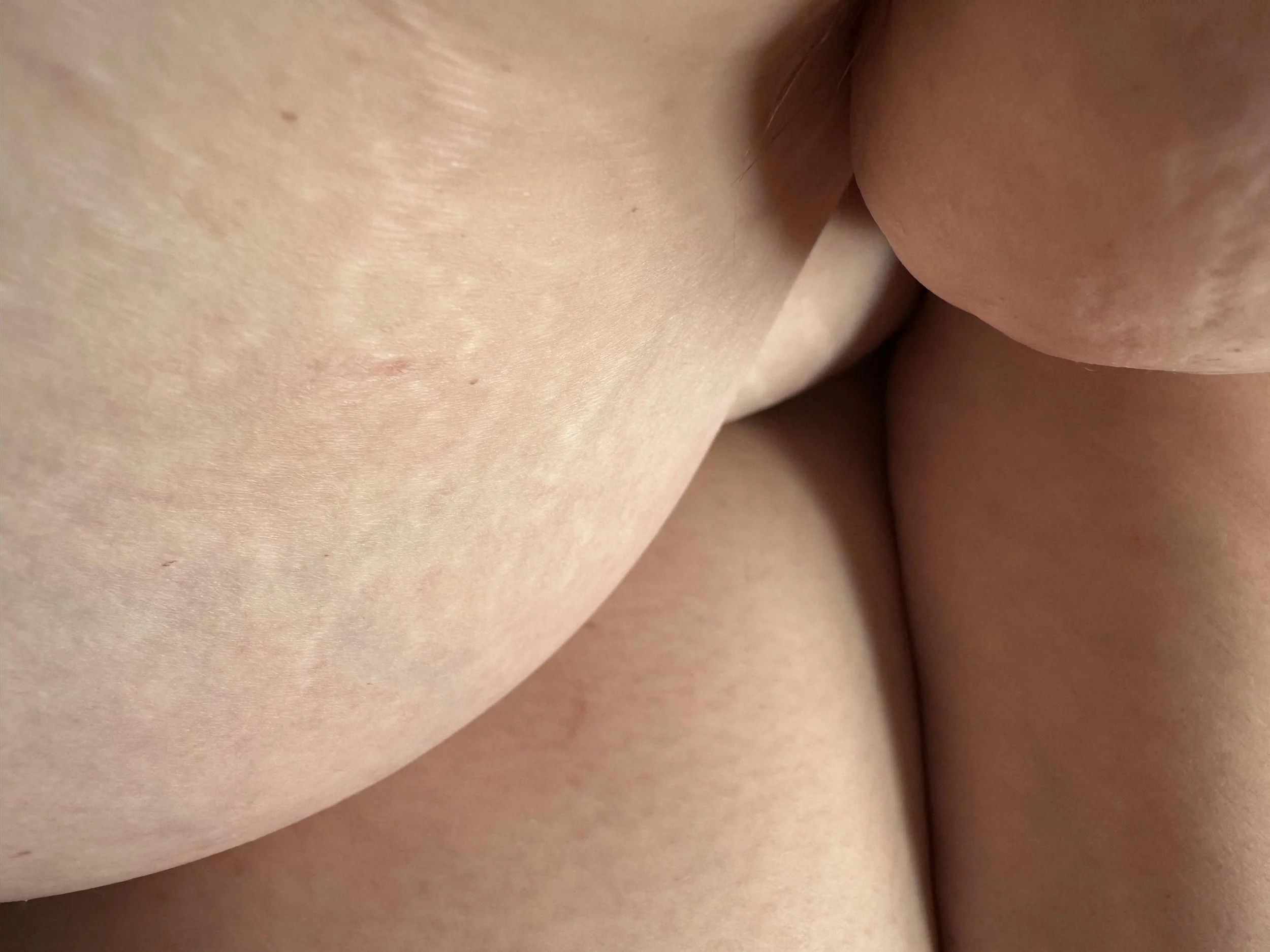
Artist: Sammi Fletcher
www.sammifletcher.co.uk
Scream From The Top
Description: We are violent to ourselves with our mobile phones, discarding bits of ourselves and throwing ourselves away. Reinforcing our bias with the supposed amelioration of our images. This is part of a series of photographs that celebrates the bits we hide, that don't fit - that sit outside the societal lines. Taken from a mobile phone - this is a play on the self-portrait, the alternate selfie. Unedited photos of my own naked body, taken from unexpected angles. An abstracted section of the female figure.
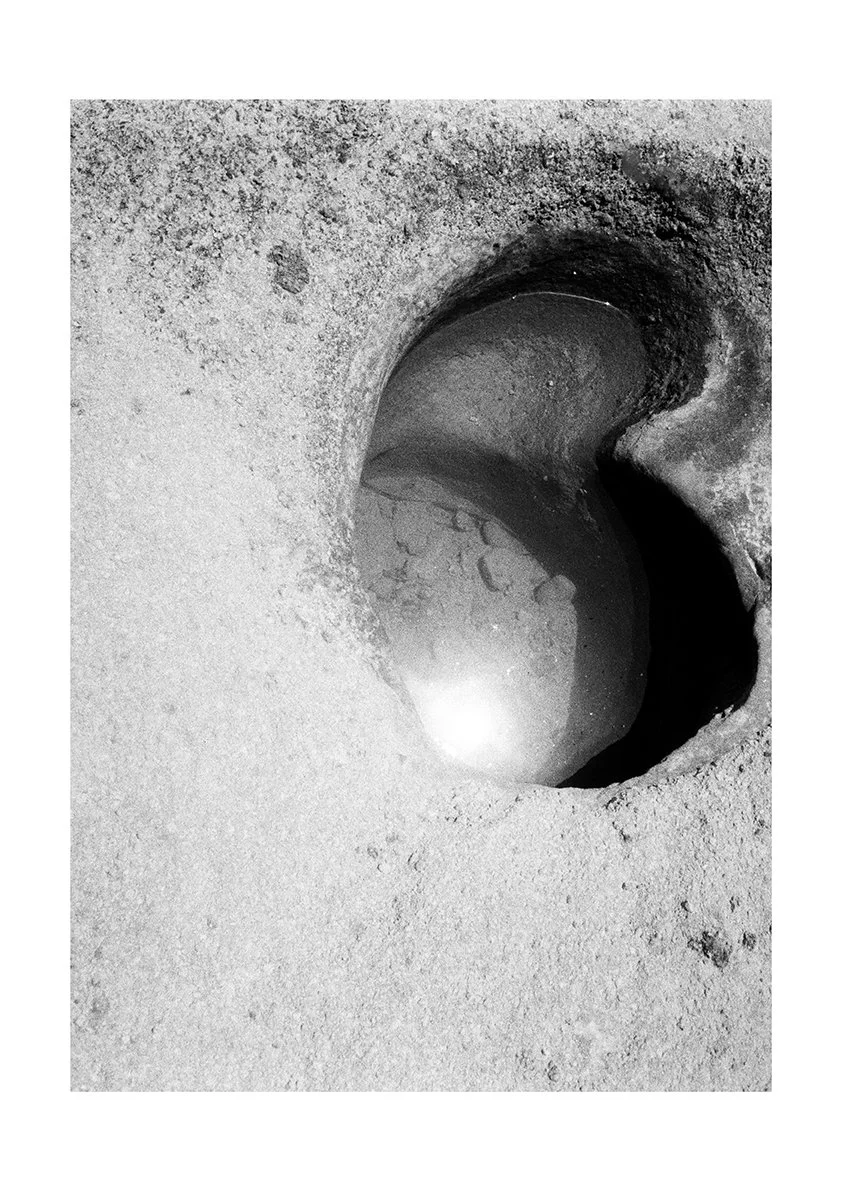
Artist: Rachel Letchford
Description
”In A Sprat to Catch a Mackerel” Letchford plays with visual bait—fragments, hints, and surface gestures that invite the viewer closer. The work reflects on how photographs conceal as much as they reveal, offering minor truths as lures toward larger, hidden ones.
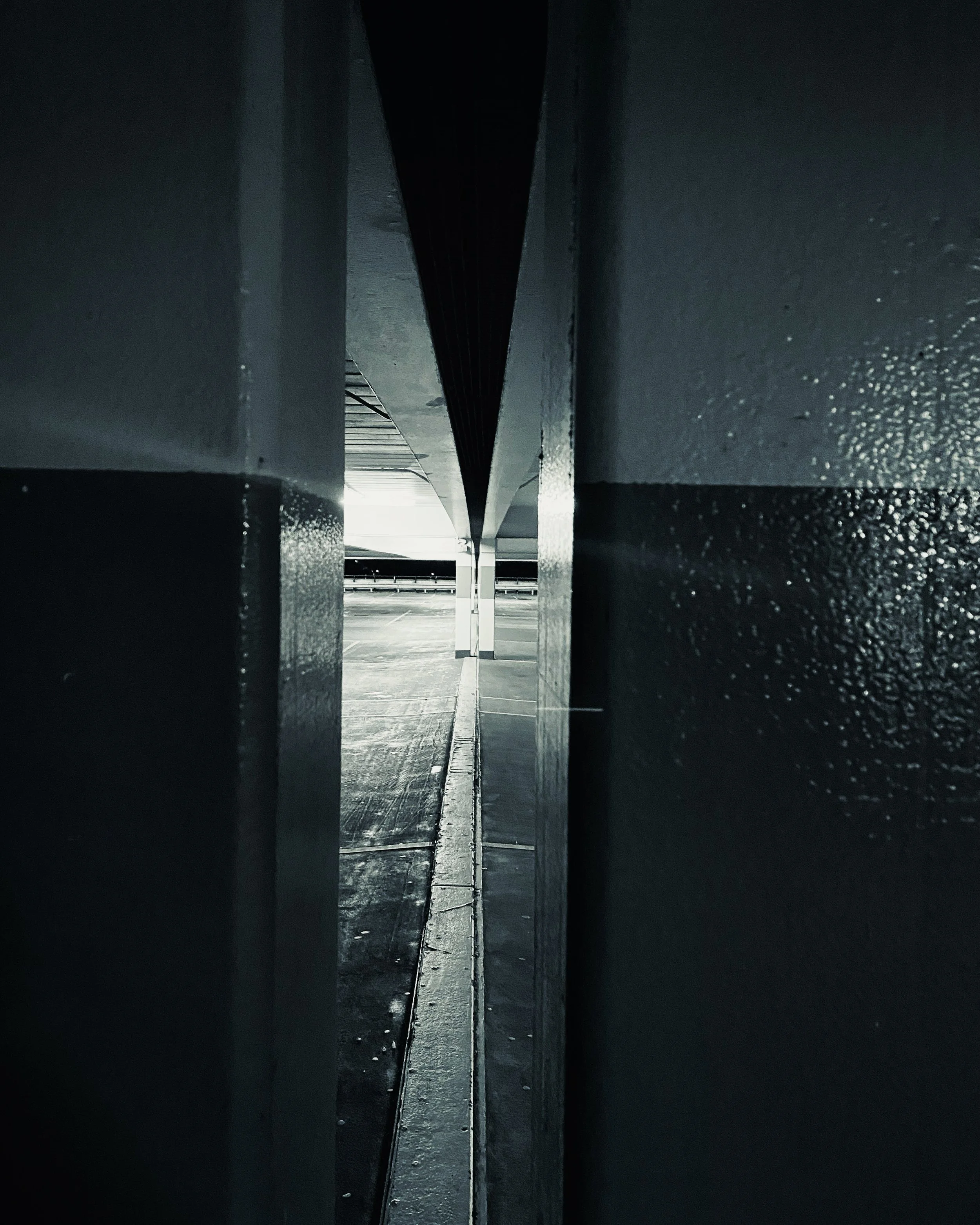
Artist: C L Davies
Www.cldaviesartist.com
“Parallel, 2024” examines a narrow architectural divide, where the tension between shadow and illumination shapes a moment of suspended calm. Rendered in monochrome, the space becomes distilled to its essential lines and surfaces, revealing a quiet geometry at the edge of perception. Created as part of a wider photographic project investigating liminality in urban spaces, the work reflects on the subtle thresholds that structure the city’s transitional zones.
Artist: Kristina Žetko
www.kristinazetko.art
Brainstorm - a sudden state of being unable to think clearly
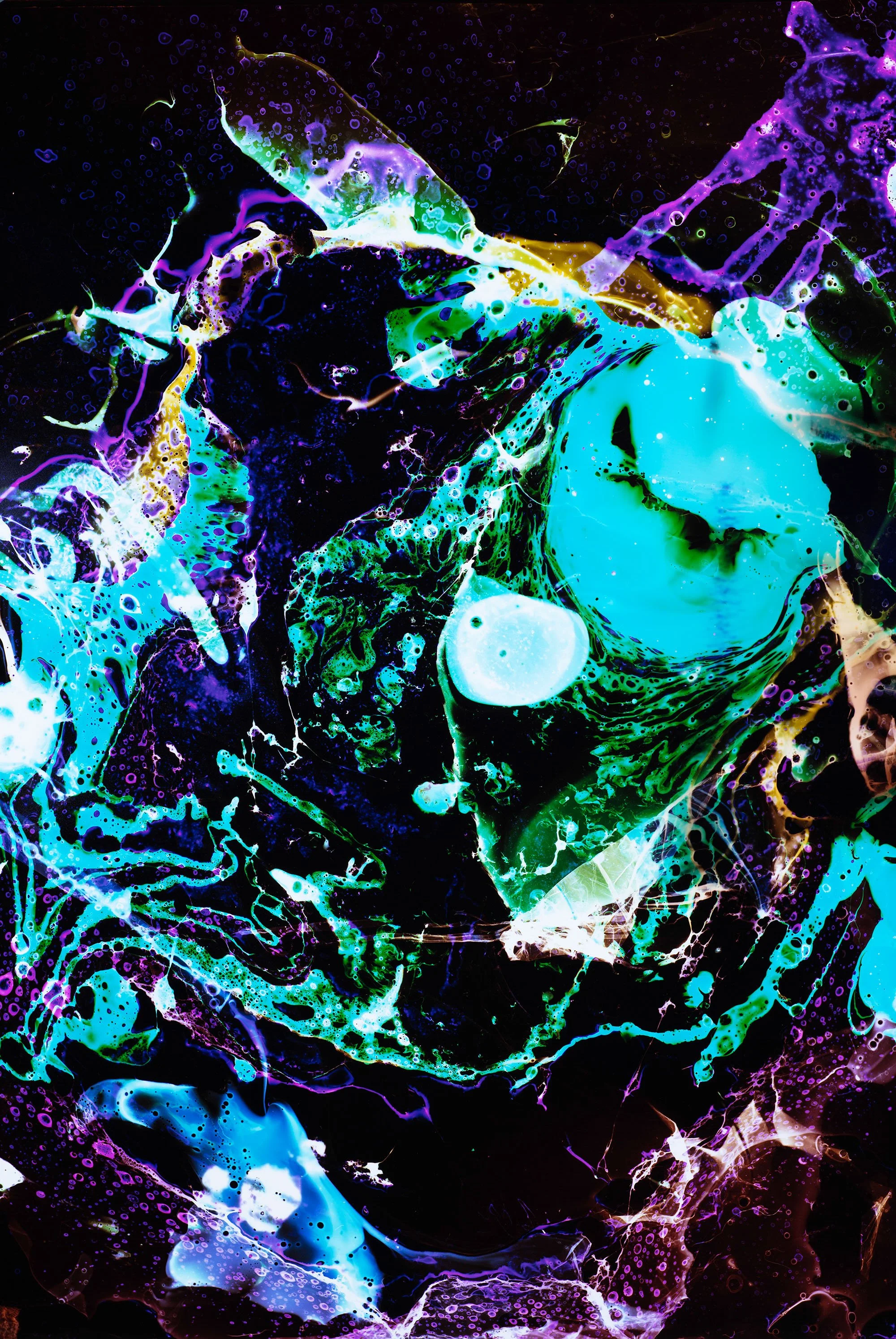
Brainstorm is an ongoing analogue cameraless photographic project centred on the sensory and emotional experience of epilepsy. The photographs are created using a unique technique of exposing light-sensitive paper with hand-painted negatives. Looking at my works, one might not immediately recognise them as photographs and I believe that is precisely what adds charm, stirs curiosity and invites viewers to rethink the boundaries of photographic art.
The title and theme of the project relate to epilepsy, a neurological condition that causes seizures. I draw inspiration from my personal epileptic auras, translating these sensory "glitches" into abstract visuals. Even though epilepsy can be stigmatised and perhaps a bit frightening, I choose to interpret it in an aesthetic, even beautiful way through vibrant, colourful motifs.
Brainstorm connects to the theme “Unseen Perspective” through its visualisation of epileptic auras - sudden, déjà-vu-like moments when reality and imagination blur. These experiences are entirely invisible to others, and by transforming them into images, I offer a glimpse into a sensory world that usually remains hidden.
I developed epilepsy at the age of 22, without any previous signs or particular reason. Over time, I have adapted to something I cannot prevent or predict. A significant part of this adaptation has taken place in the photographic darkroom - a calm environment where time slows down, allowing me to work alone in the dark and focus fully on the creative process.
Through darkroom work, I find a way to visually interpret a sensation that cannot be seen or understood from the outside. In this way, Brainstorm reveals an unseen perspective: an experience that is usually hidden from others.
Brainstorm no. 17: Reproduction of an analogue C-print from the Brainstorm project. Size: 75x112 cm The print was created in a colour darkroom by exposing light-sensitive photographic paper with a hand-painted negative (approx. 7 × 7 cm). Edition of 1 + 1 artist’s proof (AP).
Artist: Elizabeth Jordan
Www.lizzyjordan.co.uk
Title: Macroscapes Series
I create Minumental artwork that explores how humans perceive extremes of scale. ‘Minumental: working with small things to create something monumental in feeling or scale.’
The work uses photography, sculpture and light. All works play with perception, allowing viewers to imagine and create alternative readings of space.
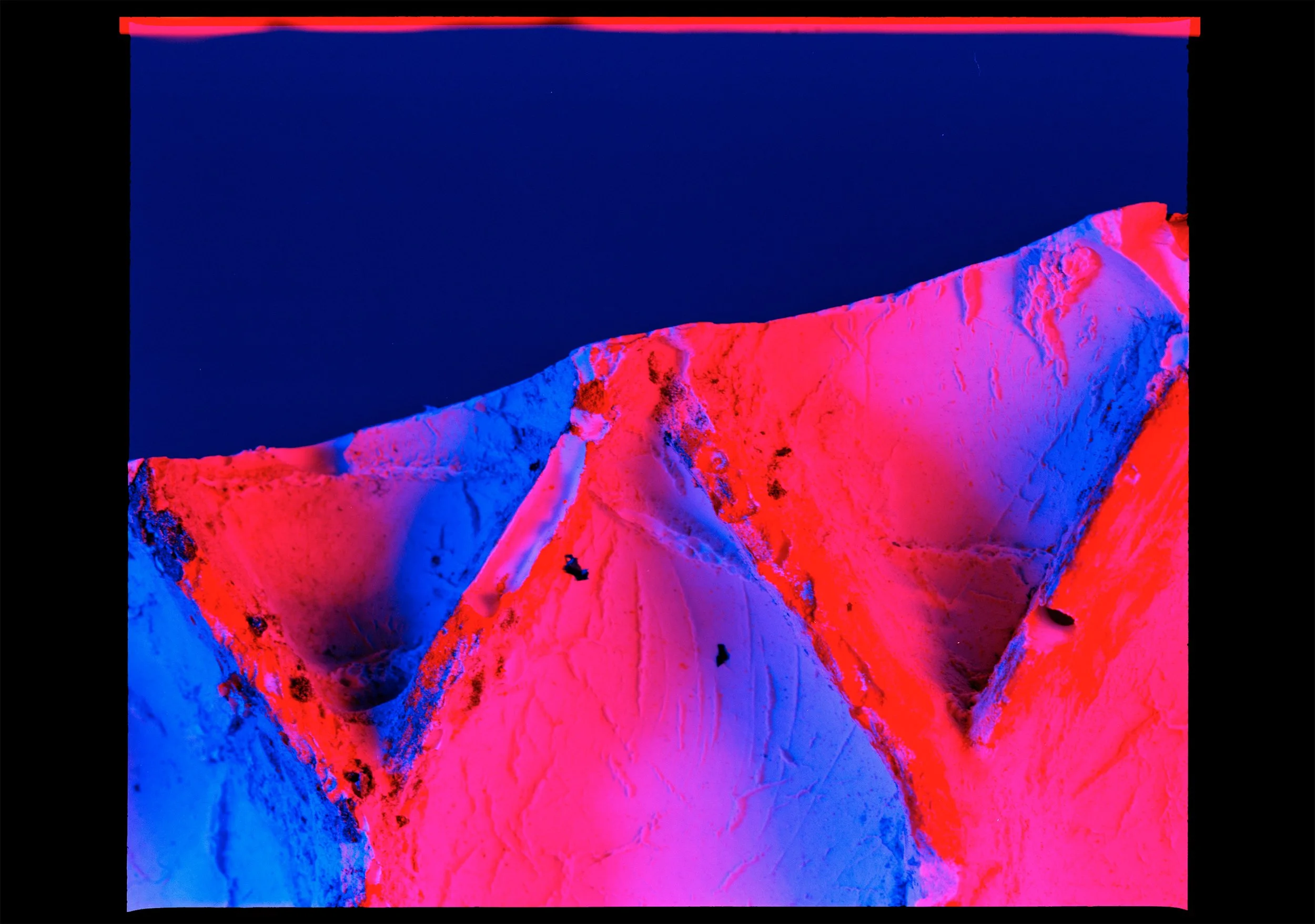
This Macroscapes series uses macro photography with micro-sculptures created from plaster prints and gilded metal. The small objects morph into barren landscapes through the lens that evoke a sense of extremities - Atlantic glaciers, deep caves and mountain ranges. The image quality is heightened with the softness of analogue photography; Mamiya RB67, Kodak 190 colour film.
Without held knowledge of production, it becomes difficult to place what, where or how it is.
Image 3: Kodak Portra 190 (Medium Format). Mamiya RB67
Artist: Bill Aitchison
https://www.tumblr.com/chinaquickfix/ www.billaitchison.co.uk
China Quick-Fix. Sign Fixing
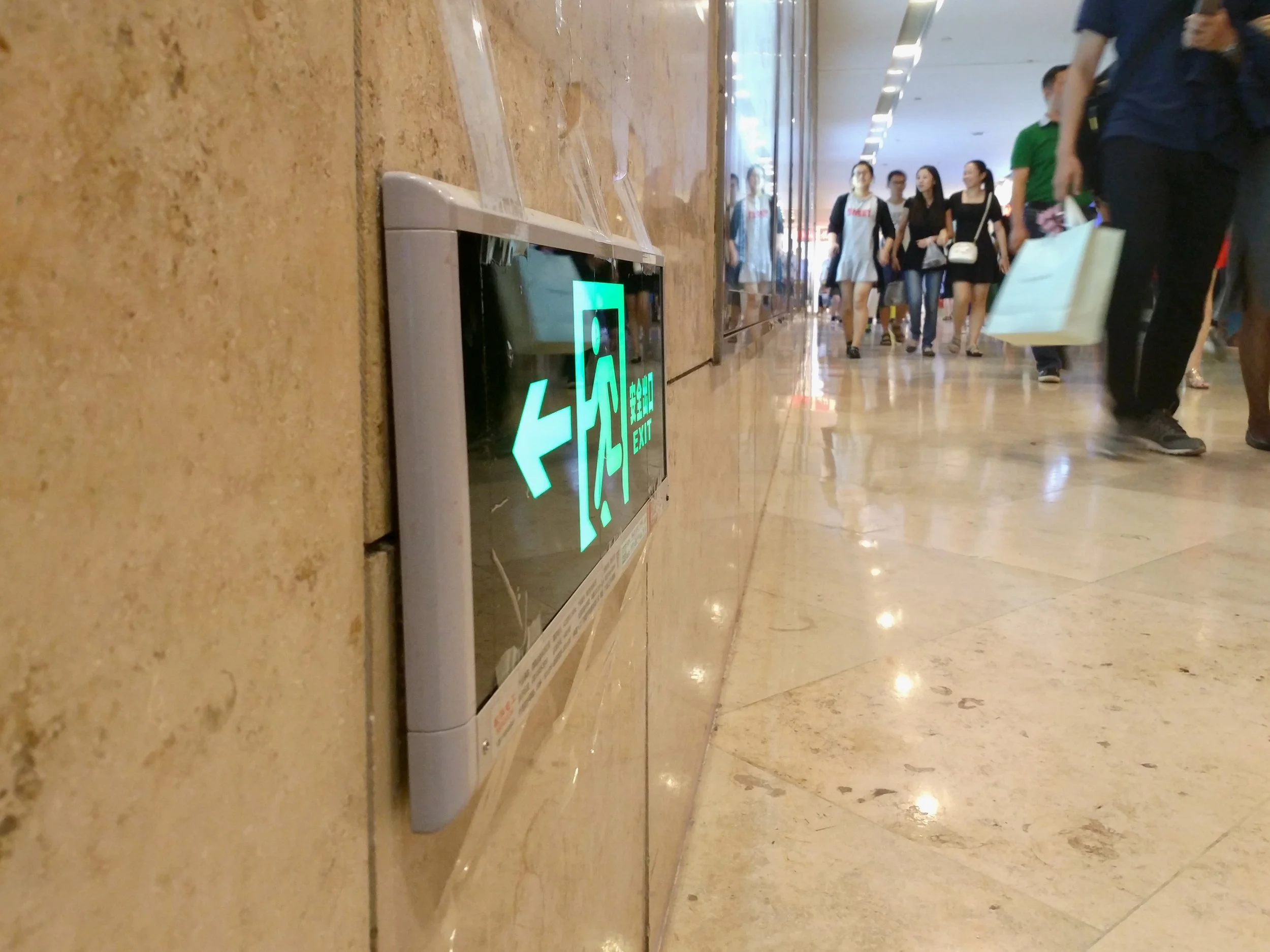
China Quick-Fix is a photographic archive of solutions to everyday problems in China; as such, it showcases both common issues and their resolutions. Because these are petty and functional, they are usually ugly and go undocumented: it is something you do but don't talk about. At the same time, these are ubiquitous so they a type of visual unconscious of the society. The uploading on this site didn't work properly, and I would not choose these precisely now; they are somewhat older ones. For the broader collection, look at the tumblr site. This has been the subject of several solo exhibitions, a book and talks sponsored by SOAS China Institute, Confucius Institute and Cambridge University.
Tape and exit sign. Nanjing
Artist: Lucas Rebelo
Linktr.ee/lucasrebelo
Instagram & YouTube: @luqalbuq
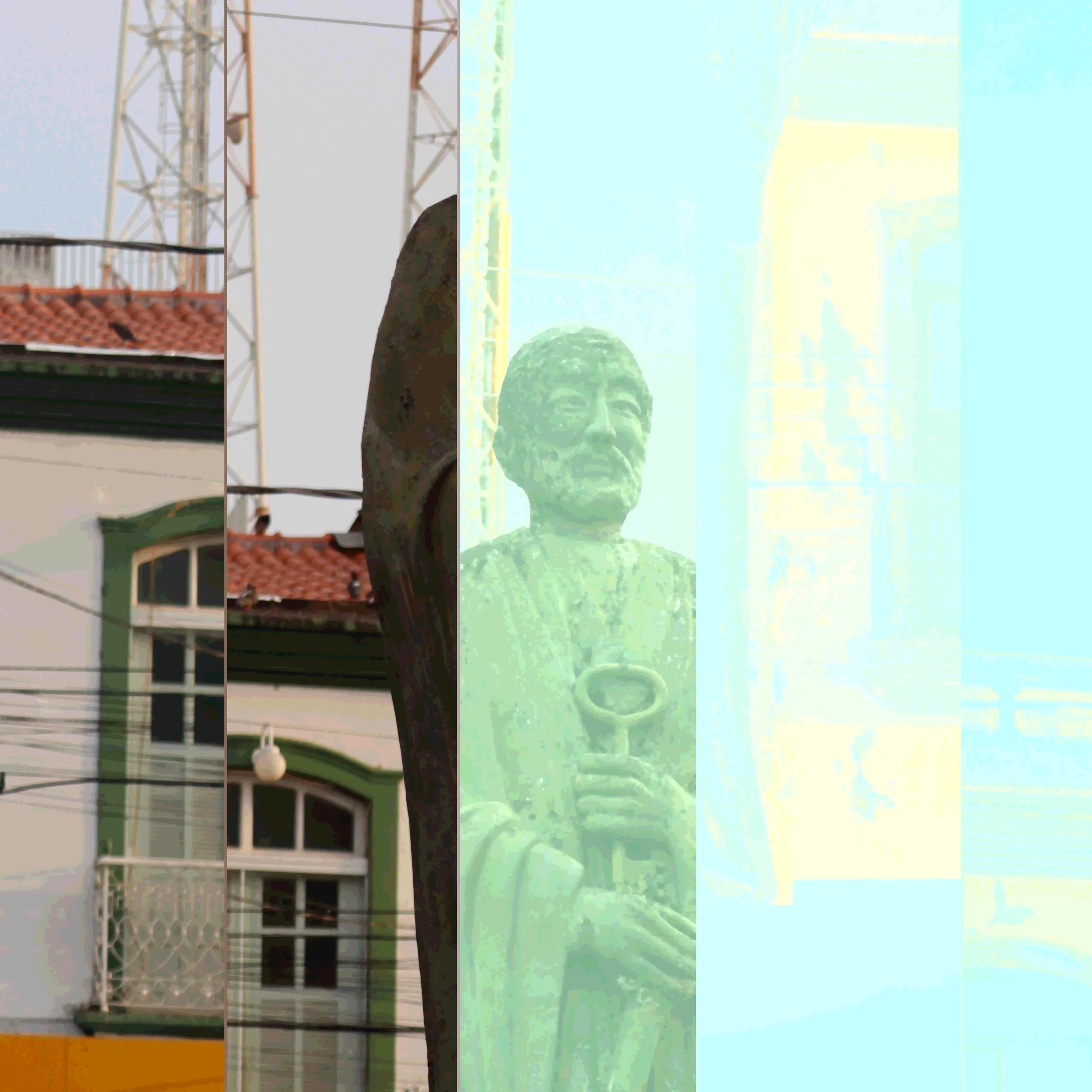
“Corrompido”. Description: It was a normal photo, but my computer broke, and some photos got damaged. Some turned out nice, like this one. Translation: Damaged.
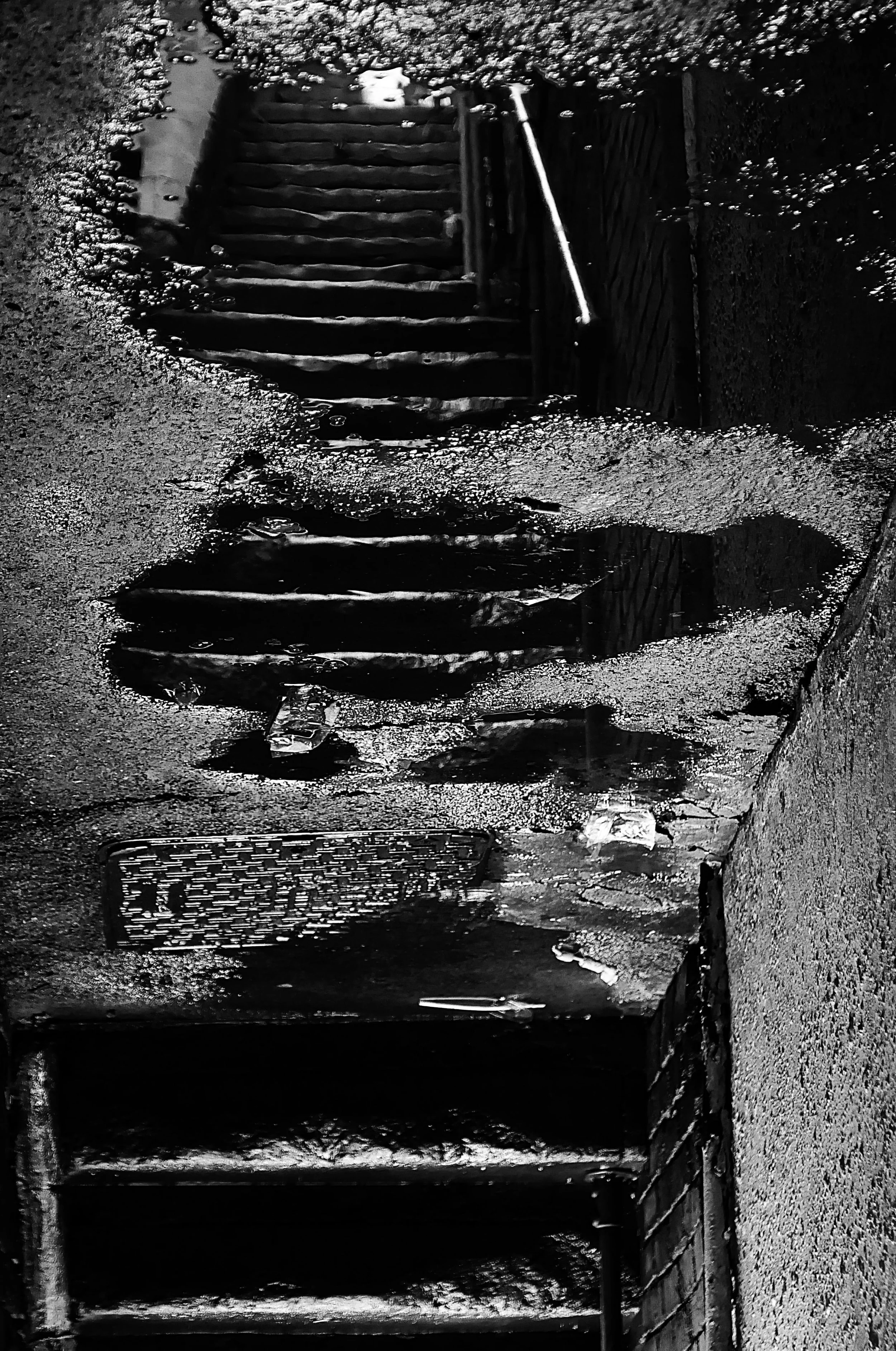
Artist: Gary Willis
"The Steps of Escher"
Description: Up or down? Down or up? Like M. C. Escher's drawings, perspective and perception reveal 'another life, another galaxy'.
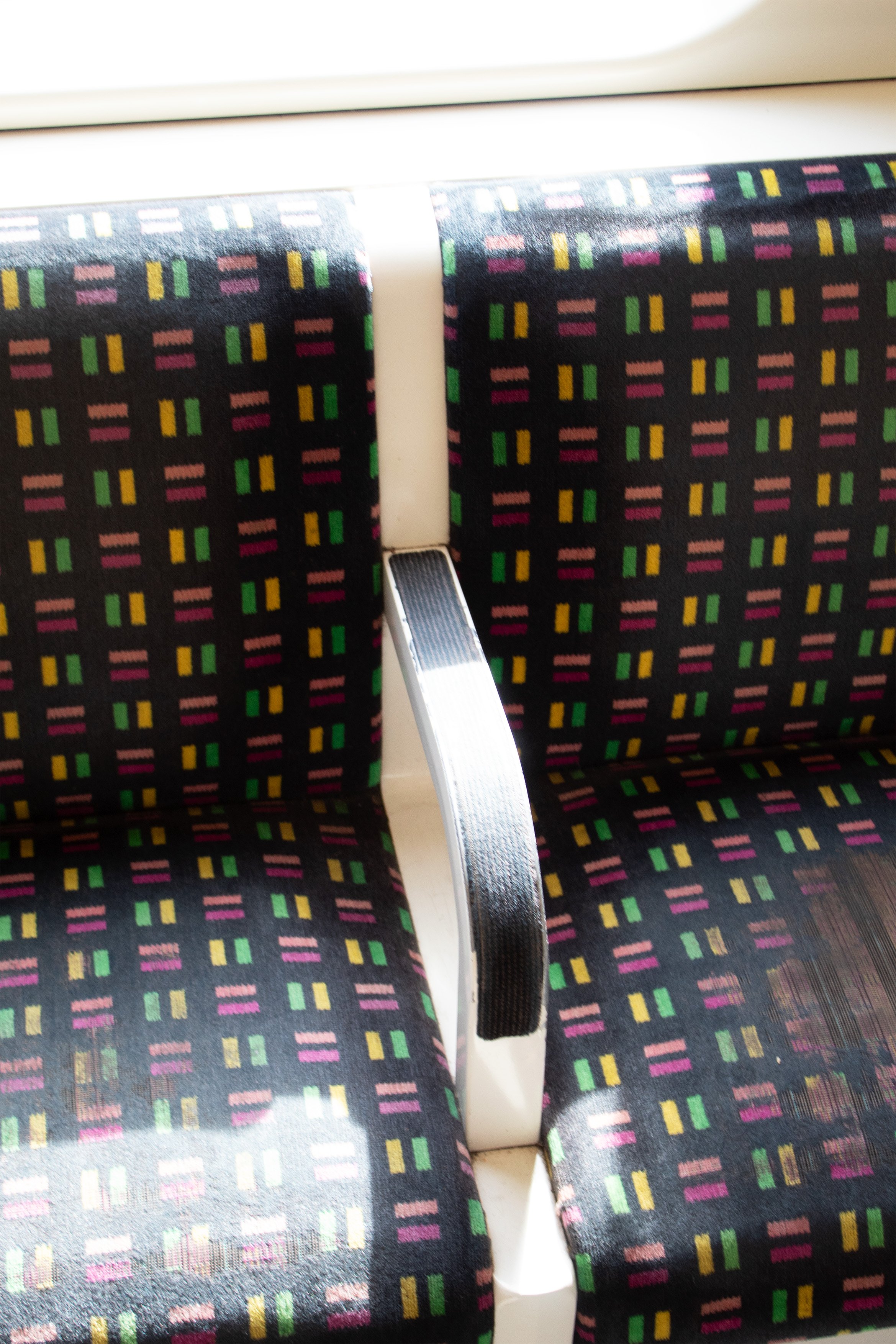
Artist: Eileen Jamieson
https://www.eileenjamieson.com/
“Seats”. Description: I spent months going back and forth between my new home in Bristol and my parents’ home in East London to shoot Where You're Supposed To Be, a photographic project centred around my family and cultural identity. This was the only image from the entire project that I planned; I knew I had to capture sunlight on the London underground. For me, it meant summer, hope, and getting the train to work at 2 PM on a Saturday. It was meeting a friend to visit a gallery, it was going to college, a date, or anywhere you could want, because it was summer and you lived in London. In my heart, I'm always going to be a Londoner, no matter where I live, even on the darkest or coldest days, I know one day the sun will again shine through the windows of the train, onto the worn-out seats- I hope that everyone gets to see it one day.
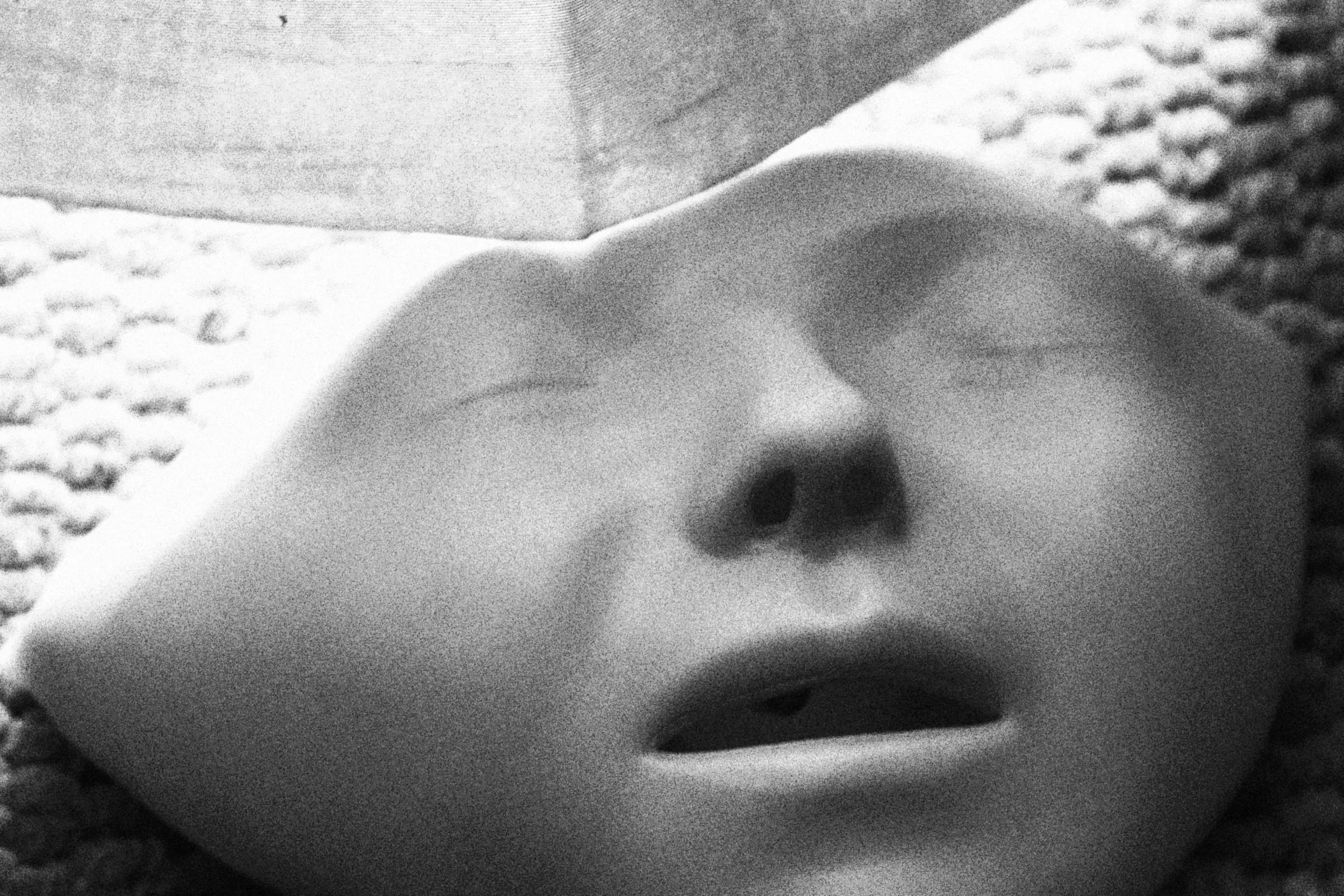
Artist: Marina Ghevondjan
https://marinaghevondjan.portfoliobox.net
“Girl with the most kissed lips in history”.
My journey into this project is about finding answers about difficult memories and connections with Annie resuscitation training doll that has been used by millions of medical professionals, but nobody actually knows who she really was. Anni’s lifeless body was found in the river in Paris, and a mould of her face was created by scientist to make a resuscitation doll.
Why do we, as humans, have the right to continue using her identity after she lost it all these years ago? She represents more than just a plastic mask that is being reused, wiped clean by sanitary wipes, kissed by millions, and duplicated, and spread all over the world. And every mask that represents her face is damaged and replaced by a new one over and over again without a second thought. I want to know so many things about her. I want to find an answer to the mystery of this face. Who was behind it? Is there a connection to finding the truth? Do we have any right to take her face on loan? Do we have the moral right to steal someone's identity and provide others access to such a private experience? Is there a breach of privacy and no one is making a human rights claim? I was fascinated by the resuscitation dolls. Annie is a training doll for hundreds of key workers, and helps save lives. But is she an object or a human? An object that is referred to as human but in fact just a piece of plastic, just another object. Something or nothing. Important but forgotten once her duties are over.
I worked for many years with this face at work, and I wanted to do justice to this well-known face that is used by millions of people in hospitals nationwide. Maybe it was destiny that I worked with this doll—to reveal the other side of the story, to uncover the actual events of her life, and to understand who she truly was.
A bit more info about the connection and why Annie?!
Maybe we were both immigrants in a new country, searching for happiness, for a place where we could belong and be part of something. Perhaps she was full of hopes and dreams. Maybe she could have become the next great doctor or scientist, an artist, or simply the girl next door.
Was Annie an immigrant child, alone in Paris, trying to find a safe place? What was her real story? I could not stop thinking—what if somewhere her family was looking for her and never found out what truly happened to her?
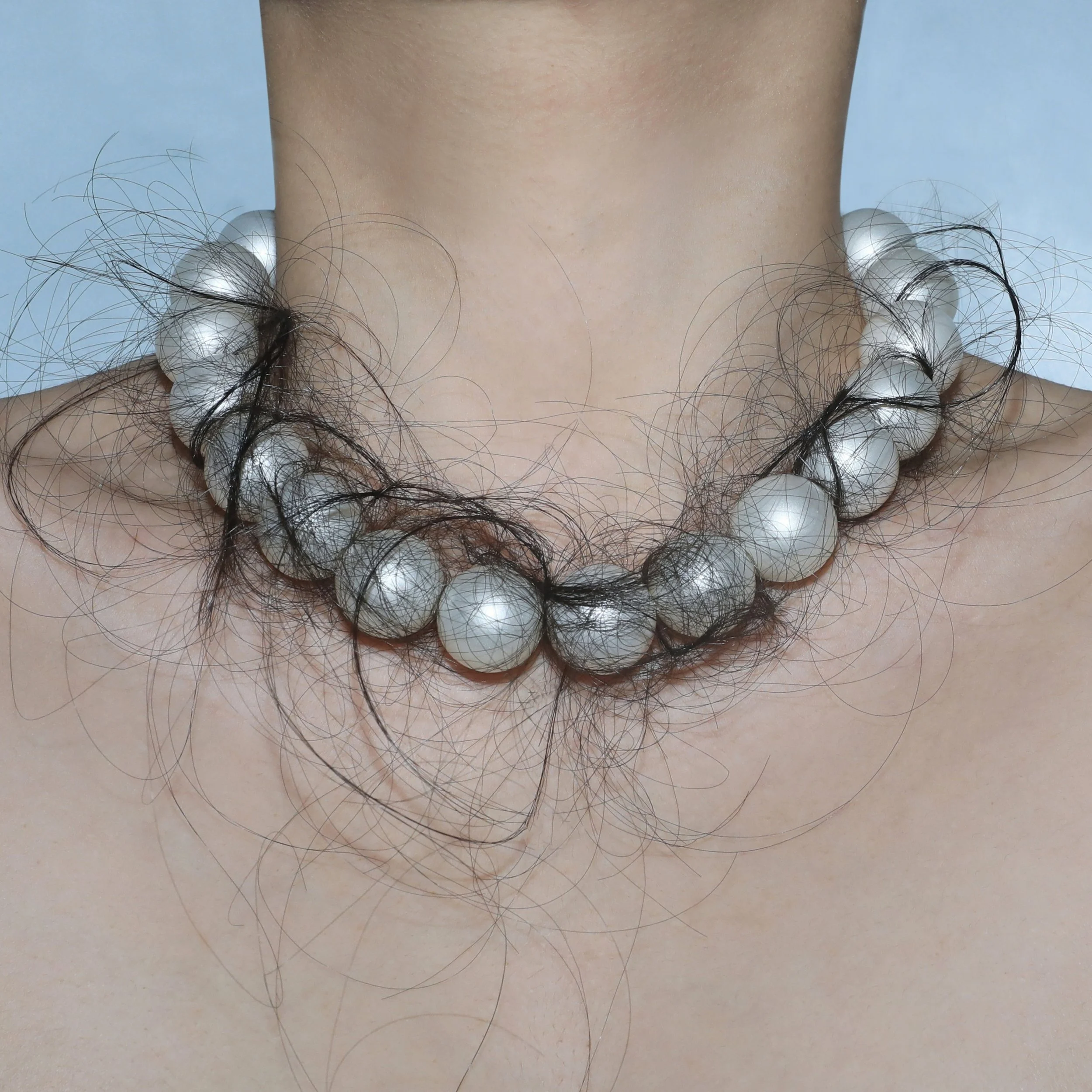
Artist: Jingyun Guan
https://www.guanjingyun.com/
“Above Skin”
Hair, as an ambiguous presence on the body, is like s stray organism living upon the skin. It exists on the threshold between the inside and the outside: both an extension of the flesh and something that seems to escape it. “Above Skin” therefore carries a double meaning - it refers at once to the surface of the body and to the fragile boundary between the physical shell and the immaterial world of consciousness.
The series originates from my attention to the overlooked details of daily life, where the sudden appearance of hair in unexpected places evokes strikingly different psychological responses. Hair is not inert matter; it is alive, endowed with its own agency. It grows, falls, decays, changes colour, reviews. In this sense, hair becomes a movement - an intimate clock that silently records the passage of time within our private world. Through it, traces of our identities are revealed.
By photographing body hair in various situations and juxtaposing it with organic and inorganic materials, I explore how hair reflects stories of the body and gender. The work situates hair within domestic and public contexts, inviting viewers to confront their own emotions, discomfort, or desires when encountering hair in “incongruous” circumstances. These images cultivate an atmosphere of ambiguity - both alluring and unsettling - where hair becomes a site of projection and imagination.
Ultimately, the question emerges: if the flesh beneath the skin is the vessel of life, then could the hair upon it be the soul that hovers above?
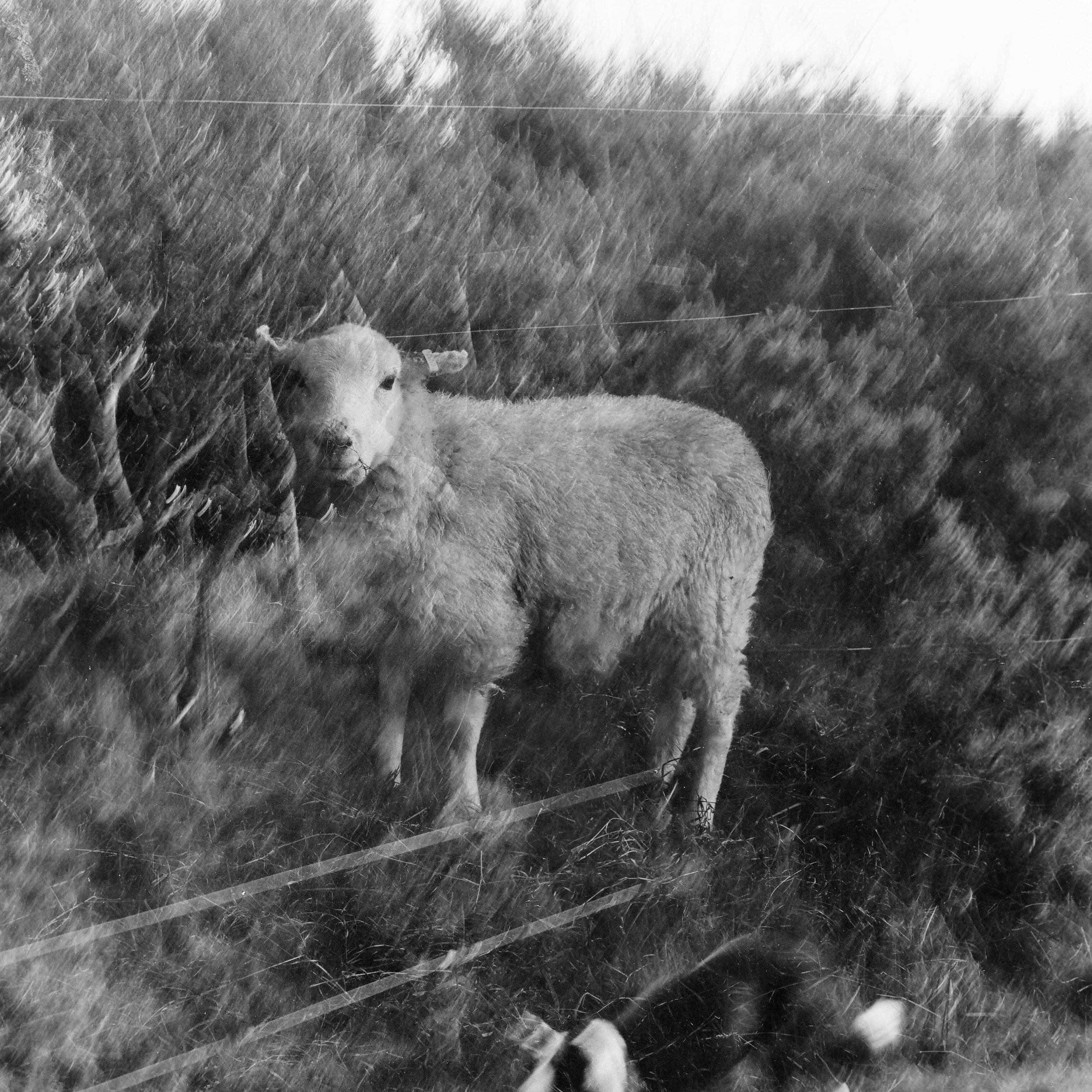
Artist: Jenny Ping Lam Lin
pinglamlin.com
"FARM HIERARCHY," a photographic series set against the backdrop of a farm. Employing documentary photography and multiple exposures, this collection captures the daily lives of diverse animals on the farm. The images serve as a reflection, drawing parallels between farm animals and human society or, in essence, portraying a microcosm of human society.
While seemingly an egalitarian portrayal of animals, "FARM HIERARCHY" also explores the symbolic power dynamics imposed by farmers, highlighting a constructed hierarchy not reflective of the true nature of the animals. Through these visual narratives, the artist contemplates the standards and definitions created by humanity in the course of civilization's development, particularly those imposed on non-human entities sharing our planet. The series prompts viewers to question the inherent biases embedded in our perceptions of both civilization and the natural world.
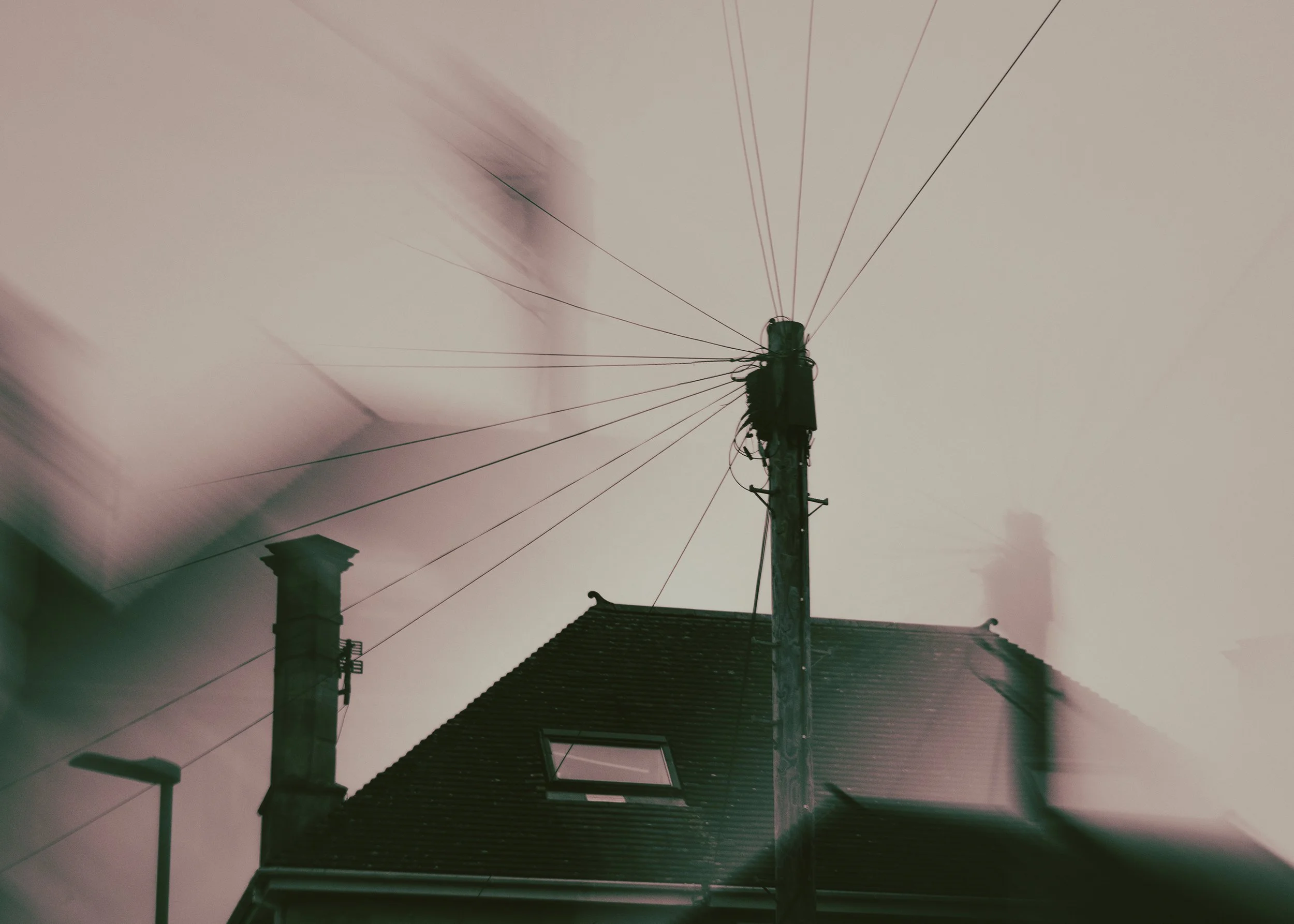
Artist: Anna Kovalevska
www.illuminatedlayers.co.uk
This work was created using a distorting filter. Will any new narrative emerge as I am walking through the most familiar streets of town? Will I see anything differently? Indeed, everything looks a little bit alien, as if assuming the presence of something else, something unnoticed previously, a movie within a movie...
“The Point of Assembly”. Description: ...You walk on a street, and you see the lines going in different directions. How can you possibly grasp them all? As a human, you are expected to respect biology while accepting technology with gratitude, and yet, they do contradict. There's no biology without the mind, and no technology can create a working backup for when the glitch occurs. Which is lucky, because then the human stays human, despite their best efforts to quit this state. The human then wakes up to the fact that there are others on other lines, and the complexity doesn't have to make sense as long as it works. The human remains curious, however, and goes to the Centerpoint nonetheless. And from there the human can finally speak...
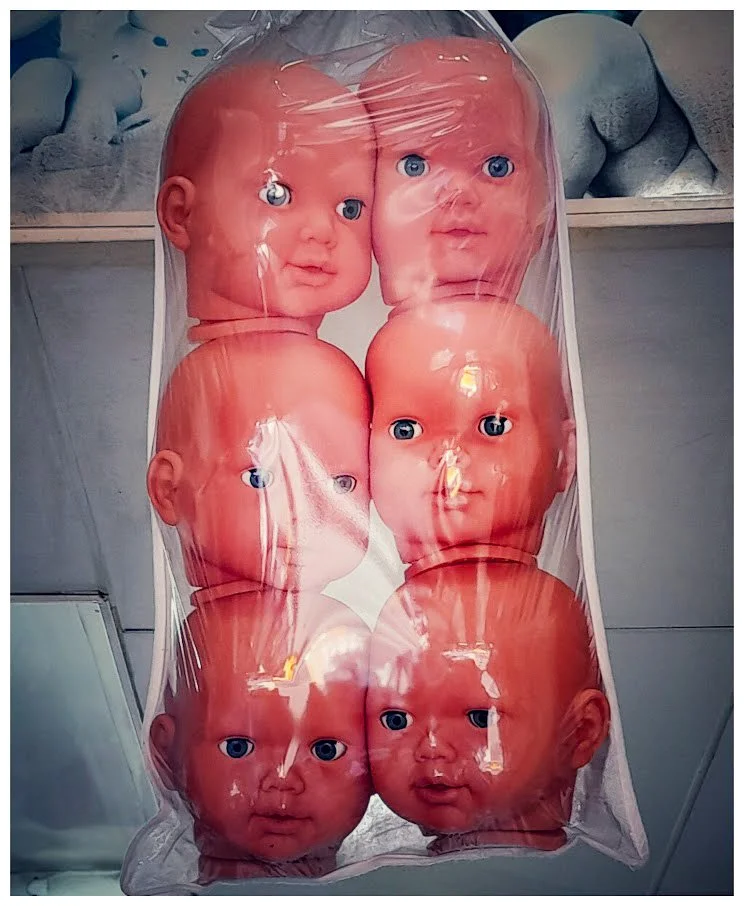
Artist: Alison Manning
“Manufactured Innocence”. Description: A photograph that captures a pack of mass-produced suspended doll heads, existing outside the emotional narratives of finished toys. By capturing them in their raw, pre-assembled state, I wanted to expose the industrial reality behind manufactured innocence. The plastic wrap becomes a barrier and a lens. their identical faces and wide, unblinking eyes create a sense of discomfort, transforming something associated with childhood into something uncanny and unsettling. The image challenges viewers to reconsider familiarity, mass production and the quiet strangeness hidden within everyday commercial spaces.
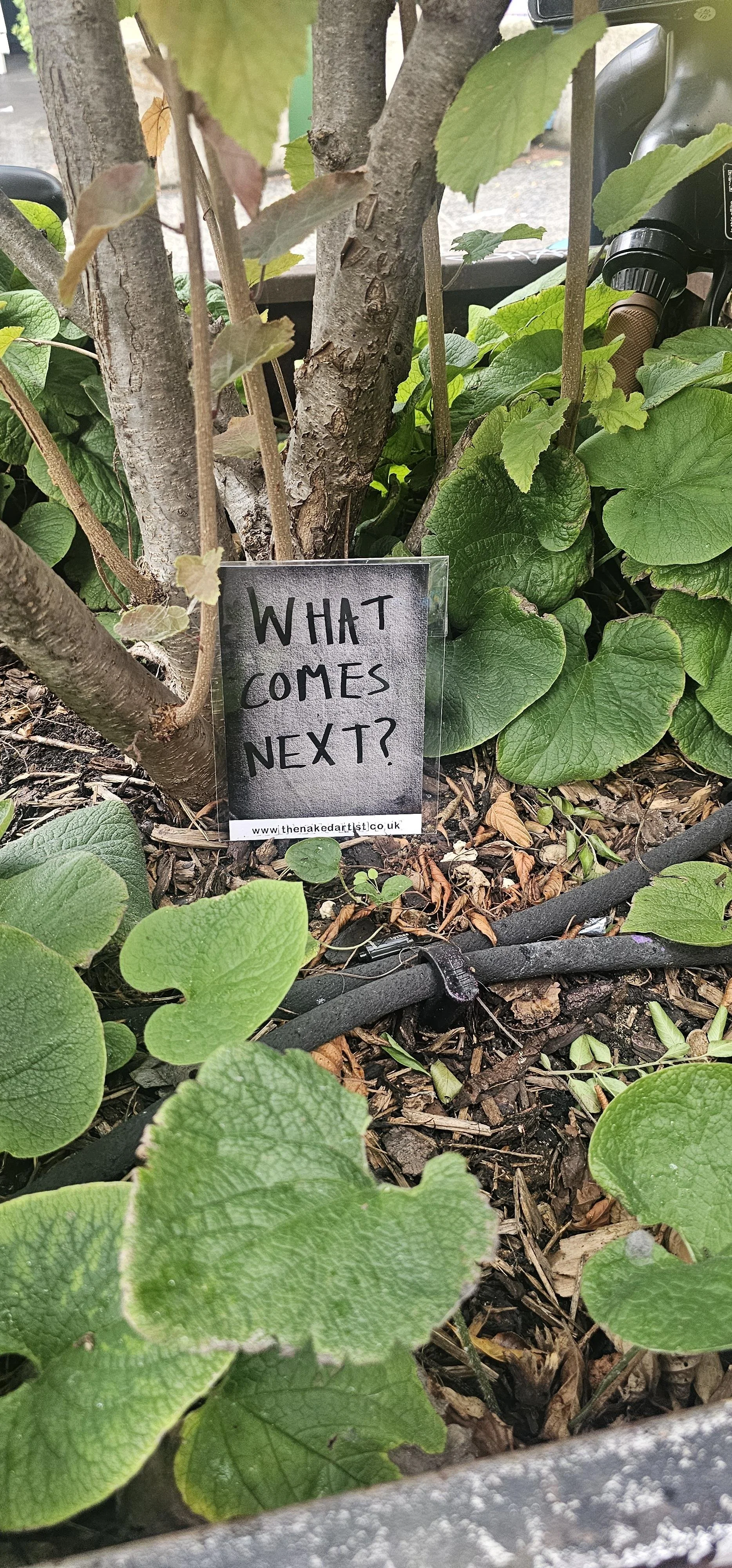
Artist: Suzie Pindar The Naked Artist
www.thenakedartist.co.uk, www.thenakedartist.bigcartel.com
“What Comes Next?”
Description: I place my artwork outside, sometimes in locations in London, hiding in obscure places where the natural eye would not usually look.
Artist: Louise Shaw
http://louiseshaw.co/
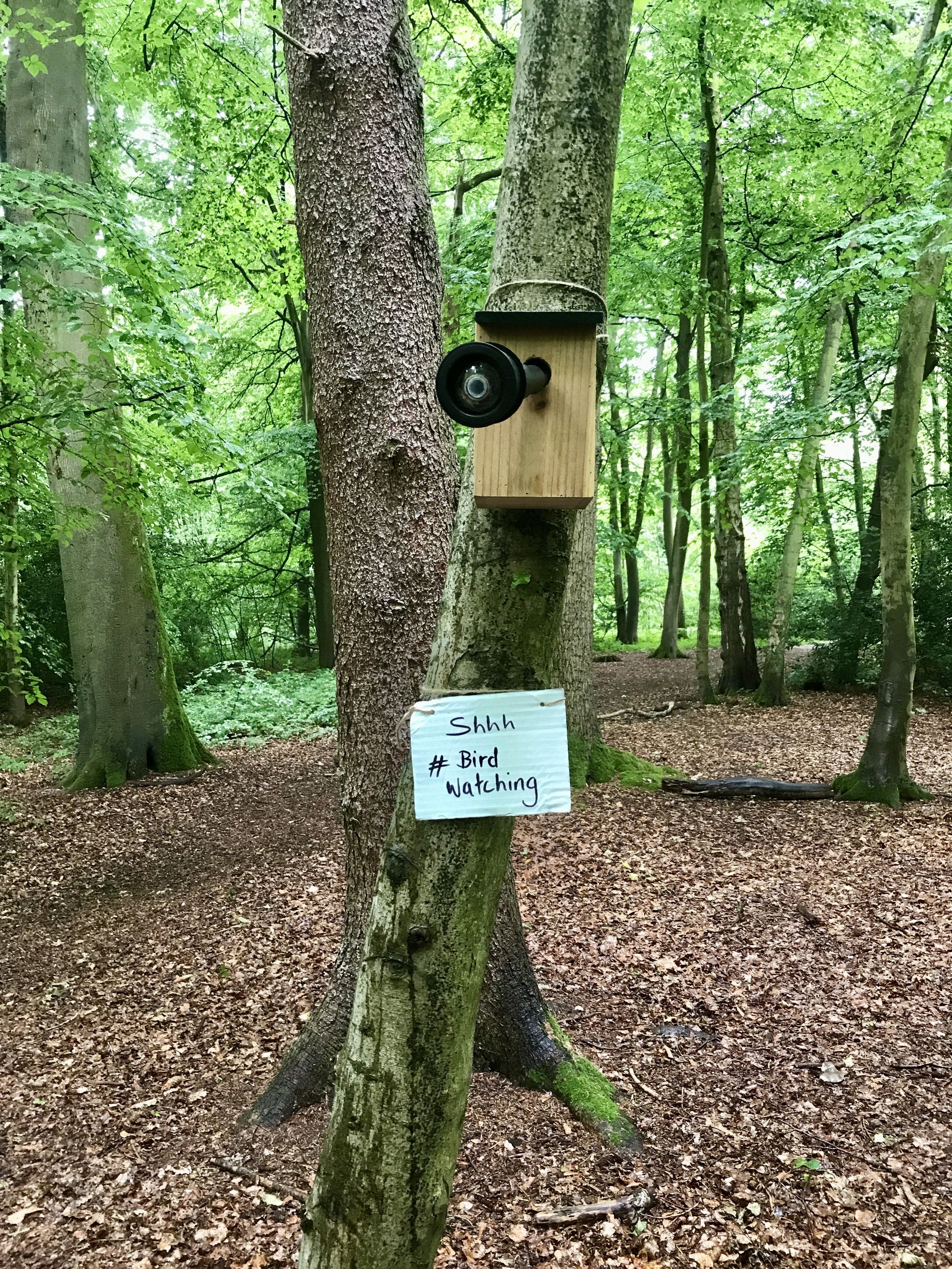
“Bird Watching (1)” Description: A small wooden bird box modified with a mock telescope installed on a tree at various sites; in town and in woodland. Below the bird box is a sign reading ‘ssshh bird watching’. I made this during the intense Spring season of naturalists’ cameras filming up close and personal to nesting birds. It felt akin to uninvited paparazzi, so I turned the tables.
Artist: Yoanna Walden
https://yoannawalden.art
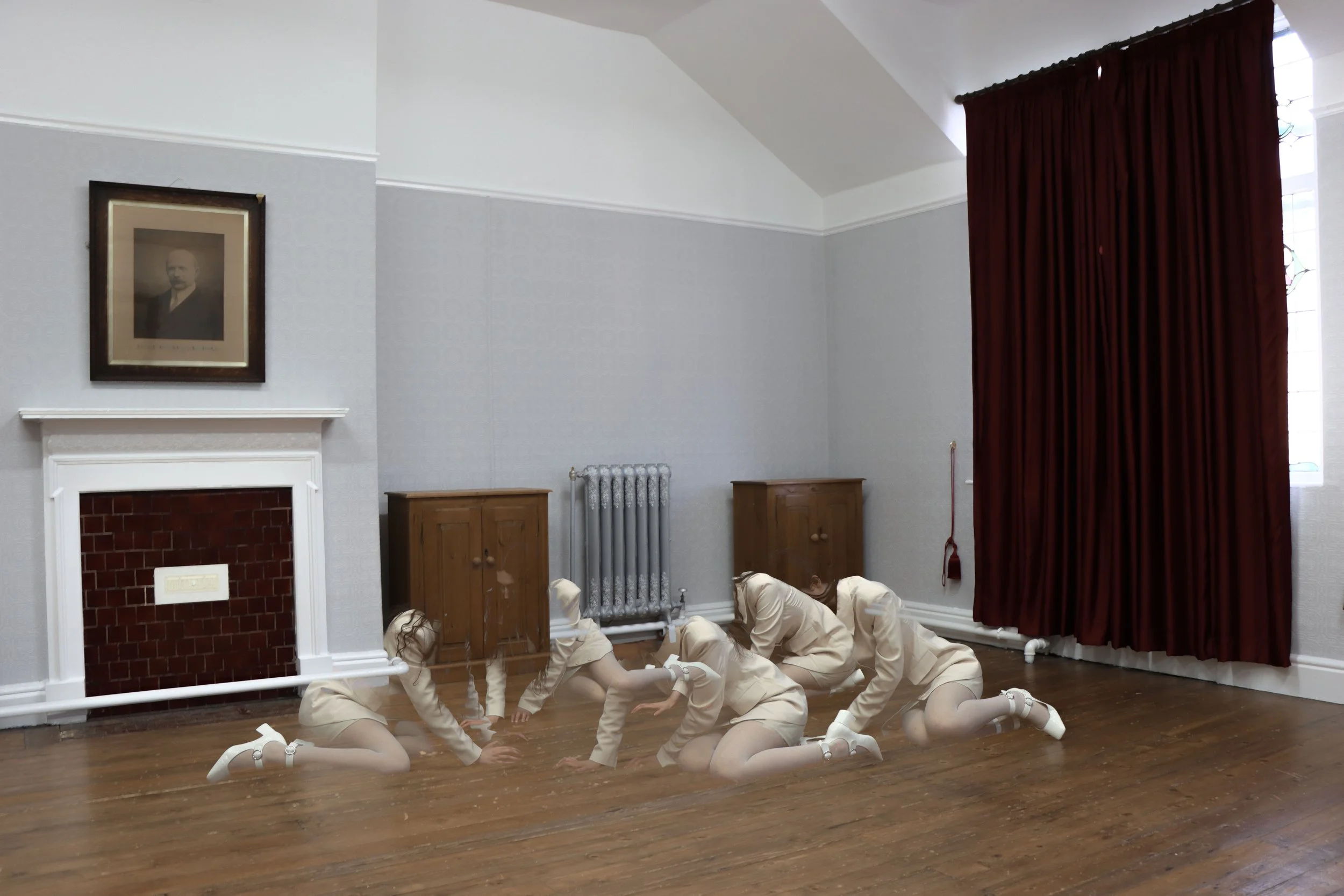
“Restraint”. Description: The practice of physical restraint within mental hospitals presents significant ethical and representational challenges. In this photograph, I employ superimposition as a visual strategy to address the difficulty of making such experiences perceptible without resorting to illustration or spectacle. The imagery reflects the disorientation, compression of agency, and fractured perception created through enforced restraint. This work forms part of “The Lunatics’ Common Room”, an ongoing photographic series that engages with the lives of individuals who were deprived of personal autonomy through involuntary confinement in mental asylums over the past three centuries. Rather than reconstructing institutional spaces, the series proposes an alternative conceptual site: a shared space situated outside institutional boundaries. Framed as an imagined “room of our own,” the work seeks to create a context in which historical experience, artistic response, and contemporary reflection can coexist.
Artist: Chloe Henderson
www.chloehenderson.co.uk
@SeaSlugChloe on Instagram, Bluesky, TikTok, Threads, and Facebook.
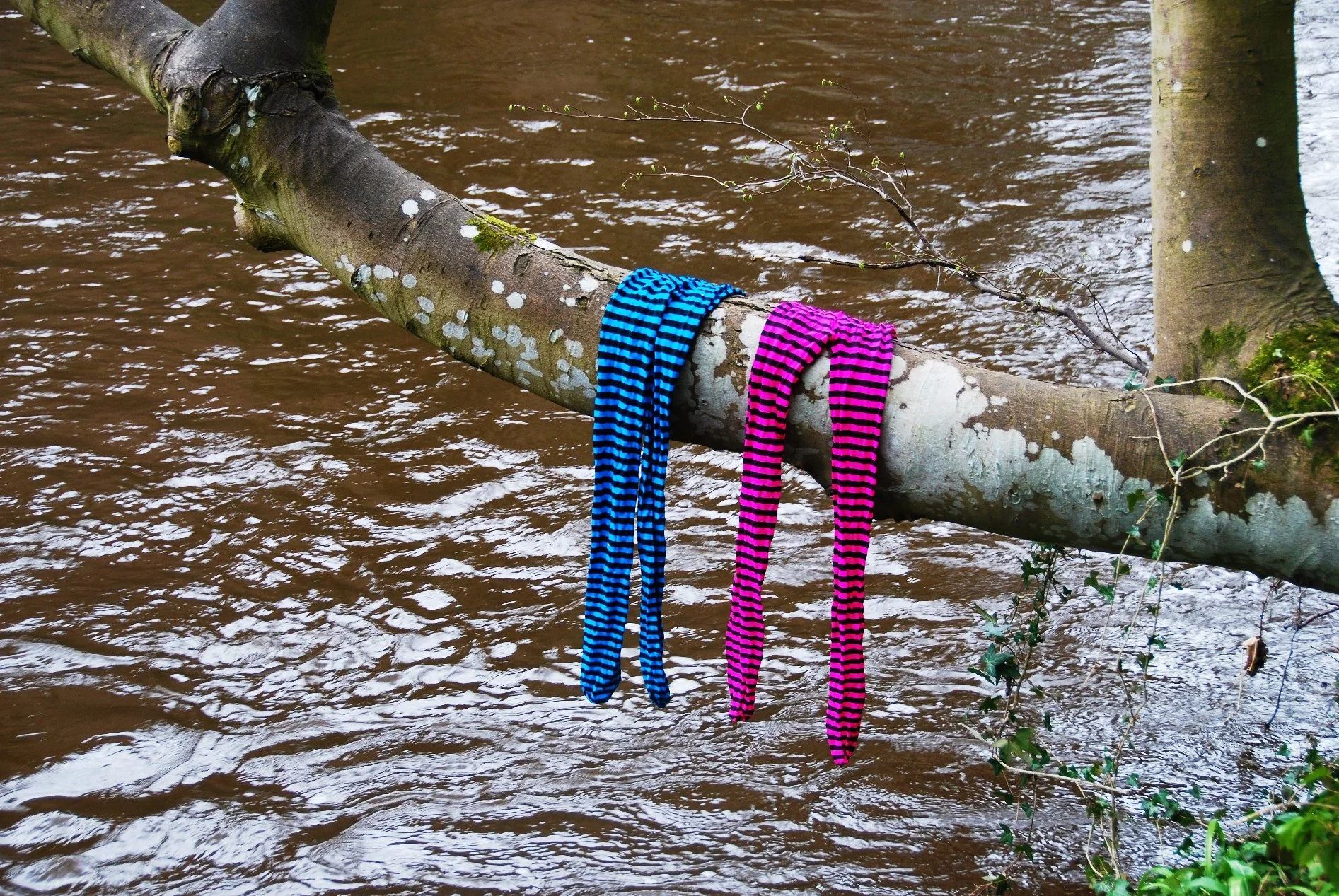
“Forest Bathing”. Description: I didn't understand what "forest bathing" was when I first heard the term, and I couldn't get my head around what people were up to washing themselves in the woodlands. So, in this photo series, I created my unseen perspective of what forest bathing might look like!