
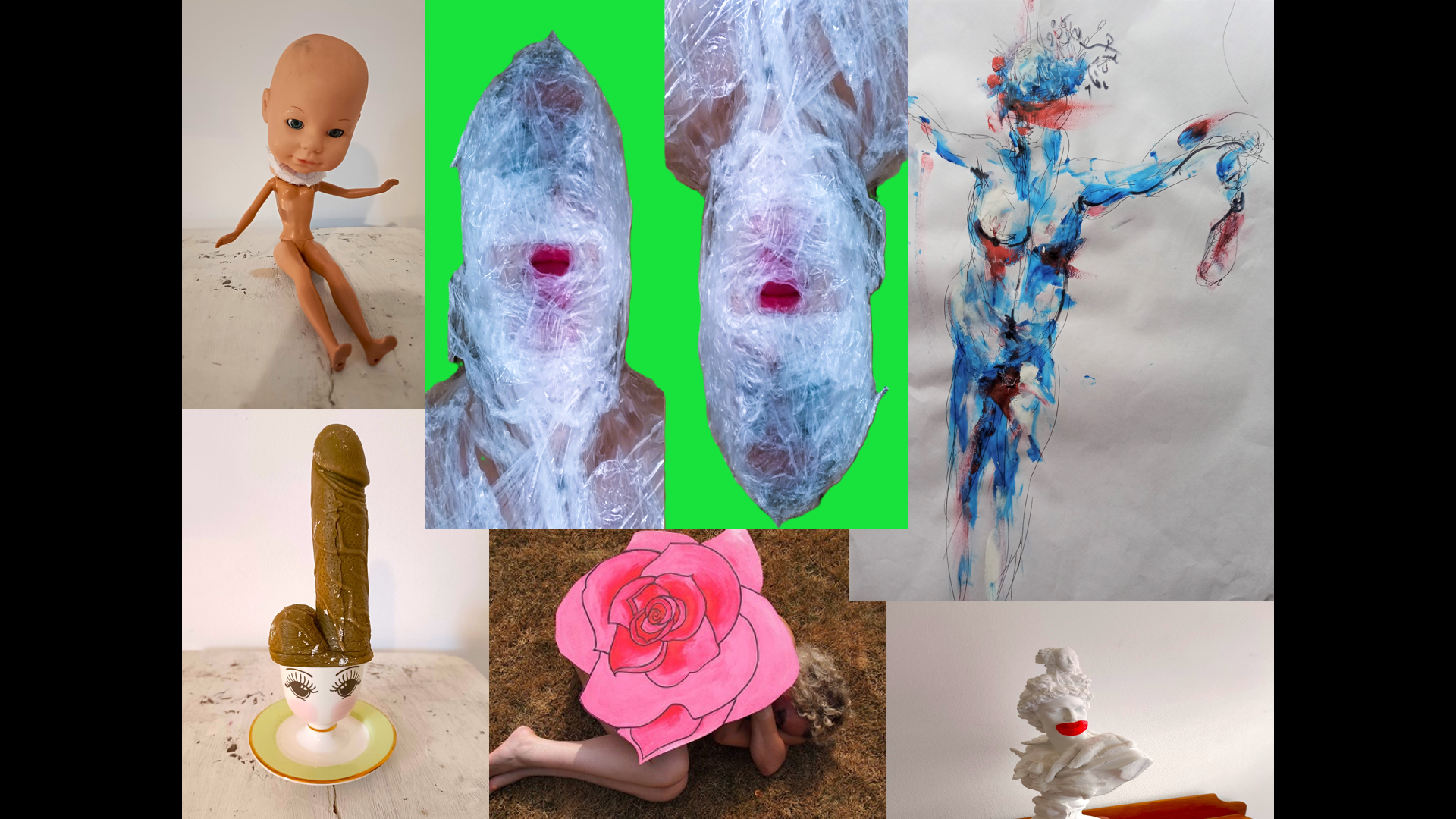
We invite artists, collectives, and interdisciplinary practitioners to submit work for The Fragmented Body, exhibition and writers pages, exploring the body as rupture, archive, surface, and site of transformation.
The Concept was…
The body has never been singular. It is divided by memory, shaped by technology, marked by labour, gendered by language, racialised by history, politicised by borders, and dispersed across digital and physical realities. It is whole and broken at once.
The Fragmented Body Issue explores work that …
The body as archive — scars, memories, inherited histories
Dislocation, exile, and displacement
Medical, mechanical, or digital intervention
Prosthetics, avatars, extensions, and simulations
Surveillance and the commodified body
Psychological fragmentation and multiplicity
The body in pieces: symbolic, literal, metaphorical
We welcomed interpretations that are poetic, political, intimate, speculative, or confrontational.
Our Resident writers have both contributed to the zine this month with some great work.
&&&&&&&&&&&&&&&&&&&&&&
Poet -Peter Devonald
&&&&&&&&&&&&&&&&&&&
Resident Arts writer, Michalea Hall
https://www.instagram.com/michaela_hall_artist/
The fragmented self
Human nature is not to be one thing; the body and identity are naturally fragmented and in flux as they are influenced by so many scientific and environmental factors, there is no two people the same and this is something that can be hard to visually represent. The fragmentation of our identities and 'versions' of ourselves are often identified by our physical appearance and creatively, there are numerous artists who portray this with their own unique approaches.
If you think of all the things you love, or maybe are a bit obsessed with day to day, or maybe the things that you don't but that seem to be everywhere - defining you in some way, think of this rolled into a contemporary portrait. You might arrive at a colourful, chaotic, busy and complex image in your mind - and it might give you food for thought while looking at New York based Johanna Goodman's work. Her colourful, beautiful compositions made up of collaged elements are bold, anything but traditional in representing a person and their body and play on ideas of fragmented identity - both in a material and conceptual sense. The collaged beings in her series of works take on different thematic forms from nature to city with their body being made up of anything from skyscrapers to sunsets. Her 'Catalogue of Imaginary Beings' series feature highways, neon signs, monuments and cityscapes both abstracting and singling out the beings in the pieces from their environments - there are so many narratives and stories that could be interpreted about why these fragments make up the portraits that they leave the viewer with the option to have fun making their own back story.
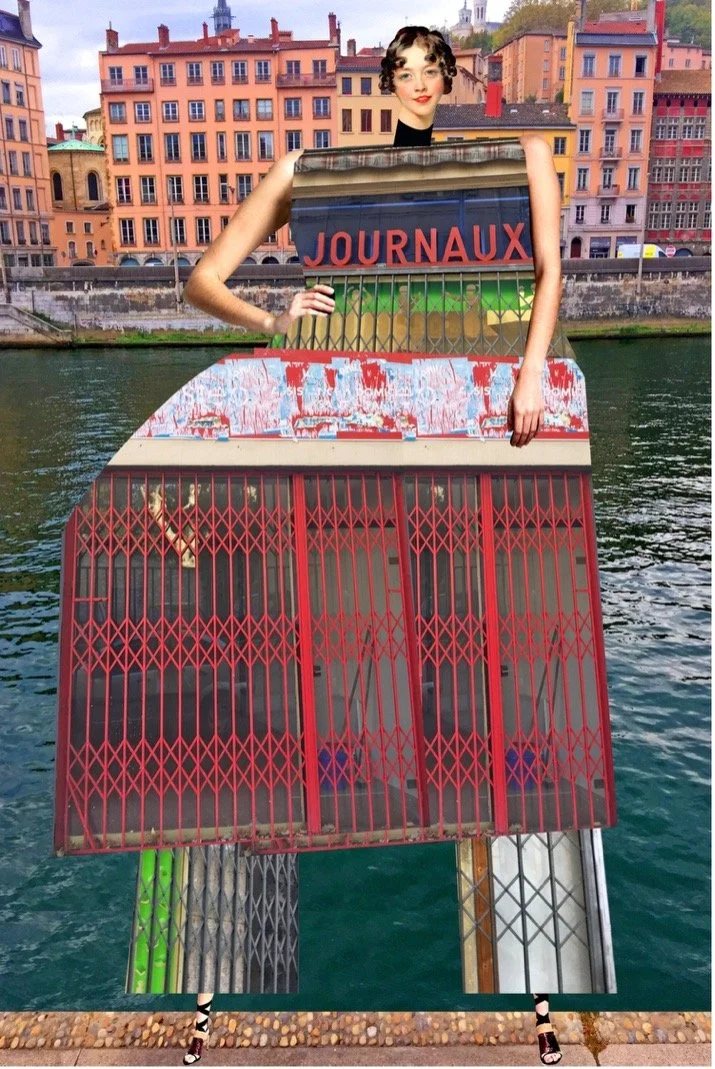
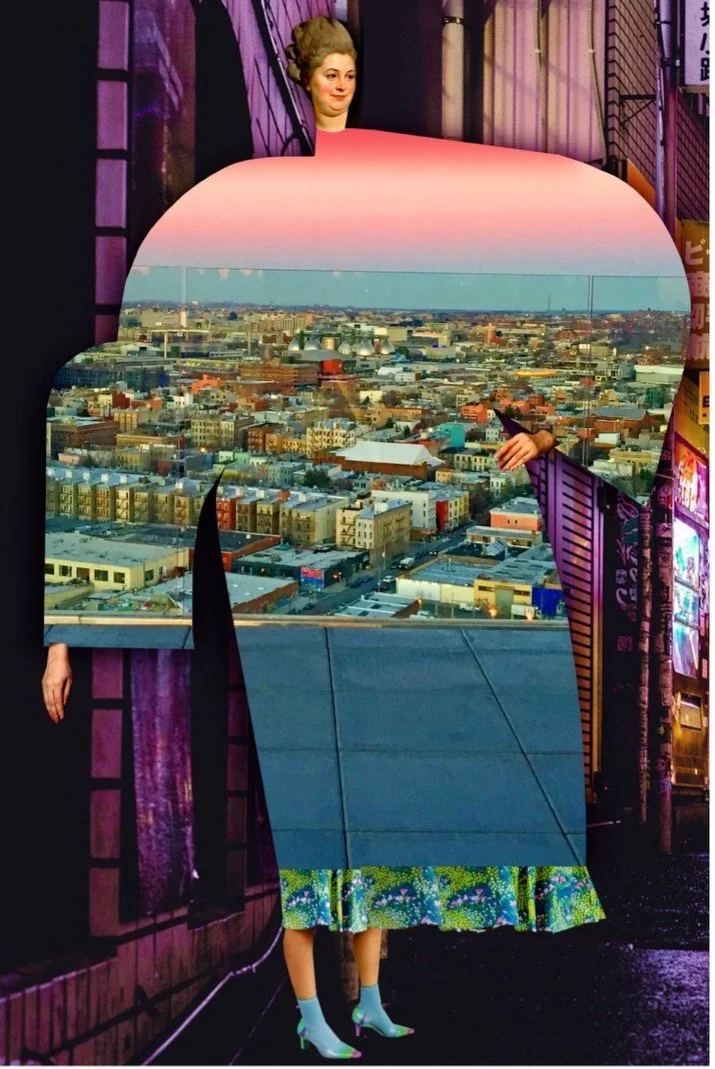
(Images courtesy of johannagoodman.com/work/cityimaginarybeings)
British artist Jonathan Yeo is famous for his distinct portraiture approach, having painted many famous faces from Tony Blair to Damien Hirst, and even the King. His figurative and expressive works are unique in their composition, often leaving space or fusing blocks of colour or texture to the context of the individual in the portrait. Just like Goodman (although with a very different approach), he leaves space for the viewer to think about the narrative behind the subject, his portraits appearing physically fragmented, showcasing and hiding certain parts. In 'Cara I (Goggles)' (2015) we only see a full depiction of the Cara's face, it is framed by white space and some goggles through which she is looking up, considering we see more white space than portrait - we are left to ponder why, what is being looked at and why it's hidden. Similarly, 'Sir Peter Blake (Study)' (2018) keeps us guessing with the portrait again disintegrating into a background of abstract brushstrokes.
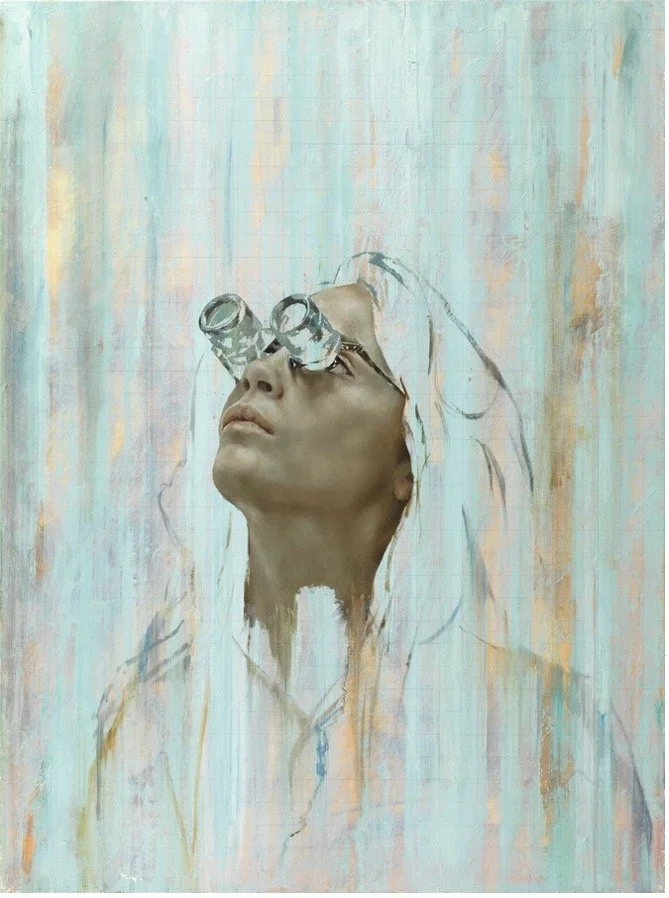
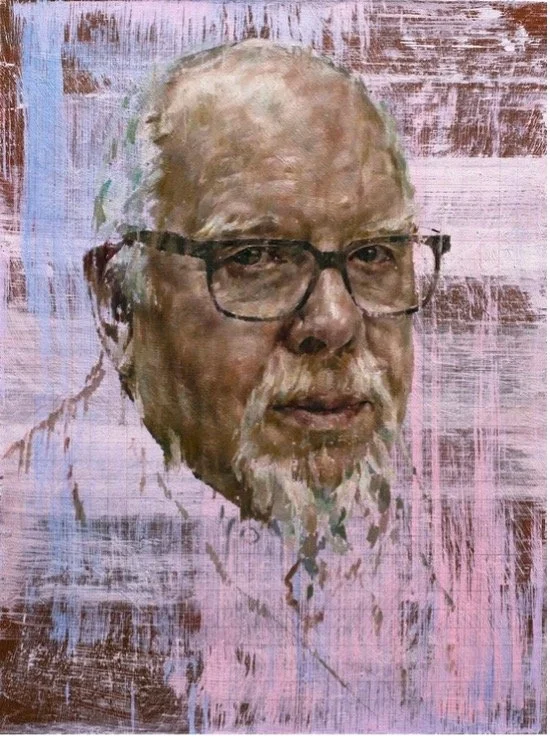
(Images courtesy of jonathanyeo.com)
Fragmentation is complex and when it comes to the body and identity, even more so. It's personal and it is also a never-ending quest for artists to understand and depict all the parts that make up another person. These artists play with surroundings, environment, composition and narrative to explore this and celebrate the idea of the fragmented self, of subjects who they don't depict as complete, straightforward or defined by one single thing.
&&&&&&&&&&&&&&&&
Artist name Garima
Website https://www.amazon.co.uk/dp/B0GL9GQR21
Socials https://www.instagram.com/garima_s_k/
About the Poem
Living in the Middle East during the current geopolitical crisis means that war is no longer abstract. Fragmented Body-(Un)Ordinary days emerged from the quiet psychological weight I felt at a time when conflicts began to inhabit the outer and my inner world.
In this poem, I reflect on the experience of carrying ordinary life and collective grief at the same time…how the mind can fracture under the pressure of constant witnessing...one part of me continuing daily routines, while another absorbs the emotional aftershocks of violence unfolding.
The “fragmented body” in the poem is not a literal body, but my mental landscape…where my thoughts, grief, fear and empathy seem to scatter across borders, searching for coherence in a world that feels deeply divided.
Fragmented Body- (Un)Ordinary days
These days her body felt less like a home
And more like scattered rooms.
One part of her held the ordinary morning,
Tea cooling on my bedside, dog sitting close by.
Another part carried the distant thunder
Of things she could not control and could not stop imagining.
Her mind wandered between maps, names of cities,
Faces on screens that refused to leave.
Some thoughts tried to remain steady,
To believe in the small rituals that make a day possible.
But others broke apart, sharp fragments
Of grief, anger, helplessness, moving quietly through her chest.
And so she walked through the day, gathering herself slowly,
As though her heart had been scattered across the world
And was still finding its way back.
About the Poem
Fragmented Body-Before “I” draws inspiration from the idea that early human experience begins without a unified sense of self. My poem reflects the moment before identity fully gathers itself, when experience is still scattered and the self is only beginning to form, exploring that early state of fragmentation as something both vulnerable and profound.
In infancy, the body is not yet understood as a single, coherent whole. Movement, touch, hunger, warmth are all experienced separately before the mind gradually begins to organise them into a sense of “I”.
Rather than presenting fragmentation as brokenness, I have tried to approach it as the delicate beginning of coherence, the slow, almost imperceptible process through which scattered sensations, emotions, and perceptions eventually assemble into a unified being.Top of FormBottom of Form
Fragmented Body- Before “I”
Before she knew herself as a single, coherent form,
There were only fragments.
A hand rising into light,
A foot startled by its own motion,
Sensations arriving,
without origin or name.
The world appeared
in discontinuous impressions…
A flicker of brightness,
A distant cadence of voices,
Warmth that swaddled.
Nothing belonged together yet.
Hunger, breath, touch,
Each in isolation,
Each conversing,
With an unformed consciousness.
And slowly, almost imperceptibly,
Amid this delicate disarray,
Something within her began the quiet labour
of becoming whole.
&&&&&&&&&&&&&&&&&
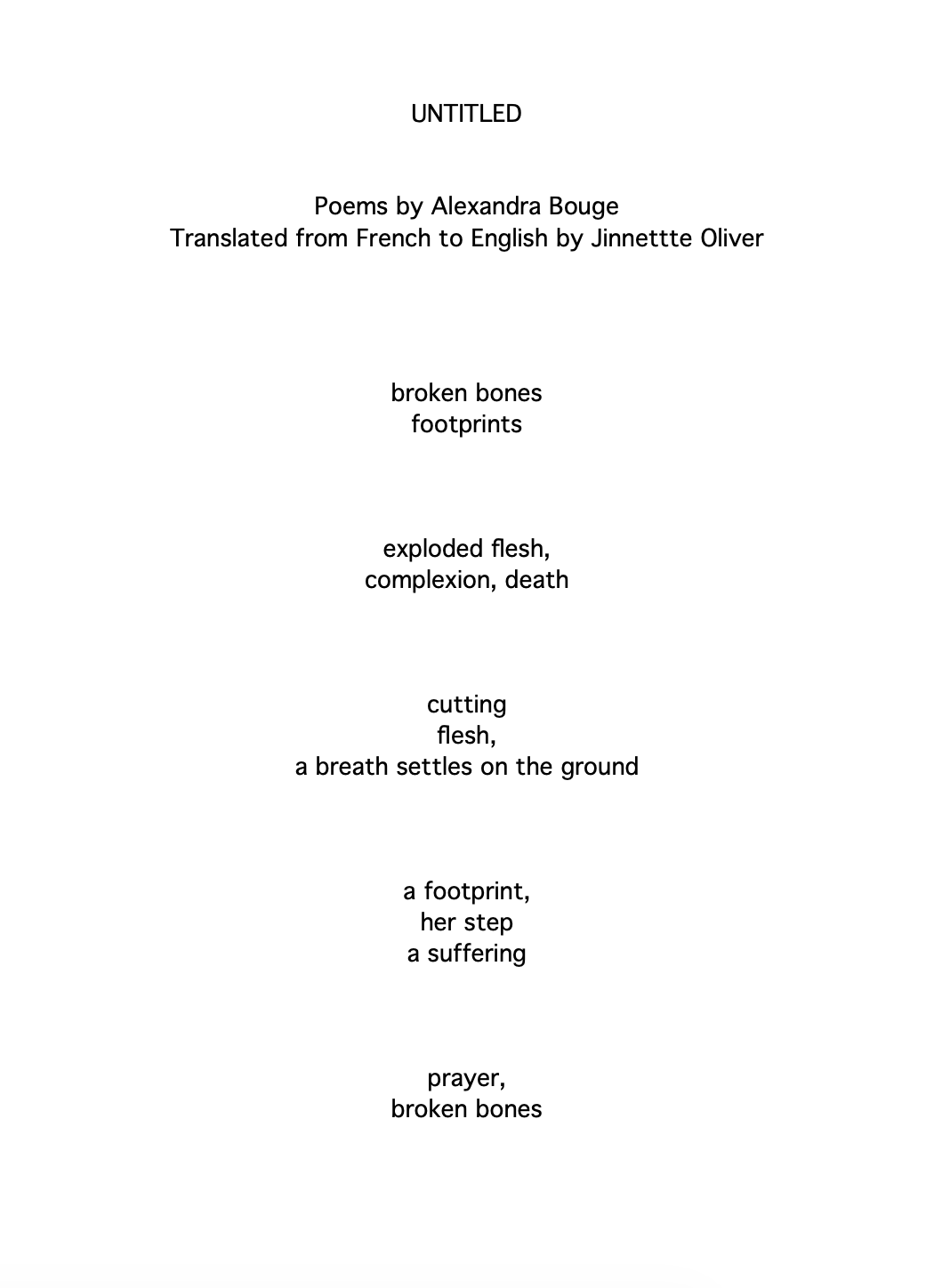
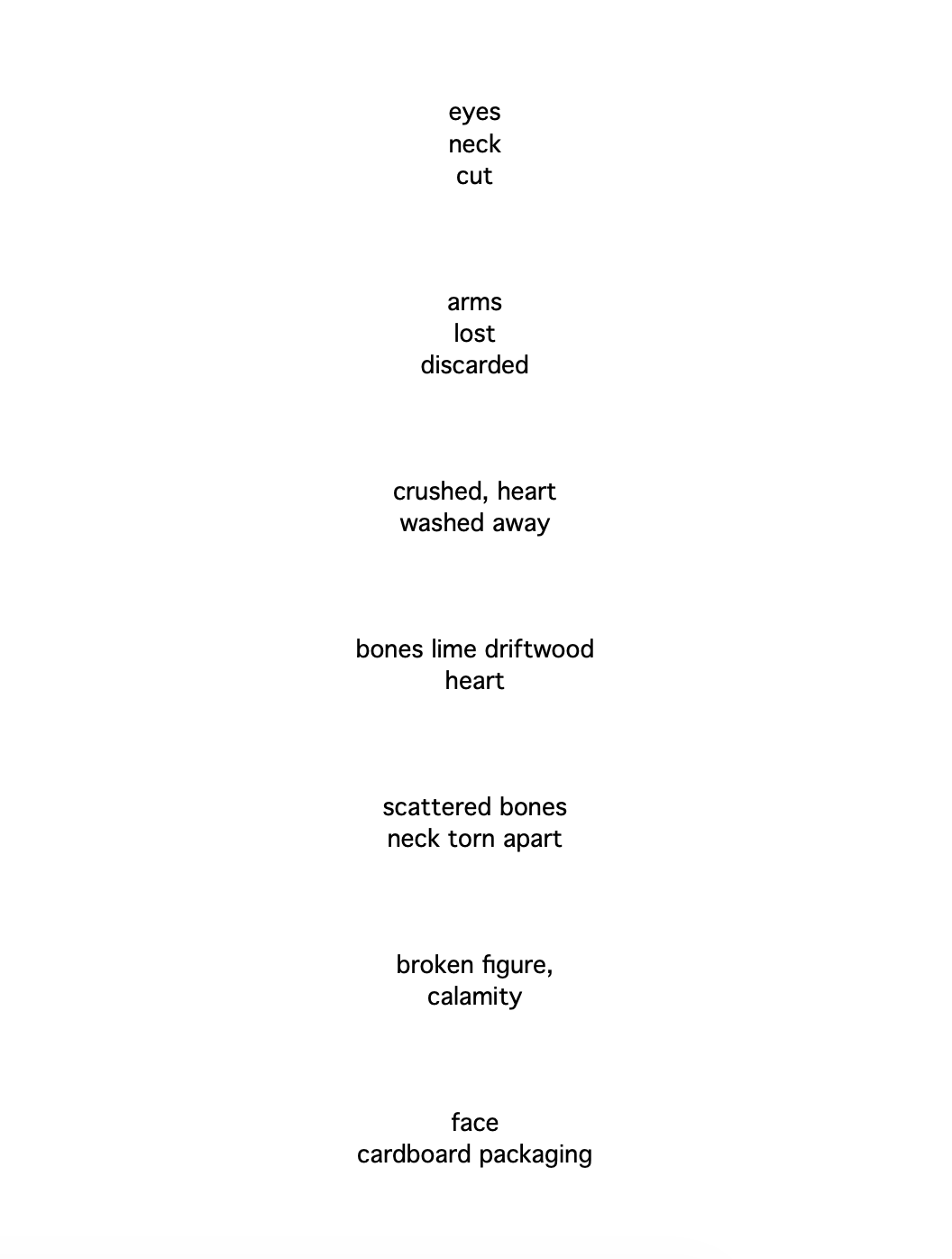
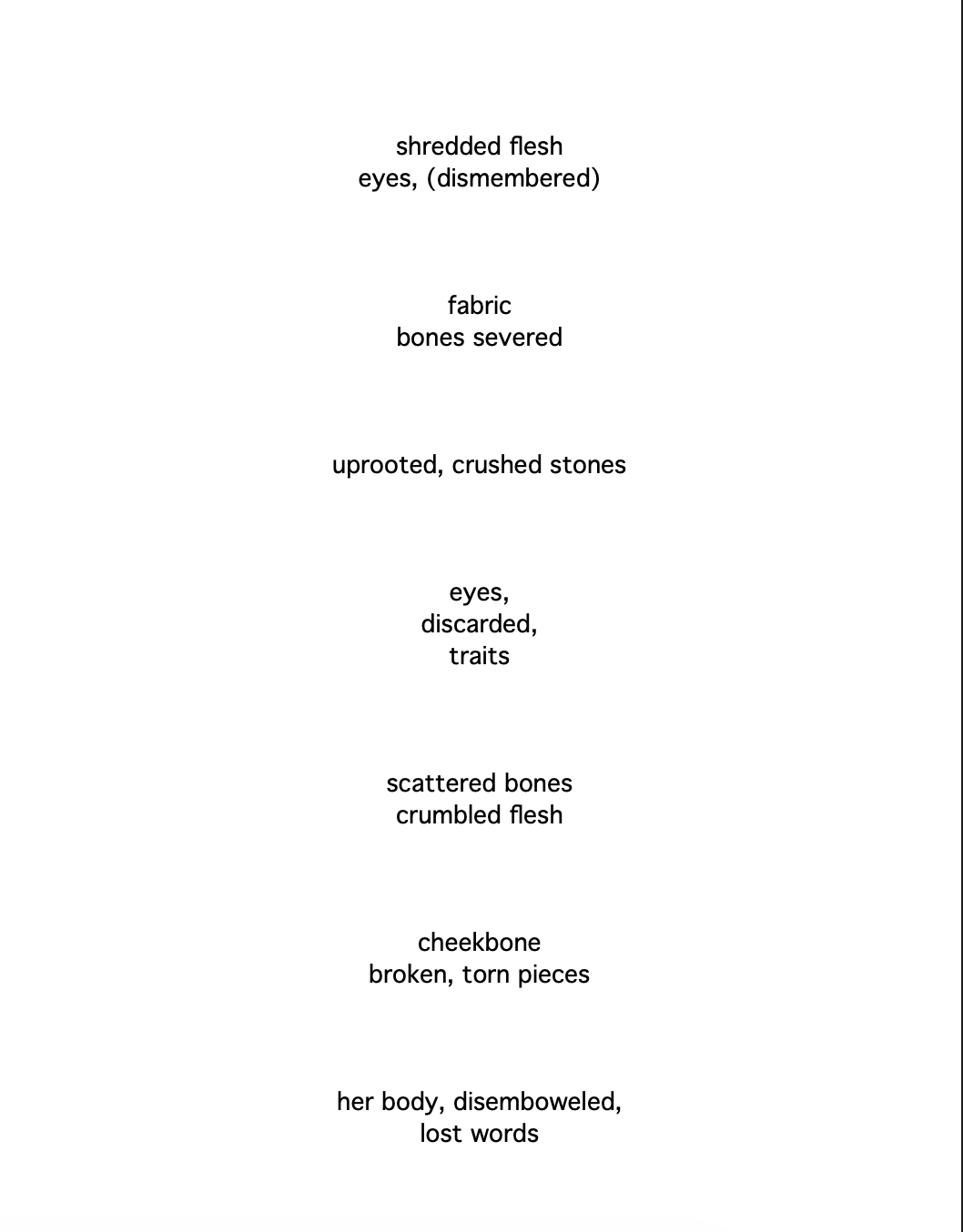
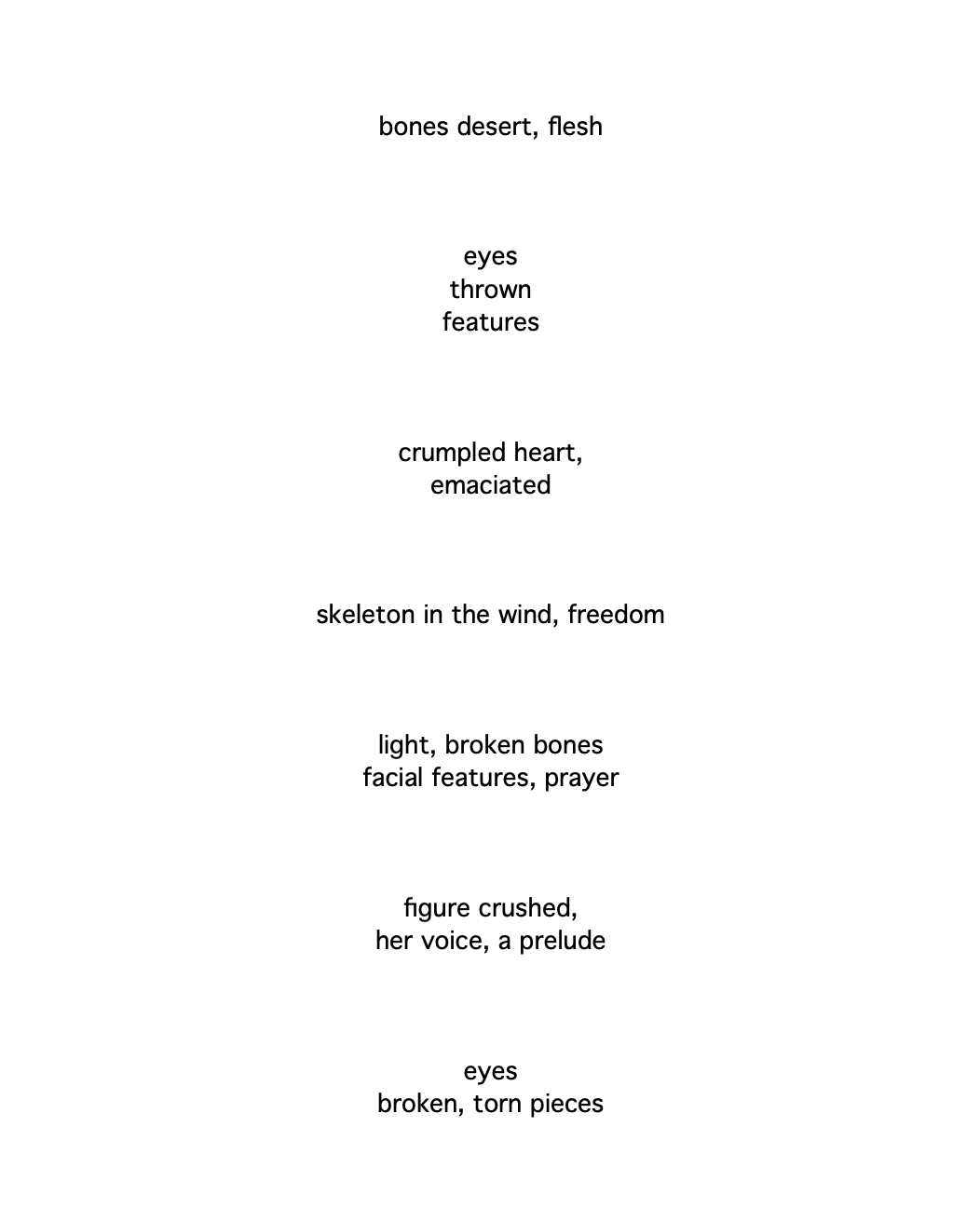
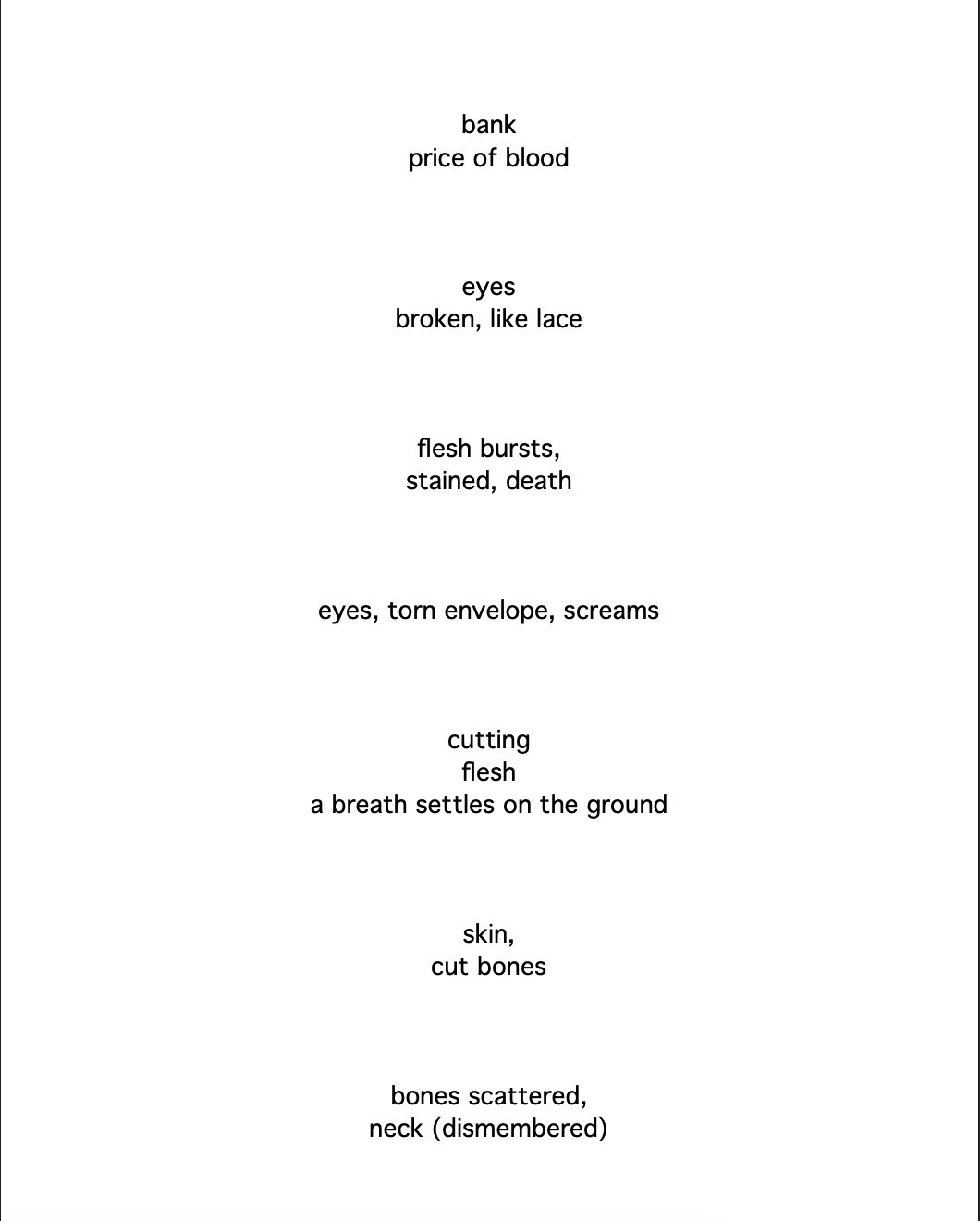
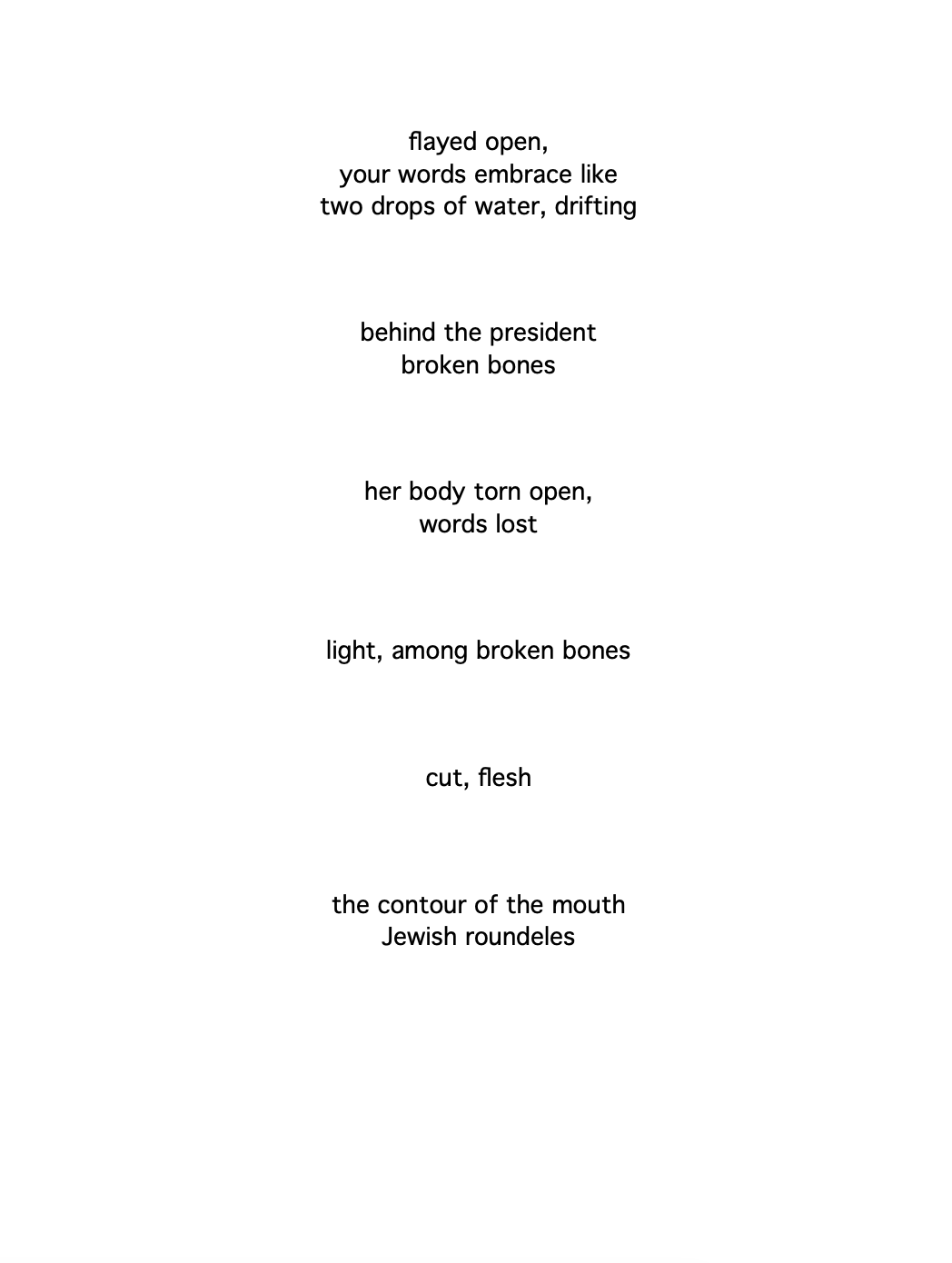
Artist name Alexandra Bouge
Website - https://alexandrabouge.tumblr.com/
&&&&&&&&&&&&&&&
Artist name - Tata Burduli
Socials @tamar_burduli
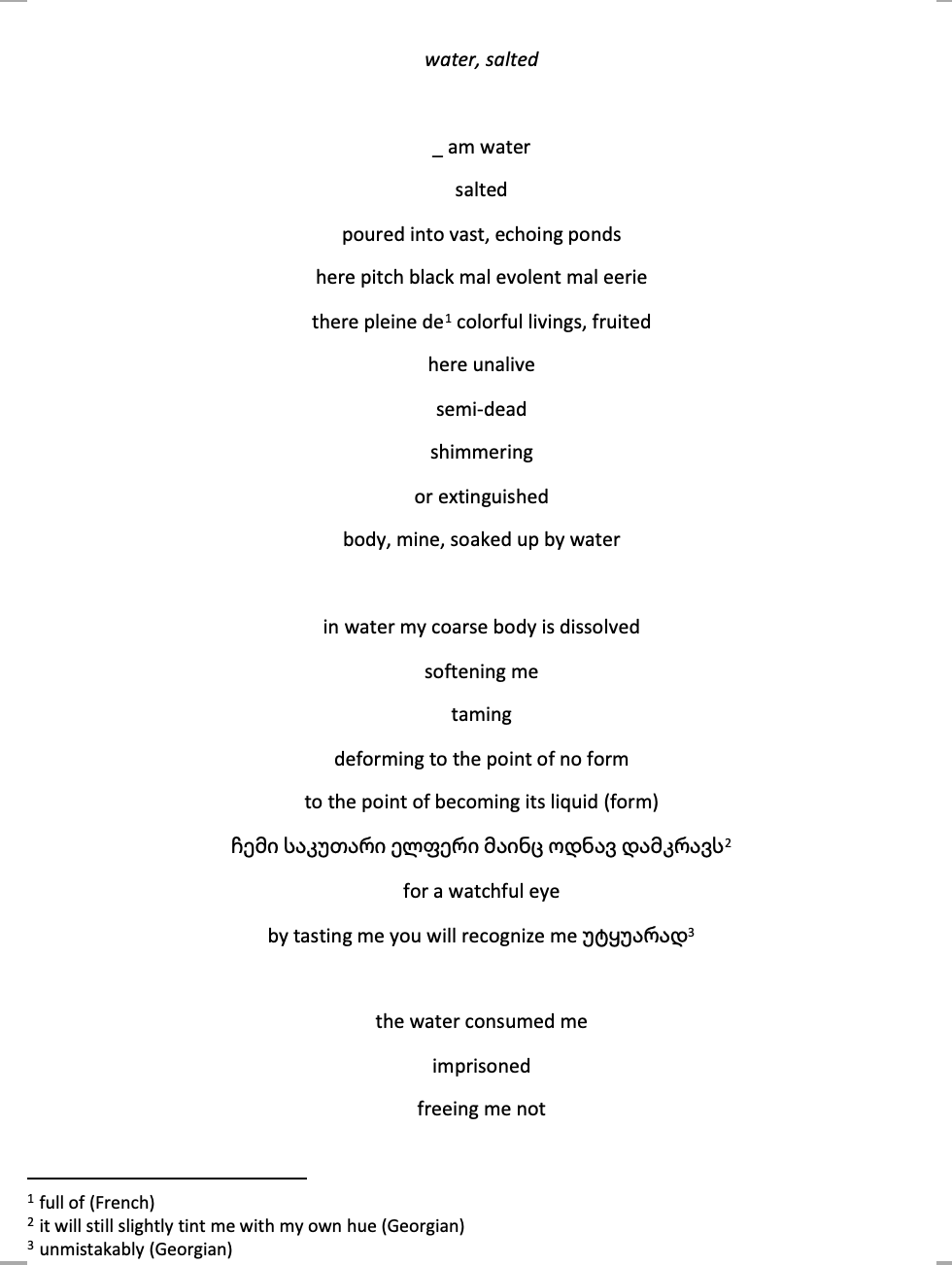
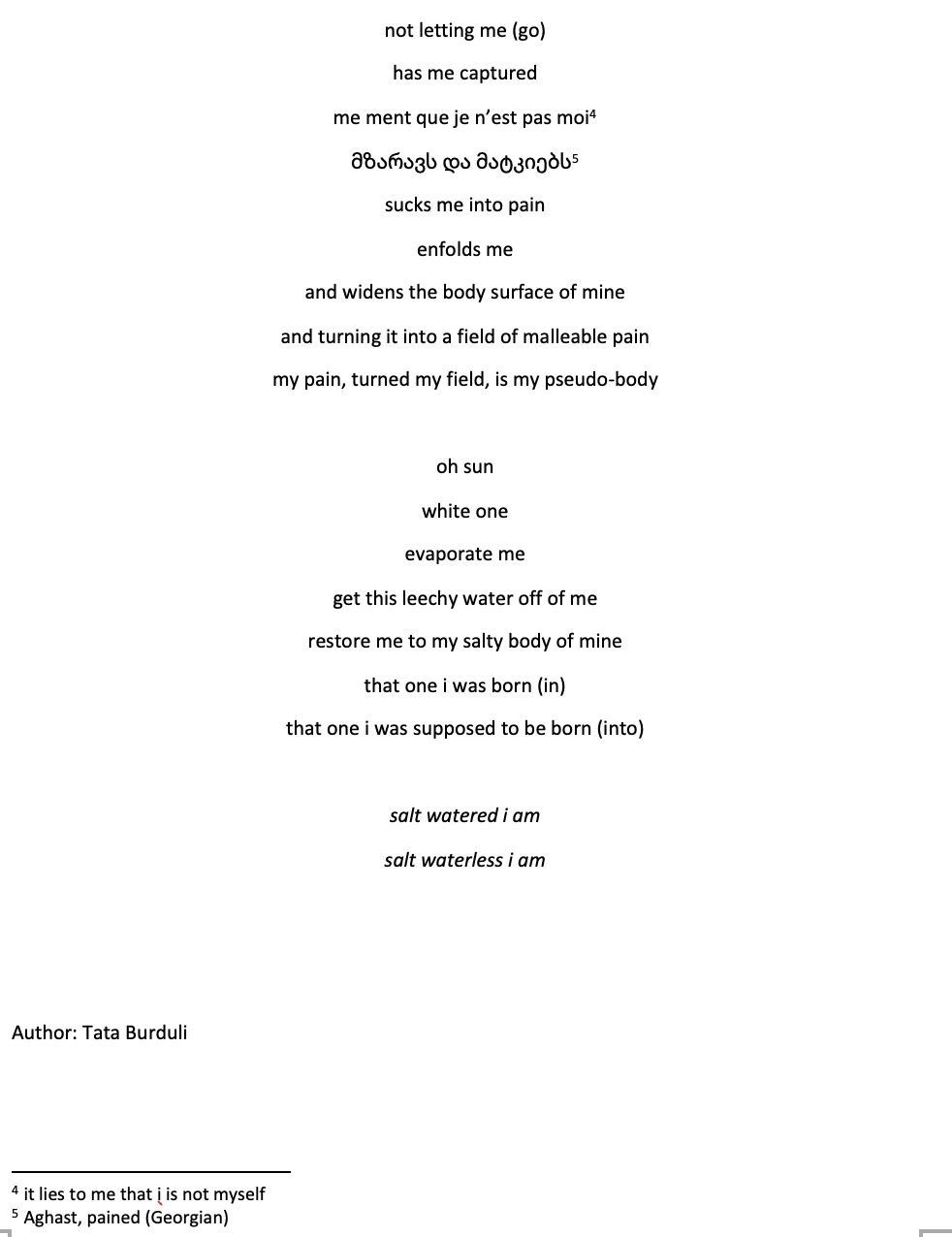
water, salted
author: Tata Burduli
This poem explores the tension between embodiment, transformation, and the absorption of self into an elemental force. Water functions as both medium and agent – at once caretaker and absorber, source of pain, compelling the body to soften, surrender, and change. The body becomes a pseudo-body, a mutable field of sensation and struggle, partially retained and partially relinquished, marking the site of transformation.
The work emphasizes the paradox of partial identity: even as the body is consumed into another body (of water) and stretched across the liquid medium, traces of the original self persist. It interrogates questions of identity, corporeality, and environmental interrelation/self-identification, while challenging the unity and hierarchy of elements and their reflection in language – is salt watered, or is water salted? Who is the actor, and who the actee? These tensions reveal the struggle and persistence of self amid absorption, highlighting the fragile (dis)balance between being claimed and retaining autonomy.
The poem offers an immersive exploration of the human body as a mutable site, simultaneously vulnerable and resilient. It underscores the ongoing dialogue between the body and elemental forces, inviting reflection on how identity is negotiated, resisted, and partially preserved within the transformative flow of the natural world.
&&&&&&&&&&&&&&&
Artist name - Kate Rigby
Website - https://kjrbooks.yolasite.com
Socials
Instagram: https://instagram.com/kate_jay_r
Facebook page: https://www.facebook.com/authorrigby
Blogs: https://authisticwords.blogspot.com/
TikTok: https://vm.tiktok.com/ZGJTtmSAk/
These three poems explore psychological fragmentation and a divided sense of self. The first imagines bodies and minds remade in rubber to resist rupture, while the second and third follow Amanda’s fractured self, through an imagined twin, voices and objects, where reality and fantasy blur and identity disperses and reconciles.
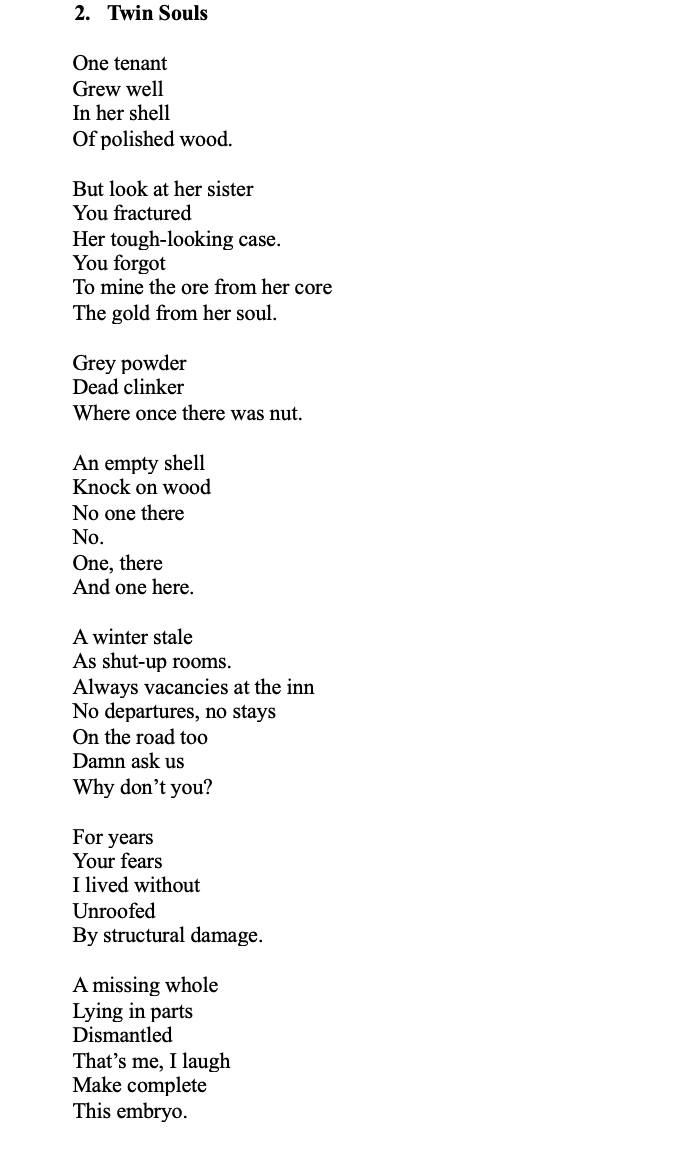
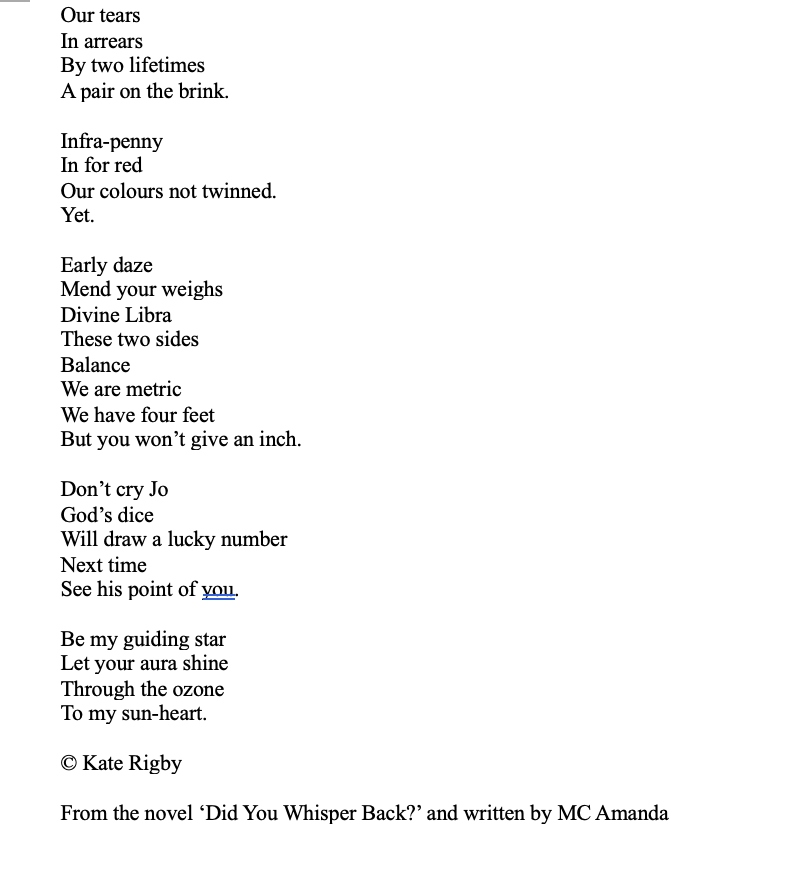
1. Rubber
If only we were made of rubber
then we could bounce
without hurting
bounce -
even into forbidden lands
then ricochet away.
But we don’t land light
we break & bruise & smash.
Or rubber minds –
now there’s a thing
the kind that won’t fragment or splinter
unlike bones or a crumpet-head
full of holes
But keep
bouncing back,
bounce bounce -
flexible absorbent
& storm-resistant.
3. Telephone Telephone
Telephone telephone
Someone plugged you in
To the volts of their heart
That they may make you ring
Telephone telephone
Are you resurrected?
I don’t like you
Quiet and disconnected
Telephone telephone
Receiver like an arm
And wire that protects me
From every living harm
Telephone telephone
With your mouthpiece so black
When I whispered into you
Did you whisper back?
You cannot shout, you cannot curse
There’s only your refrain
So telephone, dear telephone
Let’s be friends again.
© Kate Rigby
From her novel ‘Did You Whisper Back?’ and written by MC Amanda in the book.
&&&&&&&&&&&&&&&&&
Artist name- Kathy Wray
Website https://linktr.ee/kathywrayartist
Socials - https://www.instagram.com/artisticfigure
Fragmented Bodies
How my work relates to the theme:
'Between now' is about searching and discovery both outside and within the self. It references inner wounds and other worlds through the journey of loss and grief as well as passed souls. The elemental forces of fire, water and rock are significant scenes in the poem.
Between Now I can only lay my body down into the cold, wet abandoned words before I speak
& I breathe out far to where you let me birth tears from the scars I didn't know I’d hurt.
Blurring your flooded outer soul entrenched in its vision
& the film from the salty blackened lake met behind my eyes.
Your long hair is tightening around this tunnel I’m stranded in
to where they pasted me straightened along its track.
Until when,
in a dance, when his birds head becomes my feet.
I begin to ask strangers of the lesser known energy lines
to tell me where is the place?
Yet to utter its name.
Because no one knows, it’s only there where I can fly when I am still
& behave like the reflected fire through the moons flicker.
To where I can see onto the path of poems unsung
a party I could not find
in the encircling of dreams, that my skirt got stuck in its wheel.
So I ask them urgently in their spoken tongue.
Can she paint with fingers all of the stories into the contours of my skin.
Please just rub them in,
snake my form & shake out my glide along this smooth and shiny rollercoaster ride.
Upside down into our tongues rooting in an aversive manor
twisting in the rise out of taste.
In Seek and Hide in India,
can we take it in turns the other way around to stay.
To remember each soul beaten
in the laying down of every railway line sleeper in no direction.
Because his was a life next to mine that left out from the centre of the back,
when no one was watching.
It's that what made me eat like an animal
& listen to the saliva glistening and dripping down from the sores inside of my mouth.
Now, laying here I can breathe out to your paintings
that move boldly, sinking instilled into my skin.
An under known layer, a place called 'Half air / Half water'
'Rupe del fuoco' of 'Fires Rock'.
Kathy Wray
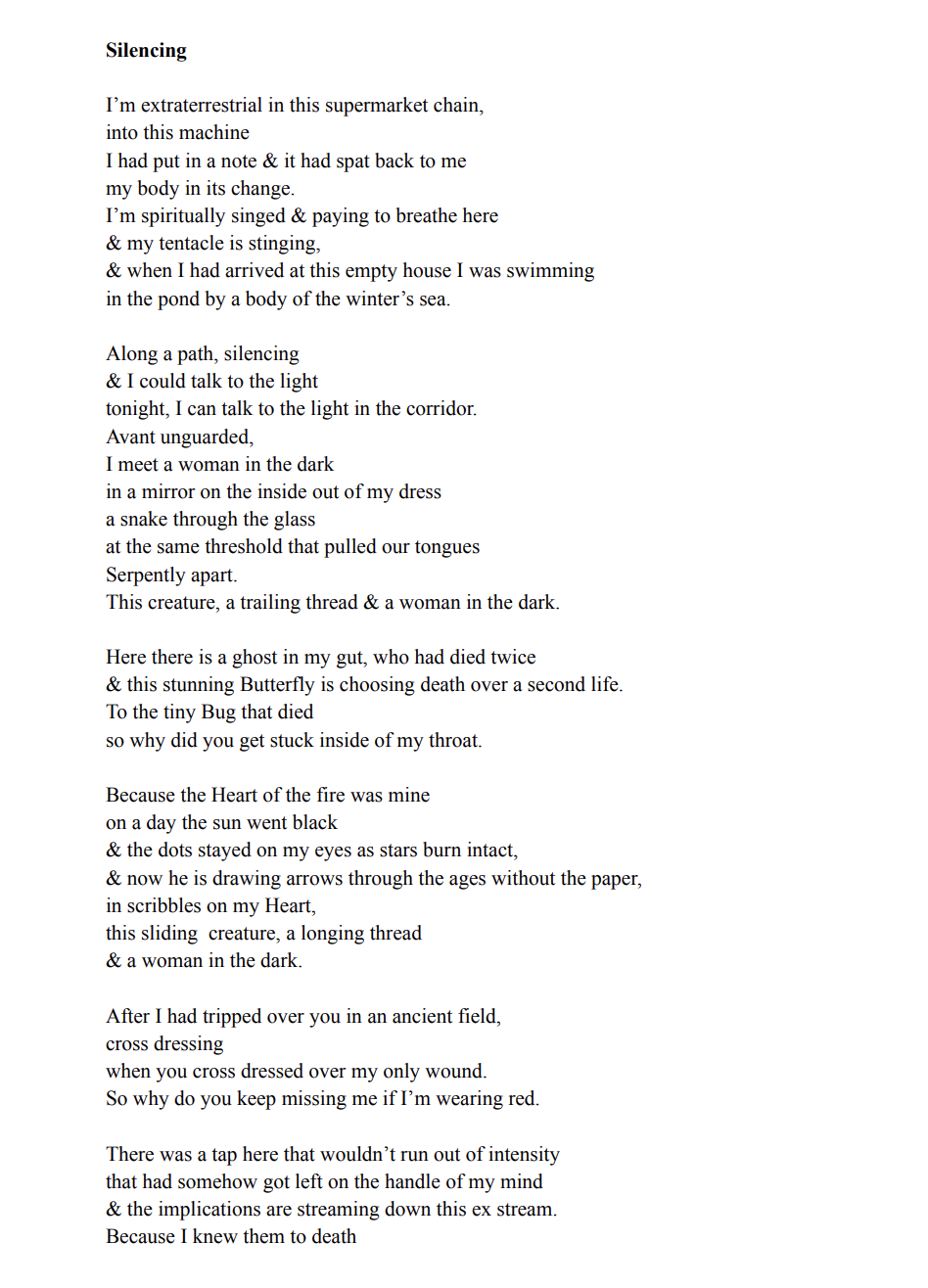
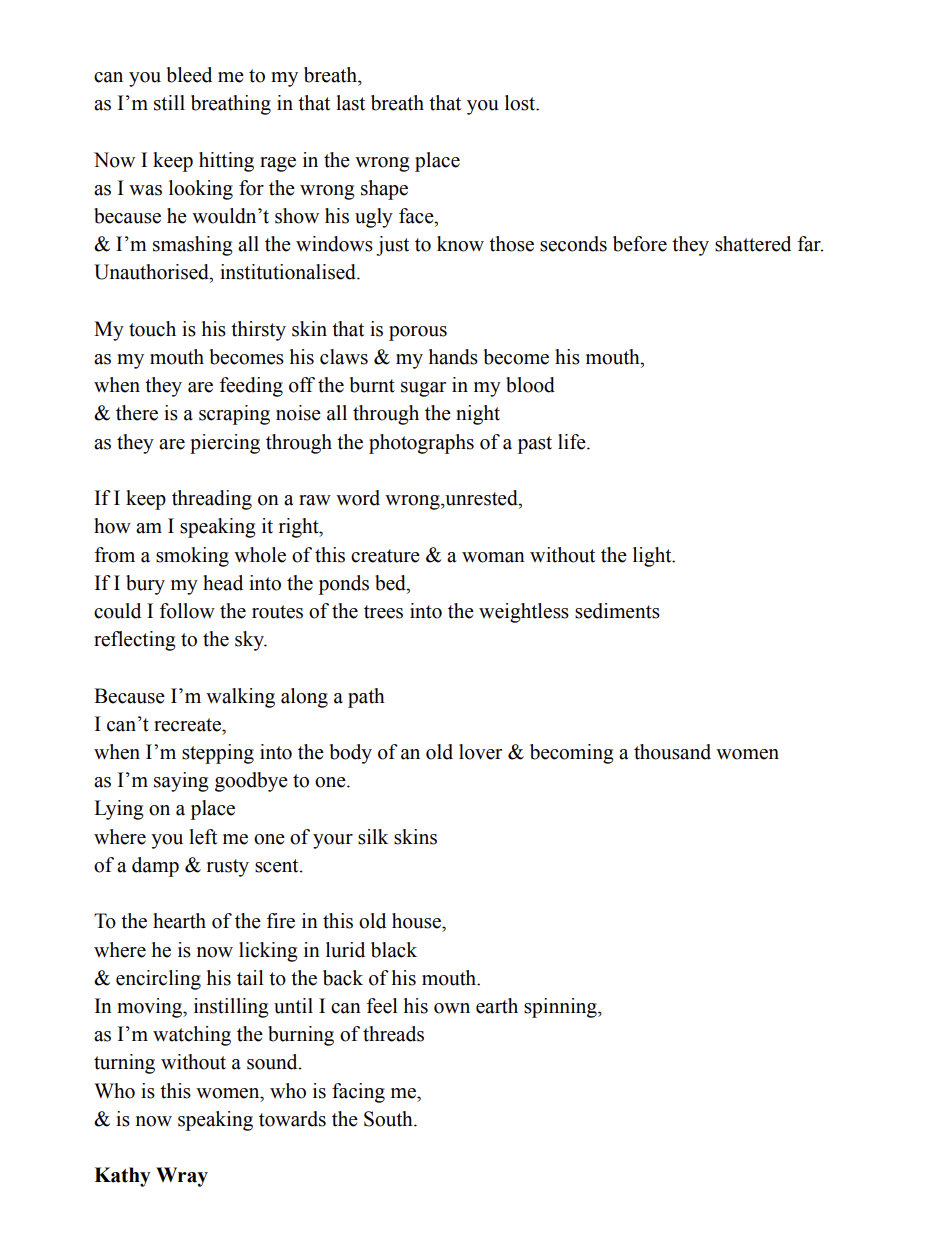
'Silencing' is about feeling like an outsider in every day life and referencing projection and reflection within relationships. There are otherworldly and ghostly presence and rage as a character outside of the body. The Ouroboros snake cycle of transformation is referred to at the end.
&&&&&&&&&&&&&&