
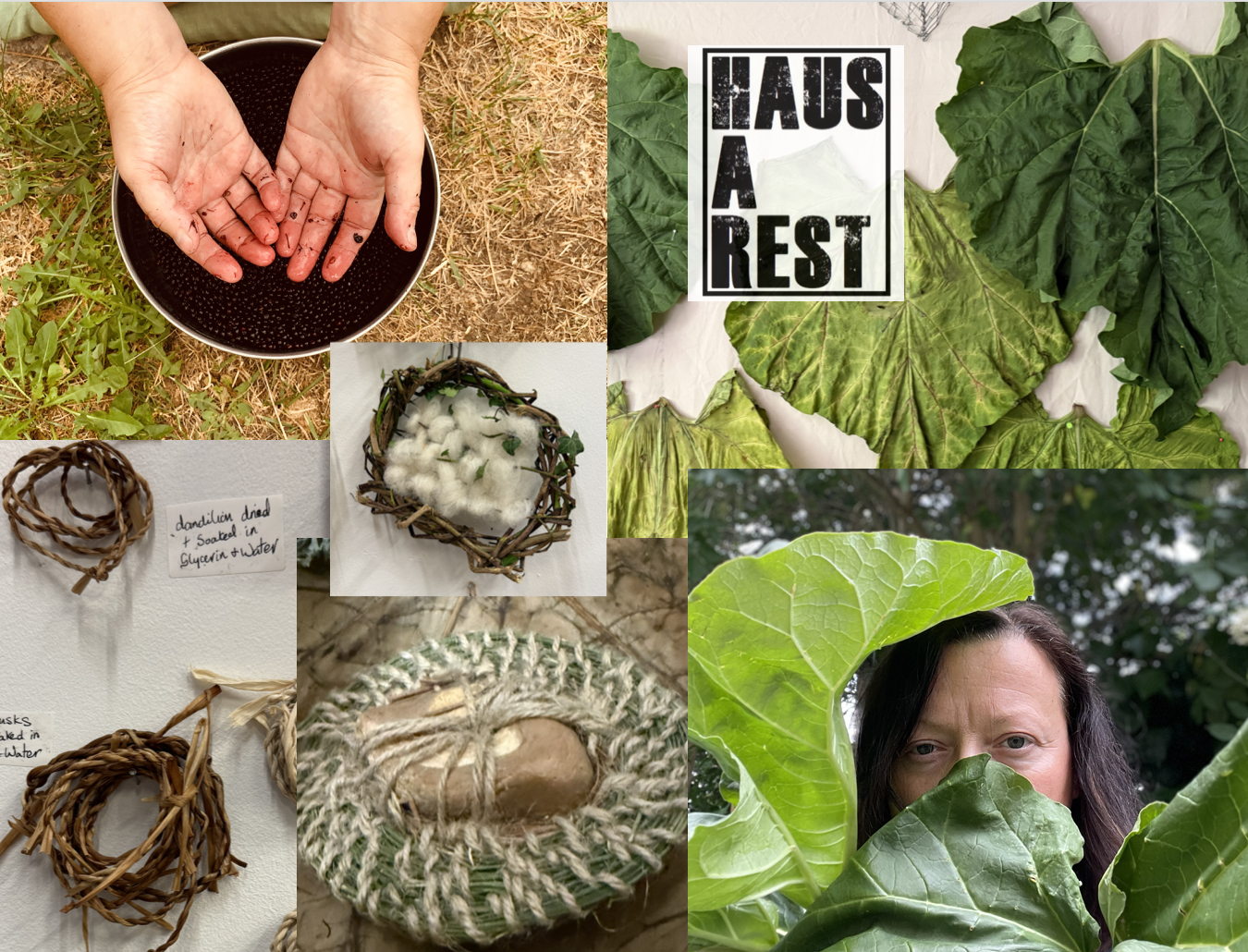
Across continents, artists and writers approach nature in diverse yet conceptually related ways. For example, interdisciplinary artist Lora Aziz reimagines cross cultural relationships with land and ecology through wildcrafting, workshops and visual ethnobotany, integrating foraging and plant knowledge into poetic installations and community engagement.
While land and environmental art historically emerged with the Earthworks movement of the 1960s/70s, many contemporary practices expand these ideas into ecological care, materials research, and embodied knowledge. Artists like Agnes Denes have used large-scale ecological projects, such as planting fields,to reframe art as both environmental intervention and social critique.
What links this diverse body of work is an orientation toward process, place, materiality, and reciprocity. Whether through walking, collecting, arranging, fermenting, or weaving, these artists invite us to reconsider art as something that happens with nature, not simply about it.
The focus of this open call was not just on finished outcomes, but on the relationships, methods and questions that emerge when artistic practice and the natural world intersect.
We were interested in work that reflects ecological thinking, material awareness, and creative responses to foraging, land, and nature as active collaborators in making.
🌳🌳🌳🌳🌳🌳🌳
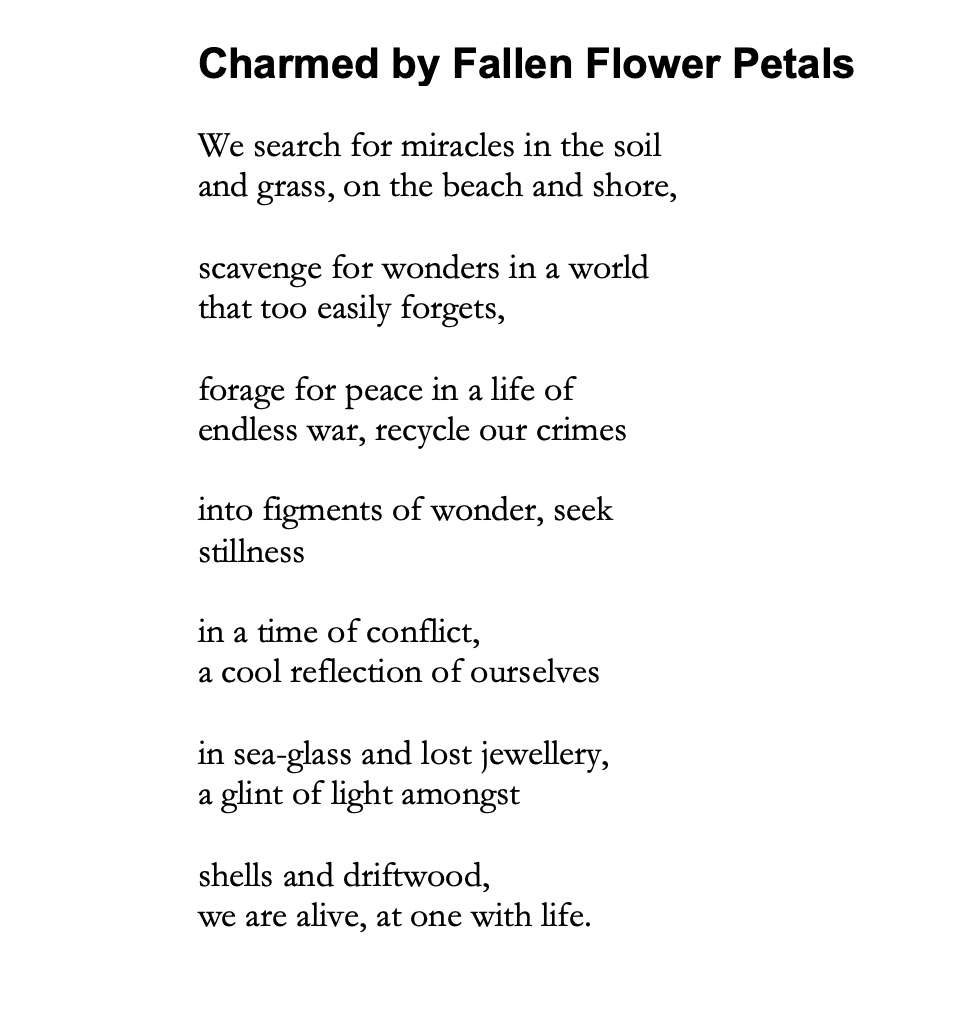
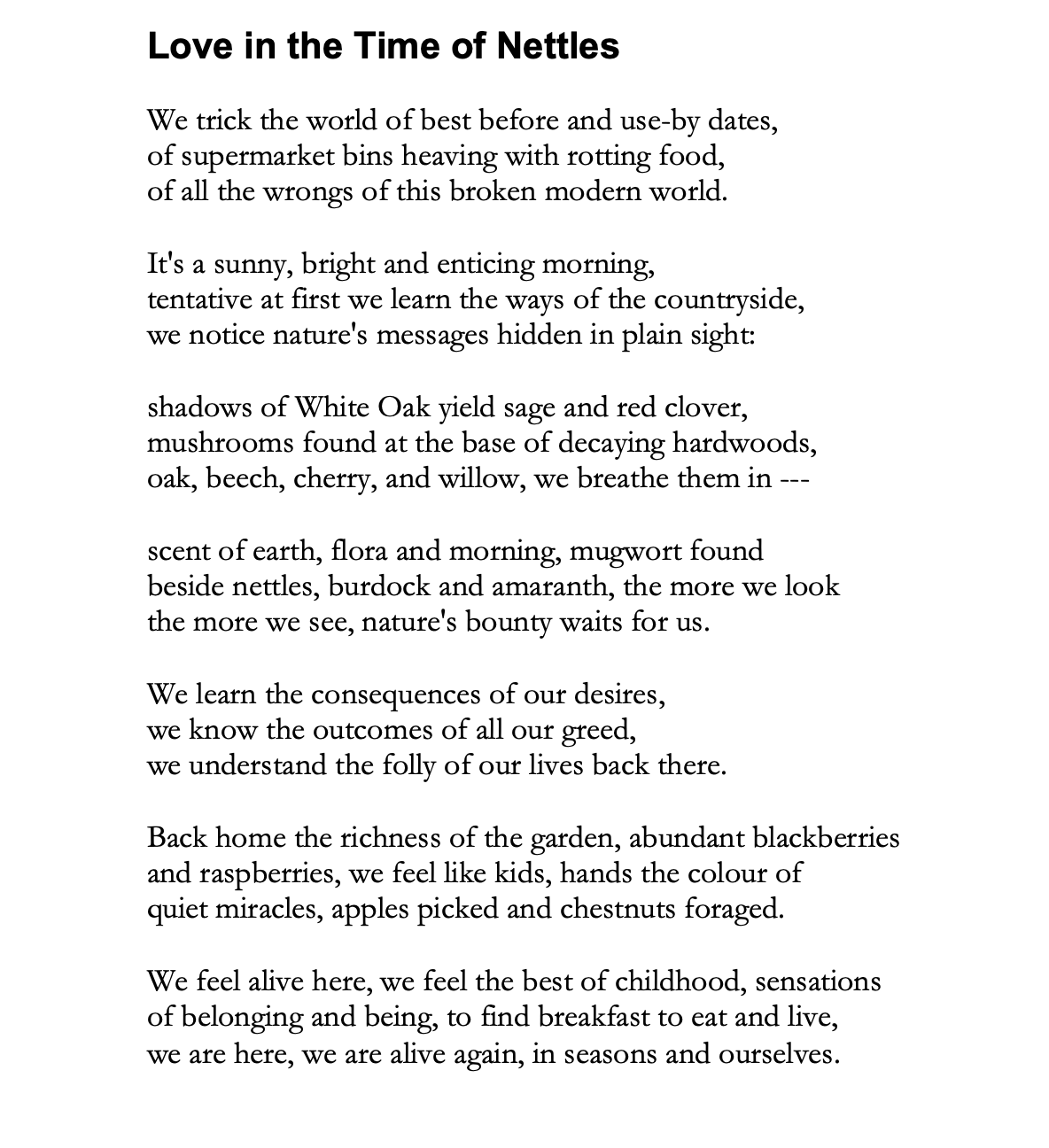
OUR RESIDENT POET PETER DEVONALD
HAS CREATED SOME BEAUTIFUL POEMS THIS MONTH
🌳🌳🌳🌳🌳🌳🌳
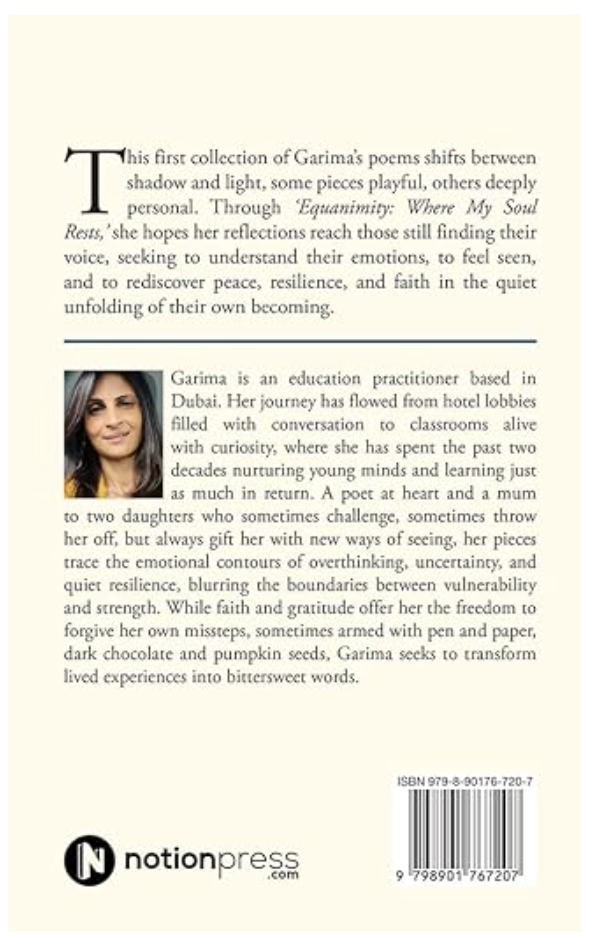
Artist name Garima
Website links to other work
https://www.instagram.com/garima_s_k?igsh=MTV5cHJ6dHlpdzFjZg%3D%3D&utm_source=qr; https://www.poetryformentalhealth.org/mental-health---vol-2; https://www.amazon.co.uk/dp/B0GL9GQR21; https://www.flipsnack.com/BD9B78BBDC9/stockport-post-february-2026-issue-73?
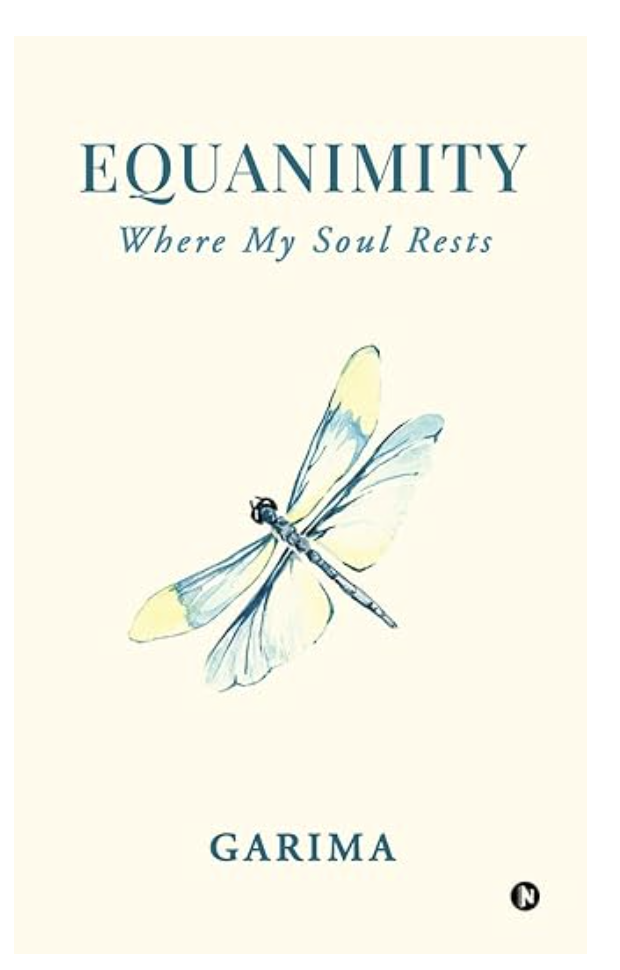
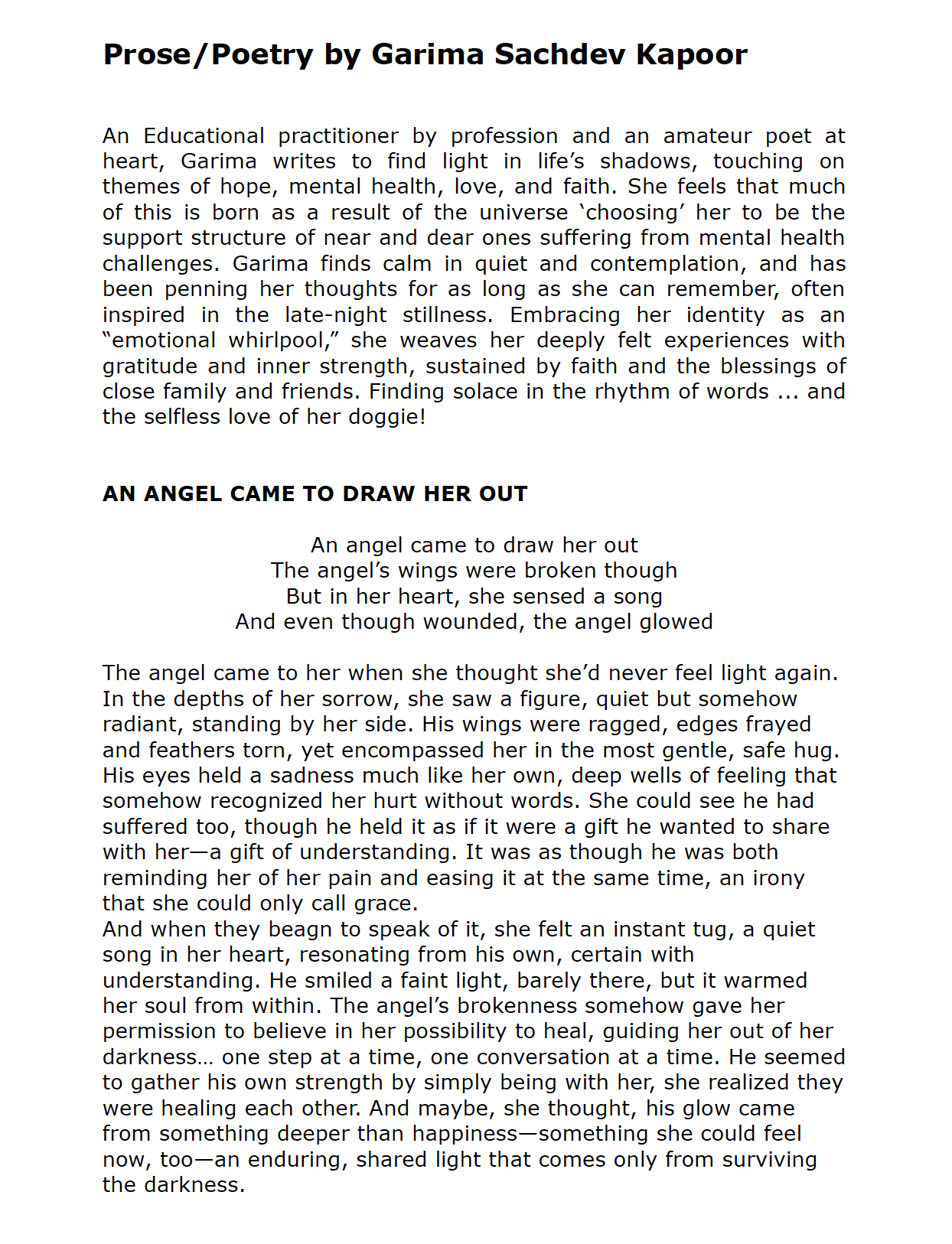
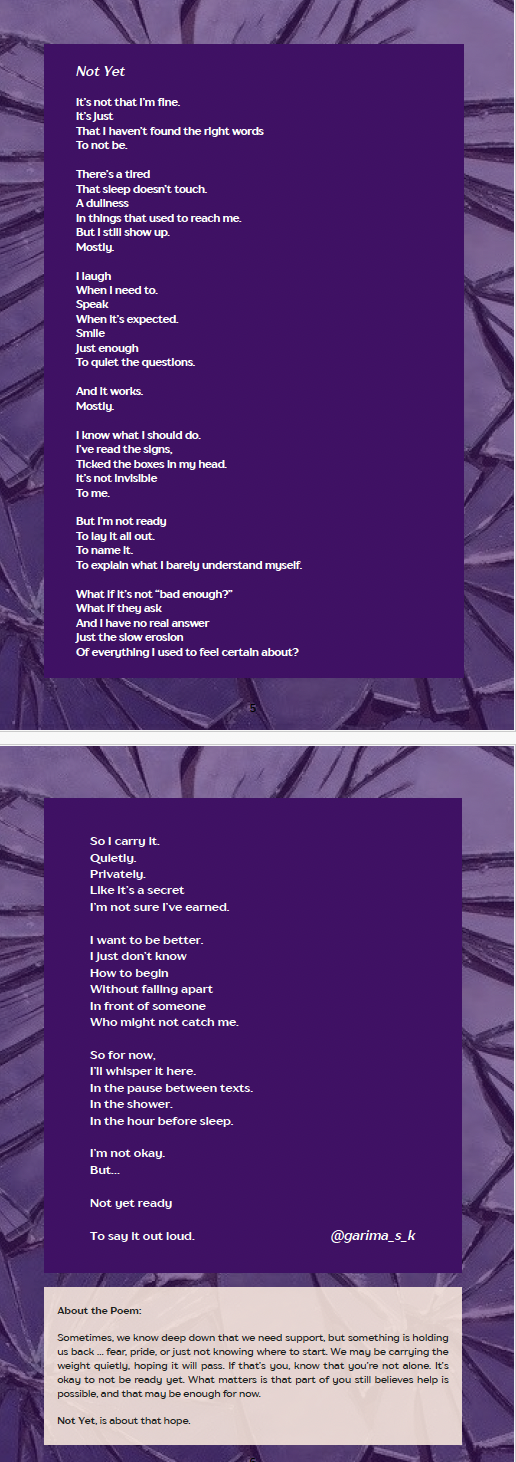
An education practitioner by profession, I have been ‘silently’ writing ever since I can remember and get most of my evocative inspiration at 11:00 p.m.! I consider myself an emotional whirlpool, with endearing flaws and immense inner strength which faith and gratitude keep alive. The blessings of family and very close friendships give me rationality, though I remain a sucker for anything romantic, which often shows in my writing. I usually write about love, mental health, resilience, hope and nature, though inspiration often sees no boundaries in topics! Most of my life, my writing has stayed within notebooks, and only a few years back I began putting pieces every now and then on my IG page. I have participated in about 35 anthologies which have been published by those compiling the anthology into books....mostly in India. I write poems for the Mental health magazine, www.PoetryForMentalHealth.org which show up on their website and facebook page. My pieces have been featured in 2 of their magazines as well. while I consider myself an amateur poet I recently took the plunge and for my 50th birthday I gifted myself the publishing of my first book (image attached) which is now available on amazon, UK (https://www.amazon.co.uk/dp/B0GL9GQR21), US and India stores. I heard of haus-a-rest from Peter Devonald who I got connected to through poetry as I submit poems to him for the stock port post and the manchester post. For me writing is therapy...I find peace it in..if it resonates with others, that is just a bonus.
The gratification of beauty gathered
Foraging - Nature as Art - Amidst tree barks and soft spores
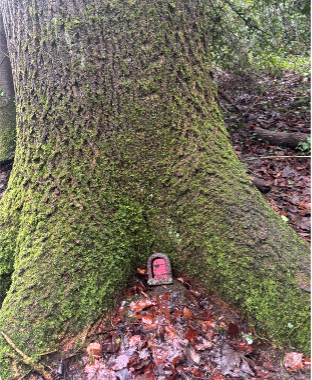
At the base of an old elder tree, a small red door appears, framed by moss and damp leaves, as if the forest is revealing the magic that hides on the ground.
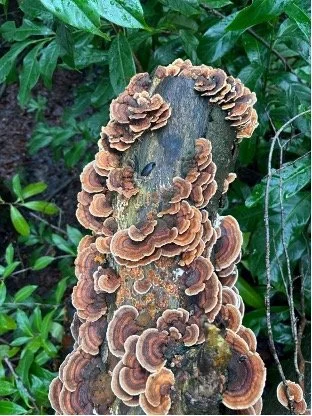
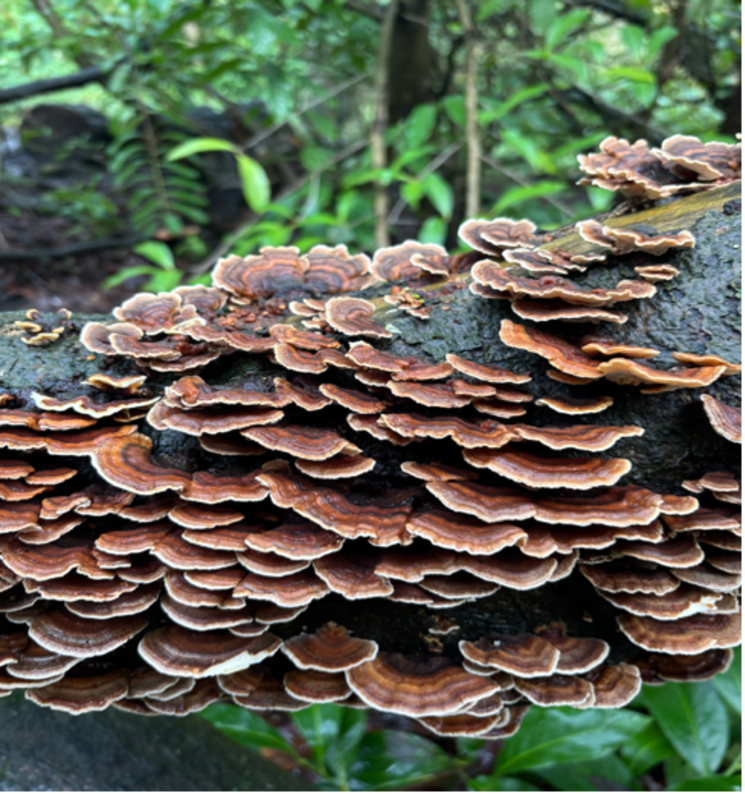
There are shelves of brown and cream mushrooms stacked with care, each edge traced in pale light, growing in layers, season upon season, shaped by rain and silence.
Further into the deep, bright orange fungi climb a fallen branch, flared bright against the green, bold in quiet defiance, proving that decay can actually lead to life.
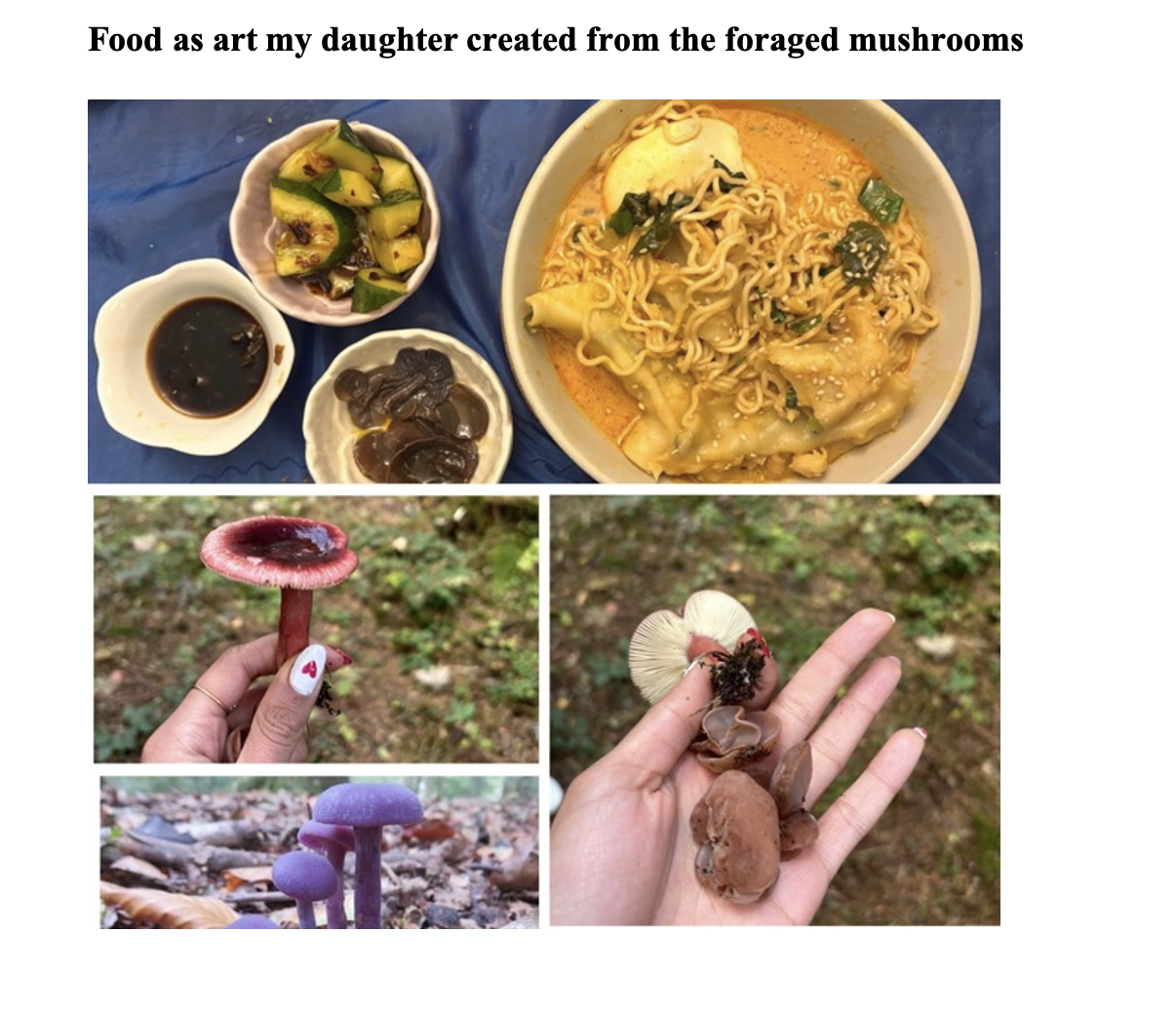
Deeper in the woodland, light is scarce; but colour complements shadow…orange and purple spores startle against the muted greens, browns and greys of mossy tree barks.
They are shaped like waves paused mid-motion, like small maps of time, textured with ridges and curves that are most certainly are from a fairyland.
She studies their shapes and colours the way others may study paintings, knowing each form is fragile, precise and exact.
She traces them with calm attention, fingers hovering before holding, aware their beauty is inseparable from their purpose, how nothing in the forest exists only for itself.
When she gathers them, it is with gratitude rather than triumph; she’s conscious that she is touching a conversation older than language, and the mycologist in her wants to eagerly learn names.
Carrying the jelly ear and amethyst deceiver mushrooms home, it is not possession she brings back, but memory…of the damp air, the exotic colours, the understanding that art was already there long before she noticed it.
Later, when the spores are cooked and shared, their beauty lingers, not just on the plate and then the palate, but in the quiet certainty that the forest shows off it’s arty hand generously to those who know how to look.
Inspiration: This 1st one, named Amidst tree barks and soft spores is inspired from my daughter's love of foraging mushrooms. She is based in Leeds and she will grab any opportunity to be in nature, especially if it involves mushrooms, as she calls herself a budding mycologist. She now loves to cook and she has learnt to pick the edible mushrooms from the dangerous ones and she she transforms these into the most exotic looking dishes. At a young age she was diagnosed with depression and anxiety disorder so when she animatedly narrates her explorations into the forest, my heart swells with gratitude. The pictures I have included with this piece are ones she took and shared with me on her most recent wild adventure.
photos that follow are from my daughter’s foraging trip

Foraging - Nature as art - What the body gathers
Foraging in our body begins without tools.
It starts with noticing what can be reached without strain,
What can be healed, what is natural.
Muscles release not all at once, but gradually,
As if they are learning that they don’t need to brace or prepare.
The body eases slowly and selectively.
Breath deepens on its own...not forced, not corrected.
It settles into the rhythm of being enough,
Inhaling only what can be held and exhaling what no longer serves.
When the body needs to relax, it tries hard to mentally sprawl
Thought becomes less sharp and edges soften.
The attention dims and emotions float.
This is a different kind of foraging.
Though it is art….not continually seeking answers,
But sensing what nourishes and what exhausts.
Art appears in the restraint.
In the choice to carry on, trusting the body’s intelligence to recognise balance,
Either to repair or otherwise to surrender.
Nothing is extracted.
Neither is it conquered.
What is gathered is proportion and space,
With foraged parts, the body is art.
Inspiration: The 2nd piece, titled What the body gathers is inspired from my own health journey. My body has figured out a way to breathe, a way to mend. It's like art, how every part comes together to perform, to support and to heal.
Foraging - Nature as Art - Wild, then home
I gathered the wild flowers without urgency,
Daisies opening shyly, maybe light embarrased them
Snow drops delicate and happy,
Bluebells bowing their heads as if introspecting,
Cow parsley wispy as breath,
Violets low and unassuming.
They came home with soil still clinging to their stems,
I placed them in a repaired ceramic vase,
The one my mama kept near the window,
Its edges worn smooth by years of holding and washing,
The cracks not hidden; supermarket glue tracing them like kintsugi.
Art appeared so easily,
Not in the deliberate arranging of colours,
But in a spontaneous coming together,
Moments carried from the field to my kitchen,
The evidence of life blooming in the keepsake of my angel.
Inspiration: The 3rd poem, Wild, then home is a reflective memory drawn from years back when I would visit the field while living in Berkshire. my daughters were young and we would go to pick flowers and have a picnic. The vase I write about is no longer with me, but the memories are alive. We foraged wild flowers and art pieces got created at home with little effort... immense simple joys...
🌳🌳🌳🌳🌳🌳🌳
Artist name - Claire Todd
Website -www.clurr.co.uk
social media details - @clurr_clarocorrecto
Description
You cannot find peace by avoiding life' is a journey through the seasons and the debilitating pain of relinquishing the biggest love of my life, and its intrinsic relationship with the loss of my mother. It's a story of facing truths; drawing on parallels in nature, the course of things, and how time, place and people can salve deep wounds.
Originally a written piece submitted to my local community magazine, which was ushered into life in December 2023, by a neighbour who suggested I write something for the Spring 2024 edition. The piece was recreated in March 2024, through spoken word and a series of filmed images and field recordings, collected locally, with a choral section accompaniment, taken from a musical piece, 'music for photons'. An early and somewhat naive piece that I composed in 2021 in tribute to that love. The piece is intentionally filmed in pillar-box format, highlighting the concept of noticing and how healing can be found in nature.
The title of the piece is based on a false quote attributed to Virgina Woolf. The line is often cited as Woolf's but is, in fact, a line from the film about Woolf's life, The Hours. Yet whilst there is a falseness in its origin, there is truth in its meaning
🌳🌳🌳🌳🌳🌳🌳
Artist name - Duncan Mackay
Website - Www.Udderdishbeeleaf.com
social media details - @udderdishbeeleaf
Description
SYNOPSIS
Scrumping has always been the commonest form of foraging for those without the specialist skills of fungi and flora identification, in this piece a timeline through earliest experiences of apples and rosehips to process and present is followed in a truly scrumptious manner.
Scrumping
I was an early-entrant scrumper. My coal miner grandfather had free coal as a perk of the job; albeit a job that eventually killed him. He used the coal to heat a greenhouse that grew humid heaps of towering tomatoes on strings and, as a toddler, I was a frequent visitor to this snug enclave. In the outside garden there was also a large Ribston Pippin apple tree with sooty sharp sweet fruits that never got scab due to a perpetual layer of protective carbon. Coal, or fossilised sunshine, as my grandfather poetically called it, was everywhere. It was a black Eden in South Yorkshire. I always liked those sweet juicy apples picked fresh from the low branches and within the reach of a three year old: My first scrumping. What was not allowed was stealing the tomatoes, bred from cosseted seeds in an alchemy of secret mulch in anticipation of prizes at the local horticultural show. I knew I shouldn’t do it but those unripe green tomatoes looked just like sweet pippins. “Nasty papples” entered the family lexicon when my green tomato scrumping crime was discovered, broadcast by a horrified little me.
In Yorkshire there is a saying “Owt f’ nowt” which is deployed often and is the main tenet of a folksy ecological religion of not wanting to waste anything, especially if somebody else has it and might not be using it properly, or at all. Thus, when the DelRosa rose hip syrup factory in Newcastle needed its raw ingredients, thousands of children were press-ganged as indentured labour in the scratchy hedgerows of northern England. Hours were spent poaching the brimming field boundaries for this aggressive seedpod with tiny bairns emerging bloodied and torn with tattered bags of hardy hips. Immune from the laws of trespass parents helped legally innocent children over field gates to the best bushes.These hauls were weighed at school and three old pennies handed back for every pound weight collected. The bigger prize, however, was the tin badge awarded to the child that collected the most bloody rosehips.
Decades later, and professionally stimulated by association with Common Ground’s arty-environmentalist founders Sue Clifford and Angela King (who gave commissions to Andy Goldsworthy, Norman Ackroyd and Anthony Gormley), we visited Herefordshire. Here we found traditional cider-making in decline but also Hereford Cider Museum. Questions elicited the response that cider-making was easy-peasy. Wild yeasts did the fermentation for you. So, we got some novice gear, washed out a lot of bottles and waited. By 1990 Common Ground had created Apple Day and enthusiasts spawned events across Britain.. We named ourselves the New Road Cyderists (not particularly Maoist but more the street where we lived) and entered our gum-puckering ‘cyder-nouveau’; and won first and second prize. Thus emboldened, we ‘scrumped the World’s largest orchard’, (suburban gardens). Putting the word out in pre-internet days was by personal contact but we soon amassed a large number of gardeners who wanted rid of their fallen apples. Owt f’nowt swung into battle readiness mode and soon we were tumping donated scrumps in heaps ready for milling and pressing. This was semi-industrial scrumping without the effort of climbing garden walls but still involved child labour turning the scratter wheel or washing apples. In 1996 it moved up a gear with the submission to the Henry Ford European Conservation Award of a proposal to encourage others to do similar things. Bless me it won; so £5000 and a presentation in Westminster Abbey from Dr David Bellamy enabled things to go electric. We bought a B&Q garden shredder for £50 and armed with a 1200 rpm cutting blade no biffins were ever safe again. For the next decade we toured like pomological rock stars and scrumped the orchards of grand houses like Disraeli’s Hughenden, the literary fragrance of Shakespeare’s Mother’s House in Stratford or the revolutionary whiff of George Washington’s homestead at Sulgrave Manor.
A visit to Denmark took scrumping onto the international stage. I had utilised the occasion of a visit to Noma in Copenhagen to meet and chat with René Redzepi, then the World’s Greatest Chef, about wild food foraging and to exchange our cookery books with me offering my slim volume ‘Eat Wild’ for René’s giant blockbuster on Scandi-nouveau. My unofficial cultural landscape mentor, Prof Ken Olwig, who first supped real cider with me at the bar in Sheffield Station, was also hosting a birthday party and Danish cider-making event at his country cottage near Korsør. He said that he had spotted a crab apple tree in the local village and thought that a wheelbarrow load of crabs might better the brew. As I was thus busily engaged in a low ditch happily plucking fallen crab apples from the muddy grass and plonking them tunefully into my metal barrow, I noticed an old woman striding with ominous purpose in my direction. I waved and smiled, knowing what was coming; there was a loud aggressive outburst in Danish. I smilingly apologised for being English and not understanding. “How dare you come to my country and steal my apples!”, she spluttered in red-faced rage. I paused, thinking clearly back to all my school history books and the vivid descriptions of blood eagle mutilations by Danish vikings, the repeated Danish sacking of Lindisfarne Abbey, and the endless stealing of ‘English’ booty by the Danish Great Heathen Army. I fought shy of a medieval-related diplomatic incident and offered instead to wheel the grubby apples round to her house. This offer was rejected with much feudal huffing and angry words in Danish. She turned and strode back to her Manor House. I was secretly pleased that the basic but deliciously naughty principles of scrumping were still alive and kicking off even in the land of Lego and the adult world of bicycling social democracy. It felt good; it was a golden thread from personal toddlerdom to feudal toddlerish tantrums and somewhere I could sense my grandfather chuckling.
🌳🌳🌳🌳🌳🌳🌳
Artist name - Sabine Rovers
Website - www.sabinerovers.com
social media details - @sabinerovers
Description
They were always there for me.
Every path I walked, every road I took, they were standing right beside me. And yet I didn't know their names or where they came from. Their beauty sometimes asked for my attention, but I mostly took them for granted. Always rushing, always running. Luckily they didn't give up and stayed there, persistent and strong as they are, waiting until one day I would see them, really see them.
At a point in my life when I felt so stressed and burned out that I had to slow down, finally they started to catch my attention. Step by step a new world awoke before my eyes. A world full of life and energy, vulnerability and strength. Of smells and tastes and a natural beauty that no artist could create. A world full of edible and medicinal plants! How could I have ignored them for so long?
All these plants are unique and essential in their own way. Now I know their names and stories, they have become kin to me. I want to take care of them, as they will take care of me. From now on I will greet them back. Knowing that they will always be there for me, if only I keep seeing them.
And now it is your turn...
to open your eyes to the magical power of plants with all your senses. To explore your surroundings and overcome your plant blindness. It is time for us to get to know the plant world again, just like our ancestors once did.
So go out there and see, smell, taste and touch the wondrous wild world around you! Learn a plant (or more) by name and pass on your knowledge to others. Please don’t forget to always forage with respect for all other living beings.
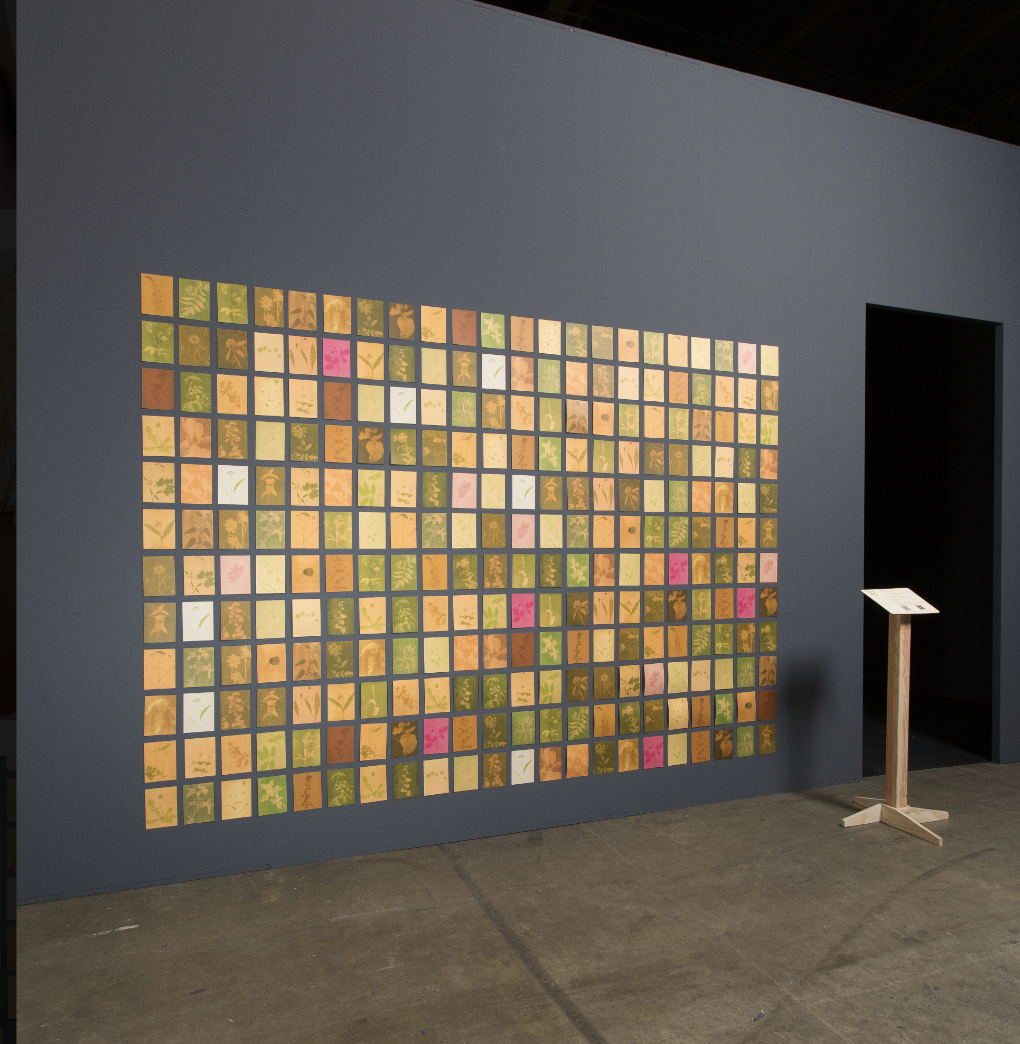
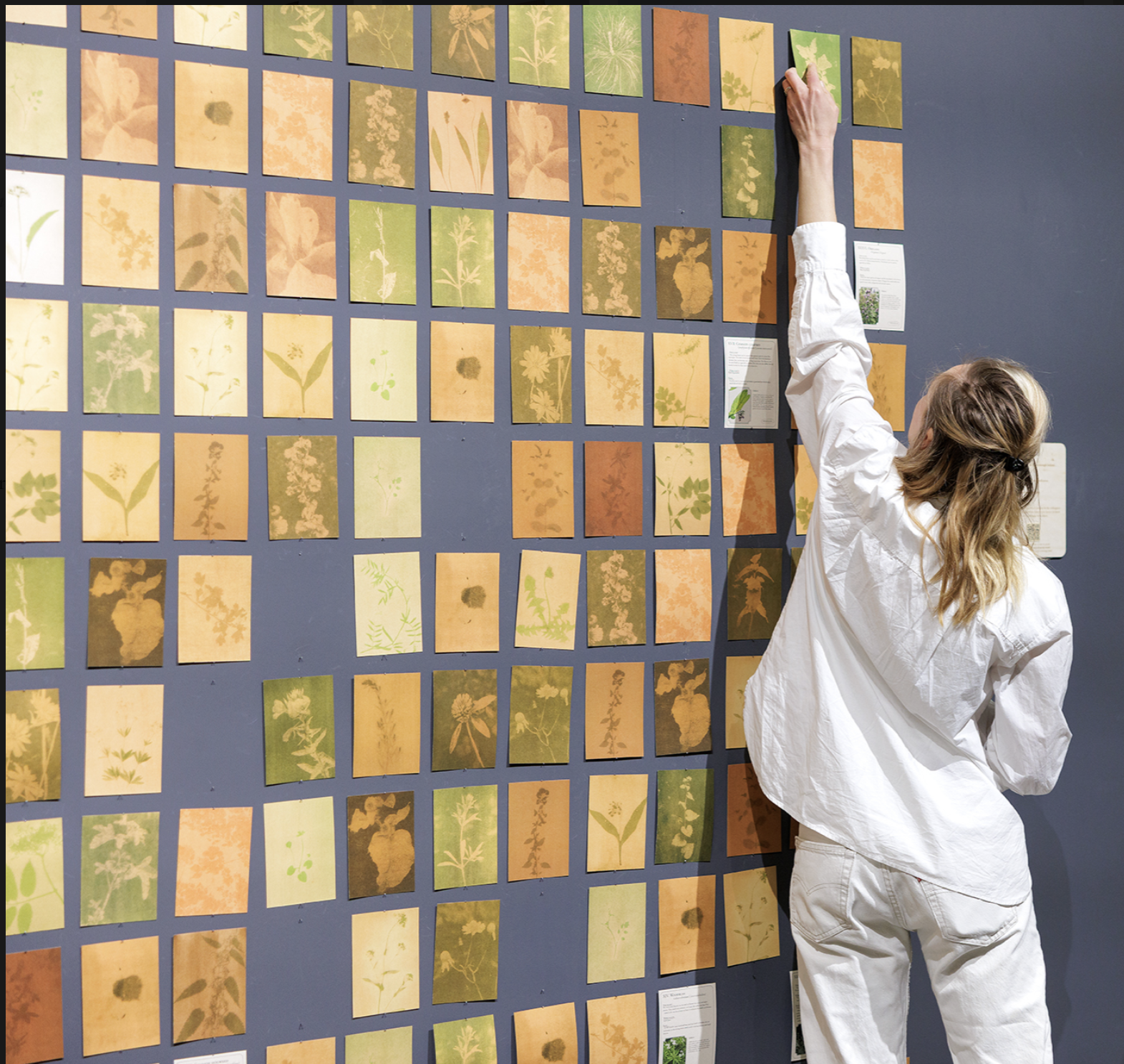
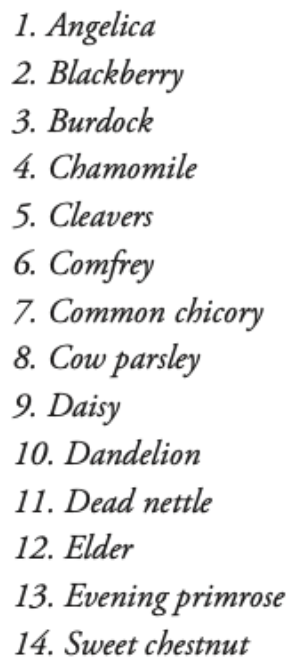
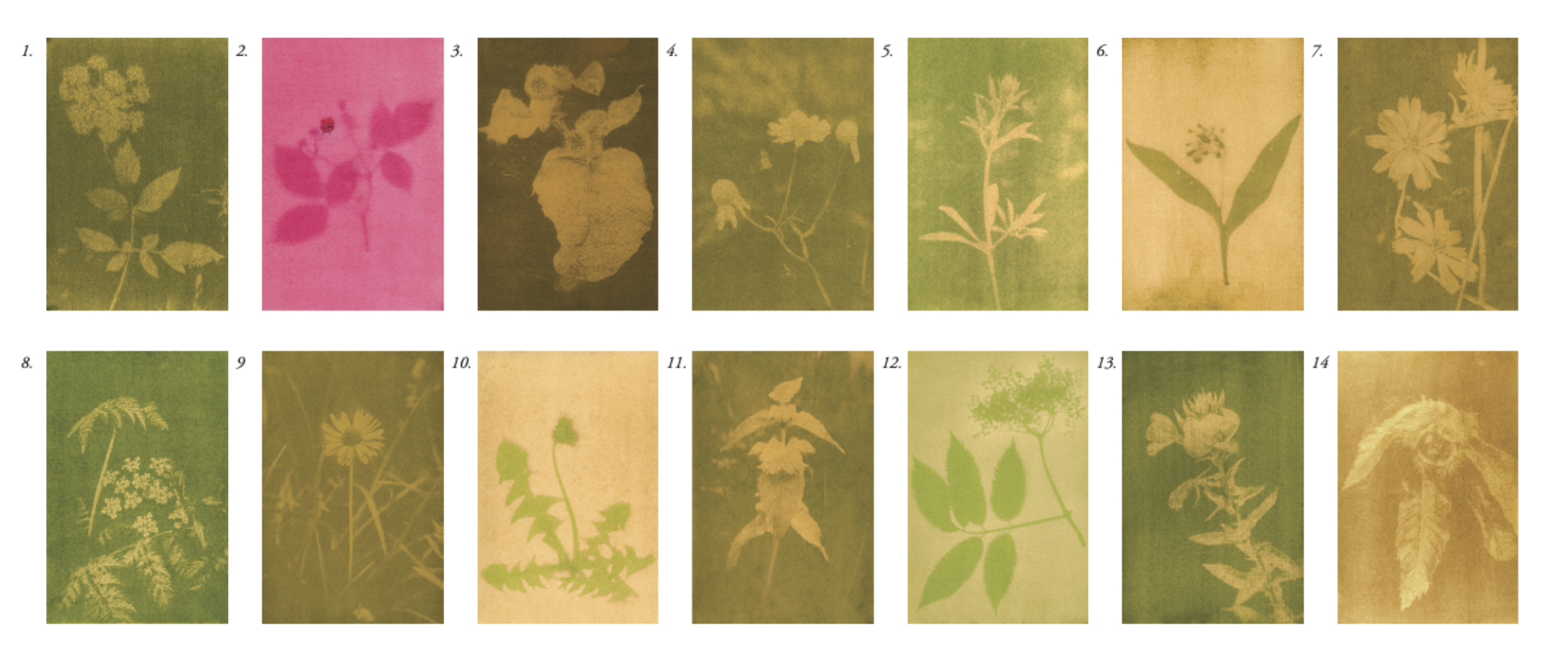
For this project I have collected 44 common edible and medicinal plants growing in The Netherlands. From every plant I extracted the natural colour from its sap and printed the plant using the old anthotype printing technique. This technique uses only plant sap (which is naturally photosensitive) and sunlight to create a print. Every plant has been printed in its own pigment, eventually showing a forest of natural colours when exhibited together.
These 44 anthotype prints have been published in a card set. Every plant card contains information about the plant on the back, so you can learn their names, unique characters and stories. Included in the card set is a foraging ethics card and 8 empty cards to add new foraged plants yourself.
Title
We've always been here for you. The magical power of forgotten plants.
🌳🌳🌳🌳🌳🌳🌳
Artist name - Anmarie Bowler
Website - https://brevityisland.home.blog/
social media - @anmariewrites
Description
A contemporary myth that explains the movement of Verbena Bonariensis to the areas on the Isle of Wight called 'duvers.' For centuries people have handed down mythical stories as a way of finding meaning amid chaos, change and uncertainty. New myths are shared stories that build closer communities and even stimulate real-world action.
Title
Bend, Long and Strong
by Anmarie Bowler
Twice upon a time and place, a future past, a wind-swept space, Islanders were the envy of a washed-up world. Against the odds and sods, we’d protected nature, celebrated history and embraced all things novel and neighbourly.
Children, ours, thrived in the warm coastal climate. Sun loving, they nonetheless learned to lean into the sea breeze. Anchored in sandy footings, Island buds grew tall, tenacious. Loquacious. Their imaginations were purple patched. Free, indeed, to listen and love, our younglings looked to the horizon for infinite possibilities.
Children or Verbena Bonariensis?
The statuesque plant was once confined to tended gardens, behind stone walls and cut-glass hedges. With clusters of tiny eyes atop wired stems, Verbena watched our infant hopes germinate, ripen, bloom and climb. She kept her eyes on our prize, and it was this Mother Nature-ly instinct that propelled her forward for the sake of those she came to consider her own.
While Wind had often felt like a thorn in her side, hadn’t she adapted? Limber, long and strong, Verbena grew to appreciate the powerful gust’s role in Island life. And so, it was Wind that she asked to carry her precious self-seeds over stone walls and through cut glass hedges, across tree lawns and over unfair thoroughfares. Wind blew the best of Verbena along our coastal outline where she gathered and grew anew on those special stretches we call duvers.
From her seafront row, Verbena bids fond farewell to departing youth and welcomes those returned – some bruised, some bonny. At beaches she provides a place of contemplation, a quiet example of bent, not broken, all her eyes high to the skies, a perpetual refuge for young of number and of heart.
And that’s why Verbena Bonariensis grows on the Island’s duvers.