
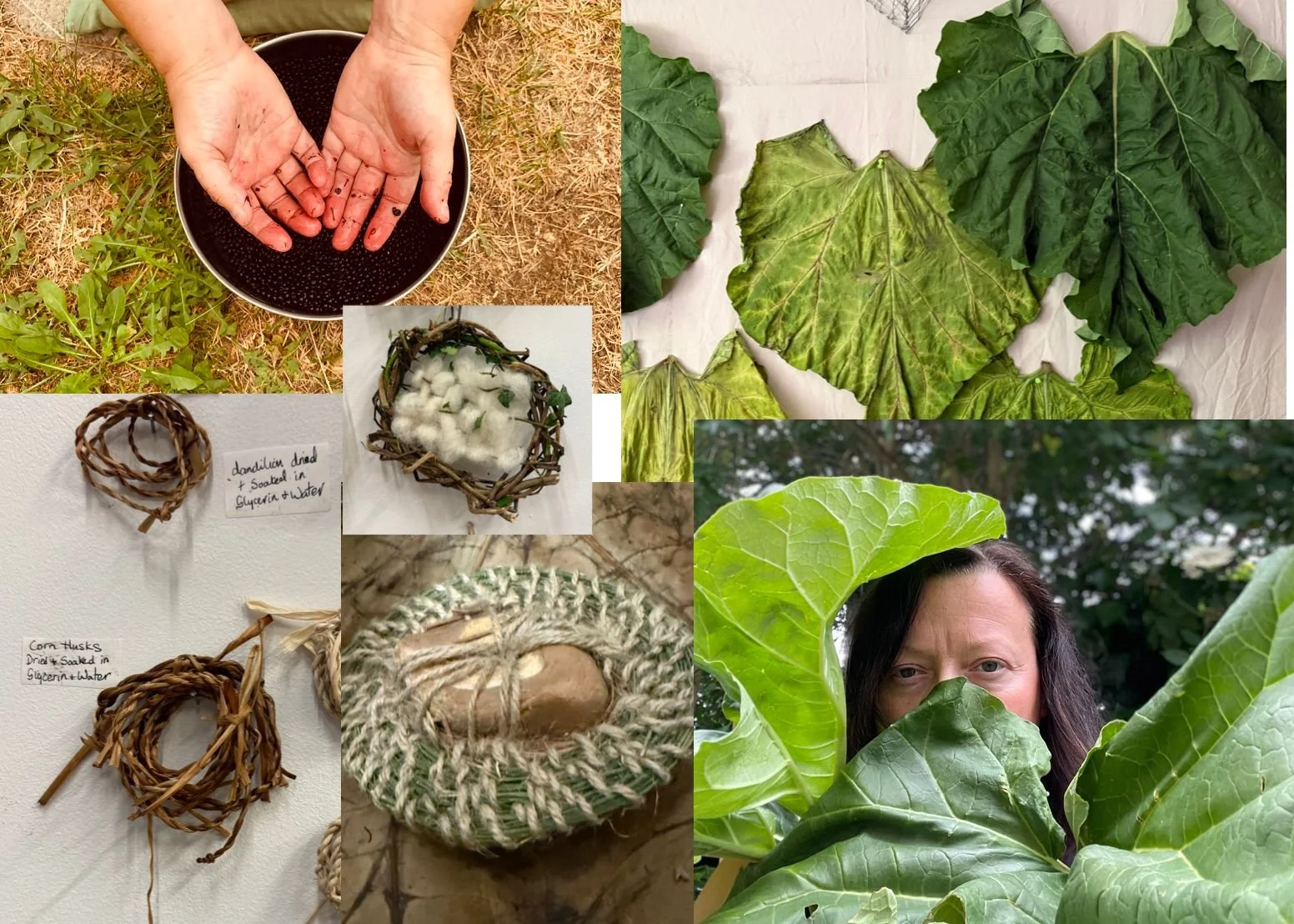
In this issue, we are exploring creative work that approaches nature not as subject matter alone, but as process, collaborator, material, method or a way of thinking.
This includes literal foraging, ecological research, walking as practice, material gathering, plant knowledge, fermentation, fibre, ritual, landscape, seasonality, care, slowness, or embodied engagement with the natural world.
Artist: Elizabeth Benson
www.elizabethbensonart.com
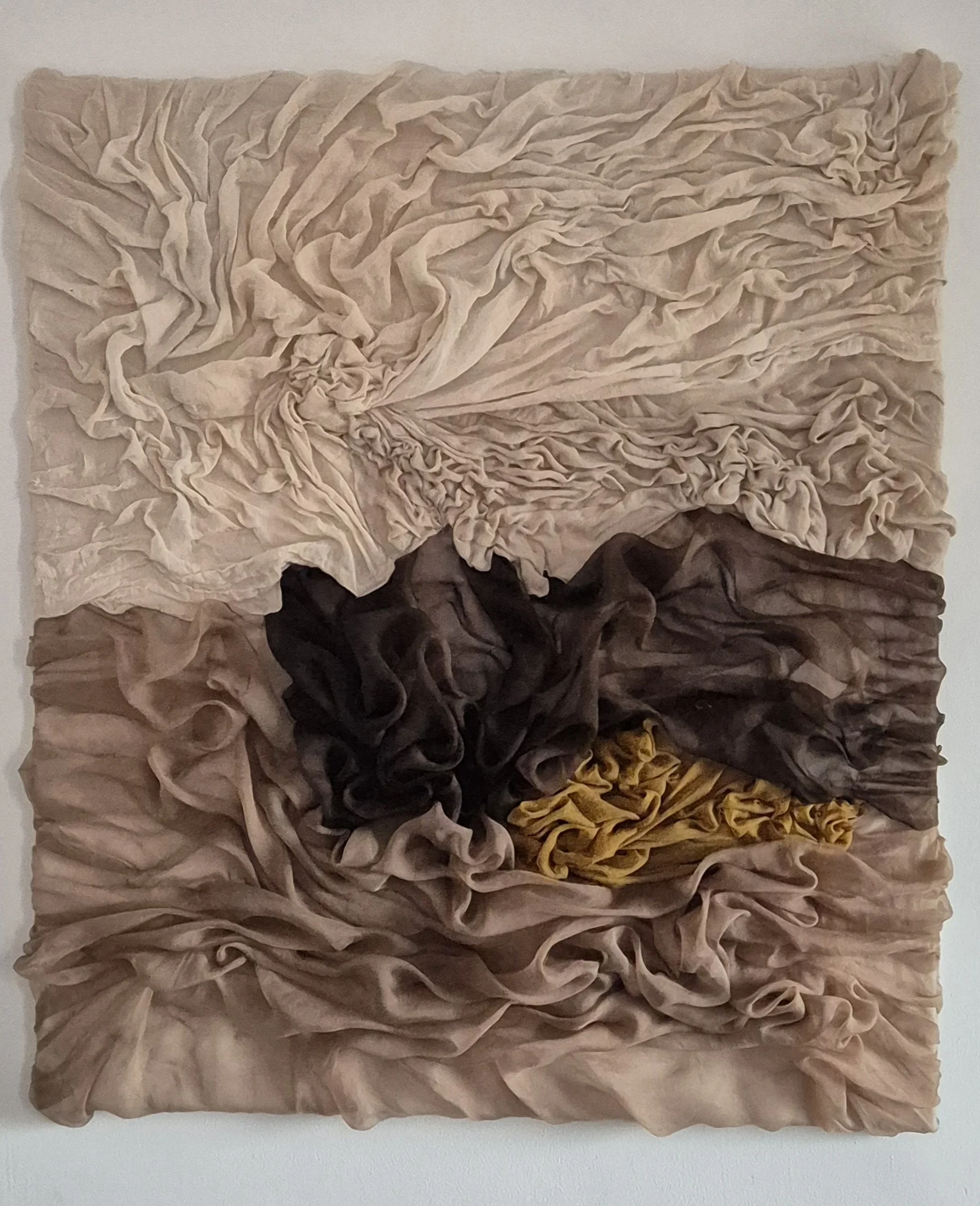
“What Remains”. I work with foraged, seasonal plant materials to create sculptural textile pieces that behave like winter terrains. My practice is rooted in walking, gathering, and dyeing with what the land offers in the cold months — alder cones, alder bark, bracken, dock root, fallen birch. I’m drawn to winter because scarcity sharpens attention; the palette becomes a record of what persists when everything else has fallen away.
For this piece, I’m exploring winter leaf‑litter as a structural logic: lighter, rust‑orange and pale‑brown tones at the top where matter is still recognisable, shifting into dense alder‑brown folds at the base. The cloth holds outward tension and quiet weight, echoing the slow decomposition and mineral stillness of the season. It’s an attempt to work not about nature, but with it — letting winter’s materials determine both colour and form.
Artist: Sandra Masterson
sandramasterson.co.uk
@sjmasterson1 The Language, Earth Instagram
Facebook Sandra Masterson
LinkedIn Sandra Masterson
”Patchwork”.
It is hard to keep the middle generation within rural communities, as this age group more often migrate to the larger conurbations where opportunities and entertainment are more plentiful. Rural areas are vital to the health and well-being of all; without these areas, the quality of the air we breathe would diminish even further.
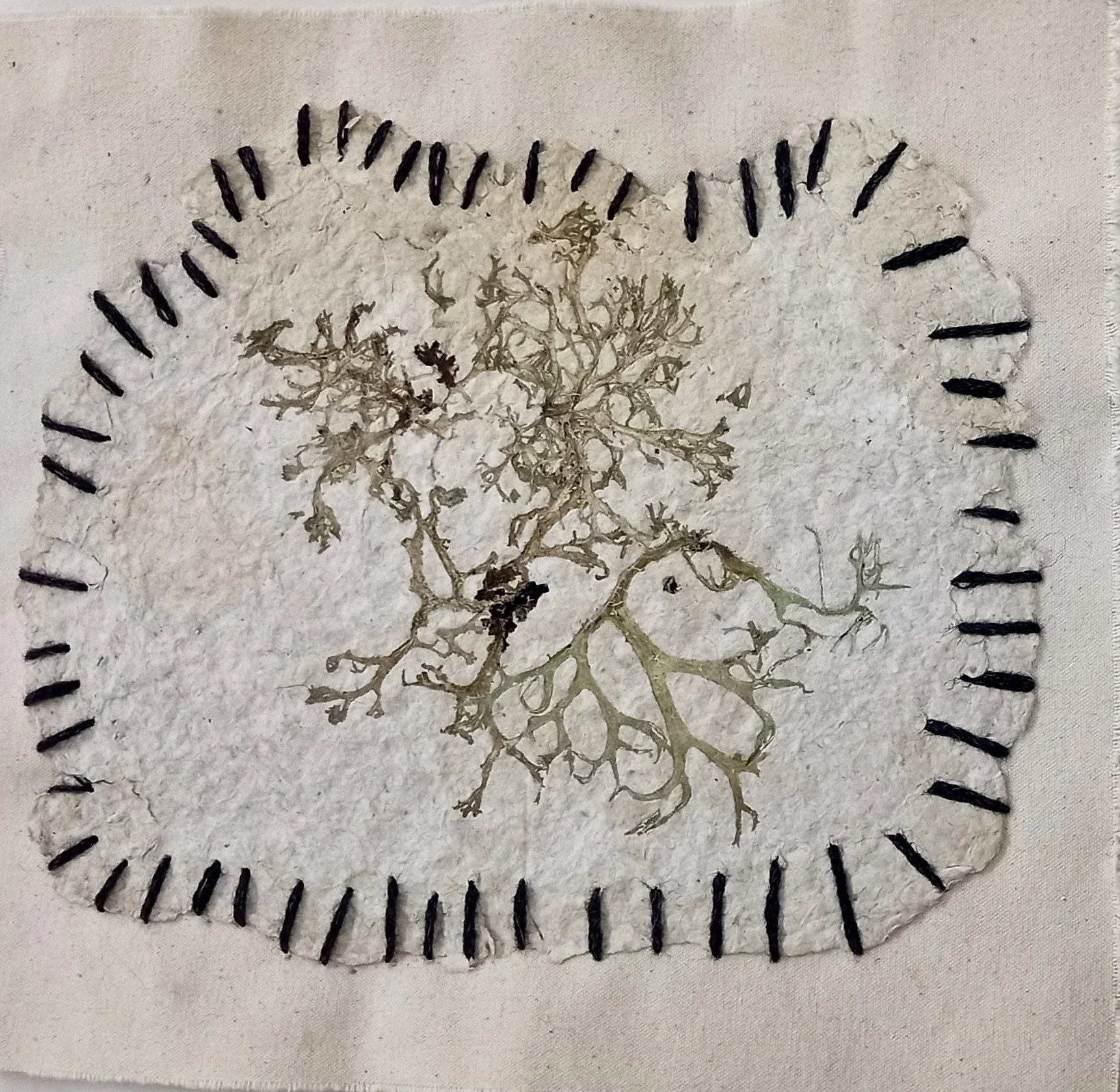
Within the wood, emerald and mars green lichens drip from the branches of the trees, while the trunks are luxuriantly coated in many forms of mosses. These are indicators of good air quality. However, land is seen as a commodity by most governments. Support for rural areas is patchy, like a “ make do and mend “ approach of the Second World War era.
The crude stitch-work I have used on each patch is in sharp contrast to the delicate filigree lacework of the lichen, held embedded in hand made paper.
Artist: Caroline Nixon
@handmadecaroline
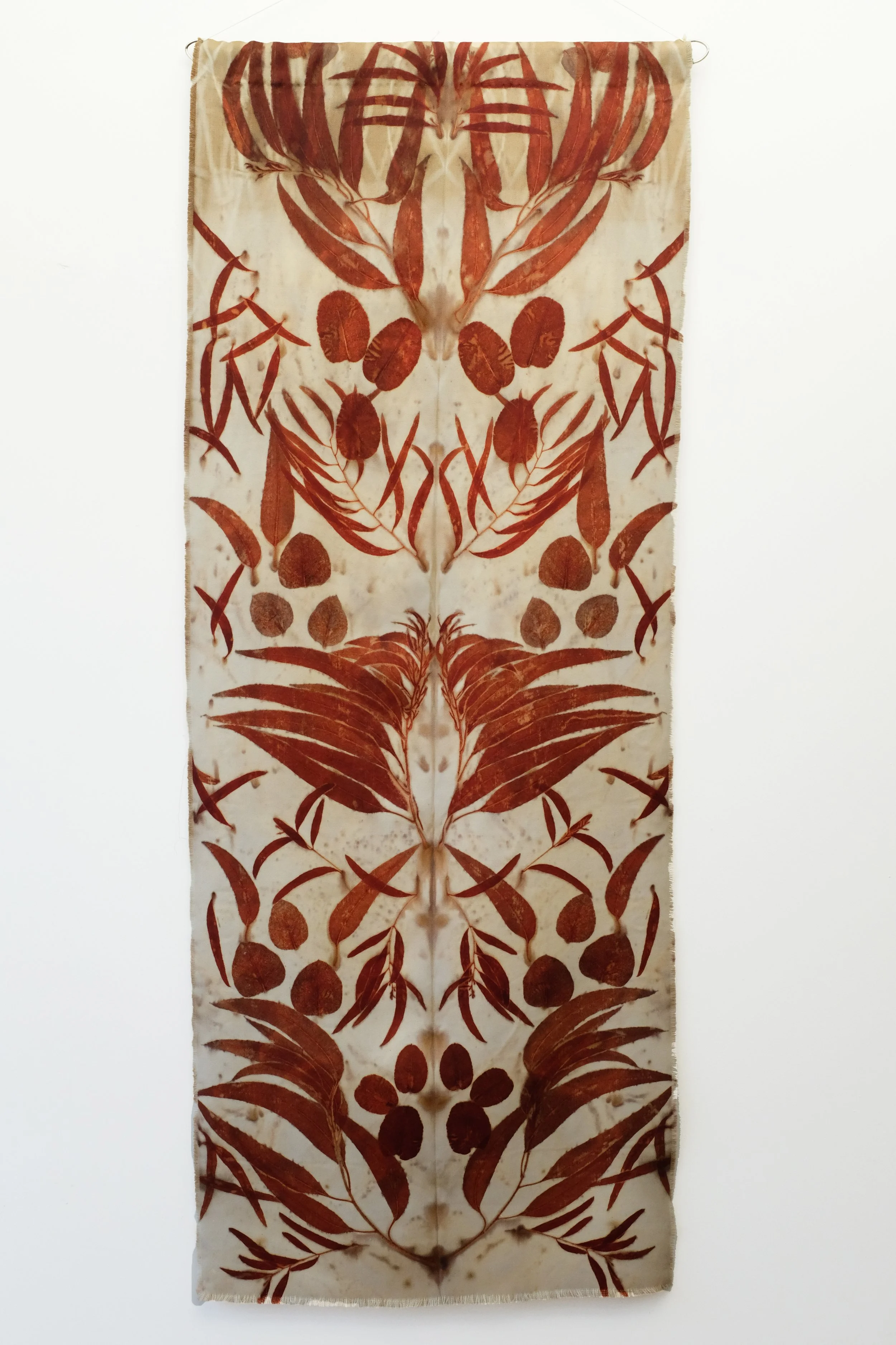
“Phoenix from the Ashes”. I am an ecoprinter. I transfer the colour and shape of leaves onto cloth, using natural dyes and tannins. All my textiles are natural fibre, and many are vintage/recycled. It's one part science and one part nature's magical alchemy. I grow almost all the plants that I print with. Others are foraged responsibly from hedgerows, forests, and friends' gardens. I work in tune with nature, growing according to season, harvesting the leaves at the time when they will give their best. Dyeing, arranging the leaves, steaming the fabric and revealing the prints are a ritual that never loses its excitement, or its calming restorative effect. There's a fascination to the way the leaves interact with the cloth and the dyes; every piece is unique and often unexpected. Phoenix from the ashes was inspired by the increasing incidence of forest fires due to global warming and human carelessness. It is printed with eucalyptus, which regenerates after burning
Artist: Jane Charles
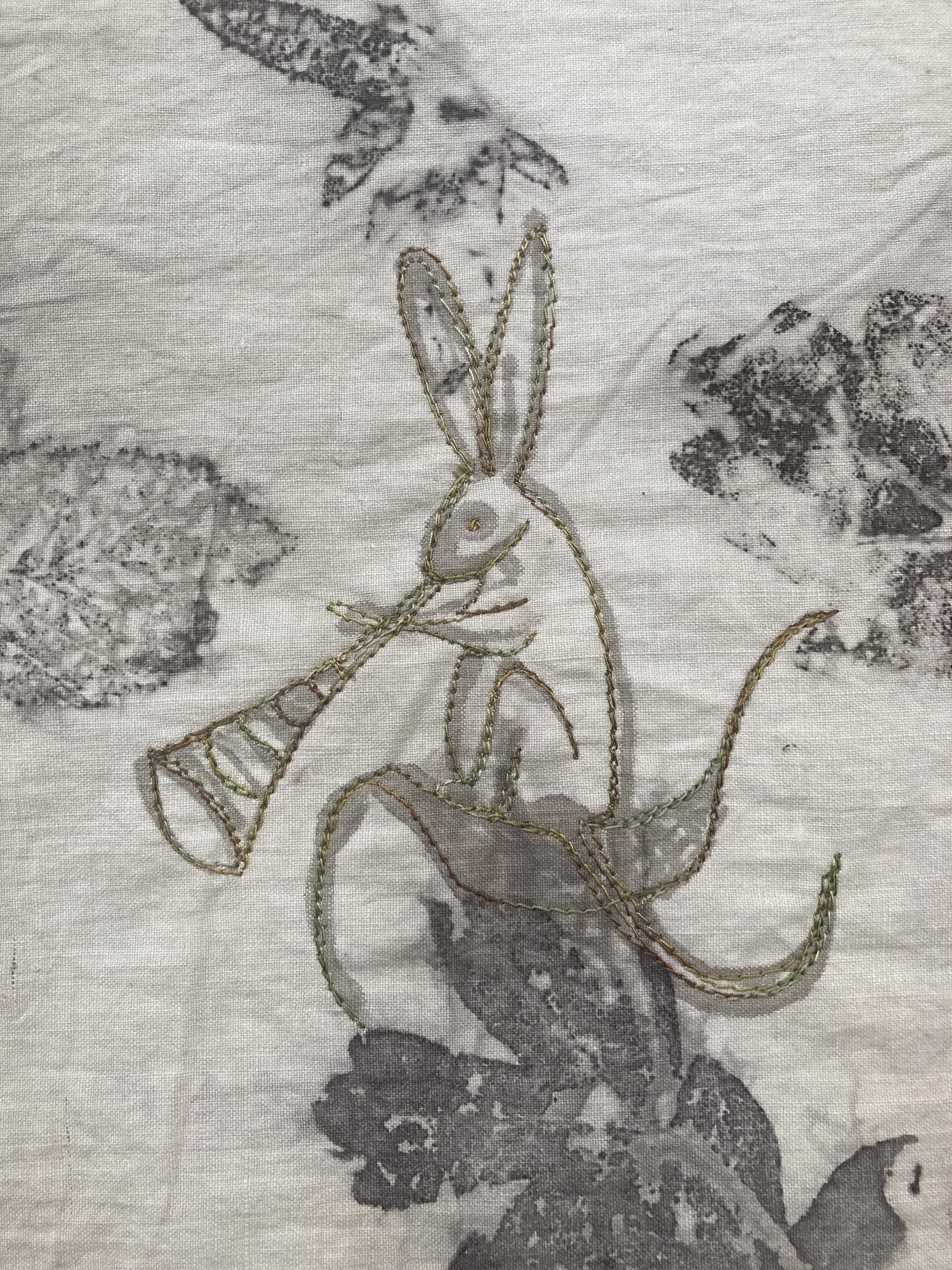
“Pilgrims Walk”. I make textile work that reflects a historic place or time with eco printing, illustration and stitch. Where possible, using the leaves from the place in mind, I ecoprint onto fabric and then embellish with oak gall ink illustration, hand or machine embroidery. Eco printing is using the natural tannins found in leaves, binding them to fabric with ferric sulphate (iron water) and steam.
‘Pilgrims Walk’ 30cms x 2m long: Eco print and oak gall ink illustration with machine embroidery on vintage cotton. There are many medieval remains of settlements in Milton Keynes, a booklet has been produced to mark an imaginary walk from North to South. I went on a guided walk and gathered leaves along the way. After eco printing a long length of fabric, I illustrated the Pilgrims who might have walked the trail and some of the characters they might have encountered.
I’ve made Oak Gall Ink from local oak galls and arranged the leaves to represent trees, not dissimilar to trees in medieval manuscripts. The work represents a hidden history in a New City that is presumed to have no ancient history.
Artist: Amy Coyne / My Imaginary Friends
https://www.artsthread.com/profile/amy-coyne
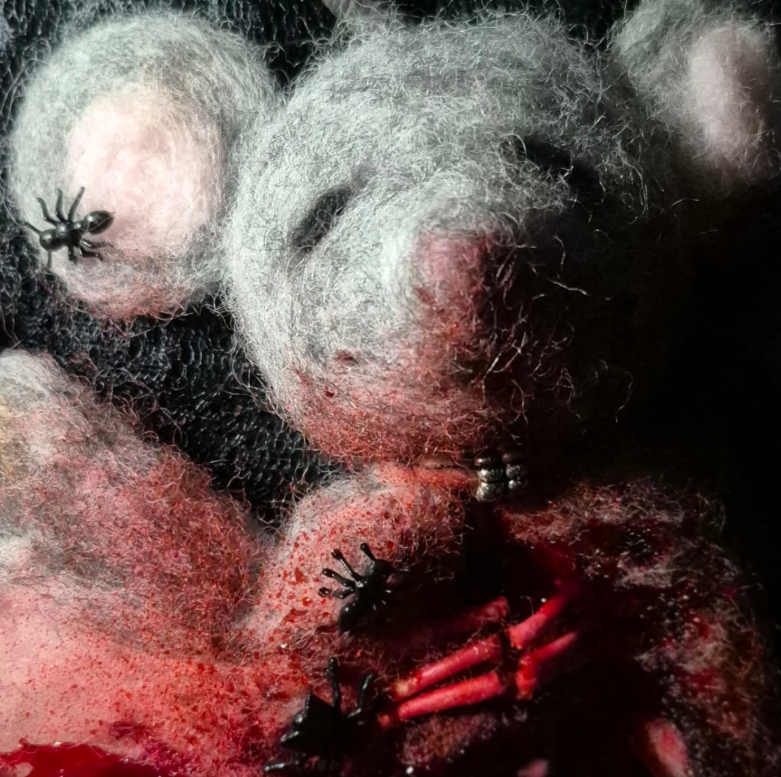
Description: My work looks into the perversions and issues within the natural world. Classic woodland animals are warped and manipulated into mutated, dying figures. As an artist who works in the horror genre, I find it best to look into topics people often feel strongly about, like the natural world, and to dig deeper to identify the issues.
Artist: Lisa McEleny
https://www.lisamceleny.co.uk/
@isamceleny_art
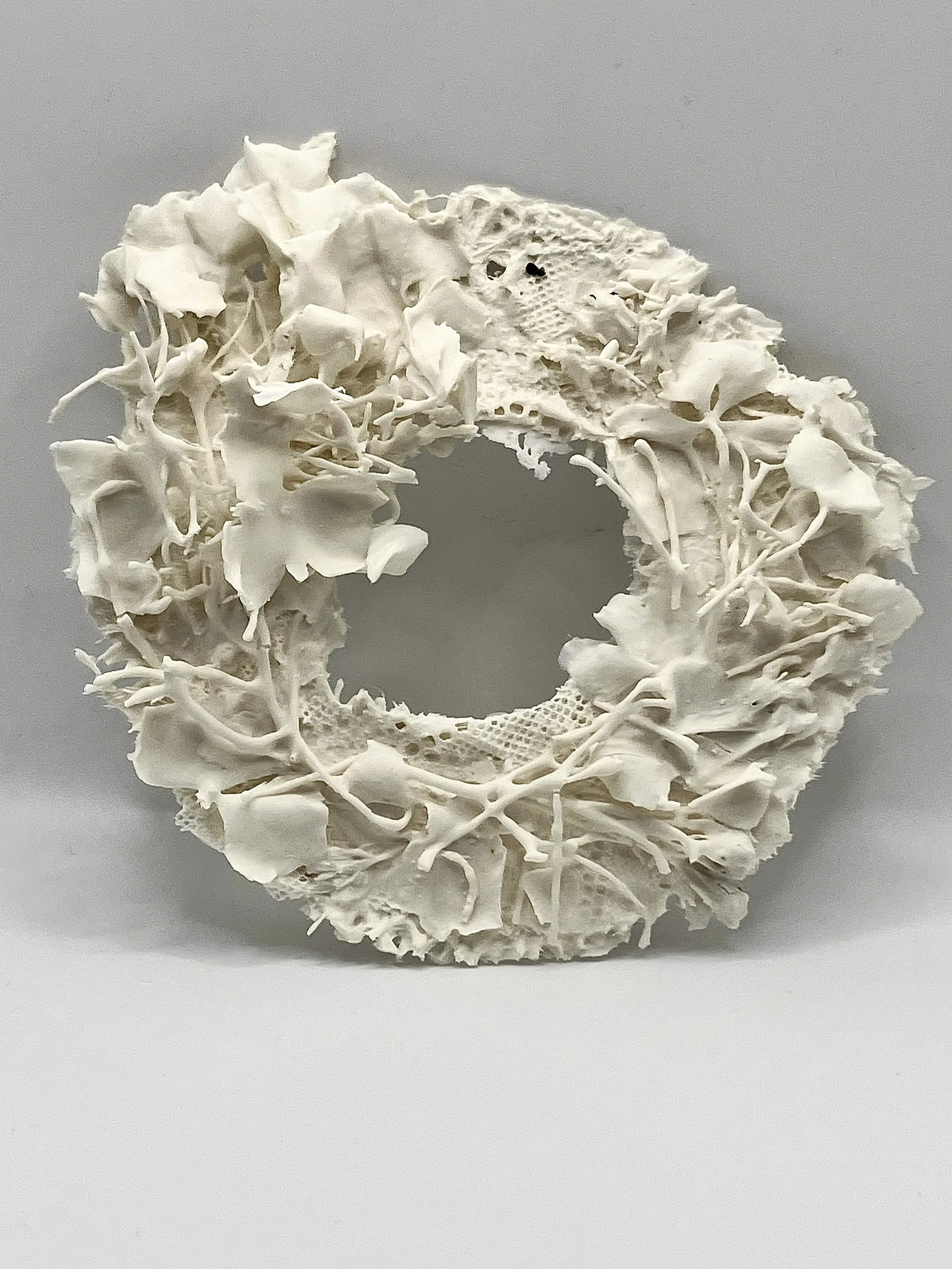
Burlap, hydrangea and lace wreath encased in porcelain slip and then subjected to the intensity of the kiln. In the firing, the organic material burns away, leaving a fragile ceramic imprint of what once was. The work exists in the tension between presence and absence. What begins as living matter becomes memory, translated into ceramic form. The destruction of the plant is not an end but a transition. The process of gathering withered flowers and plant heads, foraged from gardens or parks and natural spaces, gives a strong connection to nature and allows me to work more sustainably to create. I also use home-grown material, in the form of chia and wheatgrass, which introduces a symbiotic way of working with nature to create.
Title
Flora in Absentia I, 2026
Artist: Stuart Smith
www.stuartsmithart.com
@stuart._smith
https://www.facebook.com/share/1GXtb3ocx8/?mibextid=wwXIfr
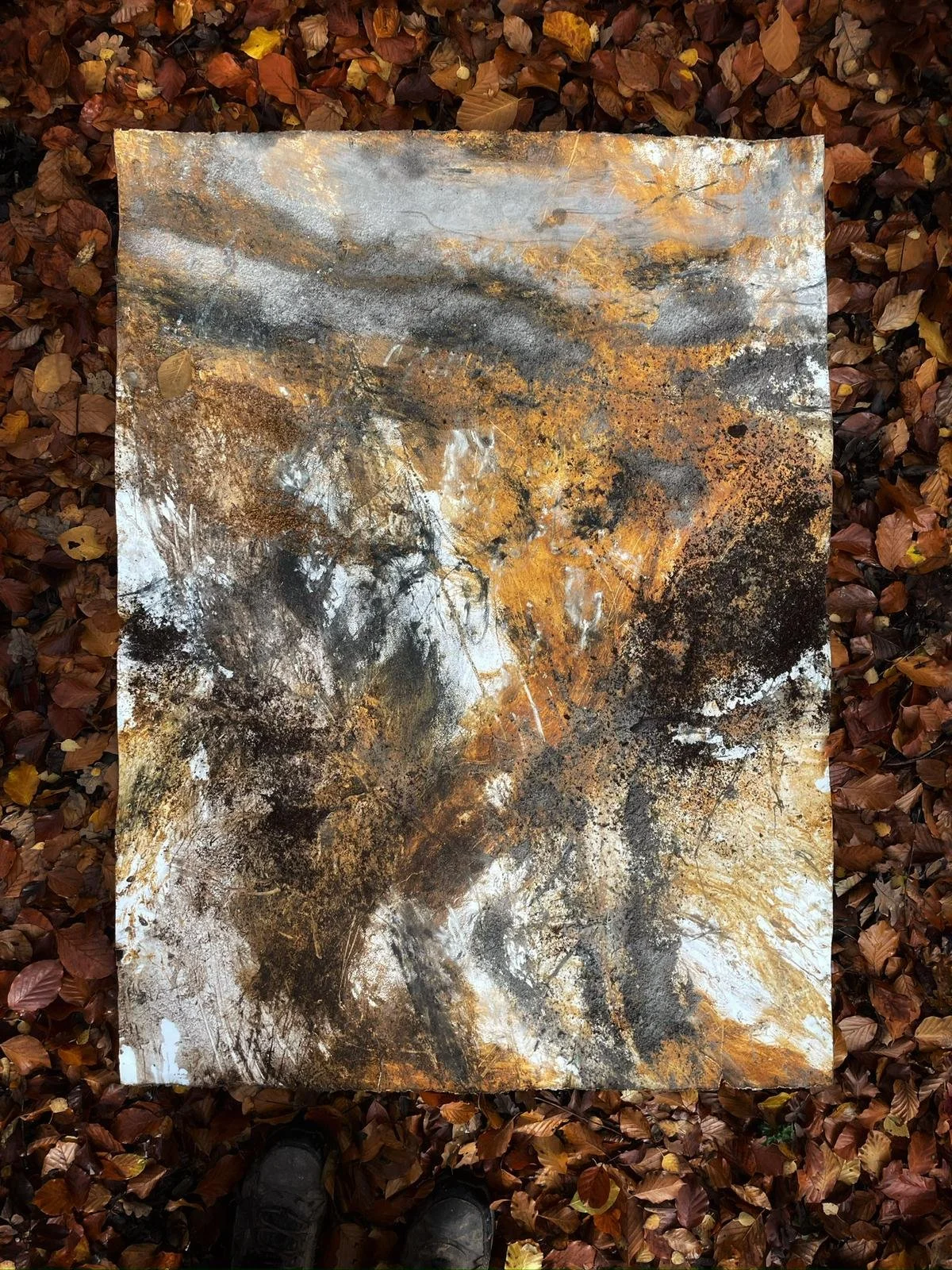
Description: Stuart Smith's practice involves repeatedly revisiting the same isolated locations in the English countryside, developing a close familiarity with each site. This year-long commitment allows the landscape itself to become a collaborator. Instead of imposing fixed images, he lets weather, seasonal changes, and natural elements influence each work, creating art that captures specific moments in time that can never be recreated. Working directly on paper and printing plates in the field, Stuart's process consistently involves natural materials he finds. He extracts pigments from earth, uses stones and flint as tools to scratch and incise surfaces, incorporates mud and organic matter, and employs bark rubbing techniques. Each piece's unique nature, linked to specific weather and seasonal moments at particular locations, offers viewers an authentic experience, enabling them to connect with places they may never see in person. Stuart's philosophy of working with minimal intervention in the landscape ensures his creative process respects the sites he works with, addressing concerns about the ecological footprint of art production while producing work of genuine originality
Title: Grim’s Ditch, October 2025. Made on site with found materials: earth, ash, charcoal, leaf litter, and chalk.
Artist: Philippa Bandurek Bradbury
studiopbb.co.uk
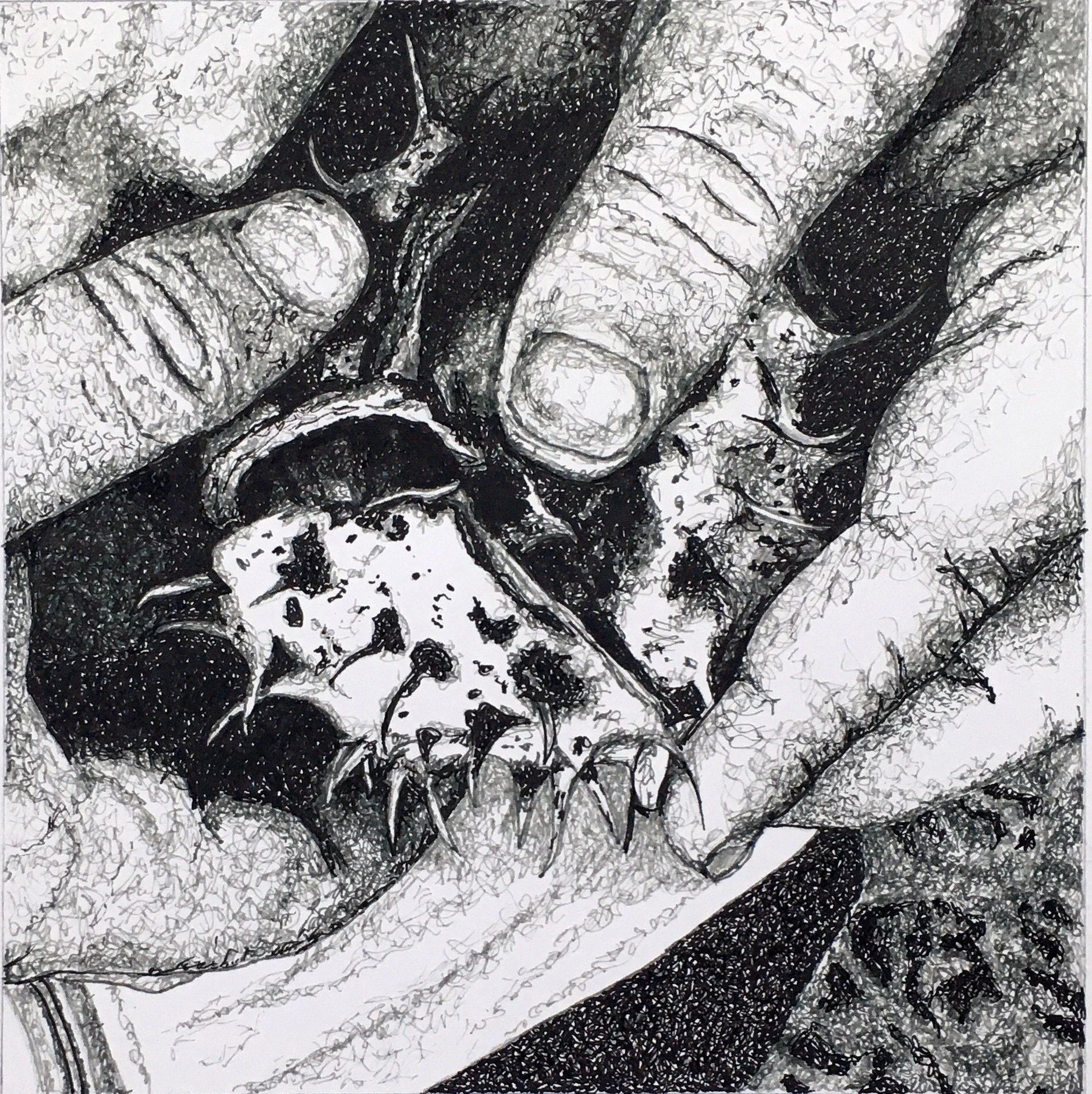
Description: “Ouch Conkers” captures a moment of both curiosity and discomfort, as my son Leo’s hands wrestle with the spiky shell of a conker. The drawing lingers on tactility, where the urge to touch and explore collides with the sharp resistance of nature.
Working in pen and ink allowed me to echo this physical tension. Scratchy marks build texture, pressure and contrast, mirroring the sensation of fingertips against thorns. It is a drawing about contact, about the negotiation between skin and surface, pain and persistence.
In focusing so closely on the hands, the image becomes less about the object itself and more about the experience of feeling. It reflects the vulnerability of touch, the determination to get past obstacles, and the way sensation, whether pleasurable or painful, anchors us in the moment.
Artist: Pryddywyrd
https://axisweb.org/artist/julianclaxton
Instagram: @pryddywyrd
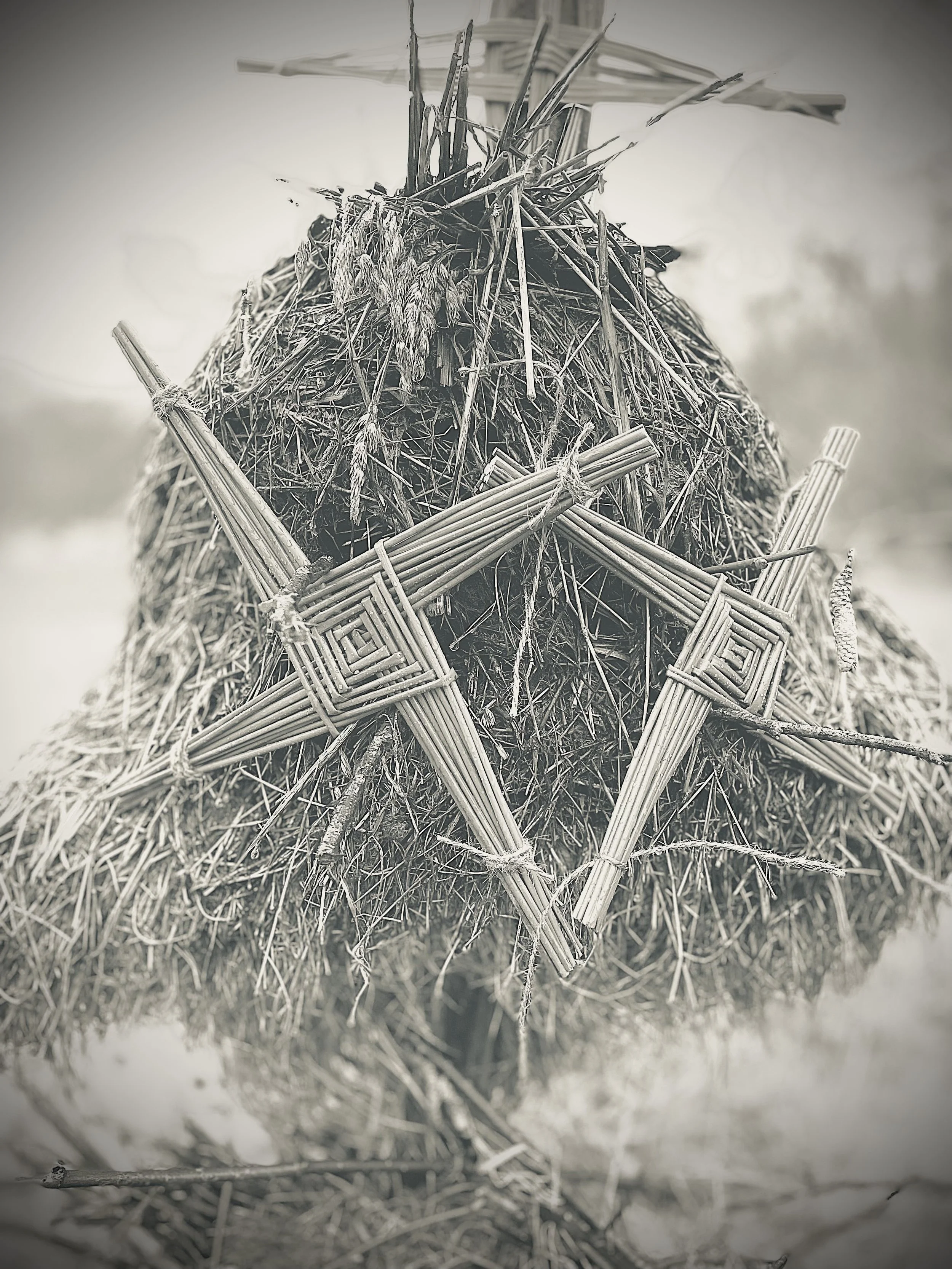
Description:“Pryddywyrd” is an ongoing project by Julian Claxton started in 2023. Firmly based in its particular locale on the Mendip Plateau, the work moves between representation of objects, animals and events to the making of objects, working within tropes of folk, gothic and folk horror. The work is mainly seen through monochrome photographs posted on the Pryddywyrd Instagram account. These exist in the grey zone, approaching dusk with mist and fog ever present.
Artist: Yimou Huang
https://sites.google.com/view/yimouhuang/
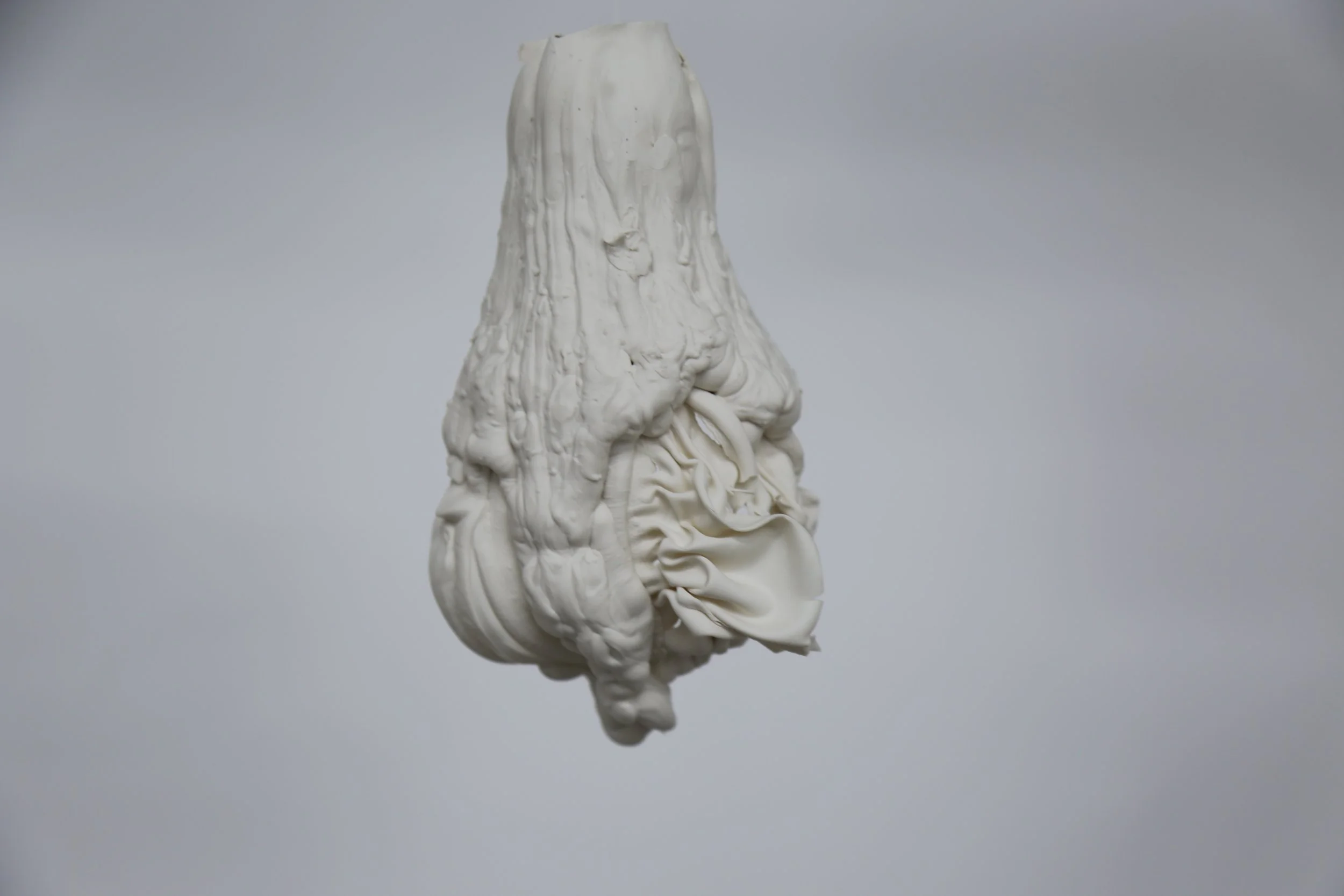
Description: Wandering air investigates the transformation of matter under the influence of unseen natural forces, guided by the Taoist concept of Qi — the invisible life force that animates the universe and flows through all living and non-living things. In this work,I use balloons as ephemeral structures, coated with a layer of wet clay. As the balloons expand and contract — and as they are further shaped by environmental factors such as wind, rain, temperature, and humidity — the clay dries, shrinks, and cracks, forming unique textures and collapsing forms.
This process becomes a quiet collaboration between human intention and natural forces. Rather than controlling the outcome, I allow the invisible energies of the environment to co-create the work. The resulting forms embody the passage of time and the presence of Qi, revealing how the unseen continuously shapes the material world. In alignment with Taoist thought — particularly the idea that "formlessness is better than form" — the work resists fixed shape or permanence. Instead, it invites reflection on impermanence, flow, and the interdependence between matter and the unseen energies that animate it.
Artist: Francis Chukwuneye
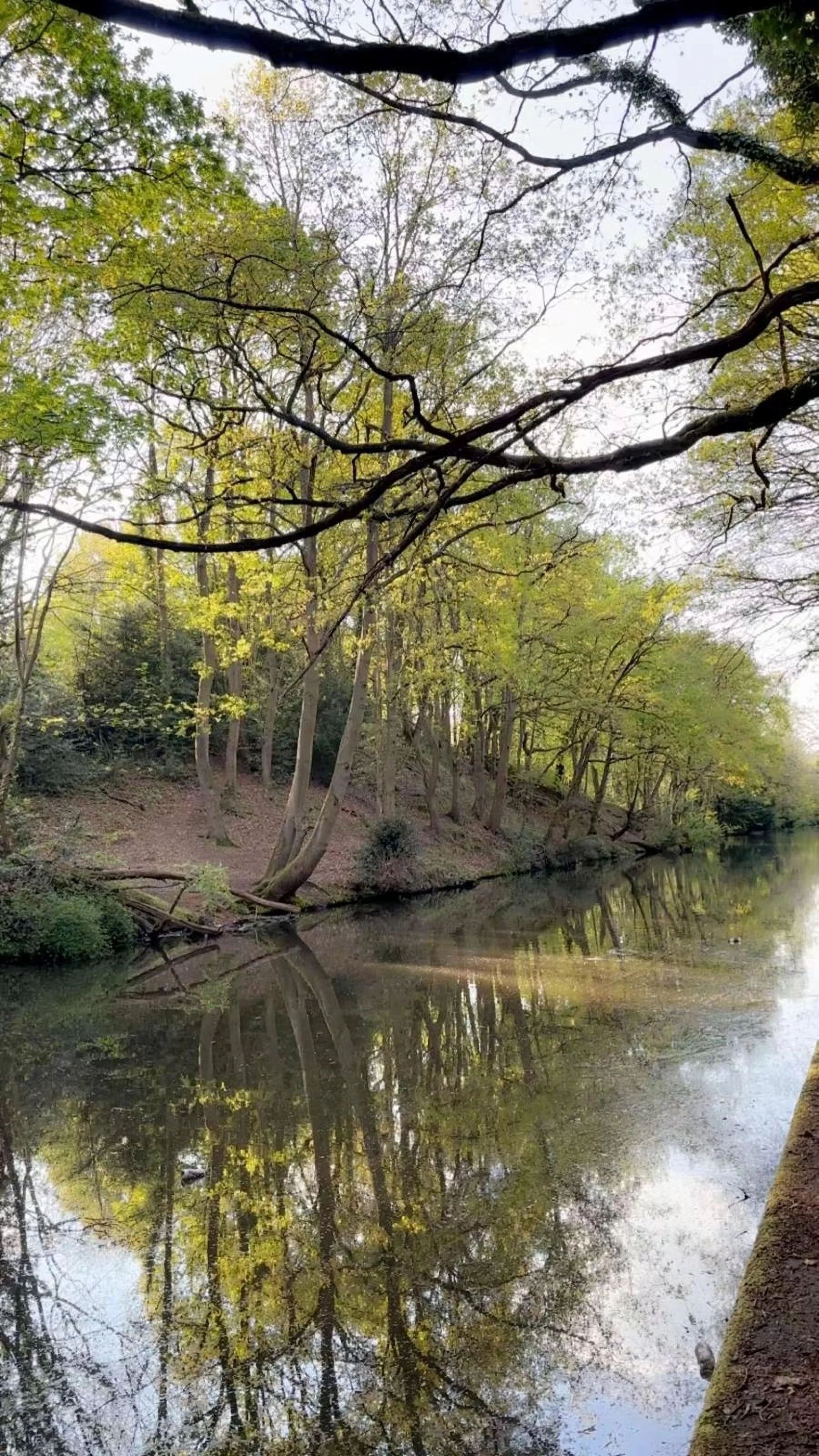
Description: “Walking in Stillness”. This work explores the quiet rituals of walking and the act of looking as a form of 'foraging' for emotional presence. By documenting fleeting intersections, such as a magpie on a fence, trees at dusk, and the stillness of a river reflection. I approach the environment as a collaborator in a slow, mindful process of observation. These images are part of a gentle inquiry into the resilience and stillness found in everyday natural surroundings.
Artist: Iza Nez
https://www.izanez.art
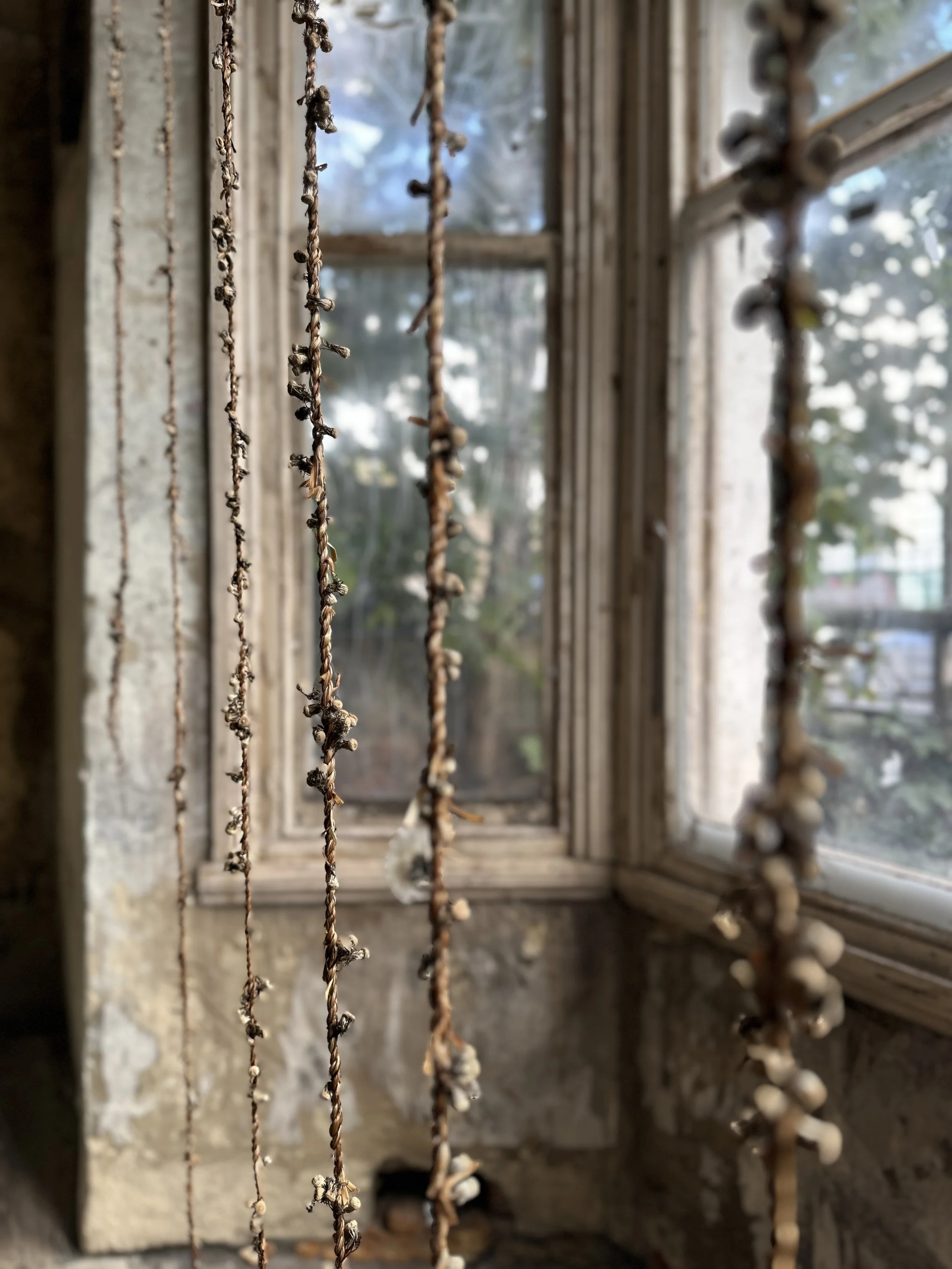
Description: Iza Nez has worked with dandelions for several years. Each spring and autumn, she spends time on long walks collecting dandelion stems, which she later uses to create works that are not intended to last a long time. Unless a particular work is to incorporate dandelion ‘clocks’, she collects the stems after the seeds have dispersed. The time spent collecting and making is a central element of her practice. Iza is interested in how we experience time. Making work in time-consuming ways that are not intended to last is her attempt to ‘waste’ time on purpose and an attempt to alter her experience of time.
Title: ‘Untimed' (in Hypernormalisation at Safehouse),
Artist: Jackie BROWN
https://southlondonwomenartists.co.uk/artists/?first_name=jackie+&last_name=BROWN&um_search=1
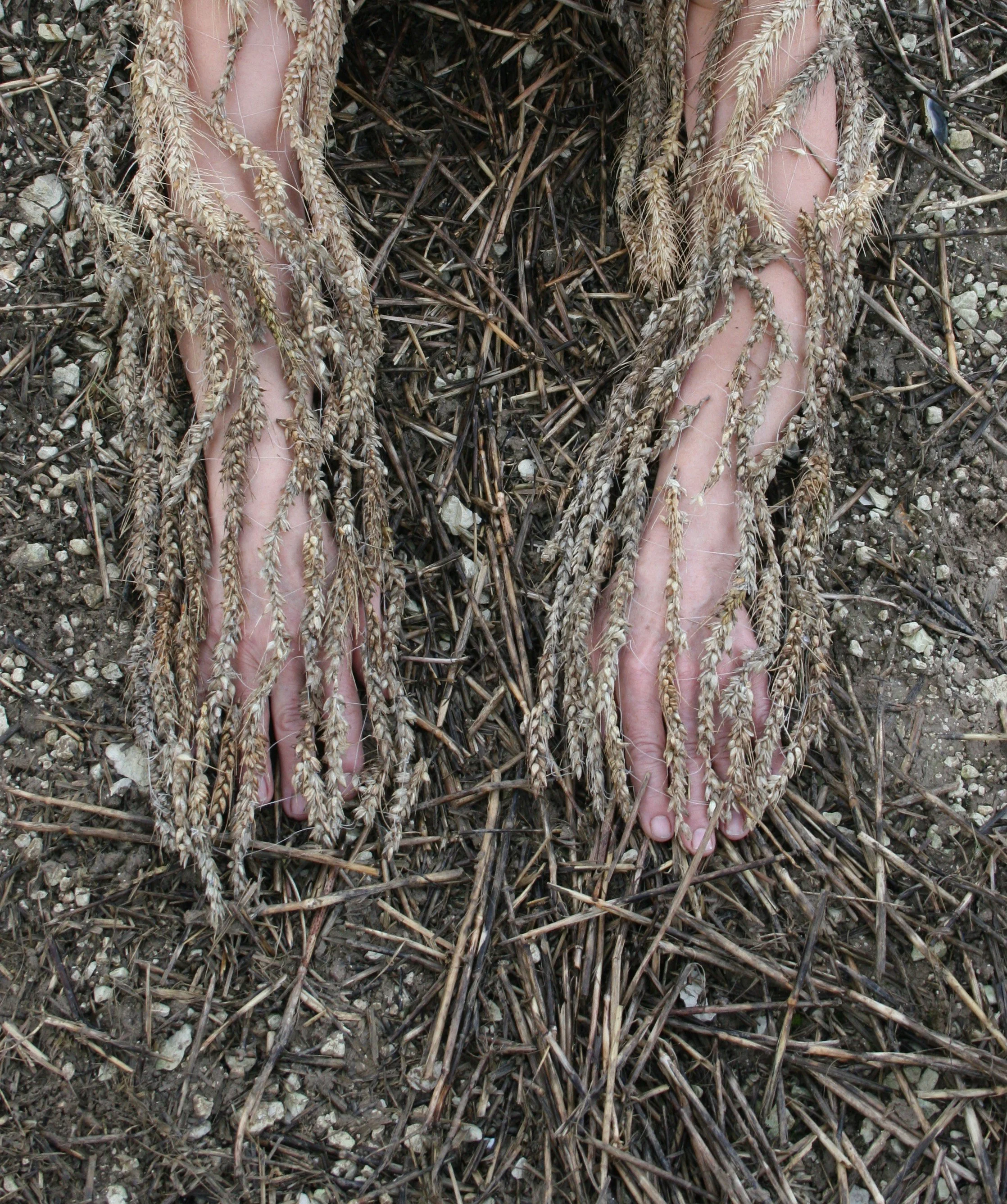
Description: “Wheat Sleeves”. I am currently focused on the heavily managed field adjacent to my studio, cut and shaped by growing crops and the use of heavy machinery. With deep and slow observation, I can feel the marks and traces of these actions, silently witnessing the passing of time and the human engagement with this land. In these observations and interventions, I am slowly becoming a part of the landscape responding to a collective memory of our relationship with nature, and a knowledge that we do not ‘go out’ into nature, we are nature. Returning to the material source, I attune to the present and past of this ancient place whilst acknowledging its future.
Using materials found in this place and processes that acknowledge the labour of the land as well as domestic labour, I create works that generate reflection beyond their initial presentation.
Artist: Emily Brannigan
https://emilybranniganfineart.com/
https://www.instagram.com/emilybranniganfineart?igsh=MXZzcHRkd3Vyd2wyOA%3D%3D&utm_source=qr
@emilybranniganfineart
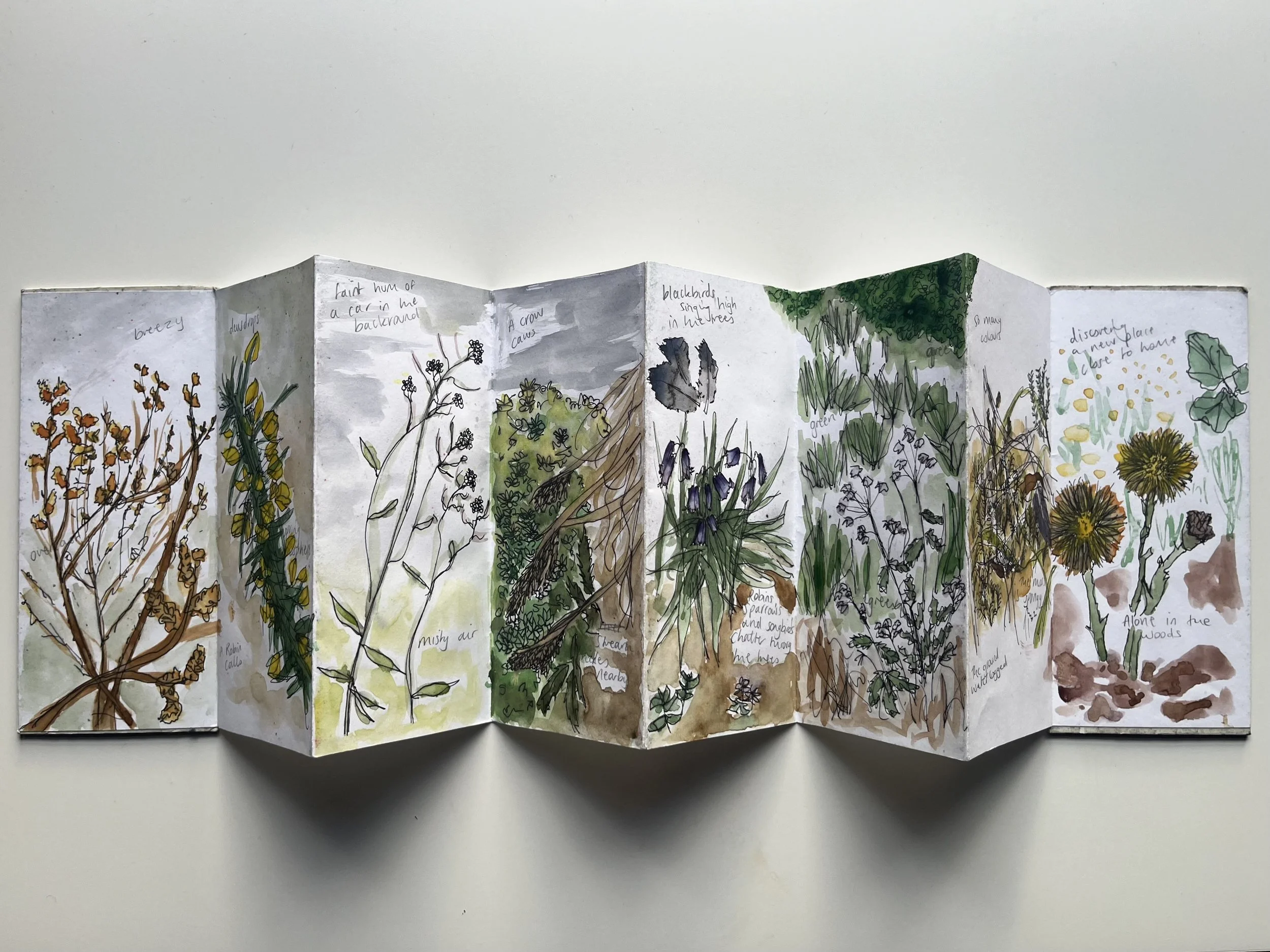
Description: “Walk in The Park”. My practise as an artist involved walking and sketching. I use walking as a way of mapping and familiarising myself with the environment around me. I am interested in psychogeography - the relationship between people and the landscape around us - particularly in the context of the natural landscape. This piece is a visual memory of a recent walk I took. I incorporated writing into the piece to further describe what I was experiencing. The piece is a folded z-book.
Artist: Rosie Redwood
https://rosieredwood111812fe.myportfolio.com/practice-5-pt2
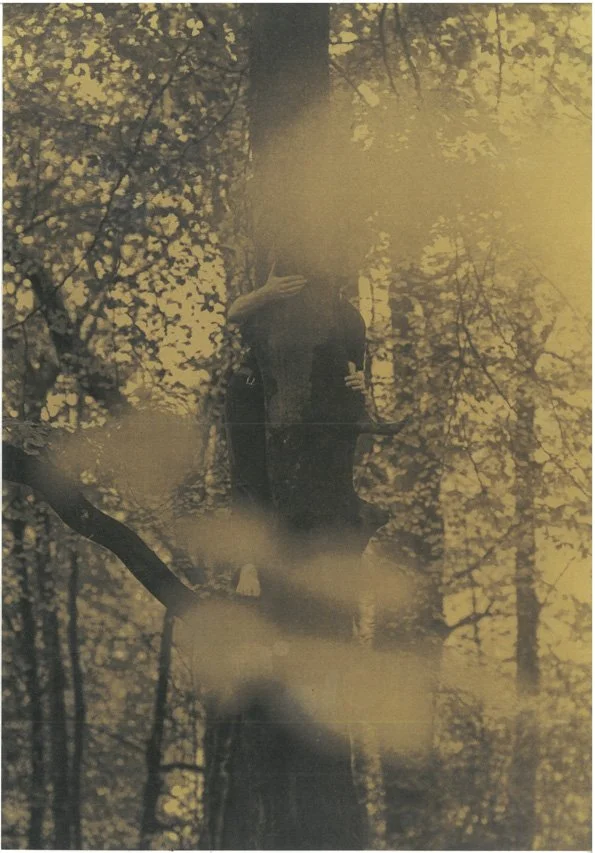
Description: ‘Bodyline Narratives: Nature Human connection’ is a process-led collection of cyanotypes toned with foraged botanicals that aim to playfully reflect the intimate connection between humans and the natural world.
Using walking as practice and material gathering, intuitively foraging in the countryside of Herefordshire, creating a seasonal-based body of work. This process leans into the slowness, embodying engagement with our living world.
Drawing on poetic and philosophical ideas of “as above, so below; as within, so without” visual comparisons between humans and the land they inhabit are explored immersively in both physical (bodies in the landscape) and material (plants within the prints) ways. Rooting the bodies into the land through a sense of feral play. Re-connecting with our wild selves.
Artist: Mat Rodger
https://www.instagram.com/accumulation_999?igsh=MTQ4aDU5cWR4bXp0dA%3D%3D&utm_source=qr
@accumulation_999
Substack- @matildarodger
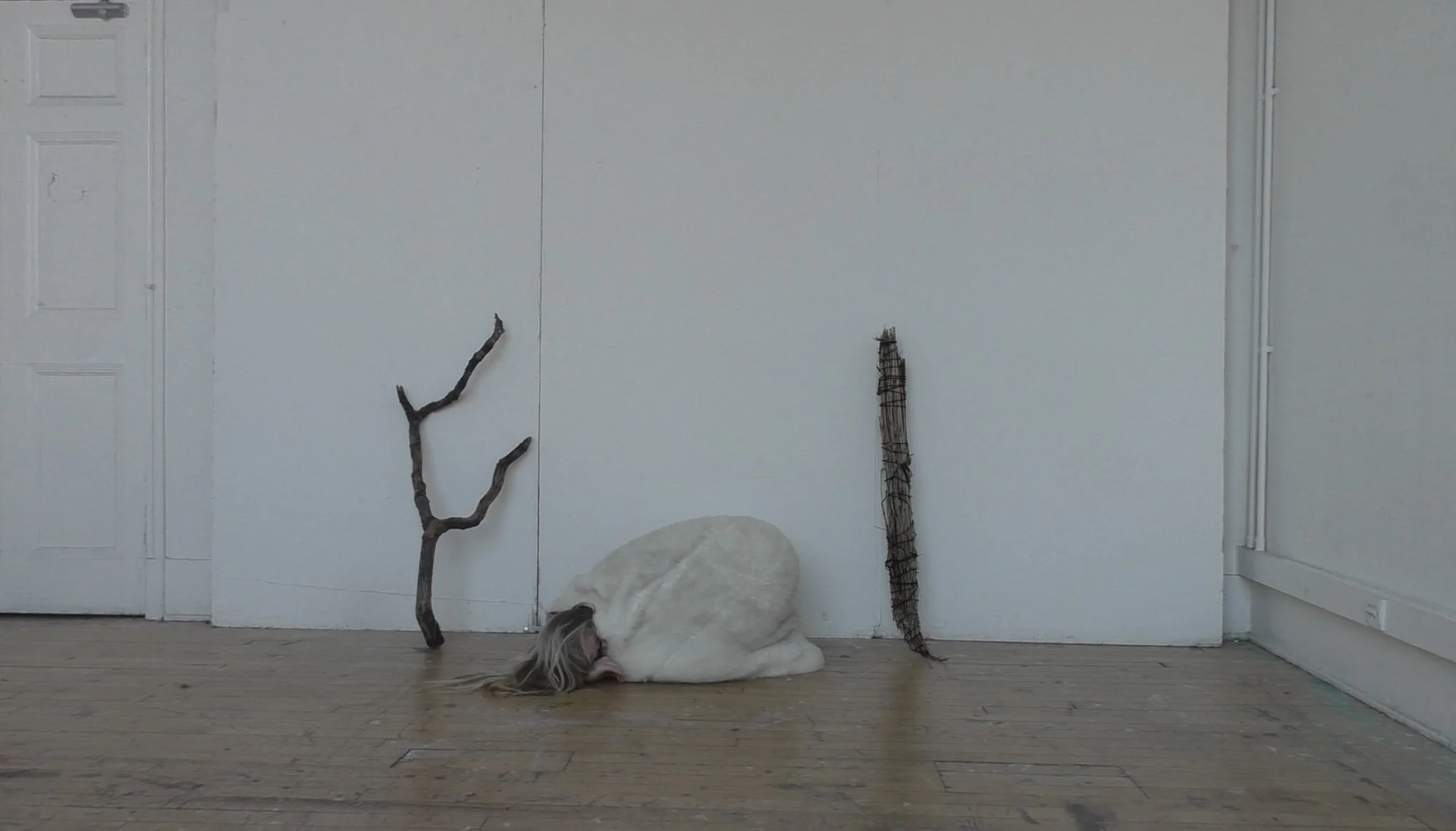
Description: “The Mound”. Stills from performance, documented on a camcorder.
Body, second-hand fabric, foraged and bound plants from the disused and wild garden of deceased grandparents in Golspie, Scotland and a stick.
The bound, drying plants comprise dock, dandelion and many other species unknown to me, but have found their way into a garden, now fully re-wilded, home to a family of blackbirds, a baby and mother seagull, and colonies of insects and other life forms. This land lay untouched for decades, with seeds planted a generation ago by my grandmother’s hands, now fully grown trees and bushes and vines. I gathered them to connect to nature, to connect to my family, they stand witness to my movement in The Mound, which is an exploration of inhabiting a newly disabled body, the fear, rest, frustration, pain, new joys and perspectives that come with this. The stick has been a friend of mine for years. I found it discarded on a woodland path. I used it as a mobility aid before getting a cane specifically for daily walking. These gifts from nature are comfort, witness, friend and protector to me, over me
Artist: Elly Platt
www.takeitupwearitout.co.uk
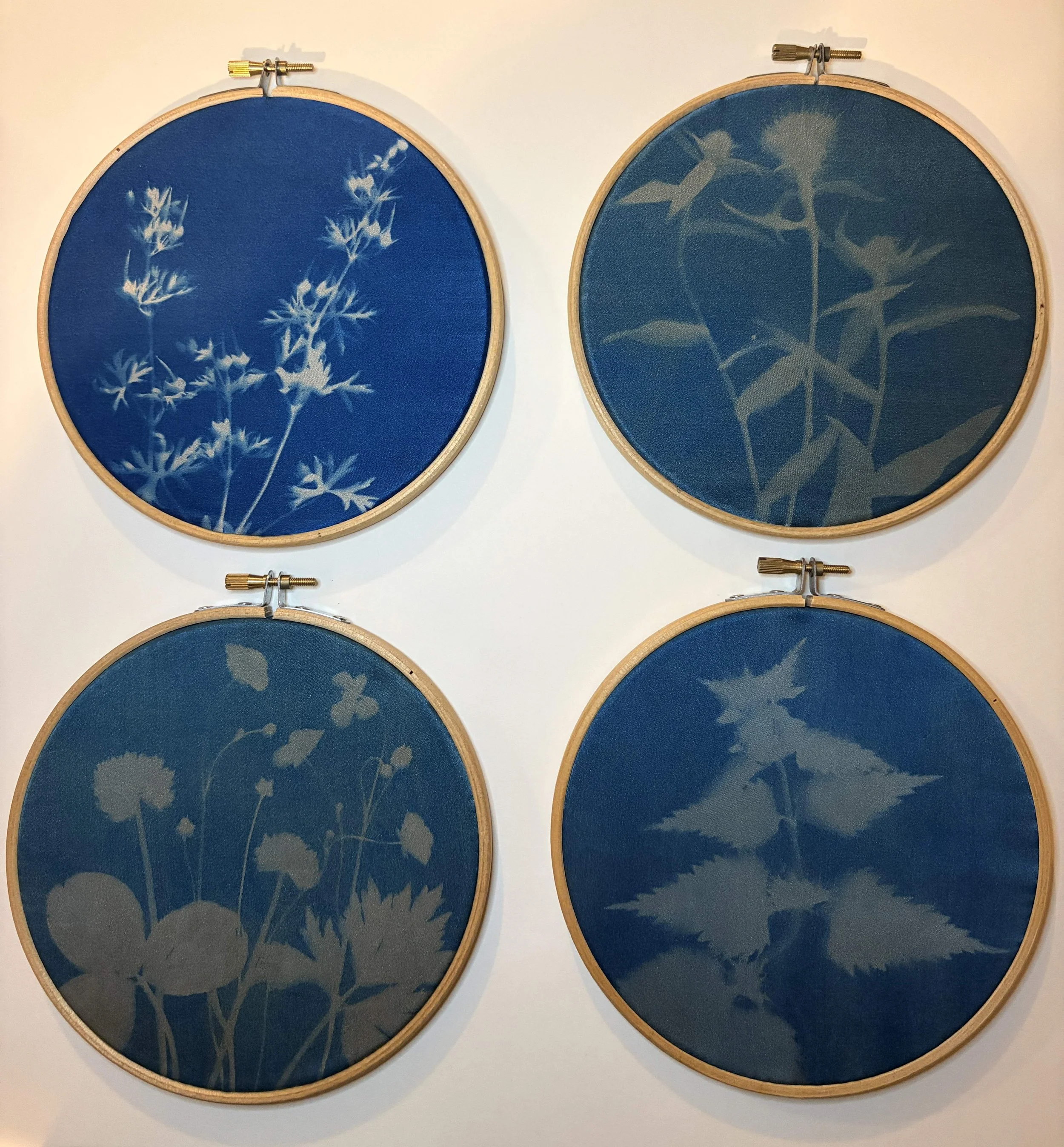
Description: World of the Wandle at Riverbank Way is a project celebrating the incredible variety of wild plants growing on the bank of the River Wandle in South London. This tiny urban area is a vibrant ecosystem of over two dozen species. I used locally harvested dye plants (yarrow, hawthorn and blackberry leaf) to dye silk scraps, which I used as the base for cyanotype prints, with the plants themselves becoming central to the documentation process.