
For this collection, we invited writers to reach into the spaces between words, to explore "Hidden Worlds" and all that lives there: the layered selves we inhabit, the quiet truths we rarely speak aloud.
So much of writing begins in concealment. We craft narrators, characters, and voices that stand at a careful distance from ourselves, and yet somehow, the most private things have a way of surfacing anyway. Beneath every sentence lies a world the reader may never fully see: the draft that was abandoned, the line that said too much, the story that waited years to be told.
This collection turns toward those interior spaces, the tension between what is written and what is withheld, between the author's mask and the truth beneath it. We were curious how writers would wrestle with these questions: What hides between the lines you choose to keep? How do the expectations of audience and form shape the stories you feel able to tell? What do you put on the page, and what do you protect? And somewhere between honesty and artifice, can the hidden self ever truly find its voice?
Our first writers are our resident Poet and Art writers Peter Devonald and Michaela Hall
Michaela Hall; More than meets the eye
Things definitely aren't always what they immediately seem, what we first perceive is only one version of the reality of something. It's so easy to trust our first impressions of something but sometimes we are required to dig a bit deeper and expect the unexpected or give things time. Installation is a perfect avenue to explore this with its approach of immersion and new environments, and it gives artists a real chance to play with the idea of hidden worlds and layered identity.
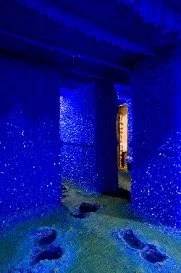
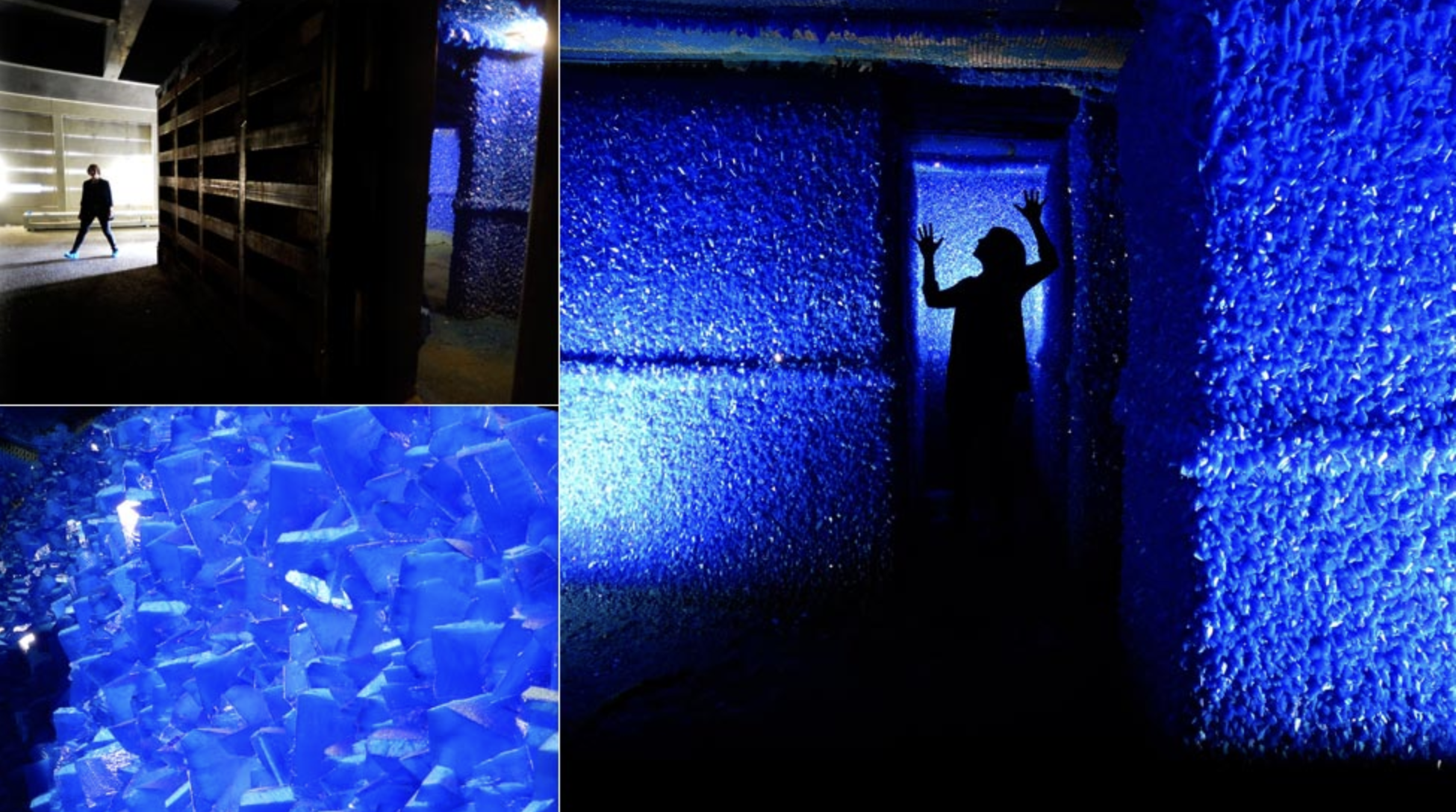
An unexpected environment that has always stayed with me is British artist Roger Hiorns' 'Seizure' (2008). In the most unsuspecting of places in an empty ground floor flat within a block of abandoned 1960s social housing in Southwark, Hiorns created a fantastical landscape of glistening crystal that seems surreal and impossible in its intensity and scale.
The glistening crystals are copper sulphate crystals, and the artist created them by using over 70,000 litres of liquid copper sulphate to create the growth which transformed the flat. The growth took over and turned the former apartment into a living crystal, with the growth seeping into all crevices and nooks and crannies. What sounds quite scientific and clinical turns out very magical and as well as being a real spectacle gives us food for thought on why Hiorns chose this place - I don't think it's a coincidence that something abandoned has been given a new life and value, a new identity. The work was later extracted and now sits in Yorkshire Sculpture Park within a concrete structure - again giving it a new context and location, a new way into the hidden world of crystal.
Another British artist who really knows how to transform a space into something unexpected and unique is Heather Phillipson. Her installations and sculpture are characteristically big, colourful and in your face – very memorable and striking environments. When we speak about a new identity of a place – this also goes for transforming a space into something else, creating something new from something familiar and showing that with time things can change and possess new versions of themselves.
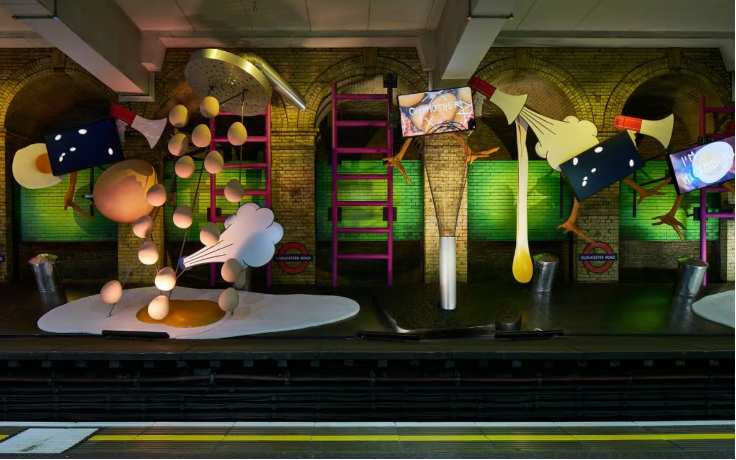
In this case, the London underground, specifically Gloucester Road station was transformed into a home for ‘my name is lettie eggsyrub’ (2018) an installation spanning 80 metres as part of London’s project to get more art on the underground. Immediately you notice the number of eggs featured in the scattered and collage like installation with a fun retro layout and huge objects that make the underground into a surreal environment, reminiscent of a strange but wonderful Dali painting. The eggs are said to reflect upon the cycle of life and food production. This breathes a whole new playfulness into the station and creates a little sub-world hidden beneath you almost certainly wouldn’t expect as an random passer-by or commuter.
When it comes to first impressions of the exterior of the Southwark flat, or the entrance to the tube station we can almost guarantee that what lies within their hidden worlds we did not expect.
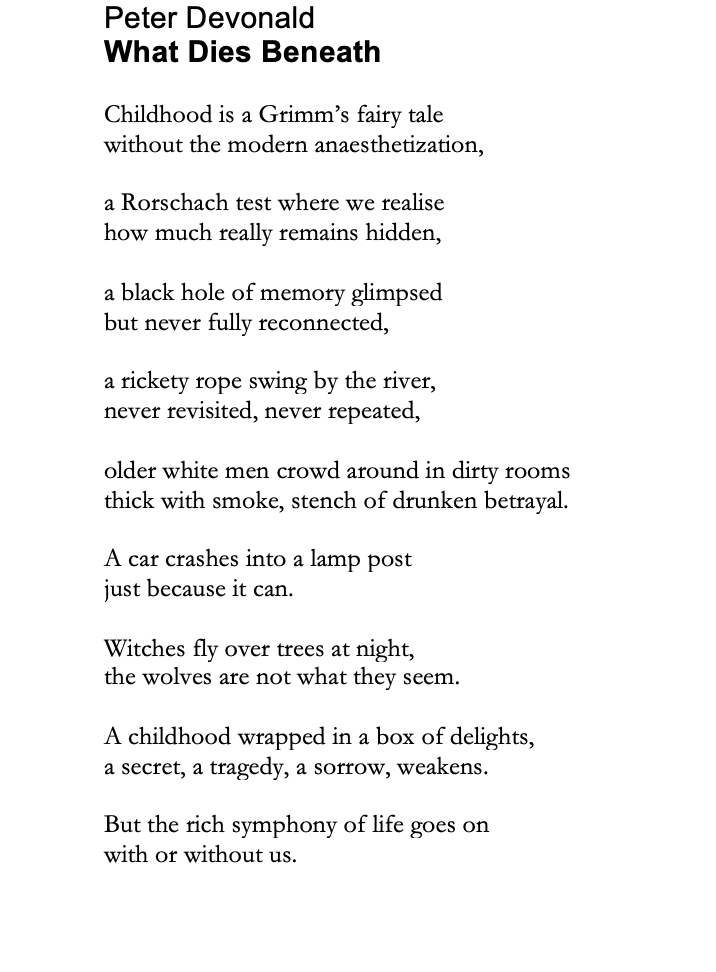
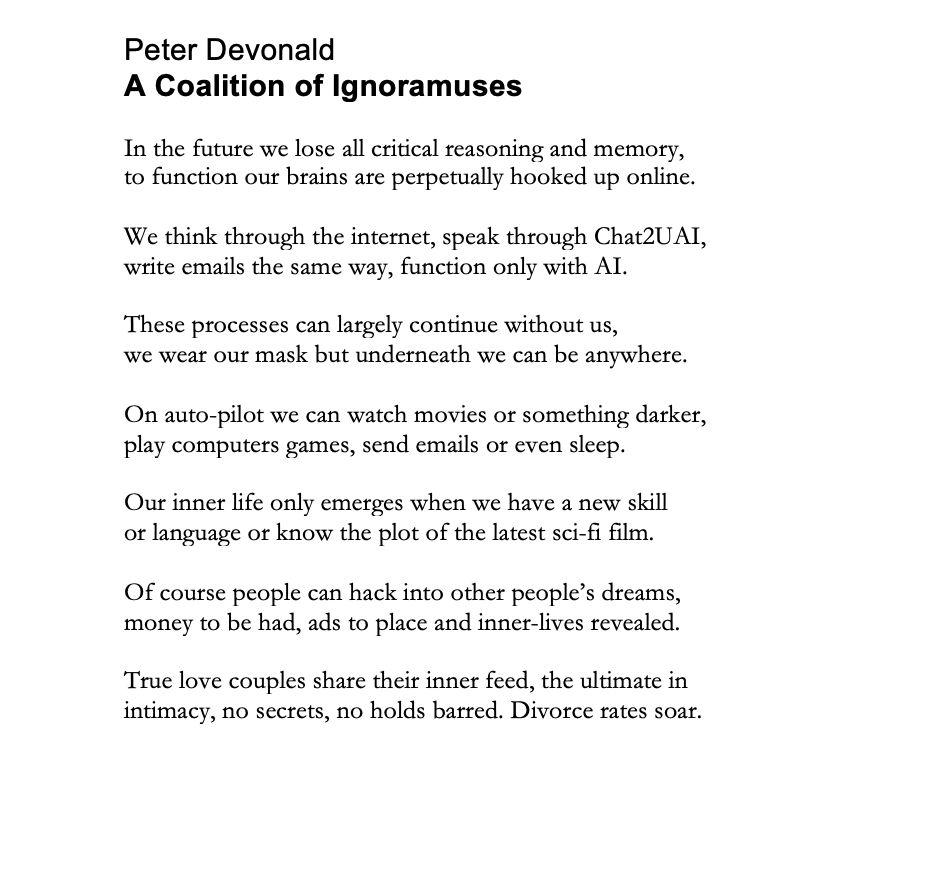
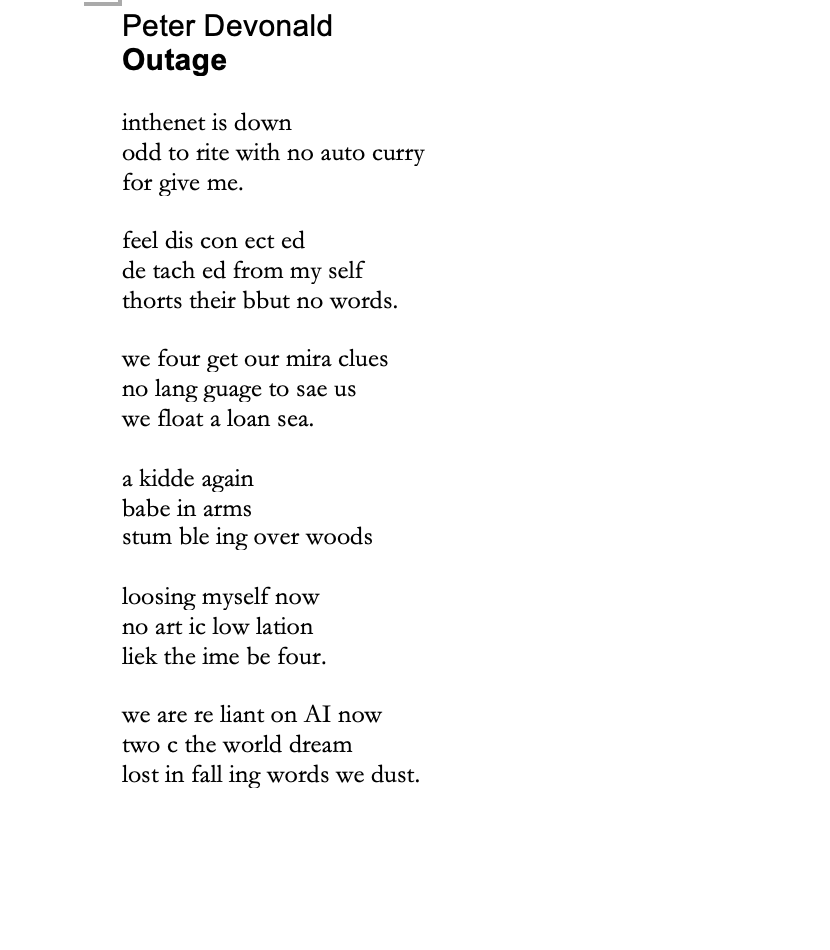
Peter Devonald; Hidden Worlds
Artist and Editor
Nichola Rodgers
After months of filling in forms, writing proposals and applying to open calls, my frustrations culminated this week, which was great because what better palce to let every know what is hidden as an artist and what needs to be seen. And thus I give you my thoughts and frustrations of the hidden side of an arts career, a female artist and one thats come to this career later in life so technically still an emerging artist…
Late to the Room: Women, Time, and the Structures That Still Don’t See Them!
There is a persistent expectation in the arts that a career begins early, that talent is identified young, nurtured through the “right” education, and developed along a steady, visible trajectory. By the time an artist reaches their thirties or forties, they are expected to be established, or at least clearly on their way. This timeline is treated as neutral. It isn’t!
For many women, becoming an artist is not a linear path but a delayed one, shaped by the realities of upbringing, responsibility, and access. Creative ambition is often present early, but the conditions required to pursue it are not. Time, space, money, and encouragement are unevenly distributed, and women are disproportionately asked to give these things to others before claiming them for themselves.
Care work is a central part of this story. Women are still more likely to take on roles as primary caregivers,to children, to family members, to households. Even outside of formal caregiving, there are expectations around stability, practicality, and self-sacrifice that shape life choices. The idea of committing to an uncertain creative career can be framed as indulgent, risky, or irresponsible. As a result, many women defer it. Some set it aside entirely, only returning to it years later, if they return at all.
Others arrive at art through non-traditional routes. They may not have attended art school. They may not have built early networks or accumulated the kinds of credentials institutions recognise. Their work develops in parallel with other careers, in fragments of time carved out around other obligations. What they build is often just as rigorous, just as considered, but it does not fit the expected narrative.
And this is where the problem sharpens. Because while women’s pathways into art have always been varied, the structures that validate artistic careers have not kept pace.
Many prizes, residencies, and development programmes still operate with implicit or explicit age limits. “Emerging artist” categories are frequently capped at 30 or 35. Early-career opportunities assume a timeline uninterrupted by care responsibilities or financial necessity. Even where age restrictions are not stated outright, selection criteria often favour those with continuous CVs, recent institutional engagement, or a steady record of exhibitions, all markers of a career that has been allowed to progress without pause.
A woman who begins her practice seriously at 40 or 50 may be treated as an anomaly, or worse, as someone who has arrived too late to be invested in. She is no longer “emerging,” but not yet “established.” She sits outside the categories that institutions know how to support.
This gap is not just administrative, it is cultural. It reflects a deeper assumption about who an artist is supposed to be, and when they are supposed to become one.
The consequences are practical as well as symbolic. Funding is harder to access. Visibility comes more slowly. Opportunities that could accelerate development are closed off at the very point they are most needed. The system does not just fail to recognise these artists, it actively makes their progression more difficult.
And yet, the work exists. It is being made in studios improvised at kitchen tables, in shared spaces, in hours borrowed from other parts of life. It is informed by lived experience, by years outside institutional frameworks, by perspectives that are often underrepresented precisely because the pathways into visibility are so narrow.
There is a quiet resilience in this, but resilience should not be a requirement for entry.
If institutions are serious about supporting artists, they need to reconsider the timelines they privilege. This means rethinking age caps, expanding definitions of what “emerging” can look like, and acknowledging that a career interrupted, or postponed, is not a lesser one. It also means recognising forms of experience that do not appear neatly on a CV: care work, parallel professions, self-directed practice.
The question is not whether these artists are ready. It is whether and when are the structures around them willing to adapt!
There’s a quiet exhaustion that comes with being an artist, one that rarely makes it into the work itself. It lives in the spaces between applications, in the careful rewriting of statements, in the slow reshaping of something honest into something palatable. You learn, over time, how to translate your voice into what you think they want to hear. You bend. You adjust. You make your practice legible to panels, to institutions, to people who hold the power to say yes, or more often, no.
And still, the rejection comes.
Not always with cruelty. Sometimes it’s polite, even encouraging. But beneath it sits a familiar implication: that your work, your way of seeing, your persistence, was simply not the right investment. That someone else could be progressed further, faster, better. It’s a quiet hierarchy, one that asks artists not only to create, but to constantly justify their place within it.
This piece comes from that point of friction. From the moment where bending begins to feel like erasure. Where the question shifts from “How do I fit?” to “Why am I trying to?”
For this next issue, I’m choosing to step outside of that hidden cycle. Not to reject growth or dialogue, but to reclaim the terms on which they happen. To make space for the parts of artistic life that remain unseen: the doubt, the negotiation, the resilience it takes to keep going when the systems around you suggest otherwise.
Because the struggle isn’t just in making the work. It’s in holding onto it, on your own terms.
What You Don’t See When You See Art
The Hidden Labour, Cost & Dignity of Being an Artist Today
There is a version of the artist’s life that persists in the popular imagination, bohemian, romantic, free. Sleeping late, following inspiration, pouring feeling onto canvas or page or clay, untouched by the demands of the ordinary world. It is an appealing image. It is also a fiction, and one that comes at a cost.
People laugh when you mention “the starving artist” it has become a joke, it is no joke, it is not just financially that artist end up as “Starving”, but they loose dignity, stability, and, for many, the ability to sustain a career at all.
The reality of being a working artist unfolds largely out of sight. It happens before the exhibition opens, before the book is published, before the performance begins. It exists in the quiet, repetitive labour of applications, in the accumulation of submission fees, and in the steady erosion that comes from being asked, directly or indirectly, to give your work away for free in exchange for little more than visibility.
The Privilege Myth
Artists are often framed as fortunate: people who “do what they love,” who have chosen passion over convention. But this framing confuses passion with ease. There is nothing easy about maintaining a creative practice within systems that consistently undervalue it.
The artists most visible to the public, those with gallery representation, publishing deals, or streaming audiences, represent only a fraction of those producing serious, committed work. Behind every recognised name are hundreds of us navigating unstable incomes, piecing together teaching, freelance work, and precarious opportunities, often anchored by the hope that the next application might change something.
This is where the idea of “privilege” becomes particularly corrosive. It is used, subtly but persistently, to justify underpayment. If the work is driven by love, the reasoning goes, then compensation becomes secondary. Yet this logic rarely extends beyond the arts. No other profession is expected to accept passion as payment.
The Invisible Labour,
Before any work is experienced, it must first be selected, and selection is a process that demands time, money, and sustained effort.
Applications have become a central, often an overwhelming, part of artistic life. Exhibitions, residencies, publications, and funding opportunities require carefully written statements, curated portfolios, high-quality documentation, and strict adherence to submission guidelines, many also require entry fees. This all becomes twice as difficult especially if you add in a learning difficulty as over 70% of artist have. All of this is undertaken without any guarantee of success, only the possibility of being considered.
Rejection is not the exception; it is the norm. Artists routinely invest days into applications that are declined with minimal response, or none at all. Over time, this cycle becomes more than administrative, it becomes psychological. The repeated act of putting work forward and having it dismissed, often without explanation, reshapes confidence and tests resilience in ways that are rarely acknowledged.
Gatekeeping and Contradiction
Beyond the application lies another layer: the institutions and individuals who determine access. Galleries, curators, funding bodies, and cultural organisations position themselves as supporters of artistic practice, yet often operate through systems that are opaque and inconsistent.
Criteria for selection can feel contradictory and shifting. An artist may be too early in their career for one opportunity, too advanced for another. Too established for emerging platforms, not established enough for major ones. Age restrictions, geographic bias, and changing institutional priorities further complicate the landscape. What qualifies an artist one year may disqualify them the next, without any change in the work itself.
Much of this process exists without meaningful accountability. Feedback is rare. Decisions are final. The artist adapts, recalibrates, and applies again.
The Cost of Working for “Exposure”
Alongside formal systems is a more informal, but equally pervasive expectation: that artists will work without pay.
Requests framed as “opportunities” are commonplace, invitations to contribute work, time, or expertise in exchange for exposure, portfolio development, or association. While visibility can have value, it does not replace income, nor does it acknowledge the years of skill, training, and experience behind the work.
What is often overlooked is who absorbs this cost. It is disproportionately carried by those at earlier stages of their careers, or those without financial support structures, reinforcing existing inequalities within the field.
Art does not emerge without investment. Materials, equipment, software, studio space, all come with financial weight. In many cities, even the space to create has become increasingly inaccessible.
These costs are rarely visible in the final work. The audience encounters the outcome, not the conditions that made it possible, or, in many cases, difficult.
Networks and Access
Opportunity within the arts is not distributed evenly. It is shaped by networks, educational backgrounds, social connections, institutional affiliations. Some artists enter the field with proximity to these networks; others spend years trying to access them.
The idea that quality alone determines success is appealing, but never happens. Talent matters, but so do circumstance, access, connections and timing. Recognising this does not diminish the work, it clarifies the system in which it exists.
Taken individually, each of these pressures might seem manageable. Together, they form an environment defined by uncertainty, instability, and persistent undervaluation, all of which knocks the confidence and mental health of the artist.
This mental impact should not be understated. The expectation to remain motivated, productive, and grateful within such conditions places a significant strain on artists, and their families, one that is often hidden behind the work itself.
What remains unseen
When encountering a finished piece, a painting, a performance, a text, what is visible is only the surface. Beneath it is a longer story: of time, persistence, rejection, adaptation, and continued belief in the value of making something at all.
Artists are not asking for exceptional treatment. The request is simpler than that: to be recognised as workers within their field, to be compensated fairly, and to engage with systems that are transparent, consistent, and respectful of their time and labour.
Because what you see is never just the work. It is everything that made it possible, including the unseen labour.
Artist name - Quentin F Lobenstine
Theme connection: This piece explores one of my deepest anxieties about my internal layers, that somehow inside me is some other force not under my control. Maybe I am a mask for some other entity, maybe my whole existence is a performance done by this thing. And maybe without them, my bare, authentic self will be nothing.
Bugs Remember your fear as a child that one day you would discover that bugs lived inside you, huge plasticky ants and cockroaches, and that you could feel each one leaving one night as you slept, through your armpit, your crotch, through the bottoms of your feet, not hurting you but making you cold and empty, one by one, until you were left with nothing, an empty plastic bag. And when your parents came to wake you in the morning, you could not speak, you could not breathe, you could not lift your head. And in that moment, staring at the ceiling with your eyelids stretched back and your stomach deflated, you knew for a fact that the bugs had been you, that they were the ones who had the magic touch all along, and that you belonged to them, a rental property, a void to be filled and renovated.
Artist name Karen Hazelton
Website
https://outsidein.org.uk/galleries/karen-hazelton/
Social media accounts
https://outsidein.org.uk/galleries/karen-hazelton/
Bio:
Karen Hazelton is a mixed‑media artist and emerging poet. Their work moves through photographic processes, drawing, painting, and installation, tracing the shifting perceptions shaped by invisible challenges. With roots in textile design, they work through layering—material, linguistic, and conceptual—as a way to explore identity, memory, and the instability of representation. Their work has been exhibited internationally and across the UK and is held in collections at Nottingham Contemporary and This is Gender, Global Health 50/50.
Artist name Sophie Maskell
Website
Social media accounts @ssophiemaskell
Synopsis:
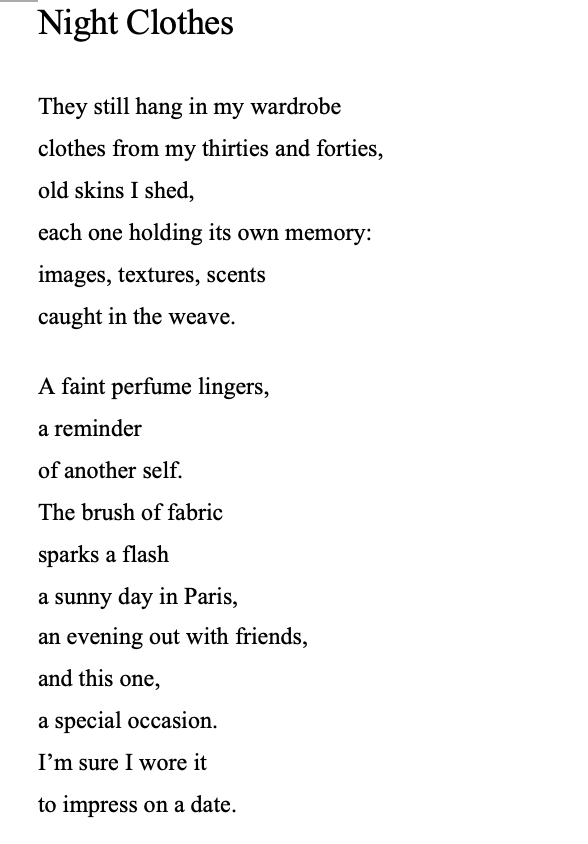
This short thought piece covers the idea that all women have an ‘inner self’ that we do not feel safe exposing to society (for the most part). Through touching upon many different topics relating to women, this piece aims to inspire the reader to consider their own beliefs and values.
Body:
As women, we often lessen ourselves to be curated and accepted by the patriarchal society we find ourselves surrounded by. Beneath the nice, polite, quiet, kind exterior, every woman feels more than is allowed. Whether this takes the form of the popular ‘female rage’ trope in movies or the current ‘thought daughter’ trend, women are only recently able to express that we cannot be shelved or reduced for male consumption.
Every trend, from bright 1970s-inspired outfits to lace tops and cowboy boots, connotes a will to change unprecedented in history. Every piece of clothing is a message and a signpost that we will never return to traditional gender roles. Cowboy boots alone are claimed, glamourised and changed into something feminine, beautiful, and soft. From their origins in the United States to a widespread trend almost exclusively associated with women, they have successfully been subverted from their roots. Lace, traditionally associated with wealth and class, has successfully been commercialised, and its ties with femininity cemented.
Women preach on podcasts, proclaiming they are not feminists while expressing personal beliefs they would not be allowed to hold without feminism. Conservative values among women rise, despite all the benefits they reap from a liberal society. In other parts of the world, women are stripped of their rights to a dehumanising degree.
Many women find the ‘philosophical’ thoughts expressed by grown men were discussed among our female peers in childhood. I challenge the ‘thought daughter’ phrase, as it implies that some daughters do not think. In my personal experience, every woman I have ever encountered has, in fact, had thoughts. Furthermore, these thoughts are beyond what is necessary to survive. Matriarchal societies in nature, such as elephants, are proven to thrive and nurture relationships beyond their most basic survival instincts. Many forward thinkers have wondered how our society would function if led by women with matriarchal values. What would a matriarchal value even consist of? We are so far removed from the idea of dismantling the patriarchy that it is almost impossible to imagine humanity without it.
Even today, many men are shocked to hear the truth of the female experience. From menstruation to childbirth to systemic misogyny, even those men who desire change have no idea where to begin. Women’s health alone was only properly studied from the 1970s onwards, putting it several hundreds of years behind men’s health. Any woman you know will have had a bad healthcare-related experience. Whether this was being dismissed, ignored or blatantly told you’re lying, the stories are endless. Women of colour are still more likely to die in childbirth than white women, either through complete dismissal of symptoms or due to a lack of medical training with non-white bodies. This is a result of systemic racism faced by every person of colour in predominantly white countries, with women of colour in particular finding themselves the victims of medical negligence.
Yet still, some men insist that equality has been achieved and now they are suffering. From blaming inclusivity laws to committing hate crimes against women and minority groups, male rage is freely expressed in public, daily. However, nearly any comment section on a ‘female rage’ video on social media will consist of mockery, dismissal and outrage. While men physically fight over a football match, a woman expressing emotions at anything will gain the brand of ‘crazy’ or ‘insane’.
As women, we are not perfect. It has been repeatedly ingrained in us to put down other women for the benefit of our patriarchal society. From social media to movies to books, those who uphold the patriarchy understand that women can only be truly held back by each other. If every woman were to join in matriarchal values, the patriarchy would crumble.
Artist name Garima
Book link
https://www.amazon.co.uk/dp/B0GL9GQR21
Social media accounts
Instagram: @garima_s_k
Hidden explores the layered self we present to the world. Outward composure often conceals inner turbulence, memories, and unexpressed desires. Identity becomes an act of translation, softening the truth to remain acceptable. In doing so, parts of the ourselves are quietly withheld, shaping who we appear to be and who we actually are beneath the ‘show.’
Hidden
She walks into rooms as if she is only one thing.
A name.
A voice at the right volume.
A silhouette that knows where to place her hands
when the camera clicks.
There is the woman they meet
steady, composed
stitched together with sense.
But beneath that she is carrying tectonic plates.
Shifting, erupting, reshaping and absorbing.
And then there is the one who remembers too much,
the romantic
who keeps moments pressed like flowers
between her ribs
She does not lie.
She translates.
Softens the sharp edges
renames the storms
Until even she forgets
what they were called, or why the began
She has been
a mirror
a keeper of silences
a reader of worry lines
yet she struggles to ease her own brow.
And still
there are rooms inside her
that have never seen light.
A version of her
that wants differently
refuses more
Waits.
Sometimes she almost hears it
that second heartbeat
Asking
What would happen
if you stopped shrinking so you would fit?
She stands there half-lit, half-known
carrying entire worlds no one has ever seen.
And if you ask her
how she is
she will smile and hand you the gentlest truth she believes.
‘I’m okay.’
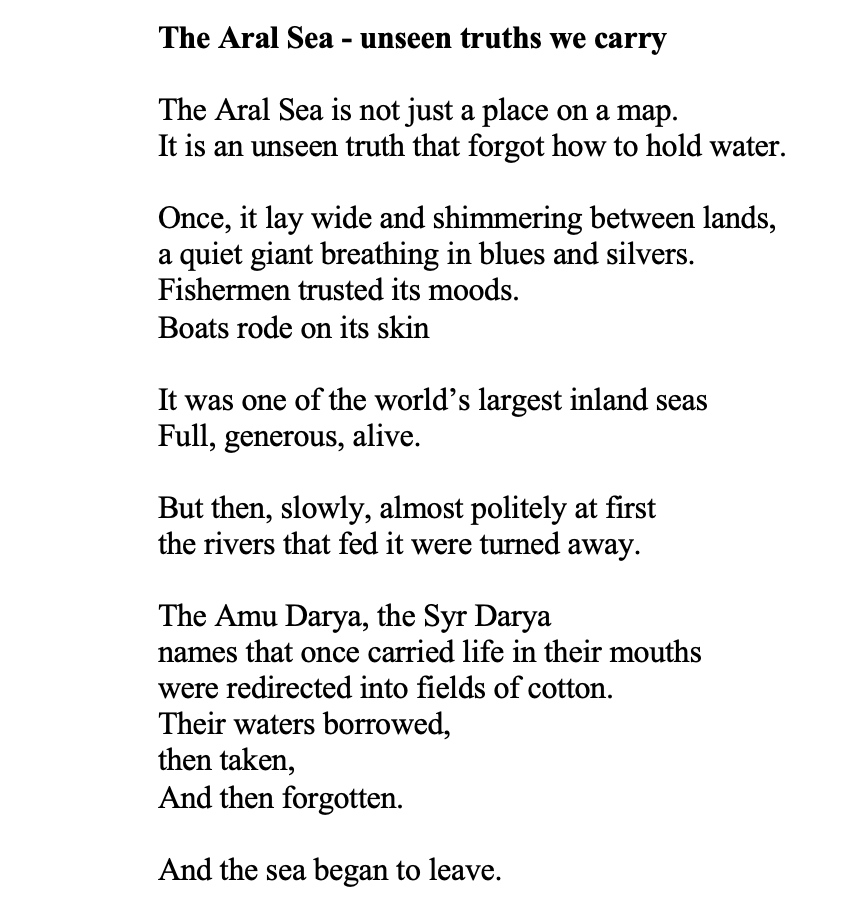
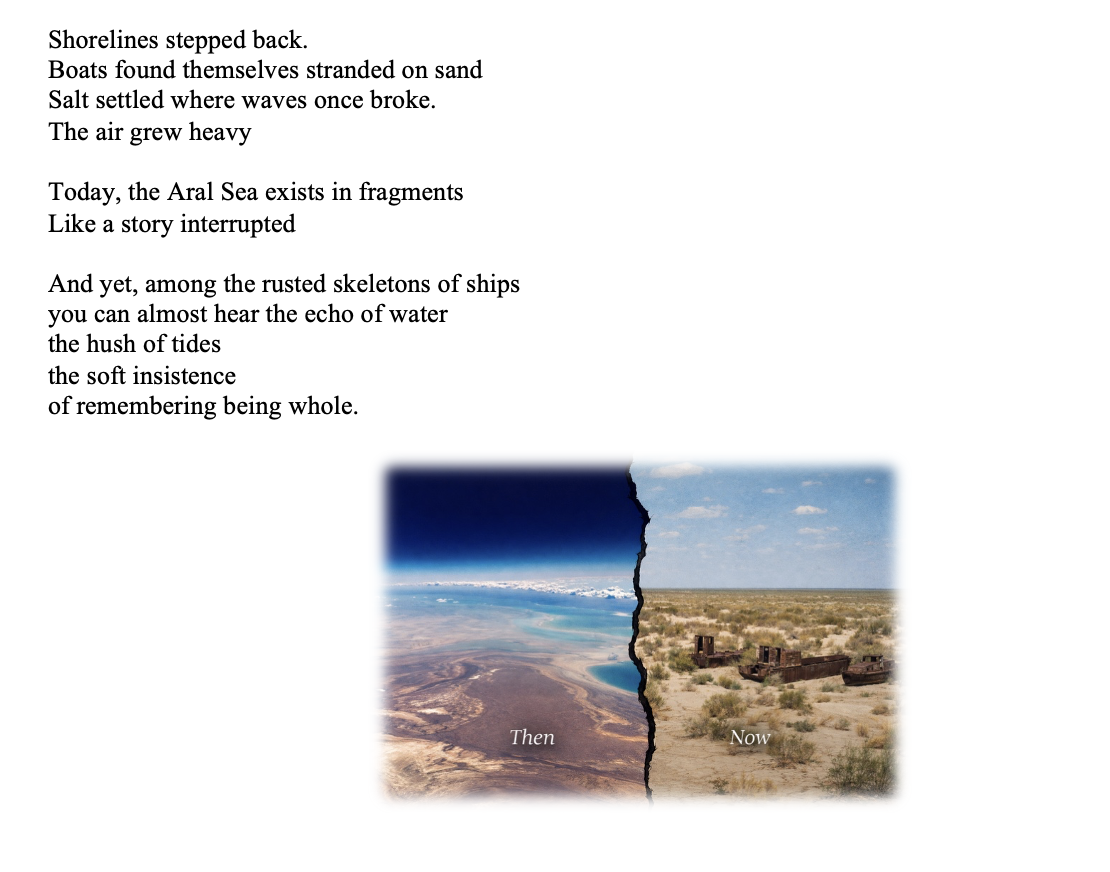
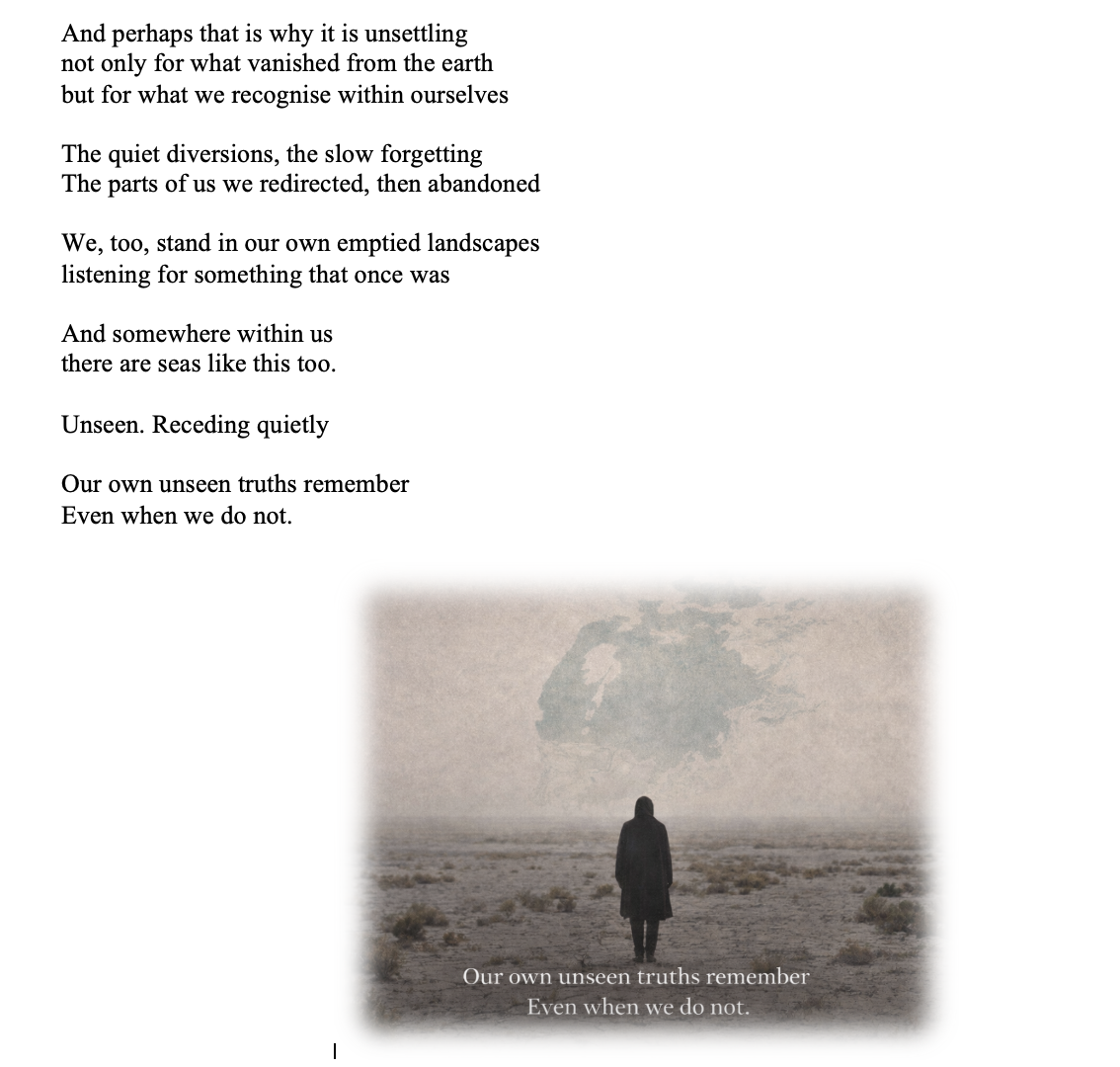
The poem- The Aral Sea becomes a metaphor for what we quietly lose within ourselves. What appears whole on the surface may already be receding underneath. Our identities are shaped not only by what we show, but by what we divert, suppress, and forget, until absence becomes part of who we are, unseen but deeply felt.
Artist name chris wilmott
Website
Social media
NEVER-the-LESS, DARK and LIGHT
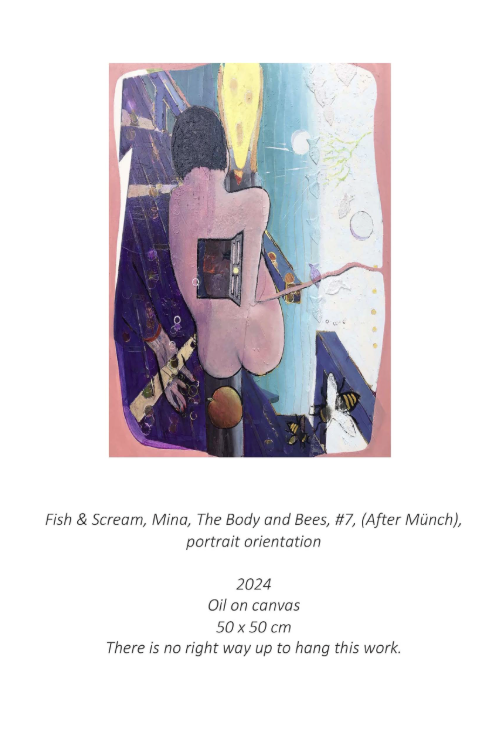
The not-yet-born-Body, un-alone, a-float,
in nice warm water, suspended in a womb,
in spirit imagines DARKLIGHT. Darkness, that
Body’s constant, balmy-world-reality,
when inside the divine-natural-pleasant
womb. The spiritual centre of the Body’s
glowing-mother, the Body hidden from light.
Lightness is that Body’s, cooler, physical,
reality, when exiting, the womb door,
instantly born. Surfing the amniotic,
into a world of cold moonlight, water,
and summery bees. Bees are light compared to
a Body. Never-the-less, bees have lightbrains, too.
The light, not-yet-born-Body has a brain, that,
later, sees bee-like, the lightness of the world,
light, having no-weight, an un-heaviness dark
pressure lacks. Lightness is a not-yet-born-Body’s
physical, gravity-reality, when
being hefted, transferred, in an instant, to
an artificial-womb. Physically cut,
separated, slit, from being a burden
to that other-person, that Screamer, who in
their touch - a spiritual-ballast - there is
dark or light. From dark to light, that hierarchy,
of flickering instants, for the Body, for
mother, is spiritually weighed, and framed,
by a higher hierarchy of darkness, to
which the newborn eventually returns.
Helpless-instantly, inevitably, with
emotion, spiritually-divining.
Yet, light is always, never, less than the dark.
This DARKLIGHT framework illuminates random,
womb-life materialities. Even of
maternity before, accidentally
calling spirit from universal darkness,
to live in an un-planned-not-yet-born-Body.
Understood this way, DARKLIGHT, creates stories.
Arbitrary tales about what to read in,
the fortuitous surface of a painting:
‘Fish & Scream, The Body and Bees’. Which,
Never-the-less, juxtaposes light and dark.
Project Fish, 2026