
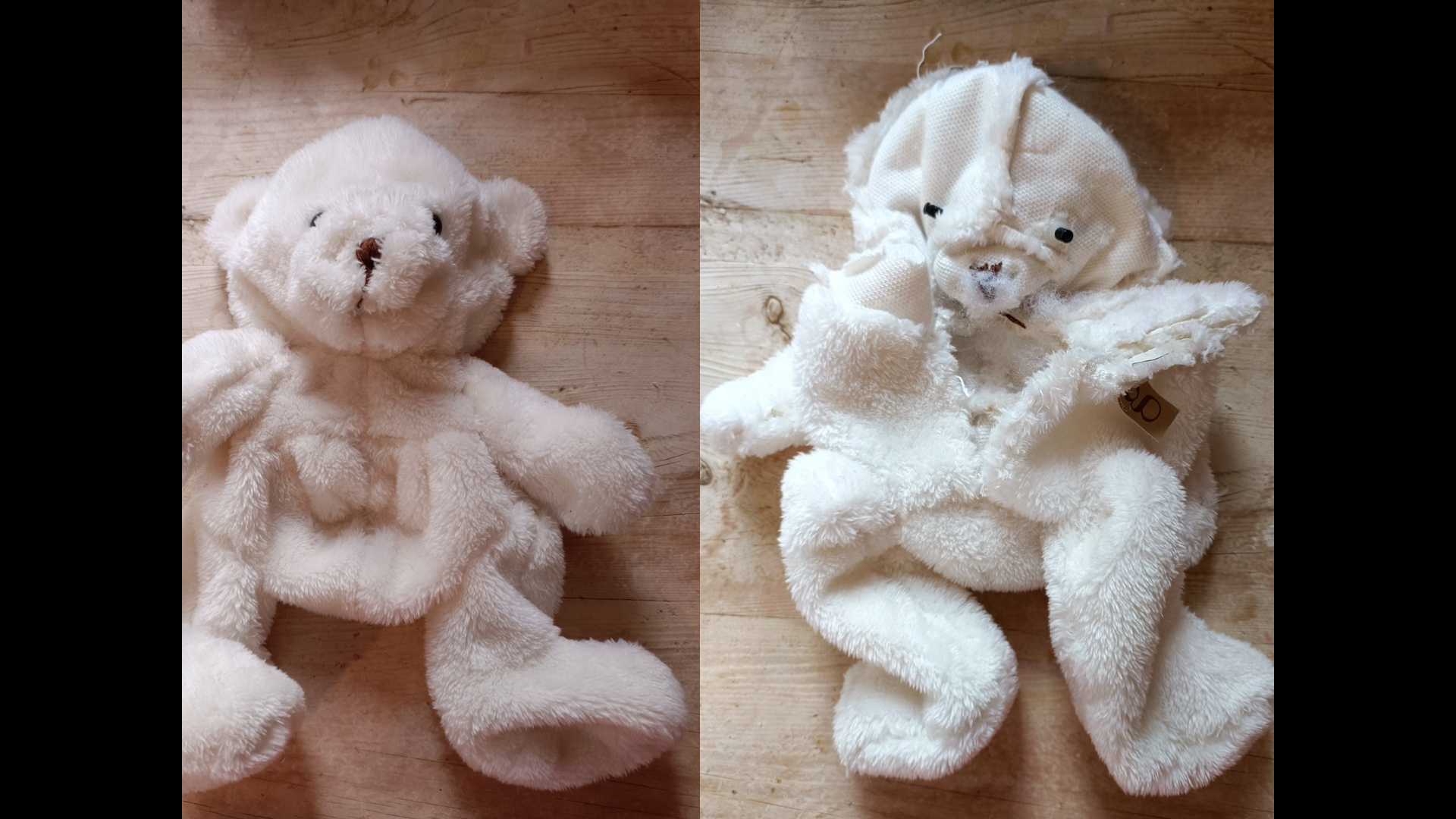
For this issue, we invited artists from all disciplines to submit work exploring the theme “Hidden Worlds”—a reflection on the layered identities we inhabit and the unseen truths we carry.
In our daily lives, we present carefully constructed versions of ourselves: composed, curated, and often incomplete. Beneath these public faces lie complex inner worlds—vulnerabilities, contradictions, desires, and stories that rarely surface.
This exhibition seeks to uncover those concealed dimensions and examine the tension between what is shown and what is withheld. We were intrigued to see how these questions were tackled: What lies beneath the masks we wear; how do societal expectations shape the identities we present; how do you present to the world, and what do you keep hidden; where do authenticity and performance intersect, and can the hidden self ever fully emerge into view?
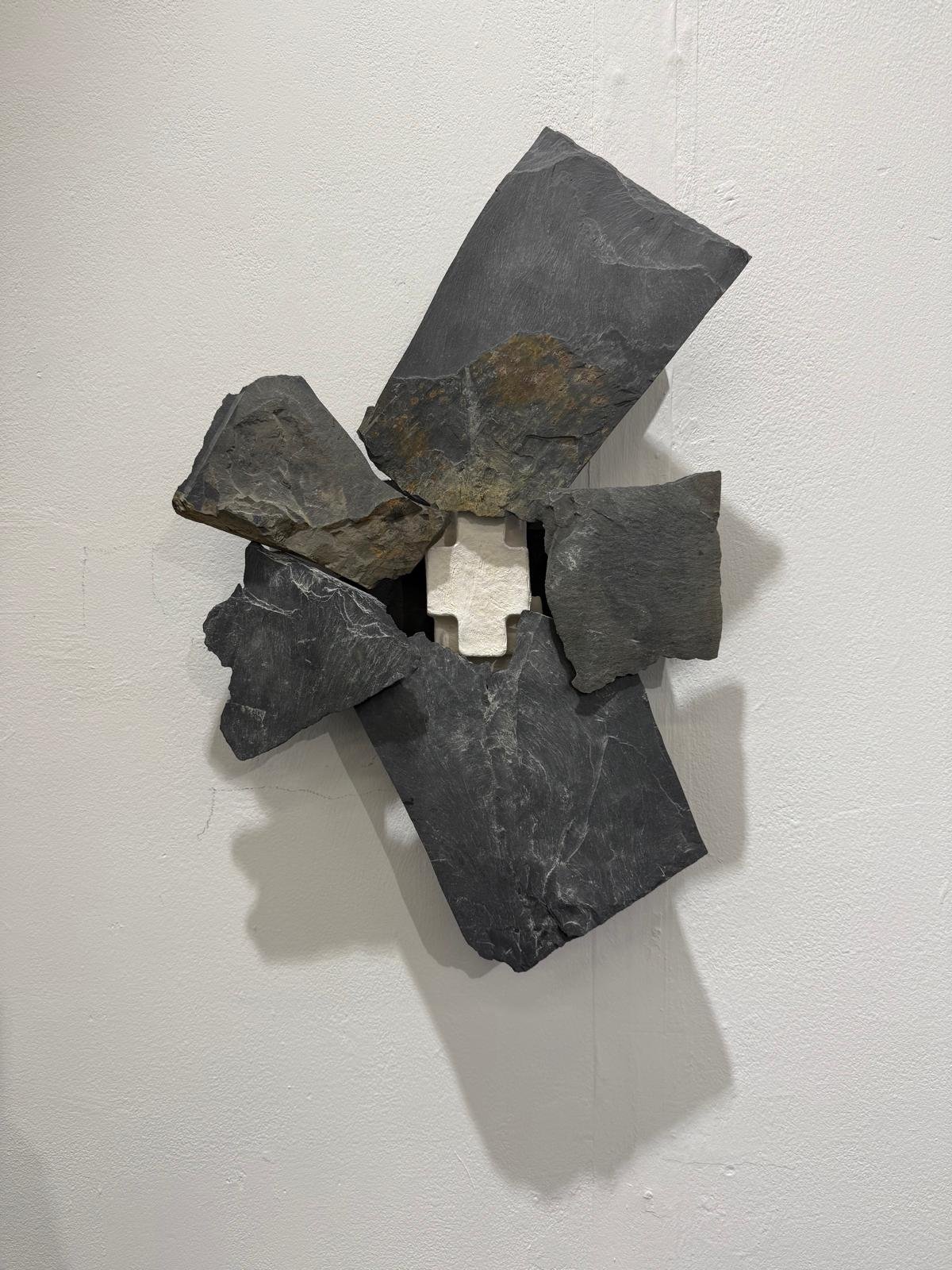
Artist: Katia Berezovskaya
www.kabeart.com
Breaking through the surface
Description: In this work, the emerging inner form takes the shape of a porcelain cross, symbolising deeply embedded beliefs and spiritual foundations that quietly shape our identities. These inner structures often remain invisible to others, yet they profoundly influence how we see ourselves and how we move through the world.
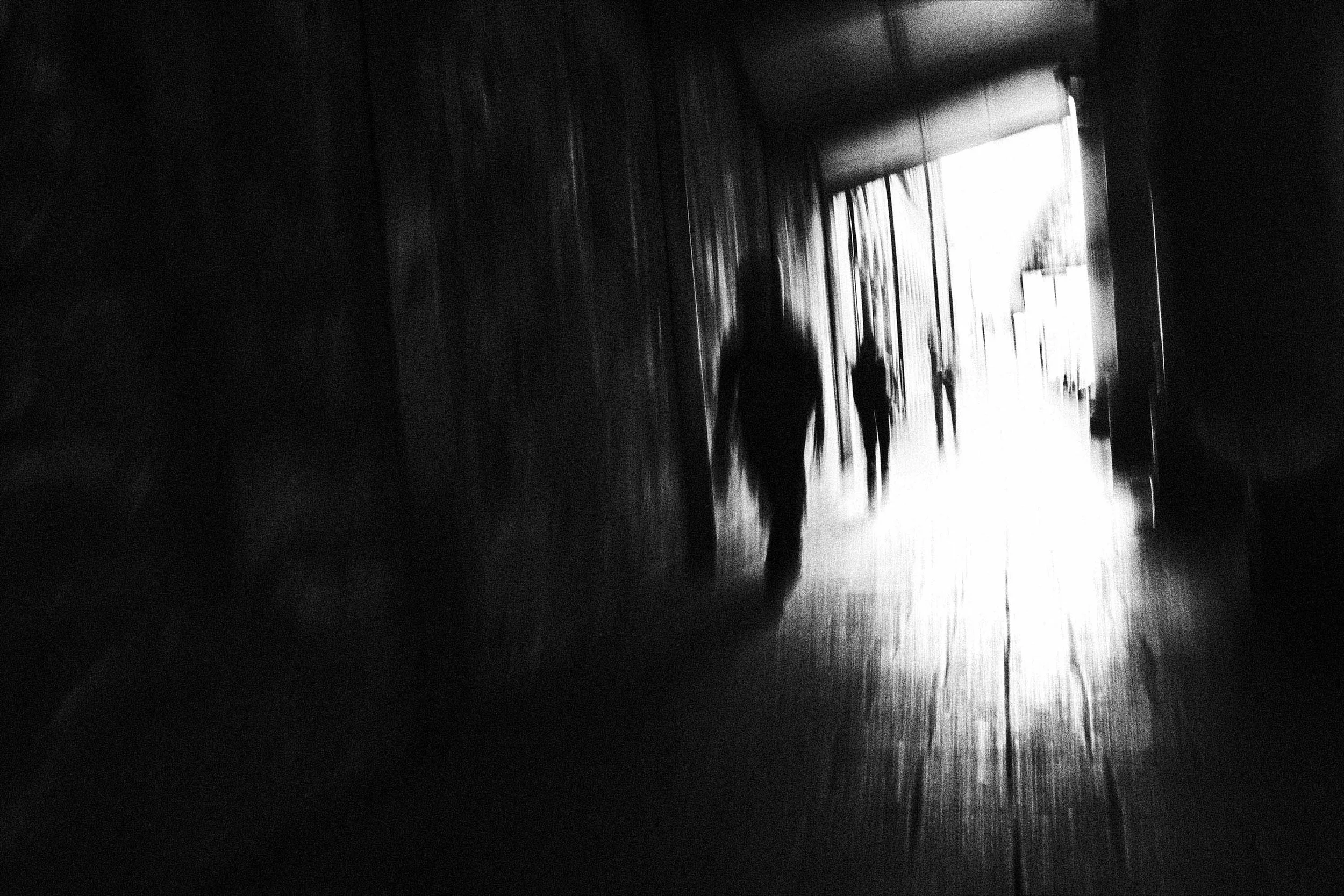
Artist: Emeke Obanor
https://www.emekeobanor.com/
@emekeobanorabstract @emekeobanor
Between Shift 3
Description: This series draws from an ongoing documentary and abstract photographic practice that explores how identity is shaped, concealed, and fragmented within everyday environments. Moving between public spaces and moments of psychological distance, the work investigates the tension between what is visible and what remains withheld beneath surface appearances. Responding to the theme Hidden Worlds, the selected sequence traces a gradual shift from social presence into emotional and perceptual dislocation. Beginning with figures positioned at thresholds and within shared public spaces, the work establishes how identity is already divided within ordinary environments. As the sequence progresses, these external settings begin to destabilise, giving way to blurred motion, spatial separation, and figures that appear increasingly detached from fixed position or clarity. Rather than treating “hidden worlds” as something purely internal or metaphorical, the work proposes that concealment is already embedded within how people move through and occupy space. Moments of distortion, distance, and partial visibility become visual indicators of inner states that cannot be fully articulated or resolved. The inclusion of long exposure and abstraction in parts of the sequence further disrupts the certainty of the documentary image, allowing the photograph to operate between observation and psychological interpretation. In this way, the work aligns with the theme by suggesting that hidden worlds are not separate from lived reality, but continuously produced within it—through movement, environment, and the limits of how we see and are seen.
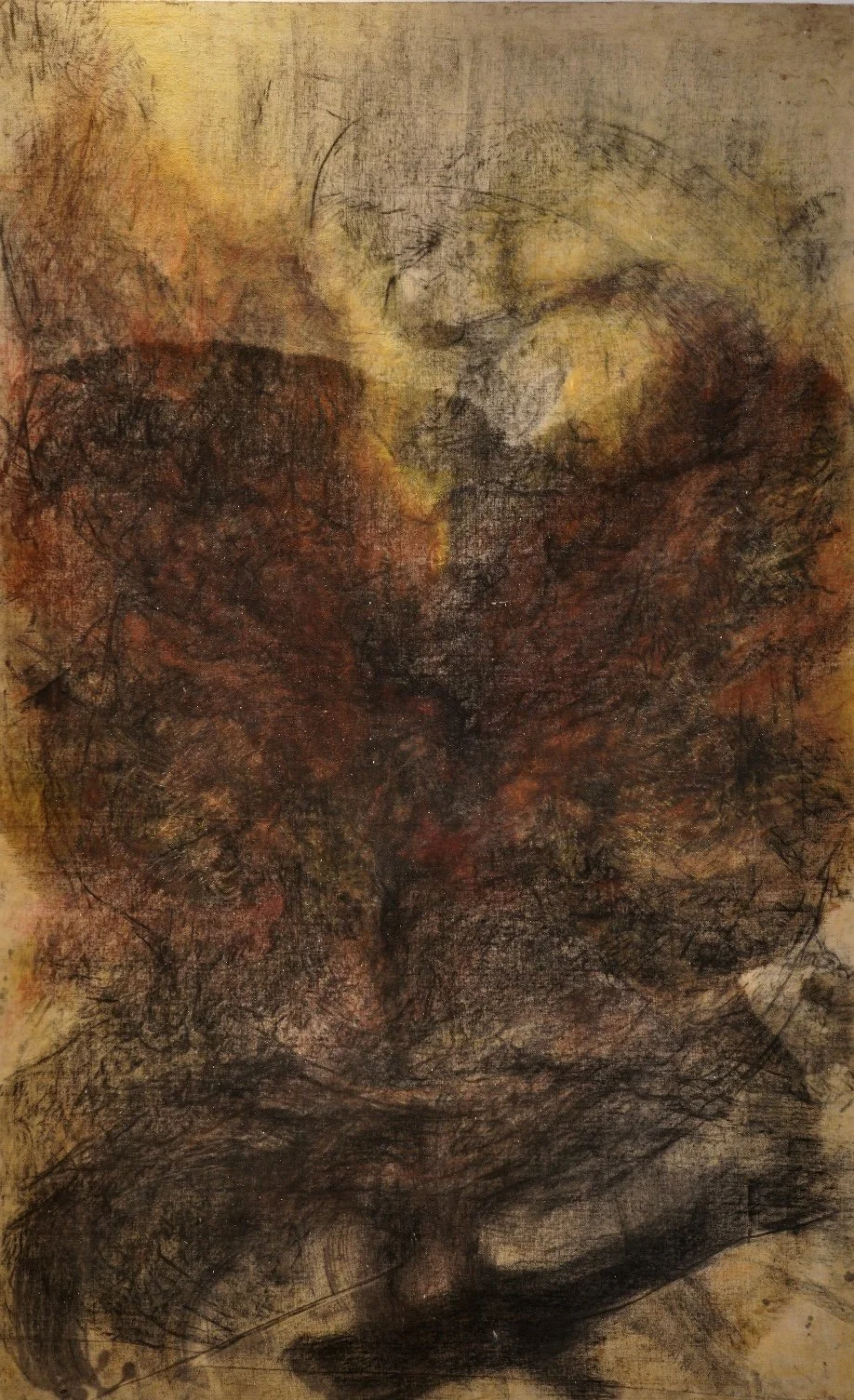
Artist: Xixi
https://www.instagram.com/artist_xixi
Residual Body
Description: This work continues an exploration of the body as a site where memory is not fixed but gradually eroded and reconfigured. The form appears partially present, partially dissolved, resisting a clear or stable outline. Through repetitive marking, smudging, and layering, the surface becomes a space of tension between emergence and disappearance. The body is suggested rather than defined, as if it exists in a state of transition—caught between visibility and obscurity. Rather than representing a specific figure, the work reflects on how personal histories and emotional residues accumulate and distort perception. What remains visible is only a fragment, while much of the experience is embedded beneath the surface. In this way, the piece engages with the idea of “hidden worlds” as something internal and unstable, where identity is continuously shaped by what cannot be fully seen or articulated.
Artist: Susan J Hart
www.susanjhart.art
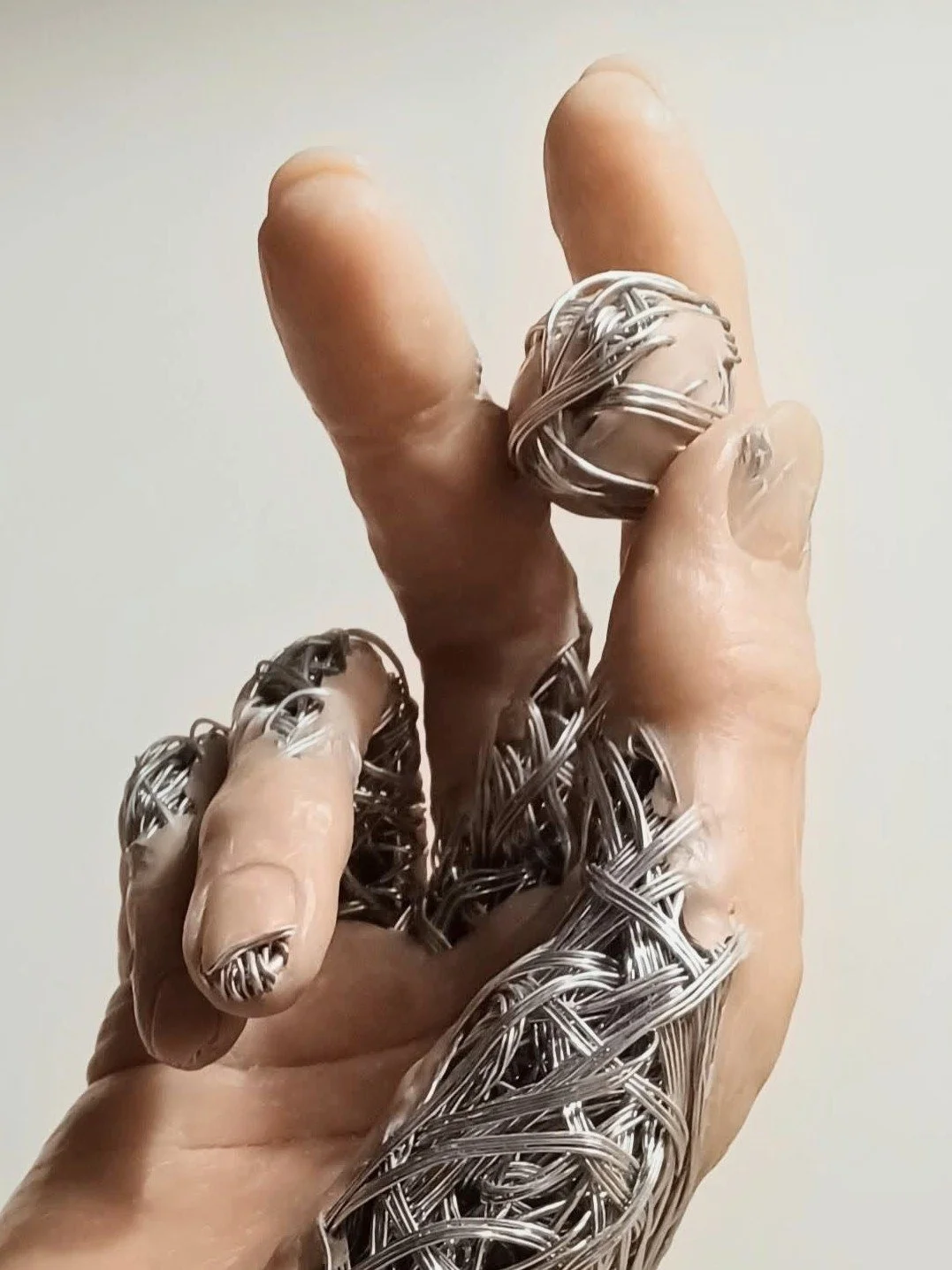
A Small Part of Me
Description: Sometimes, our efforts to maintain intention are overruled by the unintended. ‘A Small Part of Me’ examines the quiet battle between two personal worlds - who we intend to be (the intended) and who we reveal in unguarded moments (the unintended) - and represents the sense of trepidation that we experience when the two collide. Beneath the surface of the intended lurks the unintended. Maintaining the former requires infinitely more effort than allowing the latter, to the extent that we may feel we relinquish a small part of ourselves in the process. The unintended, however, holds the default setting, hovering restlessly below, waiting for the intended to drop its guard. The piece is a self-portrait, and part of a body of work which explores emotional well-being and social anxiety. 'A Small Part of Me' (detail) 2024 Aluminium wire and polymer clay on oak plinth.
Artist: Luciano Rocha
@houseoffrisson
www.houseoffrisson.co.uk
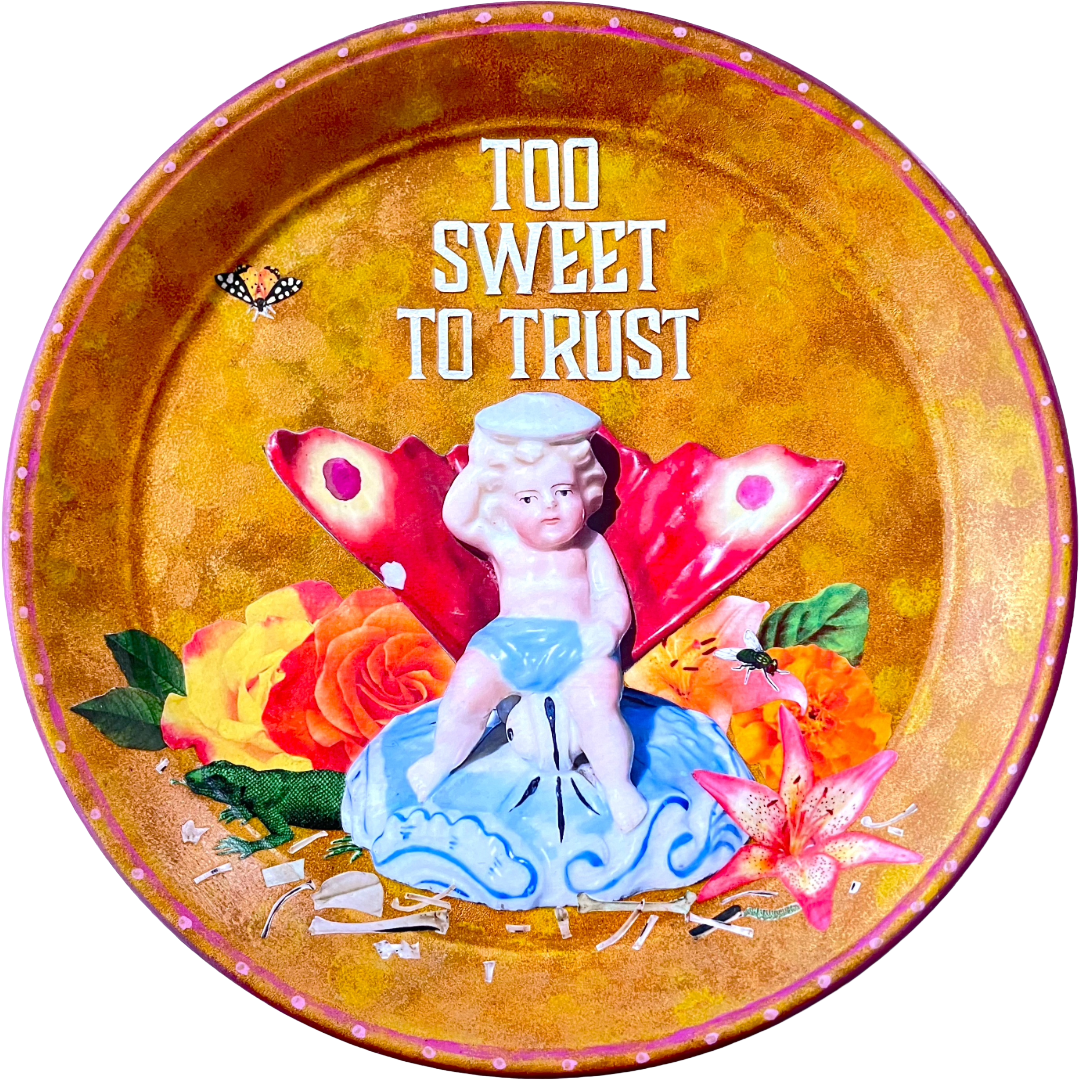
Too Sweet to Trust
Description
“Too Sweet to Trust” examines the instability of the identities we present to the world. The work uses the language of sentimental ornamentation to explore how charm, innocence and sweetness can operate as both mask and mechanism. At first glance, the piece appears gentle and decorative, but a closer encounter reveals a more complex emotional terrain where softness becomes a strategy and sweetness becomes a form of self-protection. The figure at the centre of the work embodies this tension. It occupies an ambiguous space between categories, part cherub, part creature, part symbol, part performance. Its identity is not fixed but layered, shifting depending on how closely the viewer looks. This ambiguity mirrors the hidden worlds we carry within ourselves, the parts that do not fit neatly into the roles we perform, the instincts that resist being smoothed into something palatable. The phrase “Too Sweet to Trust” interrupts the expected narrative of innocence and reveals the psychological negotiation beneath it. It suggests that sweetness can conceal boundaries, suspicion or lived experience that refuses to be erased. The work becomes a portrait of the private self, pushing against the expectations placed upon the visible one. It asks what happens when the curated exterior no longer aligns with the truth beneath it and when the inner world insists on being acknowledged. Rather than offering clarity, the piece invites viewers into a space where identity is hybrid, unstable and quietly resistant. It proposes that beneath every polished surface lies a world of contradictions, a world that is rarely shown but always present.
Artist: Ciprian ARICIU
https://www.ciprianariciu.ro/
@ciprian_ariciu_art
https://www.facebook.com/profile.php?id=100063478459661
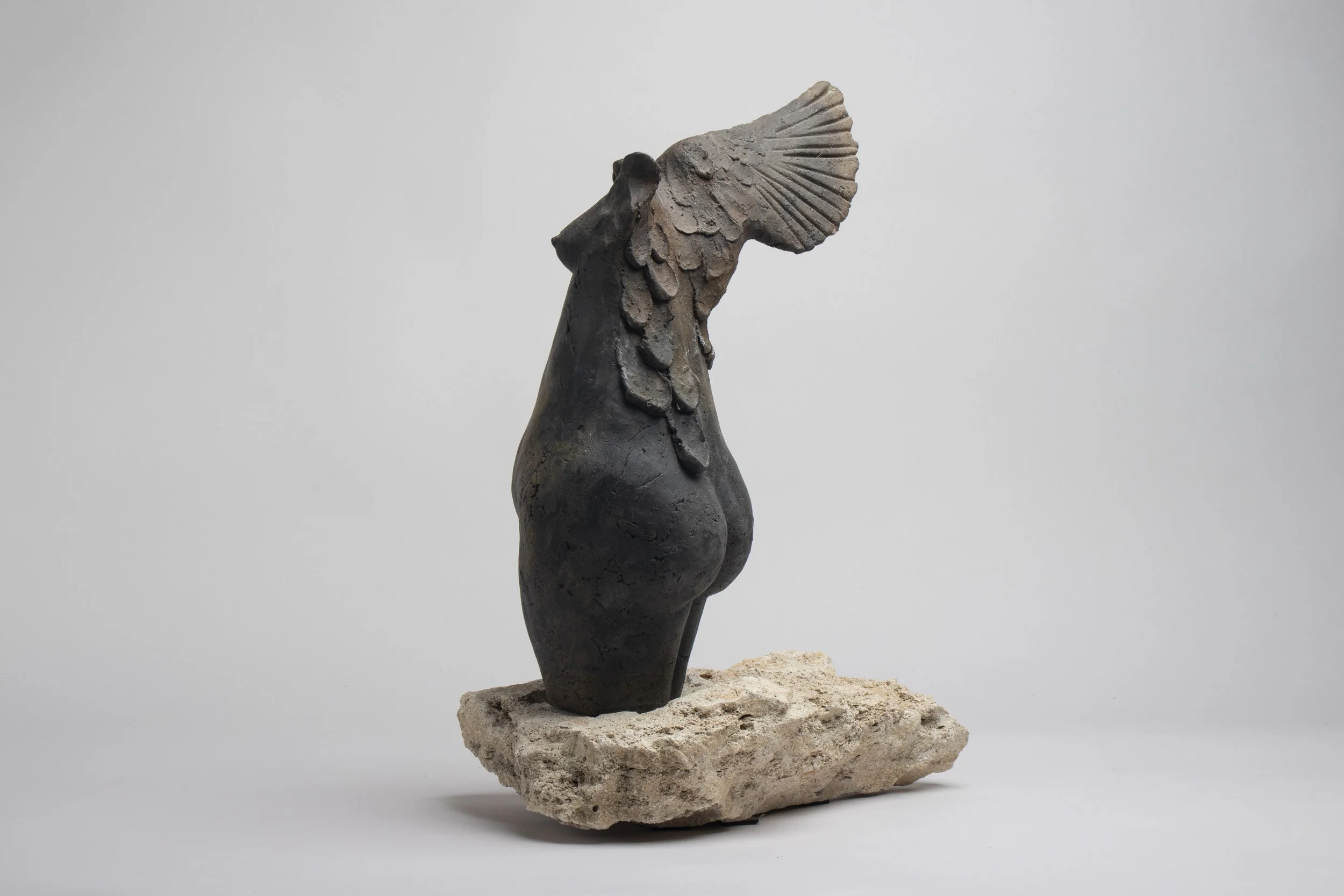
The Genesis of Flight
Description: The Genesis of Flight explores the idea of hidden worlds—those inner spaces where transformation begins, often unseen. Beneath the surface of what is visible, there is a quiet process of becoming, similar to the way growth happens in nature: slowly, organically, and out of sight. The work reflects on the moment just before emergence, when form is not yet complete but already carries the potential of what it will become. The wings referenced in the piece are not symbols of escape, but of growth. One of them suggests a continuous unfolding, as if it is still forming—still learning how to exist. Clay, as a material, holds this tension between fragility and strength, between grounding and elevation. It connects the work to the earth, while the idea of wings reaches toward something beyond it. This duality creates a space where transformation can take place. Hidden worlds are not distant or separate—they exist within us, in the parts that are not always visible or easily defined. They are where change begins, where meaning takes shape before it becomes form. Through this work, I explore the quiet, often invisible processes that shape who we are. The moment when something starts to grow, even before we fully understand it, is where the essence of transformation resides.
Artist: Paula Armstrong
www.parmstrongceramics.co.uk
@paula.armstrong2
www.facebook.com/PArmstrongCeramics
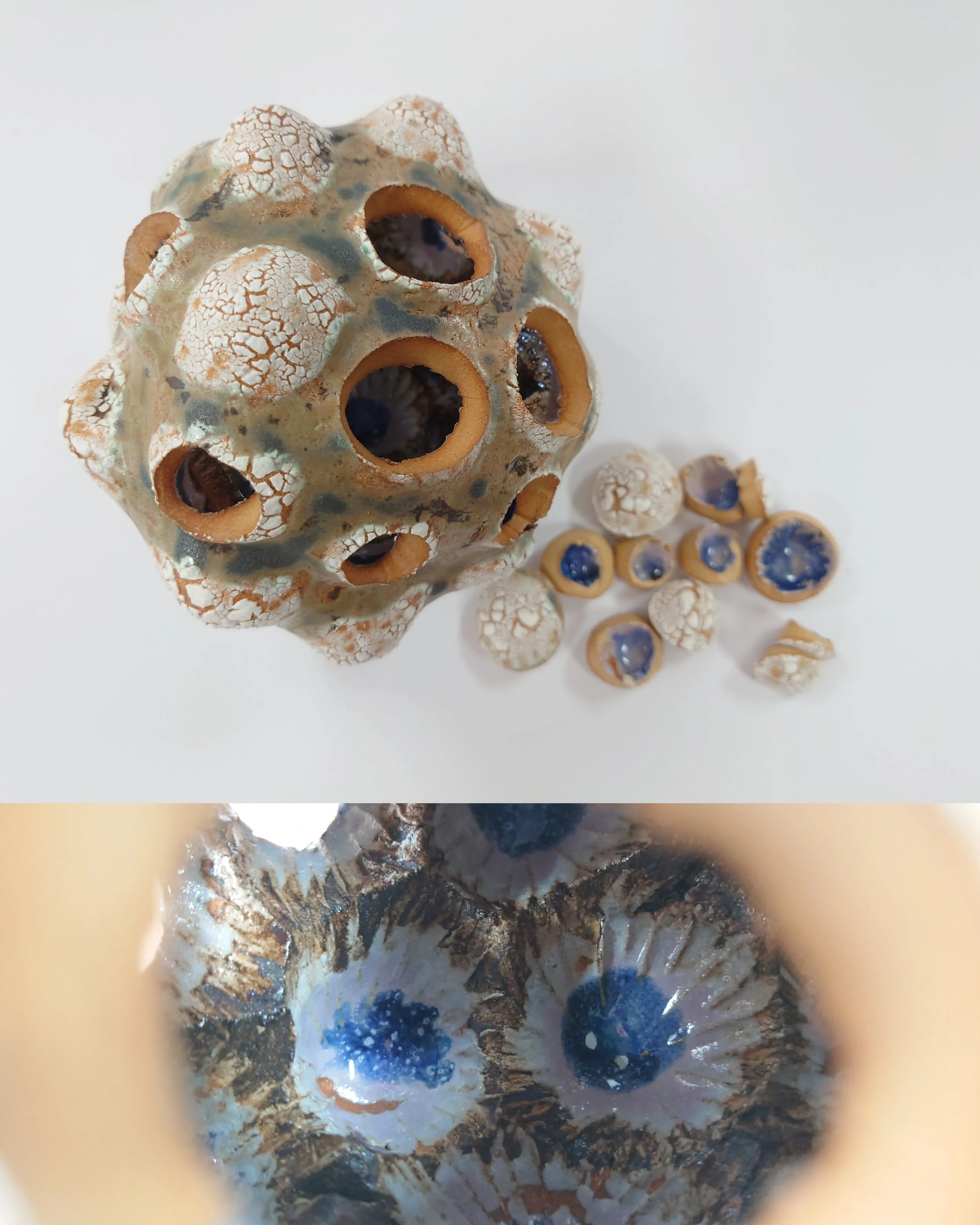
Potential Inside: Pieces
Description
Playful at first glance, profound on second. Jigsaw-like fragments invite you to imagine where they belong - a reflection on the parts of ourselves we give away, what’s kept safe, what’s lost, and what can never quite fit back in.
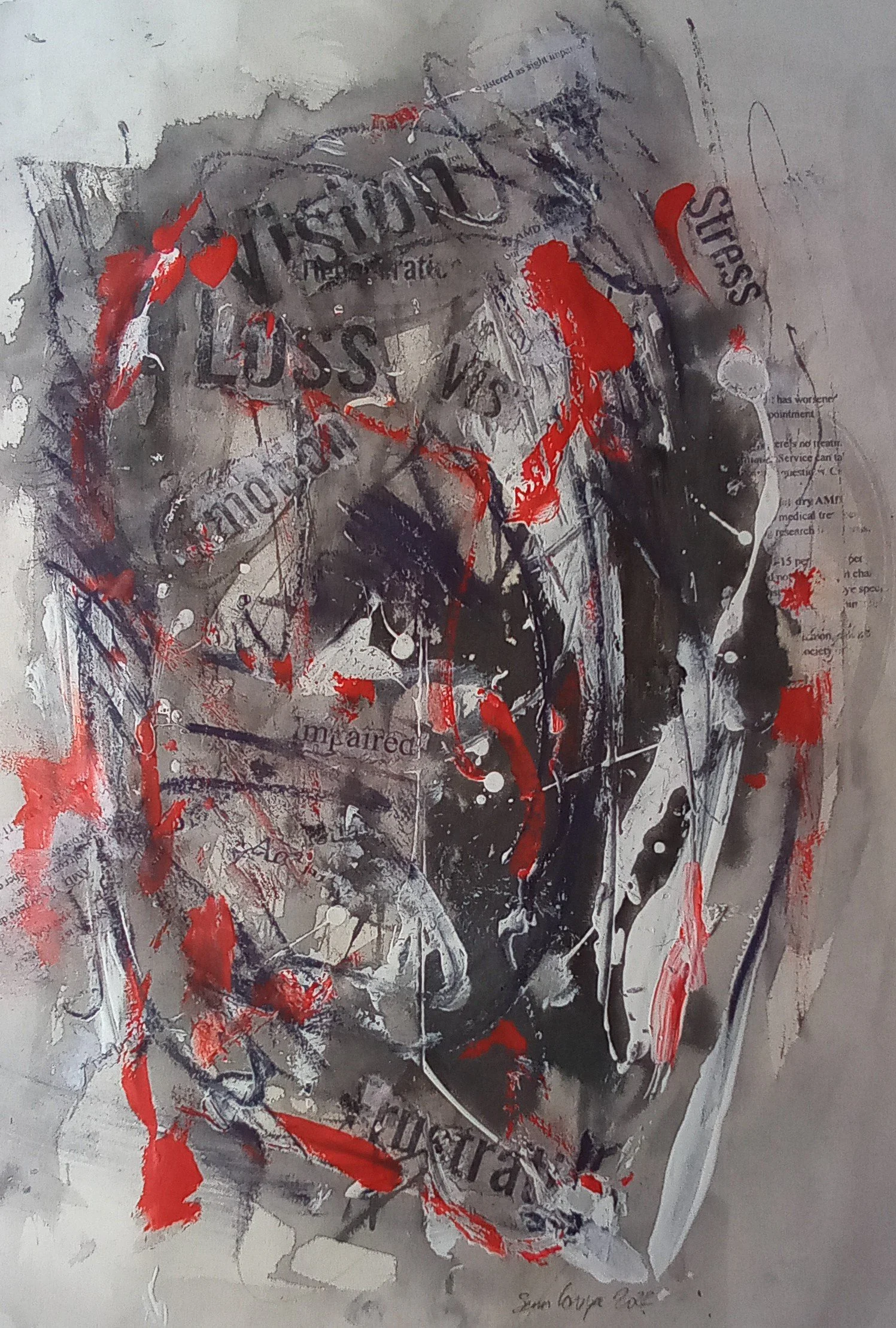
Artist: Sean Coupe
https://free-5307069.webadorsite.com/
Overwhelmed
Description: In the context of Hidden Worlds, this piece portrays the impossibility of a fully coherent self. The inner world is not a stable truth waiting to be uncovered, but a shifting, layered space, marked by external pressures and internal contradictions. “Overwhelmed” captures that moment where the effort to hold everything together falters, and the boundaries between public and private begin to dissolve. This piece encapsulates the mental health struggles I went through after traumatic sight loss and getting to grips with both a changed outward and outward looking reality.
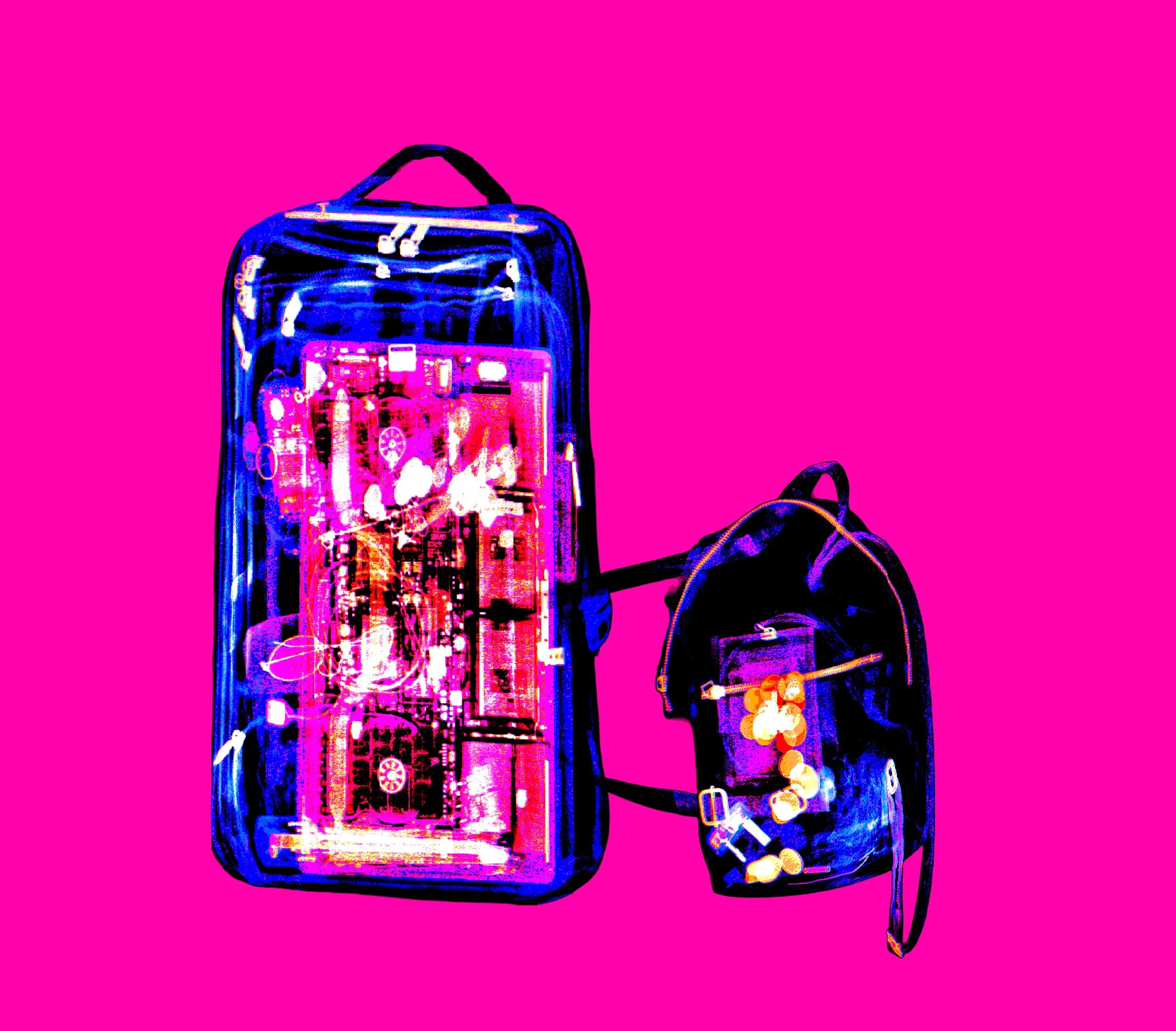
Artist: Stef Will
Stef@StefWill.com
www.StefWill.com
Hidden Cargo
Description: What lies beneath the masks we wear? How are identities constructed, regulated, and revealed within systems of observation? Where does the boundary between private and public self begin to erode? This work presents an X-ray image of two bags - the artist’s rucksack and her daughter’s small backpack - captured mid-transit within the infrastructure of an airport scanner. Produced by a machine designed for detection, the image operates simultaneously as a security document and a portrait. We move through airports as we do through much of public life, presenting only surfaces - carefully chosen exteriors. Beneath that outer layer sits a private archive: a laptop, sunglasses, medication, a charger, keepsakes - objects carried without explanation. Security imaging collapses this boundary in an instant, exposing the interior life of the bag and, by extension, its owner. The revealed contents form an involuntary inventory, an index of lived experience translated into patterns of opacity and translucency. The bag becomes a proxy body, its contents standing in for memory, care, habit, and need. The work creates a tension between concealment and enforced disclosure. A rucksack, typically a site of privacy and personal curation, is momentarily re-authored by a machine that neither understands nor truly interprets what it reveals. The colour palette shifts the image away from the clinical language of border control toward something more tender and domestic. A system designed to detect threats instead produces a quiet, affective mapping - a visual trace of attachment, accumulation, and the unseen architectures of everyday life, offering a glimpse of where authenticity and performance intersect.
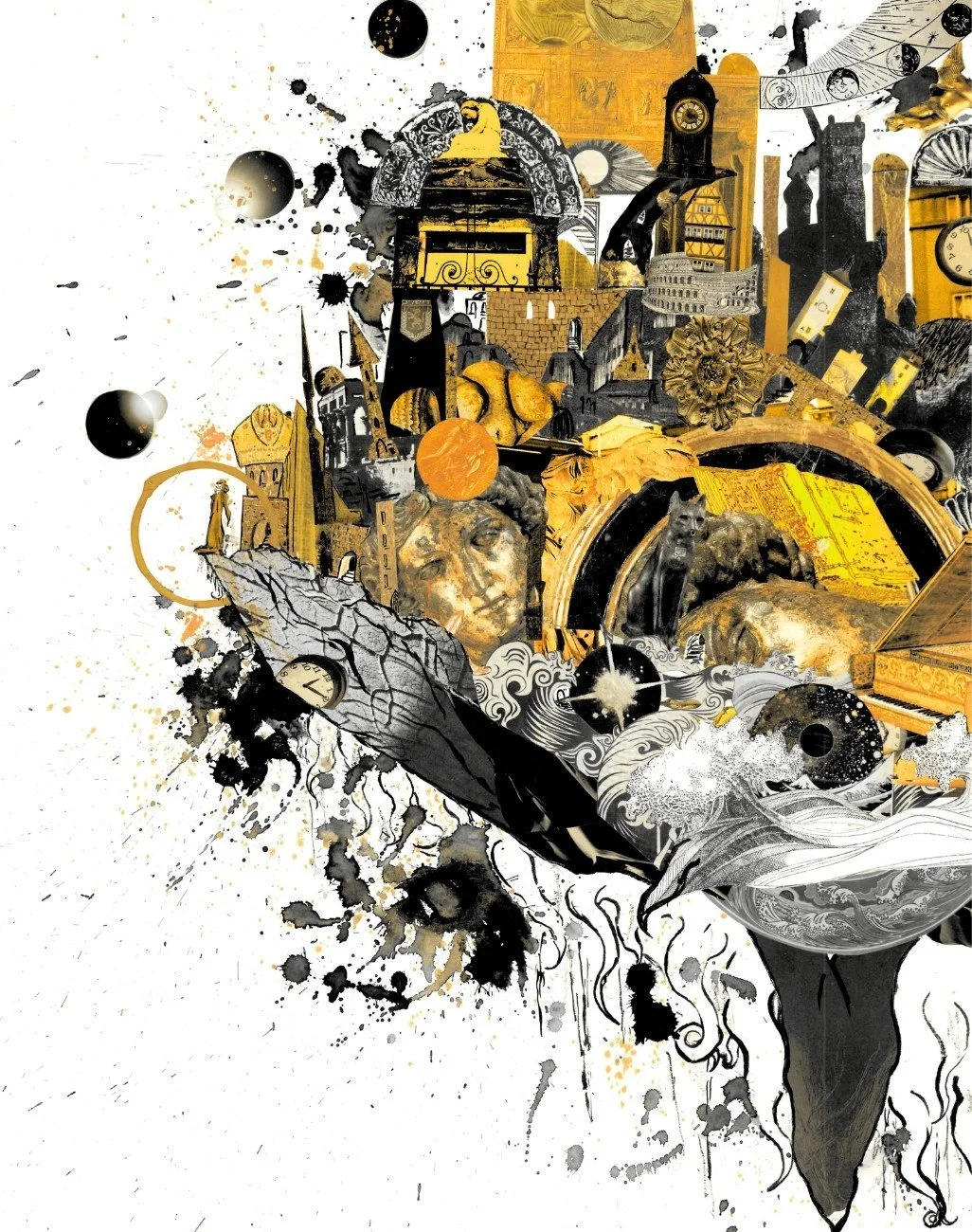
Artist: P. Moshe Shamah
www.studioshamah.com
Carcosa: Everything Within and Without
Description: Mixed-Media Analog Collage, 50x40 cm, Found Material, Japanese Watercolor and Gold Leaf Paint, Bombay Ink on Watercolor Paper “Strange is the night where black stars rise, And strange moons circle through the skies, But stranger still is Lost Carcosa.” - Robert W. Chambers, The King in Yellow Twisting and turning as a chimeric kingdom, swallowing pieces of different civilizations and fragments of ancient wisdom - Carcosa is in equal parts a terrifying and beautiful labyrinth. That hidden world lives both in the secret annals of mankind’s deepest hopes and desires, and simultaneously, in a hidden metaphysical realm layered upon ours. A mirror realm offering everything and anything that is, was, and will be - Carcosa stands as the realm of the thinker, a utopia for man's unending search for knowledge, the unquenchable desire to know and collect more. Though, to what end? What secrets of this hidden world lay hidden behind the mask of the King in Yellow? Is his mask but a metaphor for the mask we wear along our journey? Is the utopia built on the thirst for knowledge not an assurance of madness, of a thirst ironically unquenchable? Such are the questions we are confronted with when delving into the hidden, clandestine kingdom of Carcosa.
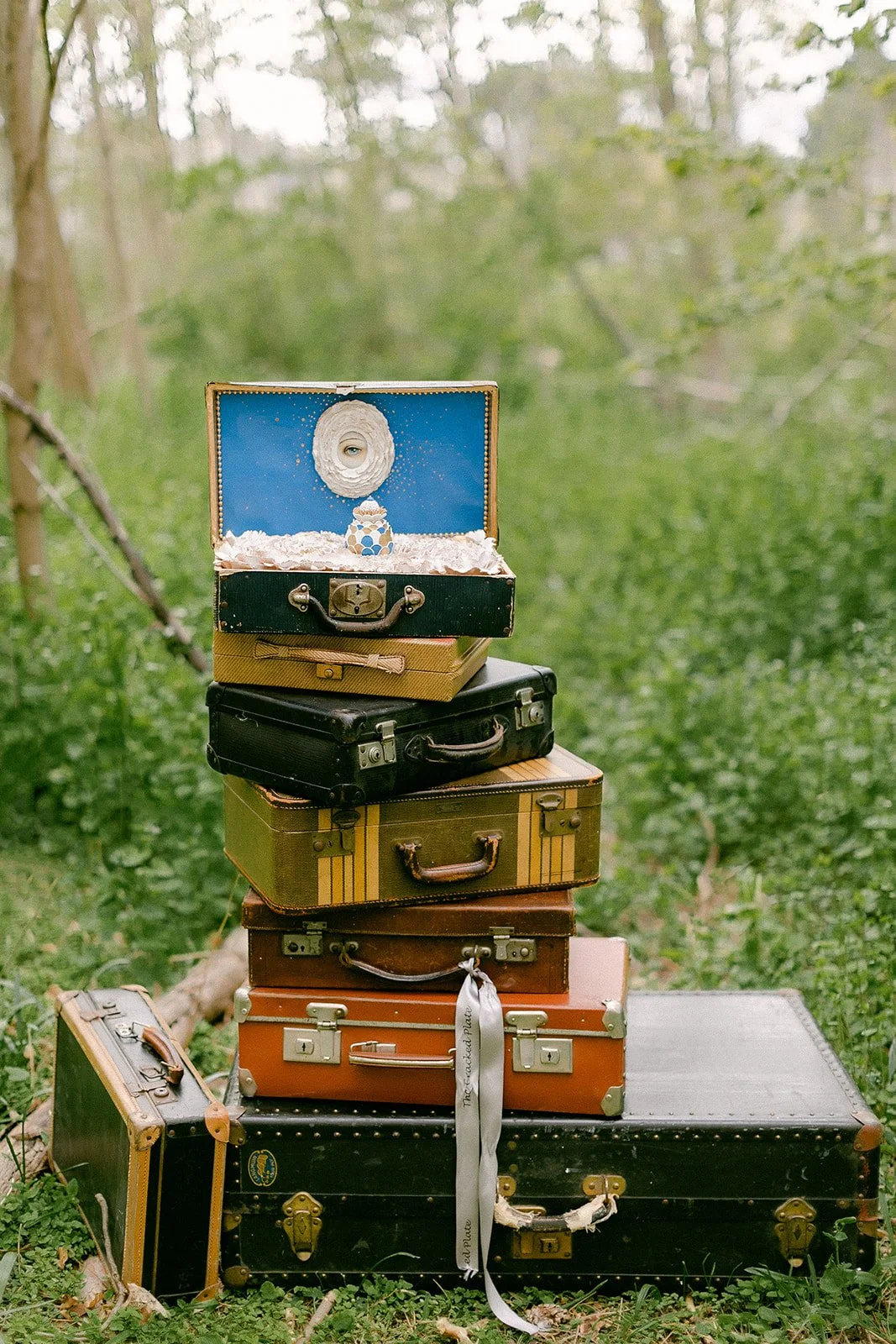
Artist: Tanya Besedina
https://www.besedina.com/
Description: “Soulcases” is a sculptural installation that explores hidden worlds within the self. Ceramic forms are placed inside vintage suitcases, turning each case into a private interior where memory and personal truth exist but are not fully visible. The work begins with a simple image. The soul as a suitcase. Some are open, exposing fragments of an inner world. Others remain closed, withholding what cannot be seen. This reflects the gap between the self we present and the one we conceal. Each case functions as a contained world. What is visible is only partial. What remains hidden shapes the whole. Ceramic and worn luggage bring fragility and endurance into tension. The materials carry traces of time, movement, and loss, suggesting identity as something shaped, protected, and never fully revealed.
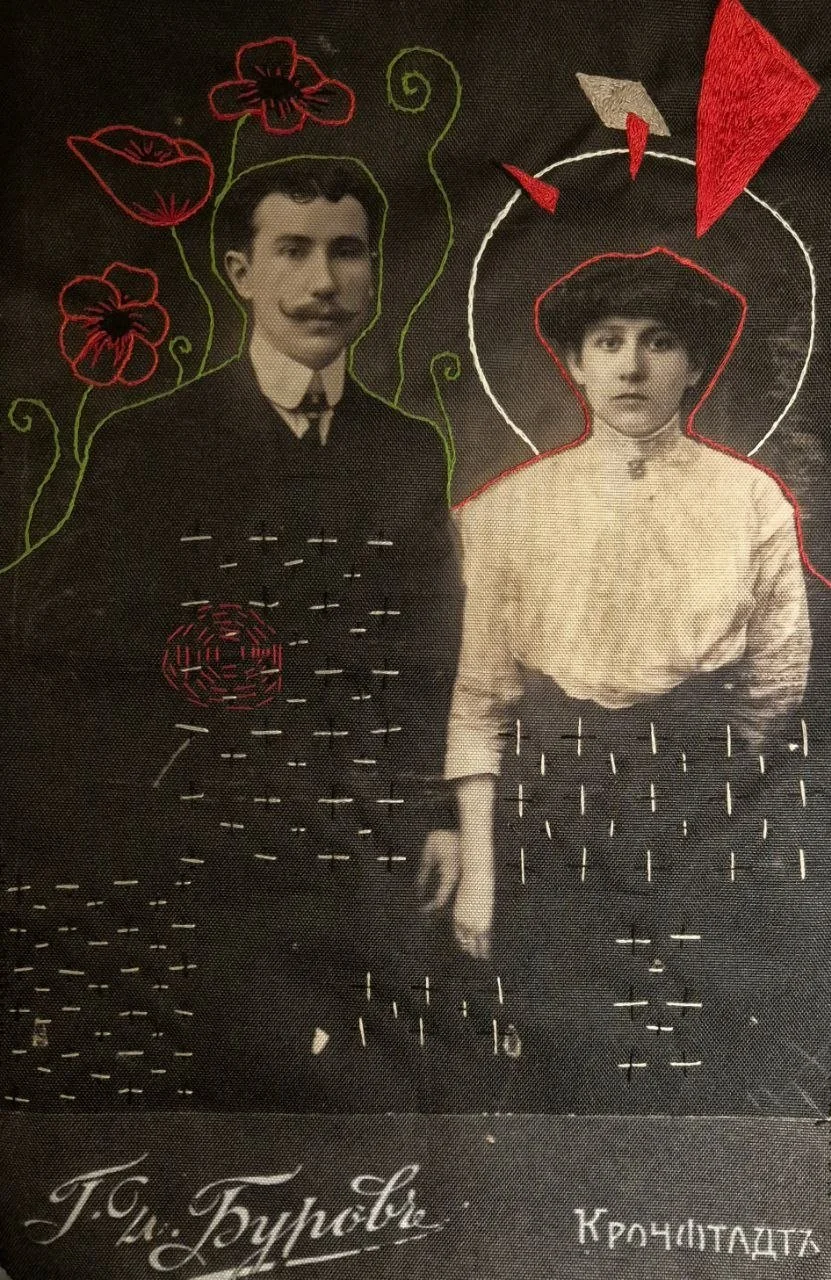
Artist: Iaroslava Maksimenko
Before the Storm
Description: This artwork is based on a family photograph found in an abandoned house in Kronstadt (Gulf of Finland), dated 1913 — an image held at the threshold of historical rupture. The figures remain suspended within a moment that has not yet collapsed, yet no longer feels stable. Time appears extended. The work is structured through two layers. The first is the original photograph: a real moment, real people whose names and lives remain unknown. The second is a constructed aura — a field of imagined trajectories shaped by historical context, collective memory, and projection. I am interested in what remains hidden within such images — the lives that are no longer visible, the stories that were never recorded, and the quiet disappearance of people from memory and history. Found photographs, especially those abandoned or displaced, reveal how easily personal histories can be lost, reduced to anonymous objects. The viewer is left alone with these assumptions. The lives of the depicted figures cannot be recovered or confirmed. Yet, with knowledge of the historical context, one may begin to anticipate possible futures — often the worst ones — and this uncertainty produces a subtle but persistent discomfort. In this sense, the work reflects not only on the past, but also on the fragility of the present. If these lives have already been erased from memory, it suggests that our own images, stories, and identities may one day face the same disappearance. The fear of being erased and forgotten may be one of the deepest hidden fears of humankind.