
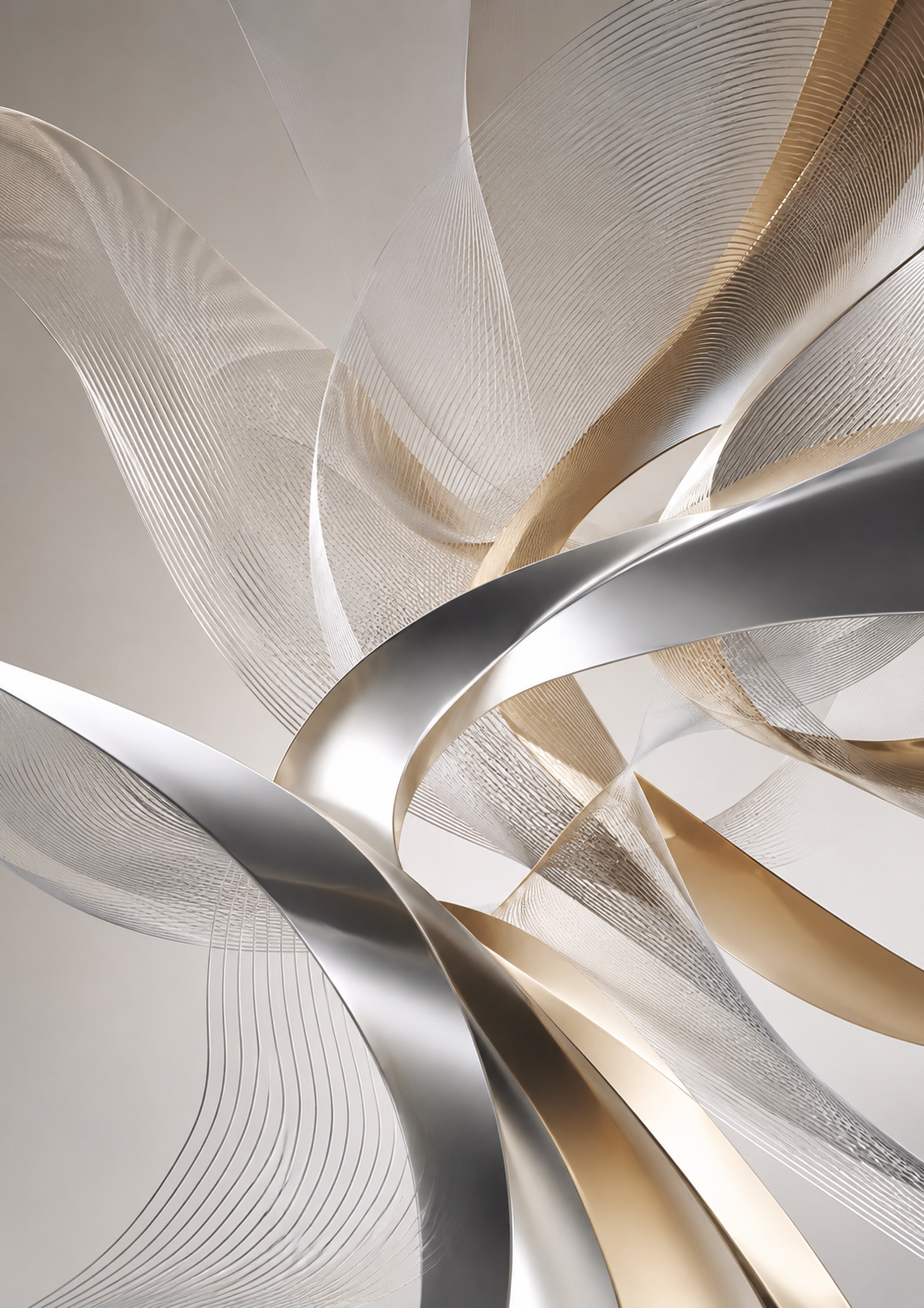
Movement
This issue traces movement wherever it surfaces, in the body, on the page, in the voice, across the archive, through the environment, and inside the imagination. We're interested not just in motion itself, but in what motion does: how it performs, disrupts, and lingers.
We asked contributors to sit with questions like:
What traces does movement leave behind?
Can writing itself perform an action, not just describe one?
What remains once the motion has stopped?
Is stillness its own kind of movement?
The result is a collection that resists fixed form, work that moves between disciplines as easily as it moves through them.
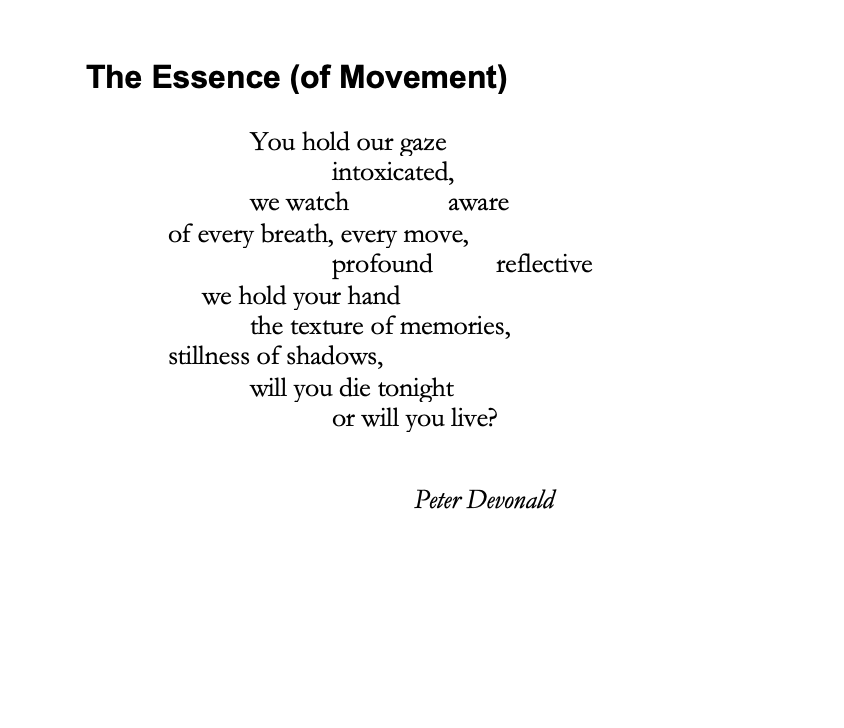
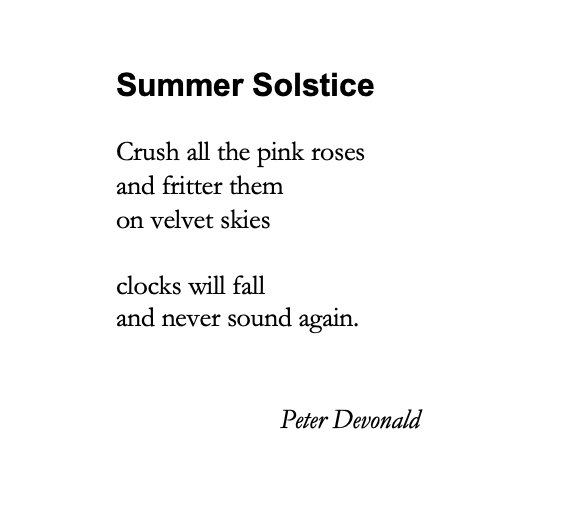
Our first pieces this month is from our resident poet Peter Devonald
I remember seeing Vanessa Redgrave elegantly portray the legendary dancer Isadora Duncan on stage in the 1991 play When She Danced at the Globe Theatre (now the Gielgud Theatre) in London. She had such presence, every move engrossing and captivating. She became Isadora, I'm sure of it. Vanessa Redgrave also played her 1968 biographical film Isadora. Fascinating to imbibe such a free spirit, to become that pure freedom and liberation.
Isadora
You move as nature moves, sublime,
you express the world with freedom
and yearning; the centre of your torso
ripples outward to all of the body,
the sway of the sea and flying birds,
energy of a herd of animals flowing.
You celebrate the joy of every move,
aware of every breath, every change
in the air, every ripple of water as a
stone skims into tranquil eternal.
Performing barefoot in flowing togas,
open-chested leaps, skips and waves,
improvisational emotion, you touch infinity
with the honest reality of being human.
🖋️✒️🖋️✒️🖋️✒️🖋️✒️🖋️✒️
Artist - Nichola Rodgers
Website- www.nicholarodgers.com
Instagram: @nicholarodgers.artist
Movement as Practice: Walking, Ritual and the Life of Materials
Movement is the foundation of my practice. Before anything is made, before any material reaches the studio, there is the movement of the walk, feet across woodland paths retraced through every season, along coastlines as the tide pulls back and returns, beside riverbanks and through parks watched as the seasons change. Walking is my primary research methodology, but more than that, it is how movement itself becomes a way of knowing. To walk repeatedly through a landscape is to let my own motion register the landscape's motion, its cycles, its returns, its constant, quiet rearranging of itself.
Movement as Method
There is a particular kind of knowledge that only comes from moving slowly and moving often. A single visit to a woodland shows you a static image. Ten visits across a year show you a landscape in motion, light shifting through canopy from March to September, plants arriving and receding with the frost, ground that floods in one season and holds firm in another. My own repeated movement through a place becomes a way of tracking the landscape's own movement over time. Walking slows the pace of observation, allowing ecological relationships, histories and overlooked details to reveal themselves, not because I have stopped moving, but because I have kept moving at the landscape's own pace rather than mine.
In this sense, walking is not simply transport to a site of research. Walking is the research. The movement of my body becomes the instrument through which change, rhythm and relationship can be measured.
Ritual Movement: Repetition as Practice
These walks are also acts of ritual, and ritual, for me, is movement repeated with intention. Returning to the same places throughout the seasons has become central to my practice, creating a cycle of observation, gathering, making and returning, a loop of motion rather than a single line from A to B. The repeated actions of walking, pausing, foraging and collecting are carried out with awareness that each movement is entering an existing living system, not simply taking from it.
This is what separates ritual movement from habitual movement. A habit repeats without noticing itself. A ritual repeats and notices, each step, each pause, each act of bending down to gather is performed with the understanding that I am one moving part inside a much larger system of movement: sap rising, seeds dispersing, water cycling, seasons turning. My walking joins that motion rather than interrupting it.
Reciprocity: The Pause Within the Movement
Central to this process is the principle of reciprocity, and reciprocity requires stillness inside movement. Before gathering any material, I stop. I take time to observe, to give thanks, and to consider what can be responsibly taken. This pause is not an absence of movement, it is movement held, movement made deliberate. Stillness, here, becomes its own form of motion: a held breath within a longer rhythm of walking, gathering, returning.
Each plant, stone or sample of earth collected this way is not an endpoint but a point of transition. Gathering is simply where one kind of movement, through the landscape, hands off to another: the material's movement into the studio, where it begins again as pigment, fibre, woven form, food or medicine. Nothing I collect stays still for long. It is drawn from one system of motion and set moving through another, carried by my hands from field to hand to loom to page.
What Moves Through the Work
By approaching walking as movement, ritual and research simultaneously, I try to stay attentive to how much of what I do is, at its core, about motion, the physical motion of the body across land, the cyclical motion of seasons and materials, and the quieter motion of attention itself, moving back and forth between taker and given, self and place.
The work that emerges carries the trace of all this movement within it, not as metaphor, but as material fact. A woven fibre holds the memory of the hand that gathered and the hand that wove it. A pigment holds the memory of the ground it was lifted from. Even once the walking has stopped and the making is finished, movement remains, folded into the object: what moves through the maker moves into the made, and continues on from there.
🖋️✒️🖋️✒️🖋️✒️🖋️✒️🖋️✒️
Artist - Manuela Johanna Covini
Website- www.covini.com
Instagram: @manuelajohannacovini_
SYNOPSIS
This experimental text explores forgetting as an invisible movement within performance. Through Sehgal, Ono, and Abramović, it reveals how the ephemeral subverts power, demonstrating why, in an age of surveillance, forgetting becomes a radical gesture. A hybrid of theory, poetry, and manifesto.
HOW MY WORK IS RELATED
My work examines forgetting as an invisible yet radical form of movement, a gesture that evades archiving and thereby undermines structures of power. Haus-a-rest’s open call asks: “How does movement leave traces? Can stillness itself become a form of movement?” My text responds with a radical reinterpretation: the trace of movement is its very absence. Forgetting is not passivity but an active, political act, a movement that dissolves into nothingness, creating new spaces in its wake.
I connect performance art (Sehgal, Ono, Abramović) with theory (Derrida, Deleuze & Guattari, Butler, Mbembe) to illustrate how forgetting operates as an invisible choreography. Tino Sehgal’s This Progress (2010) exists only in the moment; its movement erases itself before it can be archived. Yoko Ono’s Cut Piece (1964) destroys not just fabric but the memory of the act, the motion of the scissors becomes the motion of forgetting, an invisible line pulling everything it touches into the void. Marina Abramović’s The Artist Is Present (2010) transforms silence and stillness into a space of affect, an inner movement that resists fixation.
My text is itself a performance on the page: it employs rhythmic language, gaps, and provocations to render forgetting as an experience of movement. It aligns with the open call because it understands stillness and absence as forms of movement, thereby conceiving of movement as an invisible gesture, forgetting as the choreography of the unseen.
The Invisible Choreography: Forgetting as Movement in Performance
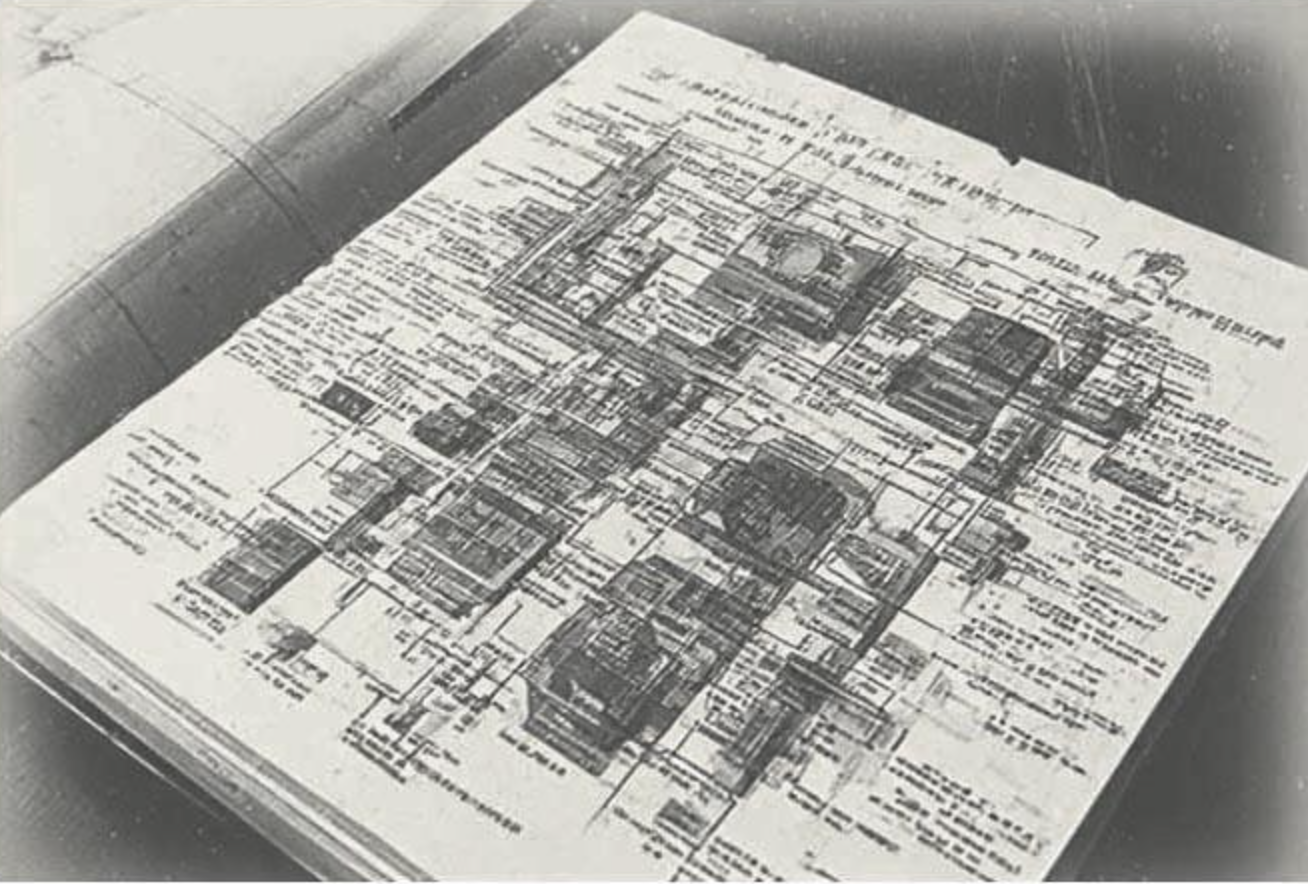
Performance thrives in the moment, but its most radical potential emerges where it dissolves itself as a movement into nothingness. This text argues that forgetting is not an absence but an invisible gesture: a movement that evades archiving and, in doing so, subverts structures of power. In a society built on storage, control, and visibility, forgetting becomes an act of radical refusal—one that sabotages the logic of memory and opens new spaces for thought.
Forgetting as Movement: The Gesture That Vanishes
Jacques Derrida describes the archive as an “instrument of power”, it determines what is remembered and what is erased. But what if art consciously disappears? Tino Sehgal’s This Progress (2010) exists solely in the moment of encounter. There are no photos, no videos, no scripts. The performance moves, not through space, but out of memory. What remains is not a trace, but the experience of a movement that erases itself. Here, forgetting becomes the choreography of the invisible: a gesture that cannot be captured because it actively resists fixation.
Yoko Ono’s Cut Piece (1964) destroys not only fabric but the memory of the act itself. The audience becomes complicit in an action that defies reproduction. The motion of the scissors becomes the motion of forgetting, an invisible line cutting through time, pulling everything it touches into the void.
Stillness as Movement: The Body as a Space of the Unseen
Marina Abramović’s The Artist Is Present (2010) demonstrates how silence and immobility transform the audience’s body into a space of affect. Tears, tremors, and silence arise in response to what eludes language and memory. The body becomes the site of a movement that is not visible—an inner choreography that resists all documentation. As Brian Massumi (2002) emphasises, affects are more fleeting than words: they are movements that pass through the body without leaving a trace.
Here, forgetting becomes a physical experience: a movement that occurs not in space, but within the body. The gesture of forgetting dissolves fixed identities and creates collective moments of communitas (Turner 1969),spaces where everything that could be fixed dissolves.
Forgetting as Political Movement: Resistance Through Absence
In a world that archives everything, forgetting becomes an act of resistance. Forensic Architecture’s The Killing of Mark Duggan (2017) uses virtual reality to render the absence of a gesture, the non-drawing of a gun, as evidence of structural violence. Void spaces are political: what is not visible can expose power relations.
Indigenous communities employ active forgetting as resistance against colonial extractivism. From a queer theoretical perspective (Butler 1993), forgetting is an act of destabilisation: it dissolves fixed identities and creates space for the new. Forgetting moves—not as loss, but as a strategy of liberation.
The Invisible Movement of the Future
The performance of the future must be invisible, not out of weakness, but from strength. It is not an absence, but a movement that evades control. In an era of total surveillance and algorithmic memory, forgetting becomes the last free gesture: a movement that leaves no traces because it is the trace itself.
Three conclusions:
1. Performance as Anti-Archive: What is not archived cannot be controlled. Sehgal’s and Ono’s works show that the power of art lies in its ability to dissolve as a movement into nothingness.
2. The Body as a Site of Invisible Movement: Stillness and affect are movements that defy language. Abramović’s work proves that the body becomes a space of the unseen.
3. Forgetting as Queer and Decolonial Strategy: Absence is more powerful than visibility. Forgetting moves as resistance against the compulsion to document.
The performance of the future is an invisible movement—a gesture that disappears in order to unfold its full power precisely through its absence.
🖋️✒️🖋️✒️🖋️✒️🖋️✒️🖋️✒️
Artist - Garima
Website - https://www.amazon.co.uk/dp/B0GL9GQR21
Social media - @garima_s_k
🖋️✒️🖋️✒️🖋️✒️🖋️✒️🖋️✒️