
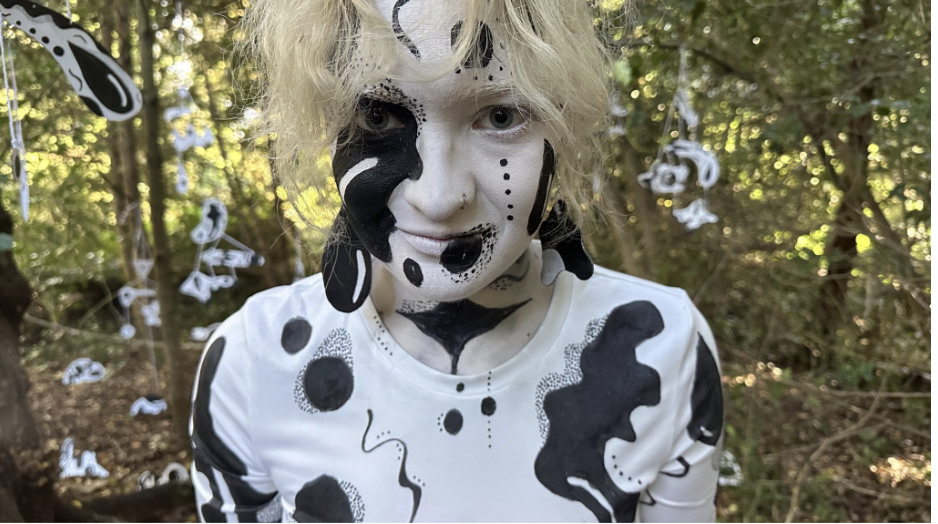
We are please to present da:ze, their residency will be over three issues, and be ran around these three themes…
Shards - During this residency I will expand on the value of disjointed materials and artefacts we accumulate in the routine creative process. Three articles will cover collecting and using found materials, harvesting personal archives and fusing collected shards together. In each article I will give an overview of my own practice, bring examples of other artists working in a similar fashion and provide exercises and questions for reflection.
Found Materials- We live in a world of objects, some shaped by natural forces, some by human hands, some by machines. While being human, we ourselves are objects inhabiting this complex net of artefacts of human existence on earth. Each object regardless of origin is a vessel of history, of innumerable iterations that preceded it. Human-made and human-used objects in particular have an extra layer of human history imbuing them with invisible stories.
As artists we have an opportunity to connect these stories and mirror them back into the world to deepen our collective understanding of ourselves and each other.
Harvesting Archives - Photos sitting quietly in the gallery, scraps of sentences crowding the notes app, sketches pressed in-between journal entries, quotes underlined and abandoned waiting in the darkness of a book shelf. All of these are essential to the creative process as a way of life.
Despite their disjointed nature these collected glimpses of reality provide insight into the deep undercurrents of our attention. Viewed together they reveal patterns and themes that our day-to-day consciousness might overlook.
The Alchemy of Shards - The shards have a magnetic quality to them. One will pull another, and one day you find yourself standing in front of materials ready to be fulfilled and realized. It’s important to let the shards speak for themselves, to follow their magnetism and stay open to the possibilities presented.
This is also a great time to bring fellow artists on board, so you can combine your respective trinket boxes and find incredible treasure in the interplay of artefacts.
First Issues work -
We live in a world of objects, some shaped by natural forces, some by human hands, some by machines. while being human, we ourselves are objects inhabiting this complex net of artefacts of human existence on earth. each object regardless of its origin is a vessel of history, of innumerable iterations that preceded it. human-made and human-used objects in particular have an extra layer of human history imbuing them with invisible stories.
Whatever your intention and medium of expression you will always find yourself reusing and repurposing pre-existing objects and ideas. in this installment i’d like to explore what found materials are and how we can engage with our own creative processes through this prism.
First of all, what does it mean for a material to be found?
To start with, an object is discovered accidentally or intentionally. in the last couple days i found two precious trinkets on the sidewalk: a plastic heart-shaped ring and a tiny metal turtle pendant. the turtle in particular found me on my way to Tate Modern, where i’m currently frantically typing out the first draft two days before the deadline. i have boxes of this stuff both in my studio and in my storage unit. children toys, police tapes, single earrings, laminated prayers in various languages, bingo cards, metal bits of unknown (to me) purpose and origin.
This discovery can also happen on a domestic and personal level. we accumulate objects constantly in our lives through purchasing, finding or exchanging. some of them would be considered waste, some of them serve purely practical purposes, some explicitly hold memories. it can be very revealing to look at our material footprint in its totality.
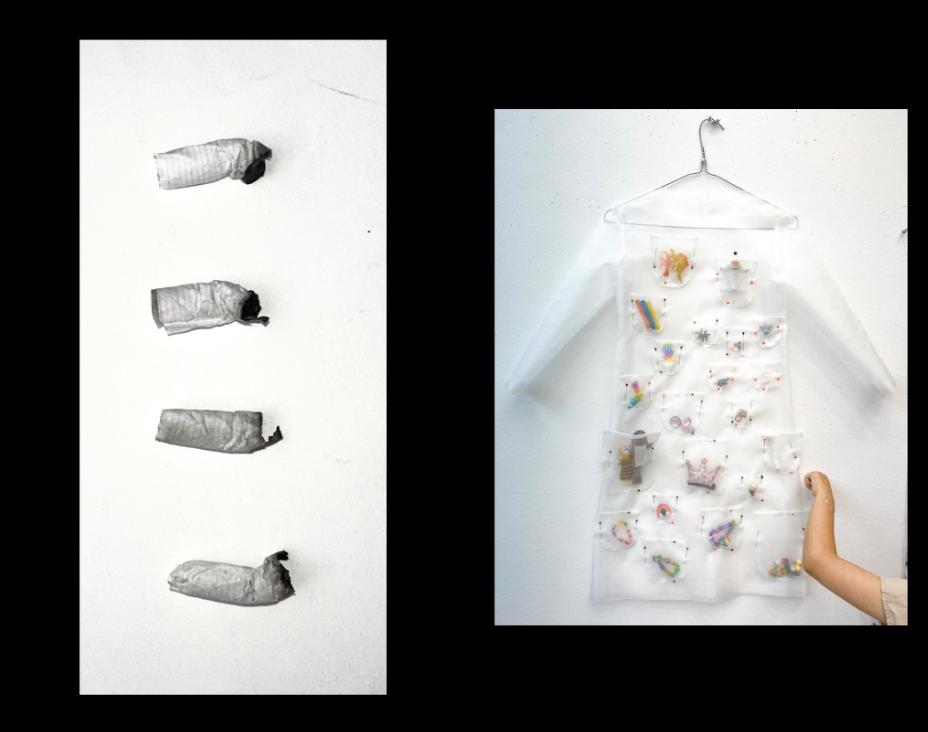
left: butts of four cigarettes i smoked outside of Tate during my incessant smoking breaks (da:ze’s archive). right: Two Pockets by Do Ho Suh and Rebecca Boyle Suh, 2021. their children’s trinkets sewn into dresses (dohosuhstudio instagram).
Of course this logic can be extended to any other type of material: found sounds and field recordings are foundational pillars of ambient and experimental music, reclaimed materials pop up all over in upcycled fashion and architecture, found footage becomes the core of documentary and creative non-fiction filmmaking, found poetry collages together words and sentences that might have never been intended to be poetic.
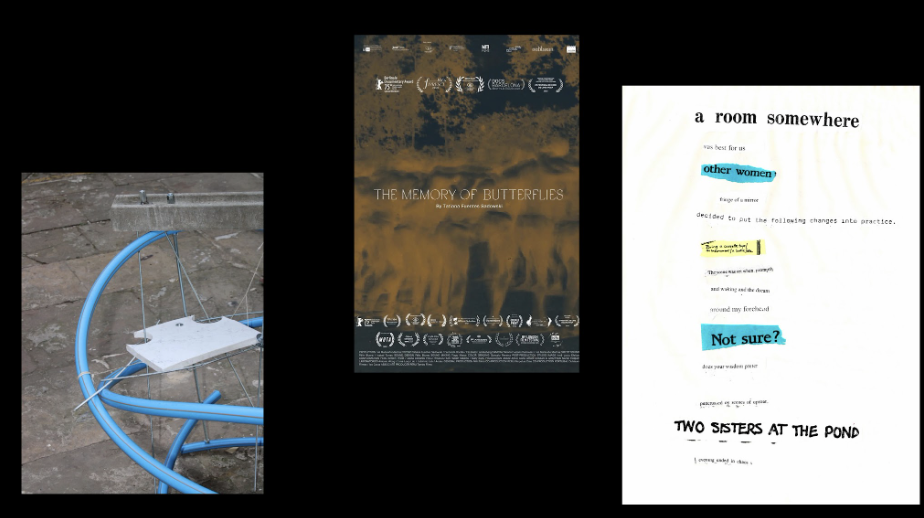
left: bar structure constructed by students at rubble’s workshop during AA summer school, 2025 (rubble_____ instagram). center: The Memory of Butterflies, 2025. a documentary film exploring the effects of rubber trade and colonialism in Peru made primarily out of archival footage (IFFI website). right: poem by da:ze collaged out of news articles and poems at Queer Noise: Poetry Workshop, 2026 (da:ze’s archive).
An essential aspect of discovery is the placement of attention. regardless of how intentional or even conscious the search was, the moment of connection is always a revelation. it’s incredibly sunny today in London, so all shadows are sharp and precise. they are a definite component of the landscape and interiors. every time i stumble into a particular vision of shadows, when patterns of 3D objects line up in an evocative composition with their shadows or overlap with traces of the surrounding environment, I almost stop breathing, overwhelmed by the discovered alignment.
These moments of recognition get woven into their own patterns. once the art of paying attention becomes our second nature, we start noticing rhymes and similarities. we start collecting these moments, archiving and categorizing them somewhere deep in our minds. people more organised than i’ll ever be, archive these discoveries intentionally. the original museums, Kunstkabinetts or wonder-rooms, were precisely such collections of found objects of all sorts of media and from all sorts of places, however questionable were the methods of their retrieval. one contemporary example of such collection is the Victor Wynd Museum of Curiosities, Fine Art & Natural History in Hackney, London.
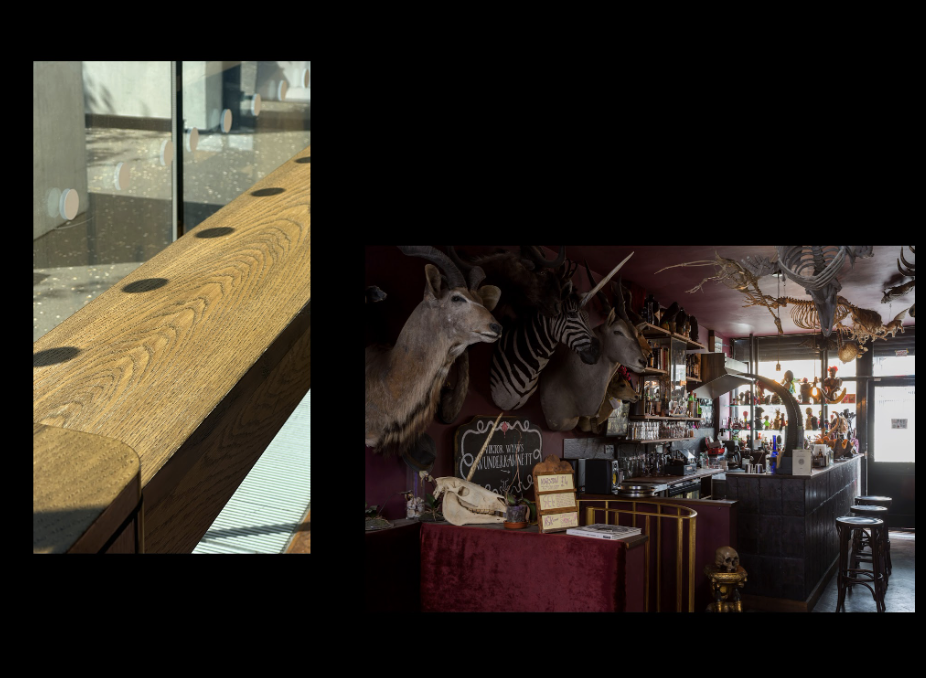
left: shadows in the Corner Cafe at Tate Modern, 2026 (da:ze’s archive). right: Victor Wynd Museum of Curiosities, Fine Art & Natural History (The Last Tuesday Society website).
Once the materials have been collected, the patterns have emerged and been observed, what do we do?
The collection and documentation in itself is a work of art. the attention of the artist elevates the found material towards the gaze of the audience, be it Duchamp’s urinal or precisely filmed reflections dancing on the waves by Matias Alonso Revelli. an example i found particularly fascinating while researching are the scholar’s rocks, or Gongshi, which found appreciating eyes among Chinese philosophers. as a passionate rock collector (in my smoking bag i currently carry three different rocks found on my last trip to Ireland) i love seeing how textures and shapes created through millions of years of natural forces have been elevated to the status of sacred art for millenia.
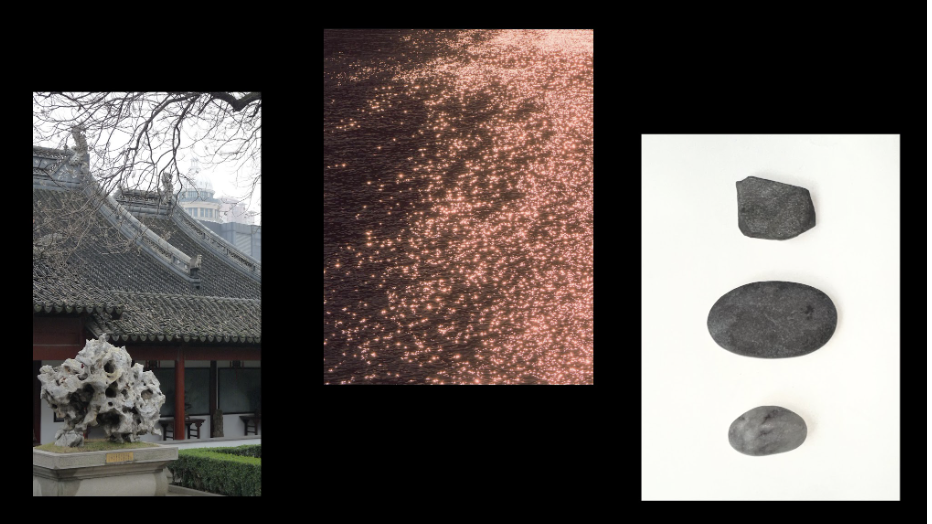
left: Gongshi in Wenmiao temple, Shanghai (Wikipedia). center: Matias Alonso Revelli, 2026 (matialonsor instagram). right: three Irish rocks living in my smoking bag, 2026 (da:ze’s archive).
Then comes the assemblage. the found objects are still visible in their initial form but composed into a narrative far beyond their intended purposes. from Rauschenberg’s delicate combines to the exciting world of trashion, from documentaries to dj-sets, while we can still clearly distinguish a found object from an artist’s brushstroke we’re submerged in intricate stories that interlace the artist’s circumstances at the time of creation with our own emotional and intellectual responses. to plug my own work, a couple years ago my collection of found objects found shape in a party “the city is hell. the city is home.” the debris revealed and highlighted the pulse of urban environments i happened to inhabit.
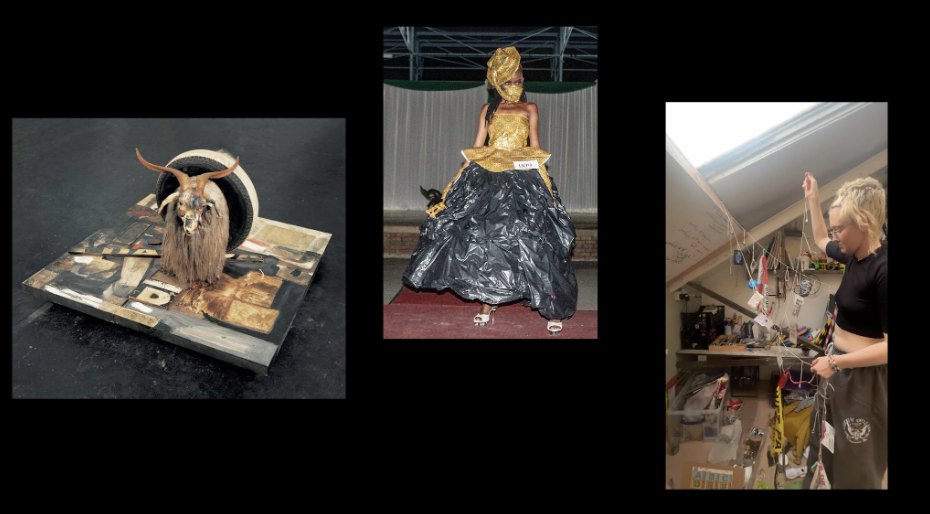
left: Rogert Rauschenberg, Monogram, 1955-59 (Robert Rauschenberg Foundation website). center: A Woman in Ghana wearing a dress made of repurposed waste (Wikipedia). right: da:ze in the process of creating garlands of objects found on the street, 2024 (da:ze’s archive).
Past assemblage happens fusion. the initial objects are no longer accessible, instead we encounter painted still lives full of objects found in one’s studio, samples so transformed that they can no longer be recognized in their original form, visions of old masters repurposed into fashion photoshoots.
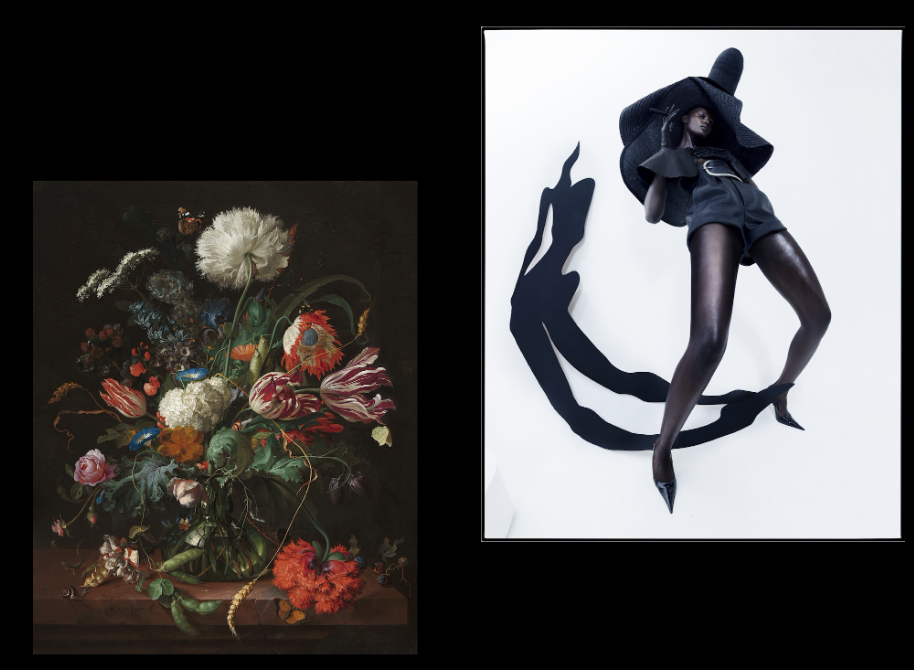
left: Jan Davidz. De Heem, Vase of Flowers, 1660 (Wikipedia). right: Tim Walker, Duckie Thot, Aubrey’s shadow, 2017 (artsy.net website)
My invitation for you today is to pay attention to what your attention is drawn towards: what patterns, sounds and objects you encounter in your daily routine, what pulls you to look just for a second longer. for a few days find ways to document these visions, whether collecting the objects themselves (i always carry a hand sanitiser for that reason, tetanus is no joke) or taking photos, doing amateur field recordings with your phone microphone or writing down words found in the wild world of information. at this point it doesn’t matter whether these documents will become anything, what we want is to embody the discoverer’s mindset, to view the world itself as a collection of curiosities patiently waiting to be noticed and recognised.