
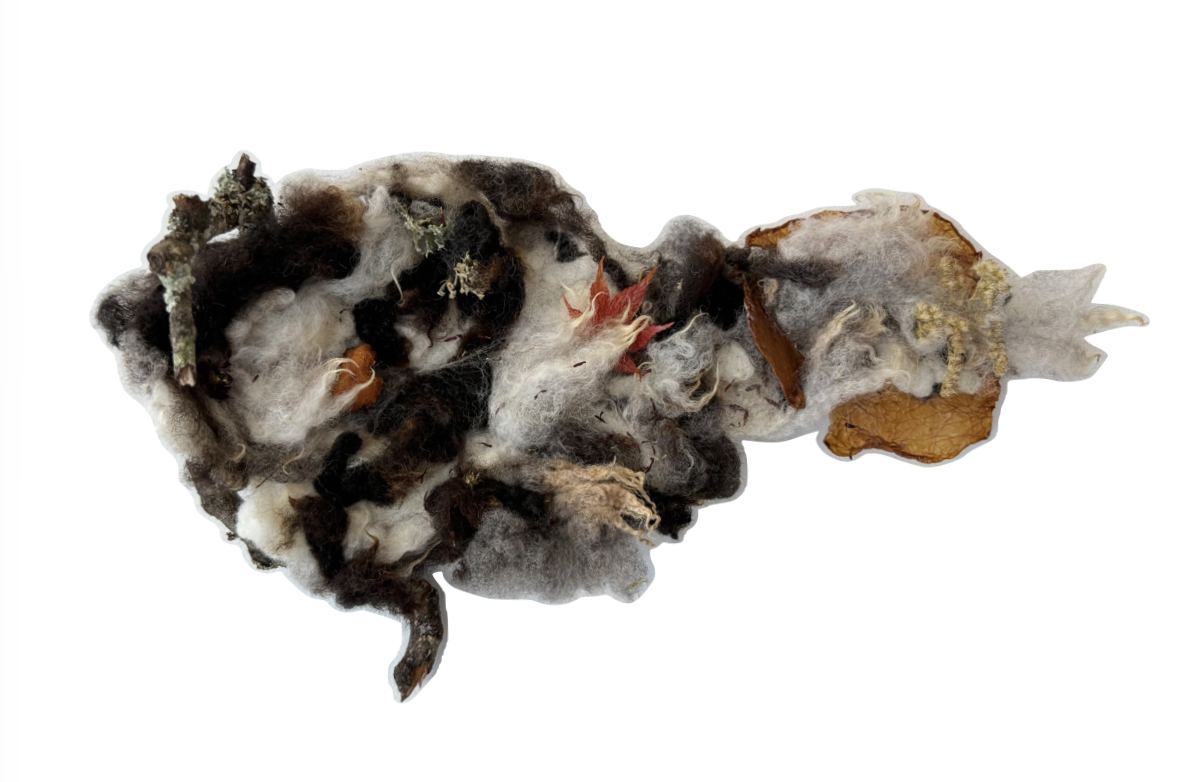
This month’s theme is eco Materials and what does it mean to create responsibly as materials are never neutral. Materials carry histories of extraction, labour, place, memory and transformation.
As artists and writers, the things we choose to work with shape not only the finished work, but the stories we tell about our relationship with the world around us.
The artists submitted work that uses reclaimed, recycled or naturally sourced materials - clay, earth pigments, plant fibres, paper, textiles, found objects, waste materials, biodegradable processes, or materials gathered through walking and foraging.
The work explores repair, reuse, circular economies, environmental ethics, or question what sustainability really means within contemporary art.
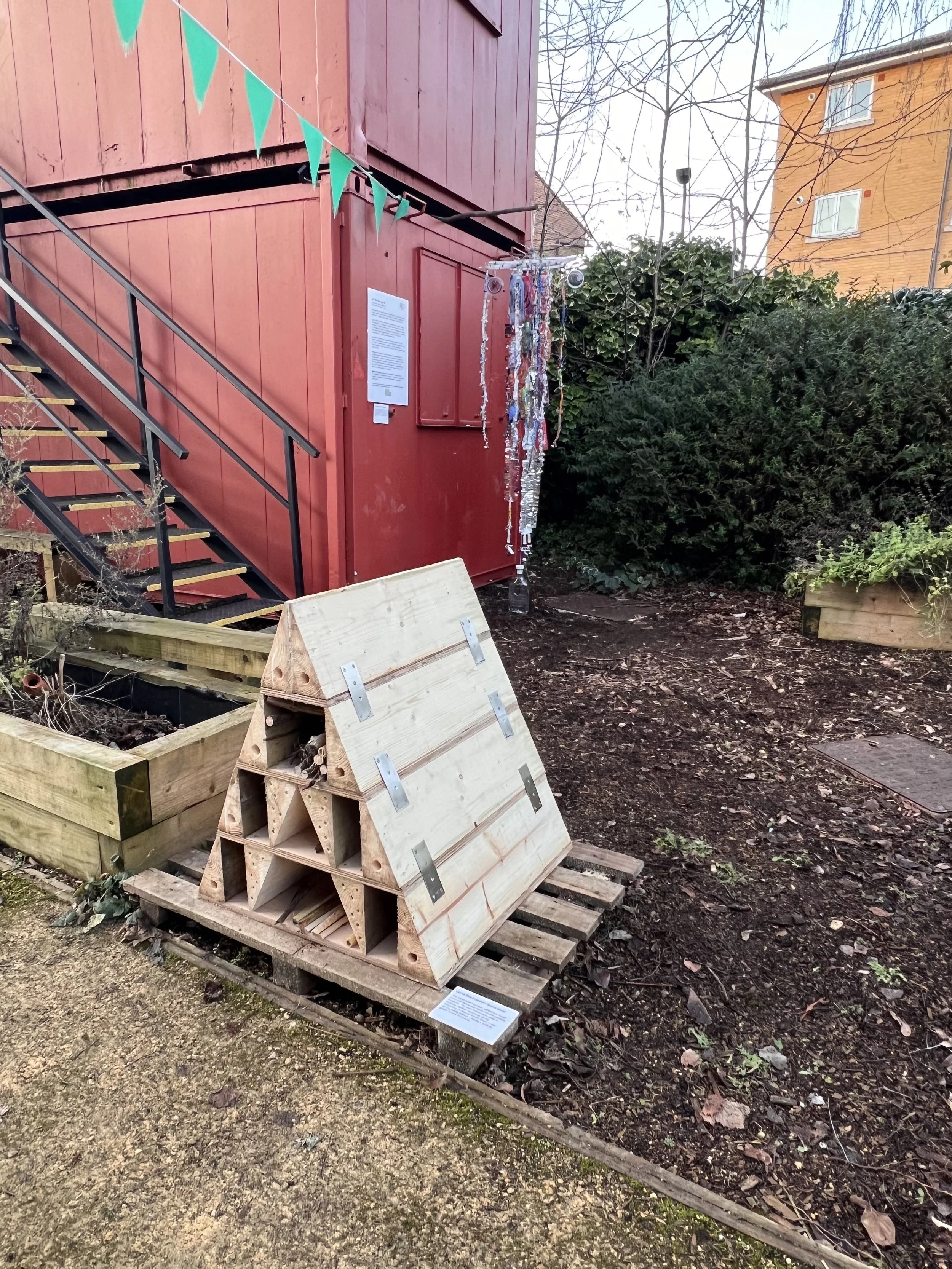
Artist: Anita Agarwal
The work was commissioned and created for the ReRooted Residency Program. Developed during the four-month program, my project- 'Let’s Be Eco Logical!'.A program created by Arbeit Studios and supported by LLDC, the ReRooted Program was premised on ecology, sustainability, and the public sphere. a product of a residency program. The Bug Hotel- is an insect refuge built entirely from reclaimed timber—offcuts salvaged from the previous artist in residence’s work, rescuing it from the landfill. It proudly holds a permanent place in the North Garden.
Artist: Lizzie Hill
www.lizziehill.co.uk
@lizziehill1 (substack)
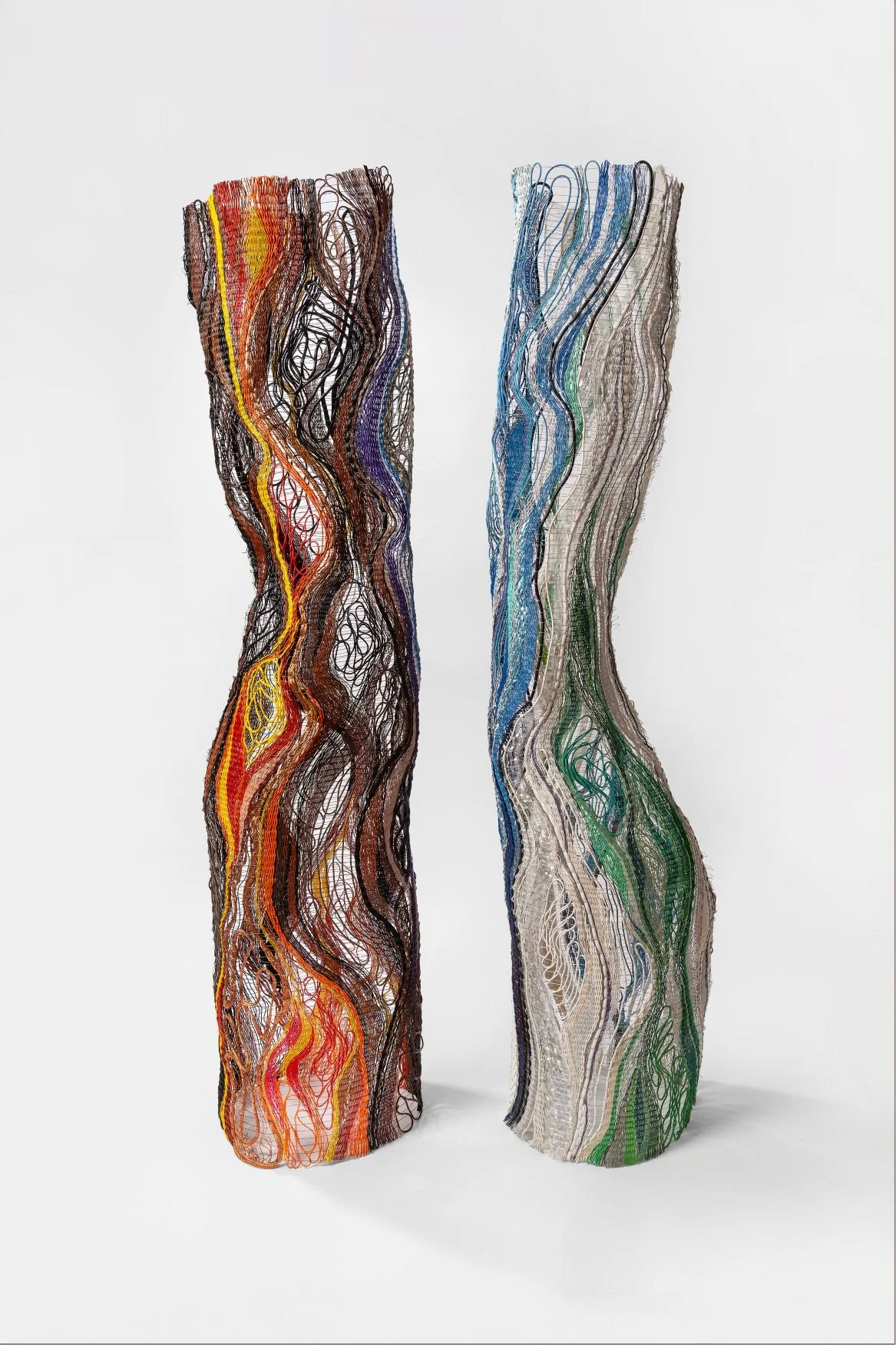
Lizzie Hill has a unique practice, weaving waste materials into large anthropomorphic sculptures. These works reflect the artists concern with the way in which humanity interacts with its environment. Visually emulating the pattern and colours of geological strata, the work celebrates the resilience, innovation, and beauty of man-made materials, but raises questions about the value we place on these substances and the impact they have on our planet. The work opens a dialogue about humanity’s relationship with the material world and its long-term consequences.
Lizzie focuses on threads as a medium for creating sculpture, drawn to their ethereal quality as well as their association with narrative. Her process involves transforming both domestic and industrial waste into usable weaving materials. This process is an act of care and restoration as the artist carefully rescues waste materials, cleans them and manipulates them into fibres. These fibres are then layered up like strata on a wire frame. The final stage is to manipulate these densely woven 2D tapestries into free-standing sculptures. The strength and physical integrity of the work comes from the structure of the woven materials.
Artist: Rachael Barns
www.rachaelbarns.art @rachaelbarns.art
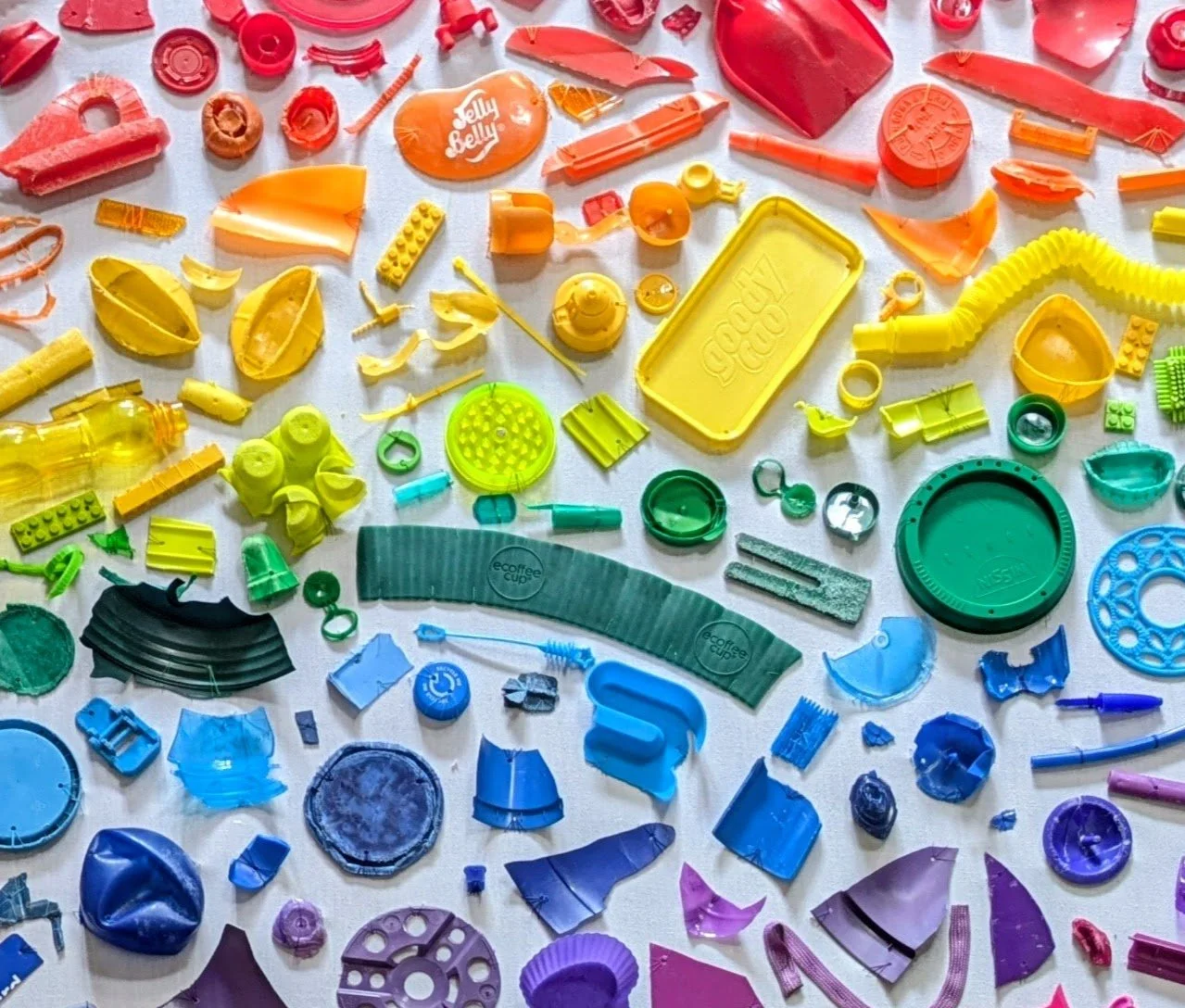
Synthetic Spectrum - Over 150 individual pieces of colourful street combed plastic litter stitched to a huge embroidery hoop. The hoop is made from a discarded (really big) hula hoop and an old sheet. The waves of colour invite viewers to look more closely and identify the individual items, prompting reflection on what is discarded and why.
Using waste materials is integral to my practice. I am increasingly aware of how runaway capitalism is affecting our planet. We already have enough. I predominantly use materials that would otherwise be thrown away, I find discarded, or already own as a stance against consumerism and the associated waste.
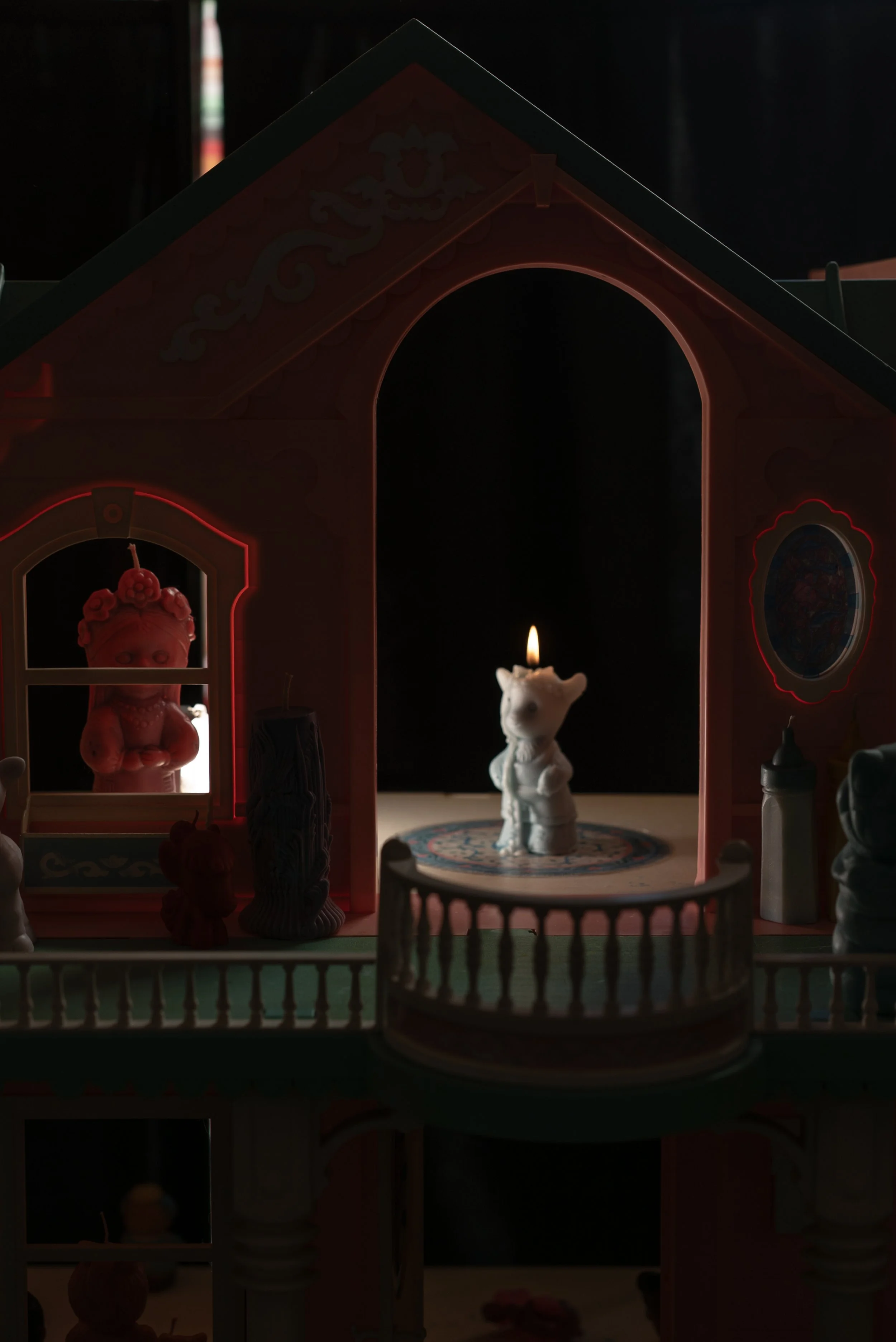
Artist: Siyelov Yudiv
https://linktr.ee/siyelovyudiv
Description: Toyspell is an ongoing body of work that combines biodegradable soy wax with found childhood objects and toys. I am interested in materials that transform over time—soy wax can be melted, reused, and continuously reimagined, while discarded objects are given new meanings through rituals of care and collective wishing. Through these fragile and ever-changing materials, I explore memory, sustainability, and the possibility of creating alternative futures rooted in tenderness and ecological responsibility.
Installation photograph by Kıvılcım Güngörün.
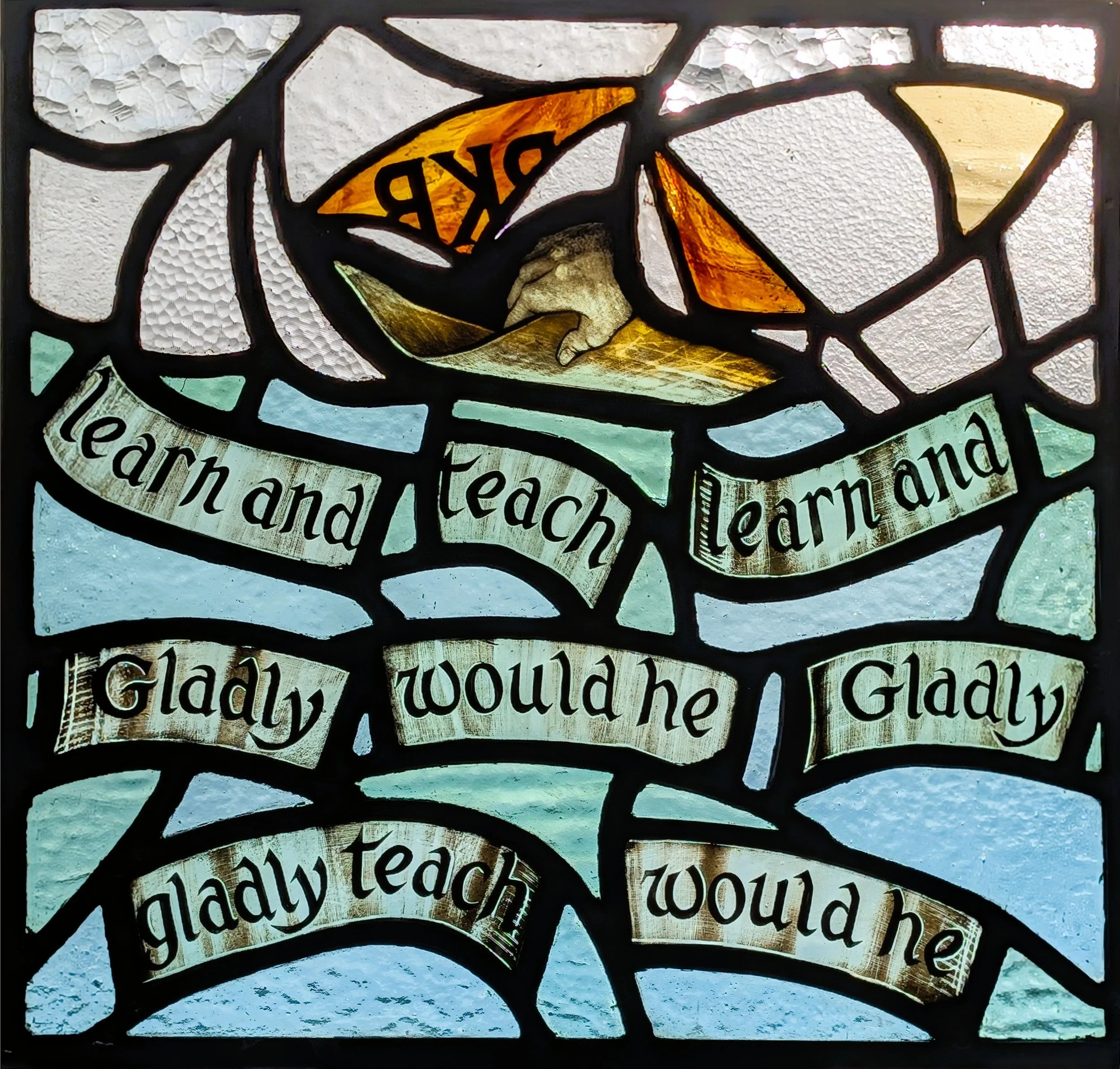
Artist: Martin Allman
https://www.curatorspace.com/artists/quattrofragment?preview=true
Sea of Words is crafted from recovered fragments of stained glass. A line from Chaucer’s Canterbury Tales—“and gladly wolde he lerne and gladly teche”—breaks into a rhythmic tide of repetition, honouring the generous spirit of mutual learning.
English is continually reshaped by those who reach its shores; each new voice adds its shape.
This work explores transmission: how meaning travels across time and borders, carried by hands, voices, and material fragments. The hand that forms the word is also the vessel which crosses the sea. Working with fractured aged glass, the piece reflects on how ideas endure through rupture, partial preservation, and the long passage of time.
Half lost and half found, these words have travelled six centuries to reach us, carrying a tide of generosity across time. They remind us that we are one family, united in the shared spirit of learning and teaching.
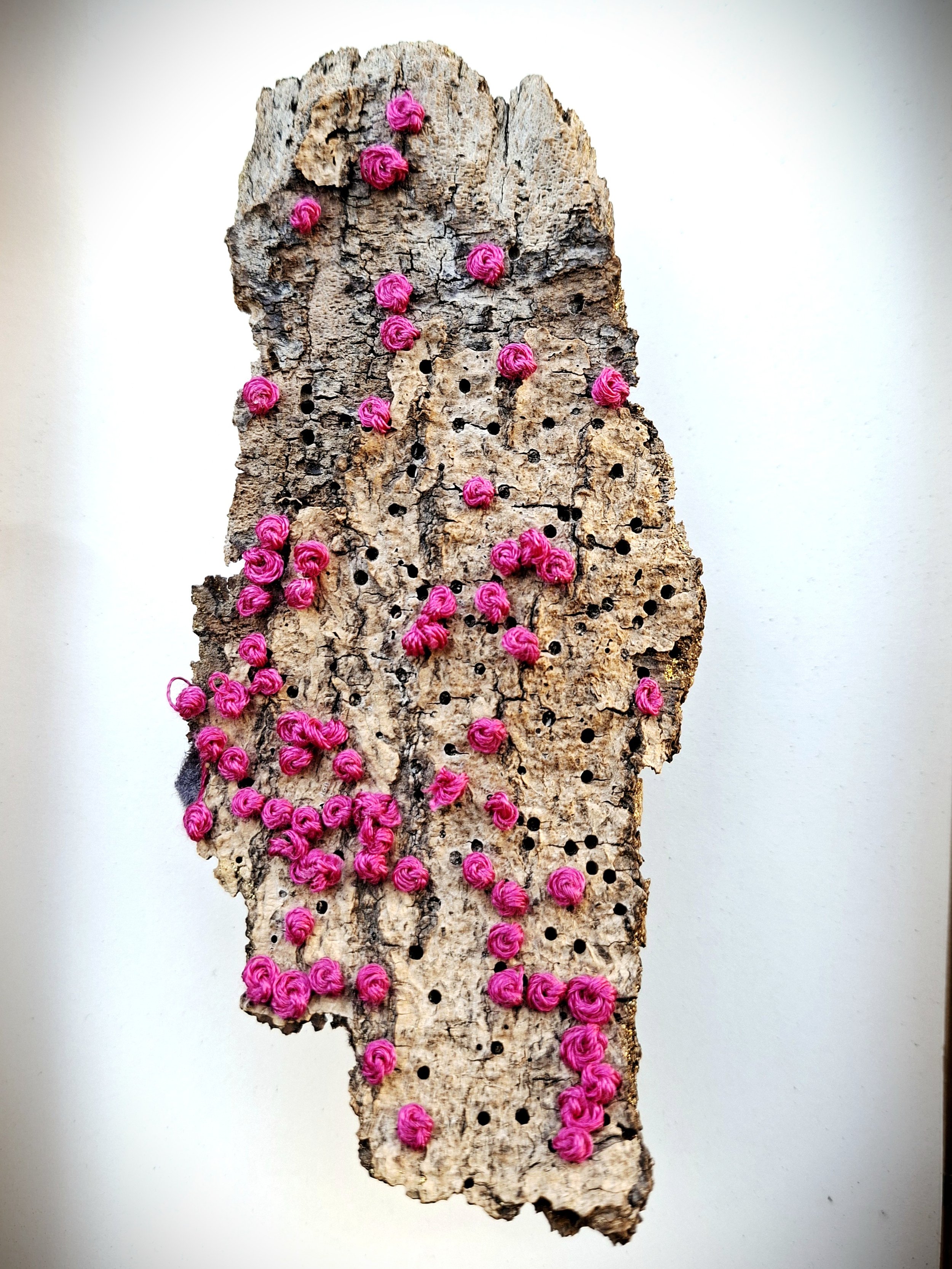
Artist: Jen Cable
@jencableart website www.jencable.art.blog
About the work - Hand stitched/darned tree bark and deadwood
Mending tree bark seems fairly pointless at first, but if you start stitching you notice more and more holes needing attention, rather like the plight of our planet. Every scientific study is finding more problems caused by humanity; from the warming of oceans, to species extinction to plastic pollution. The latest (and very depressing) report from the Intergovernmental Panel on Climate Change found that it is already too late to reverse climate change. But that doesn't mean we can't slow it down. In the words of Greta Thunberg "changes will not happen overnight, but if enough people push then change will come". Mending takes patience, presence and appreciation for the marks of use and damage. It is a reminder that resilience is beautiful, and that strength can grow from what once seemed fragile. The stitches do more than adorn—they reinforce, binding fibres more firmly than before. Imperfection is not erased but transformed highlighting the value of what we already have and creating a stronger foundation for the future.
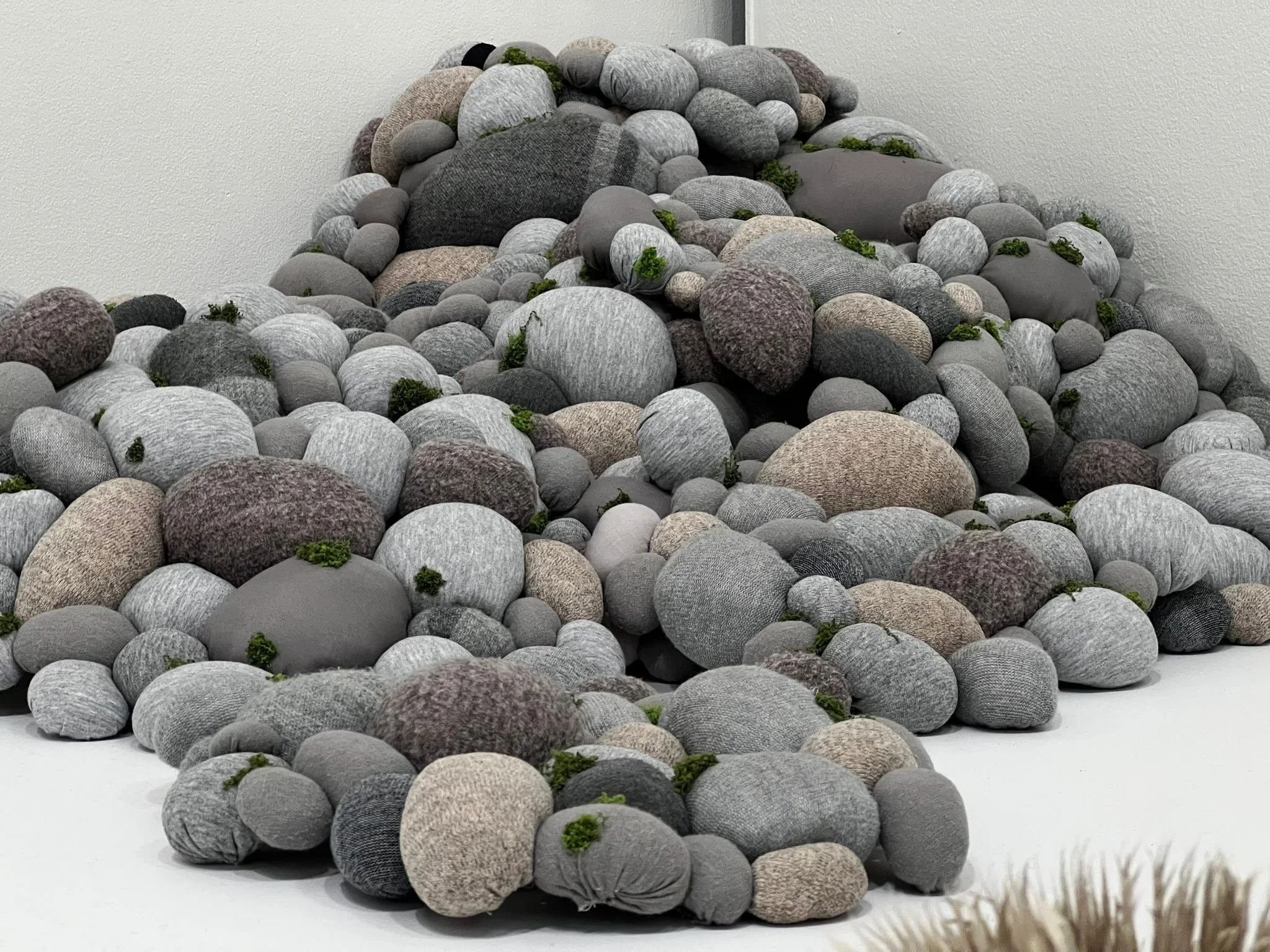
Artist: Julie Dodd
Description: I use my art practice to reflect my concerns about our consumption and environmental responsibility, often working with discarded materials to respond.
”Leave no stone unturned” (recycled sweatshirts and jumpers, stuffing and thread)
Climate change is significantly altering rivers around the World. The changing flow patterns have caused extreme floods and droughts; in turn, this increases erosion and the deposition of sediment. Riverbeds are changing their compositions, and their shape and undoubtedly future ecosystems will be impacted.
Artist: Kate Brown
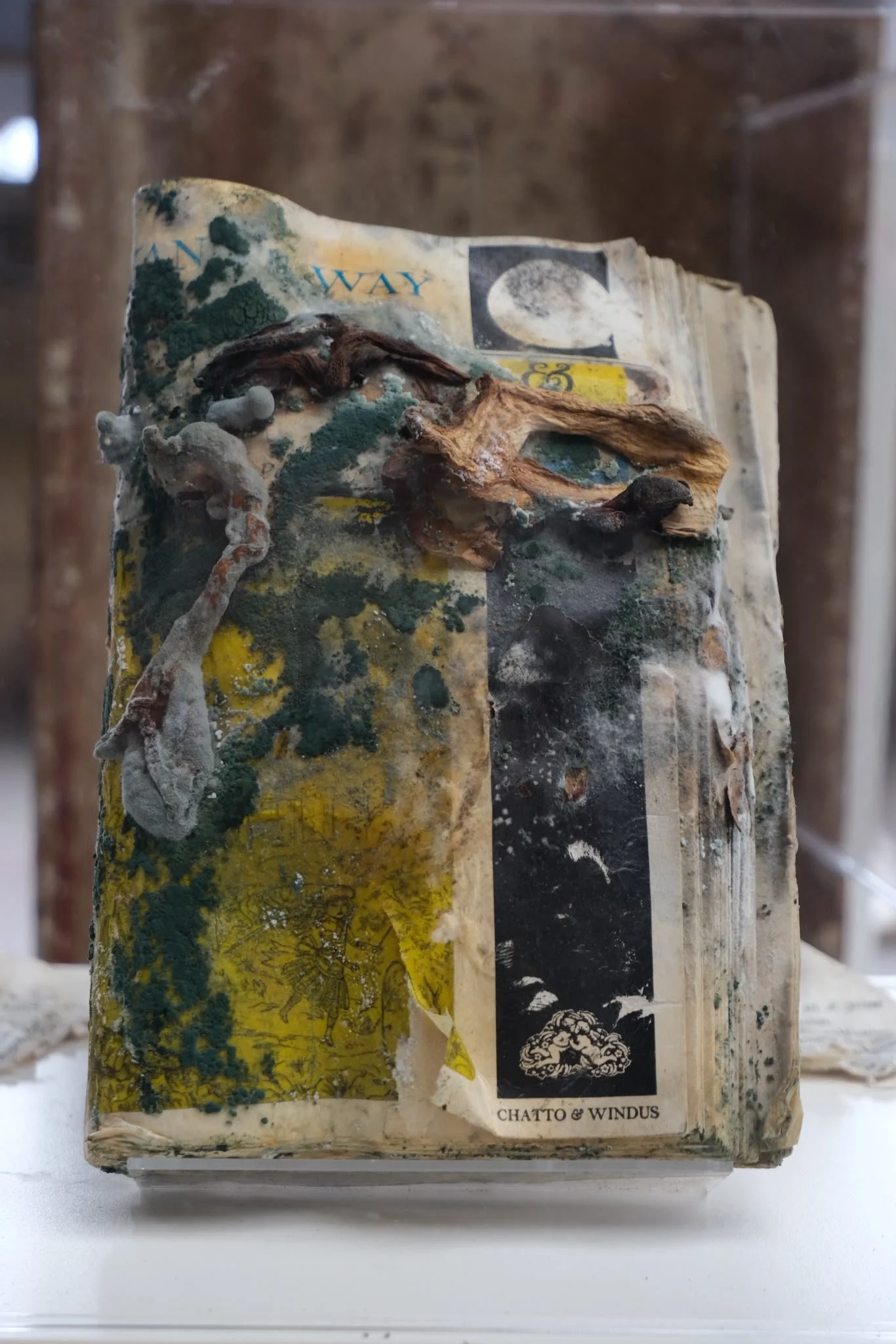
“Agency of Decay” explores authorship as a collaborative process between human intention and living fungal systems. Rather than representing mushrooms as subjects, the work positions them as active participants whose growth, material behaviour and temporal rhythms shape the book itself.
The project incorporates mycelium elements and processes of biodegradation as integral components of its making. These are not simply aesthetic techniques but forms of collaboration in which living systems influence the appearance, structure and evolution of the work. By allowing fungal growth, decay and transformation to remain visible, the book resists treating materials as passive, recognising them instead as active contributors to the creative process.
Working alongside fungal processes introduces uncertainty, adaptation and shared decision-making, challenging conventional ideas of artistic authorship and control. Rather than presenting sustainability as a fixed outcome, Agency of Decay proposes an ecological practice rooted in reciprocity, attentiveness and care. Fungi transform organic matter through cycles of decomposition and renewal, offering a model of making that embraces impermanence, regeneration and interconnectedness. Through these material processes, the work invites viewers to reconsider relationships between maker, material and environment, suggesting that responsible creation begins with recognising the creative capacities of the living systems with which we work.
Artist: Bo-Yi Wu
@boyiwustudio and website : https://www.boyiwustudio.com/
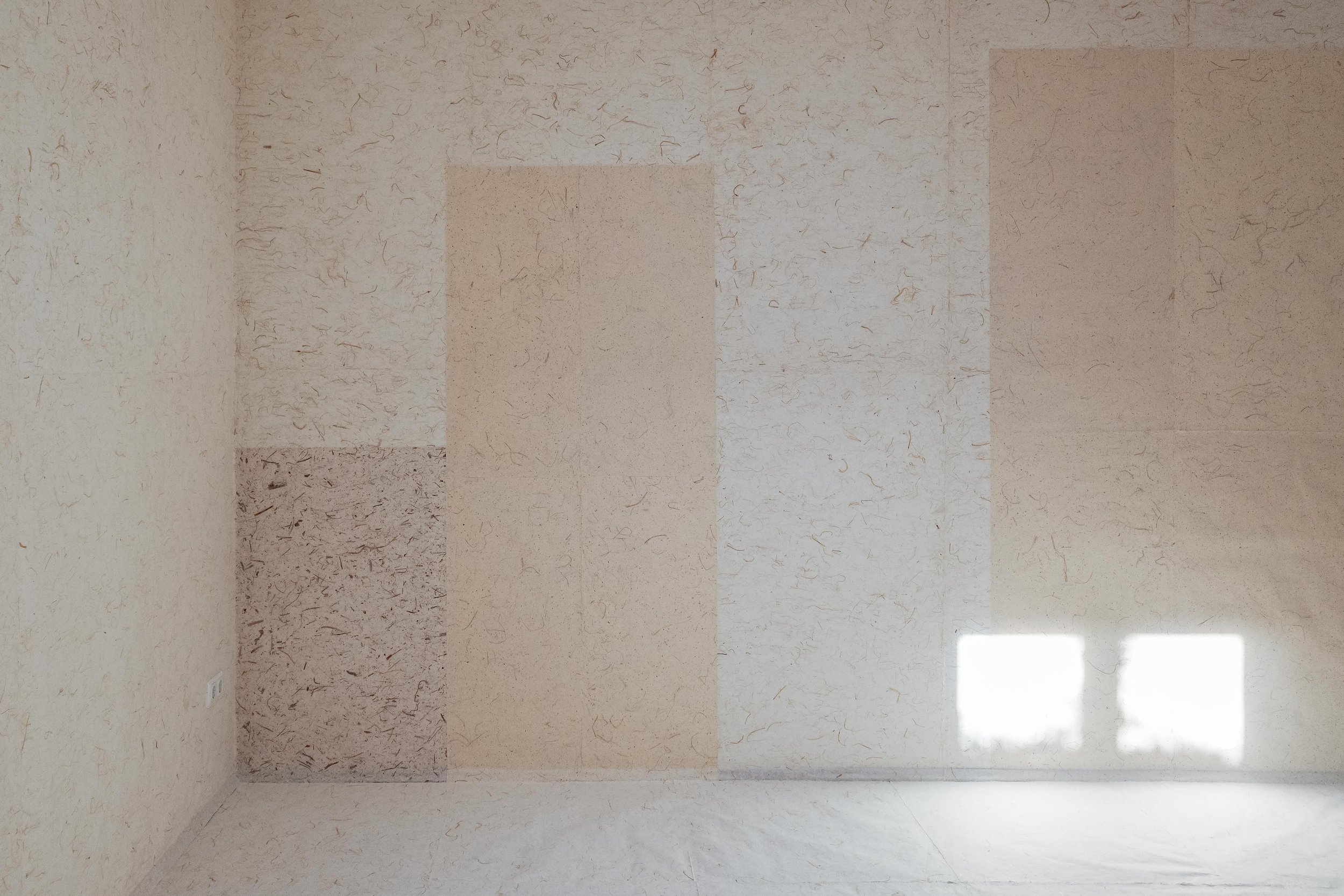
Accretion transforms Japanese knotweed into handmade paper that envelops the walls and floor of the exhibition space. Introduced to Britain in the nineteenth century as an ornamental plant, Japanese knotweed has since been redefined through changing ecological policies, legal frameworks and social priorities as an invasive species to be controlled and eradicated. The material itself does not change; its meaning is continually reshaped through systems of knowledge, power, law and culture.
The work begins with Japanese knotweed destined for removal, part of which is sourced in collaboration with invasive plant removal contractors. By engaging directly with the process of ecological management, it transforms a material marked for eradication into handmade paper, repositioning it as the central material of the installation. Variations in colour, fibre and texture preserve traces of the plant's ecological history, allowing the material to retain the record of its own transformation.
Rather than redefining the plant itself, **Accretion** examines how materials are named, classified, governed and assigned value. It suggests that materials are never neutral, but are continually shaped through histories of power, culture and ecological relationships.
Artist: Lauren Egan
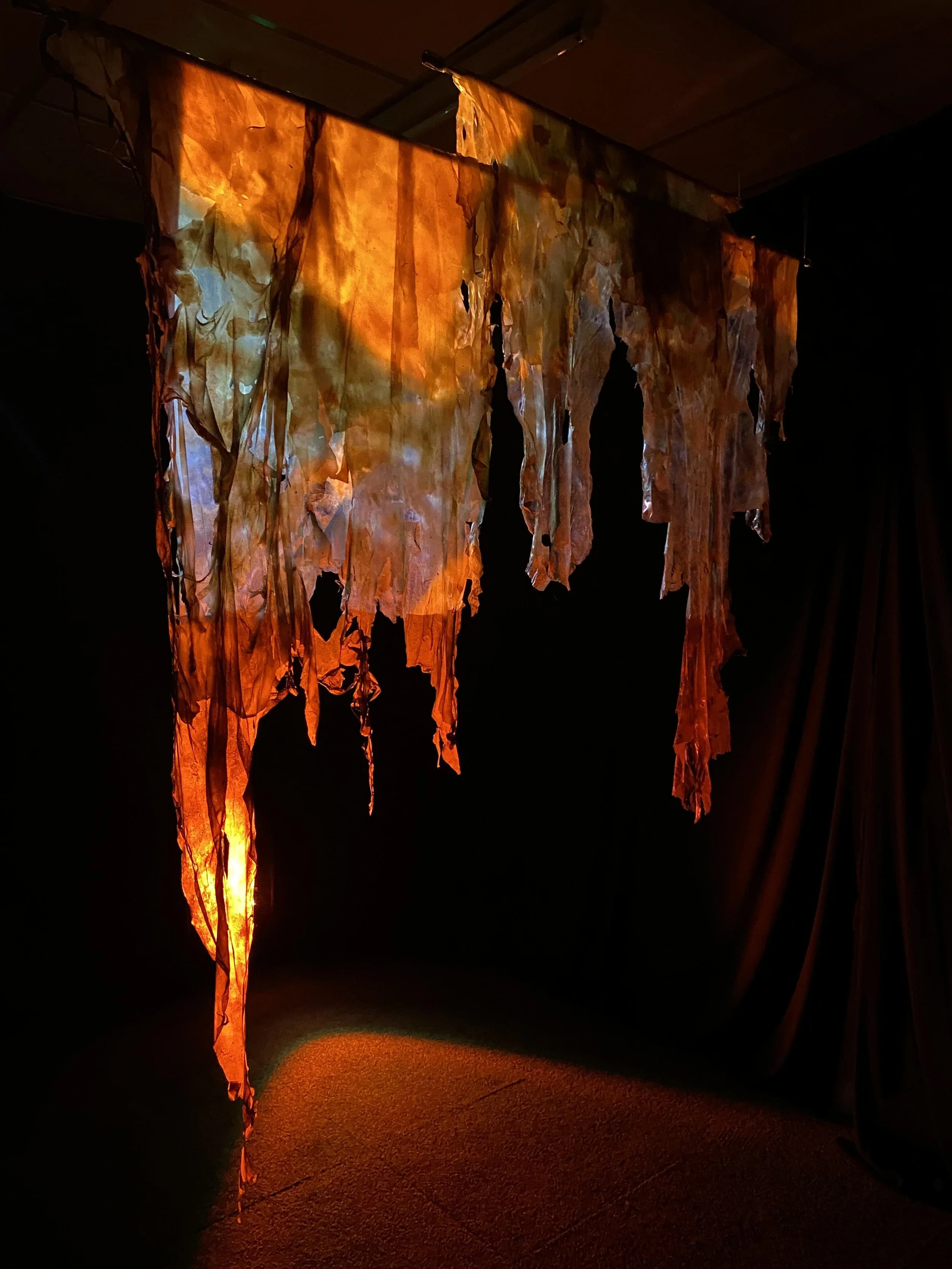
Shared Skin, A living, bio-art installation by artist Lauren Egan that explores the porous, shifting boundaries between bodies, ecosystems, and technology. Working with kombucha SCOBYs (symbiotic cultures of bacteria and yeast), Egan suspends sheets of living material to create sculptural forms that blur the line between skin and canvas. Alongside the physical installation, a projection-mapped video performance features a dancer embodying themes of touch, transformation, and ecological intimacy. Through this multi-sensory approach, the work evokes questions around bodily permeability, microbial kinship, and the ongoing legacies of colonisation on land and self. Egan’s work sits at the intersection of expanded painting, bio-art, and ecofeminist theory, confronting how extractive systems have disrupted our relationships with the natural world. Crafted from vegan, sustainable materials, Shared Skin is an invitation to witness fragility, growth, and decay, while imagining new ways of being in connection with more-than-human worlds.
Artist: Cynthia Reynolds
https://cynthiareynolds.art
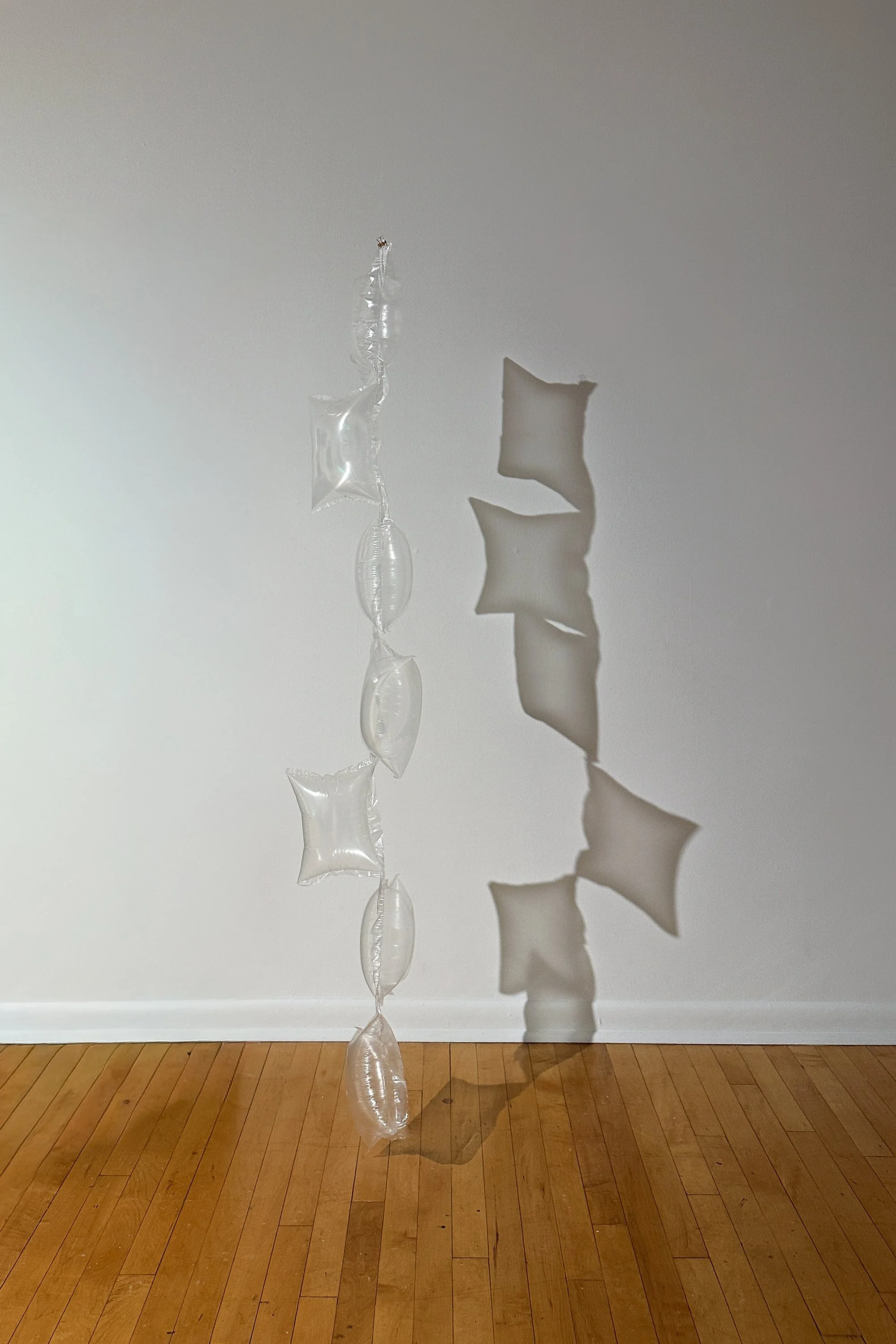
Respire ii (2025): verb (used without object) 1 - to inhale and exhale air to maintain life; breathe. 2 - to breathe freely again after anxiety, trouble. Materials: Found air pillow packaging, breath
69 x 15 x 15 inches, A found section of air pillow packaging, partially torn along the perforations and refilled with the artist's breath. This is the second version of a work that was made in response to/during COVID 19.
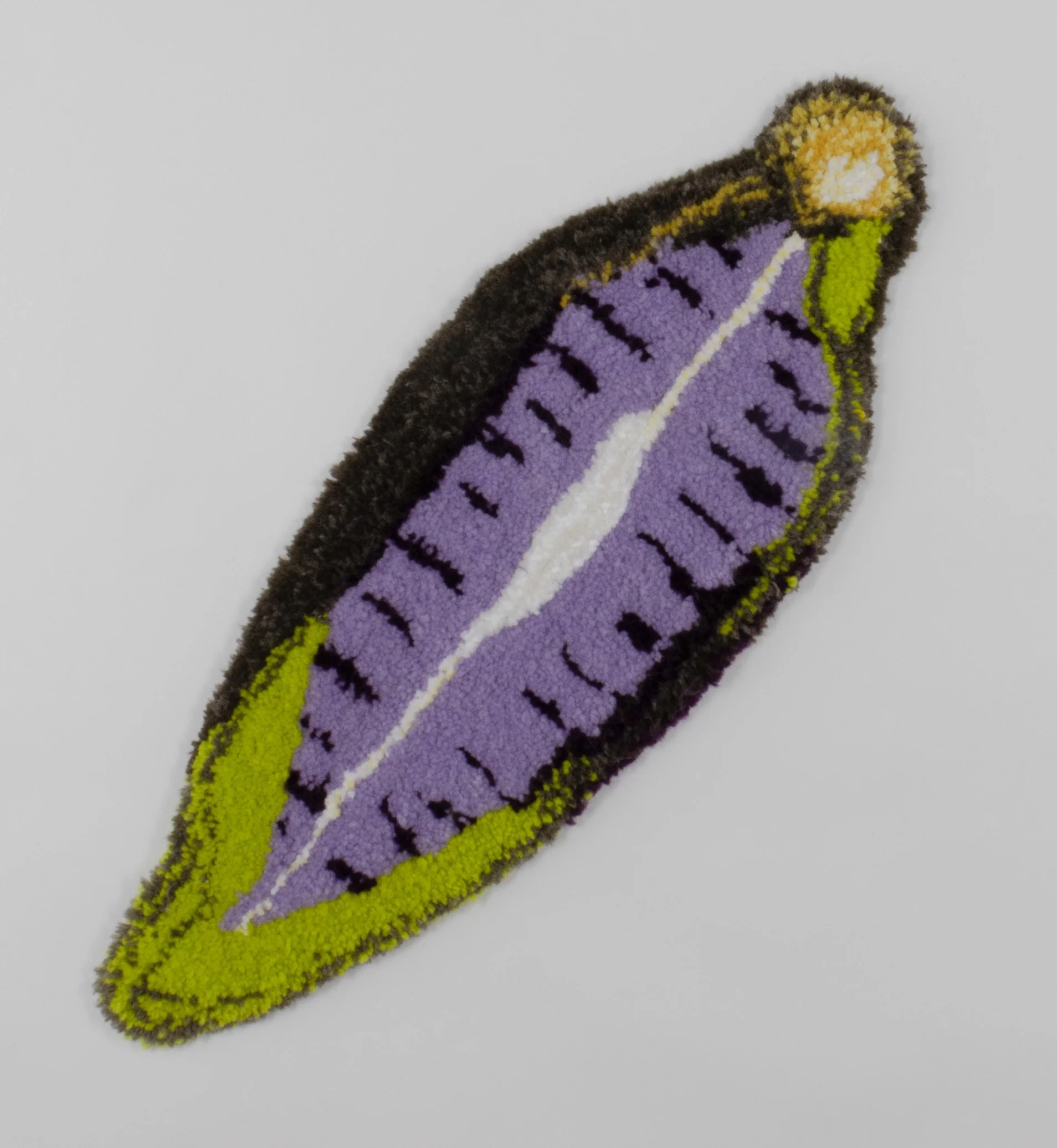
Artist: Holly Holmes
My tufted works are all made with natural fibres and yarn I literally took out of the trash. My studio is in a building of studios, and artists move in and out at times and put many items in the bin. It is this recycling of materials and using fibres and cloths that can be returned to the earth without harm that I strive to use.