Artist Oktavia Schreiner works in Ceramic and Wood Sculpture
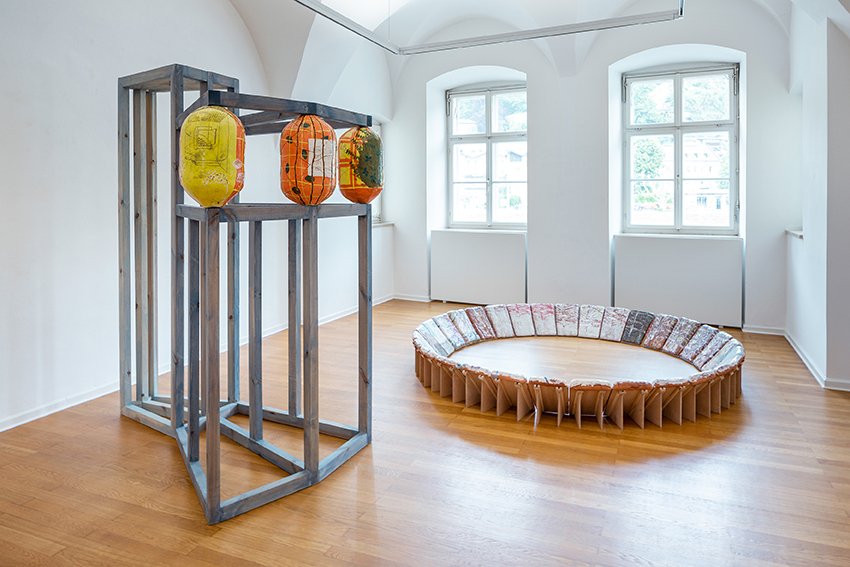
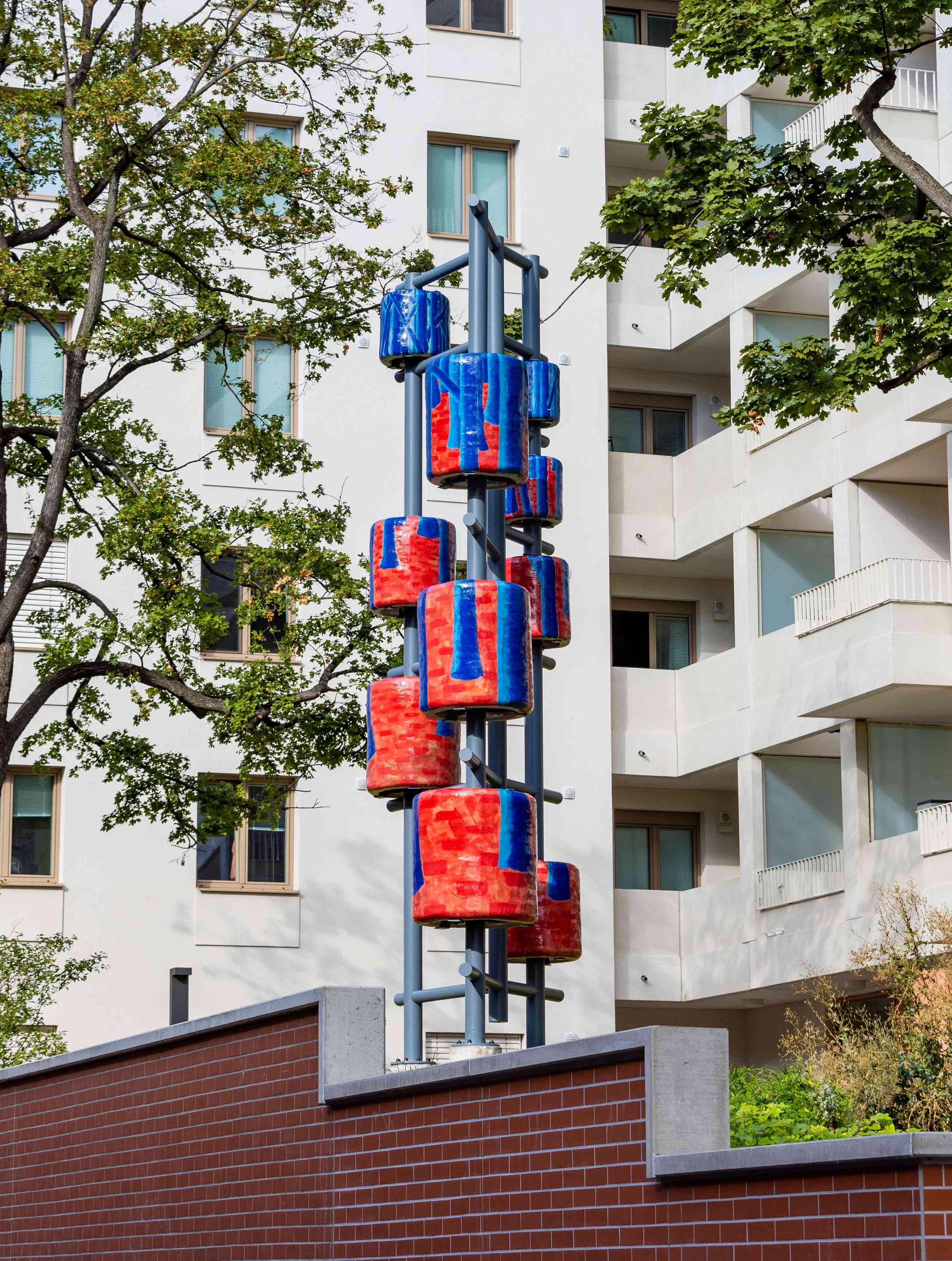
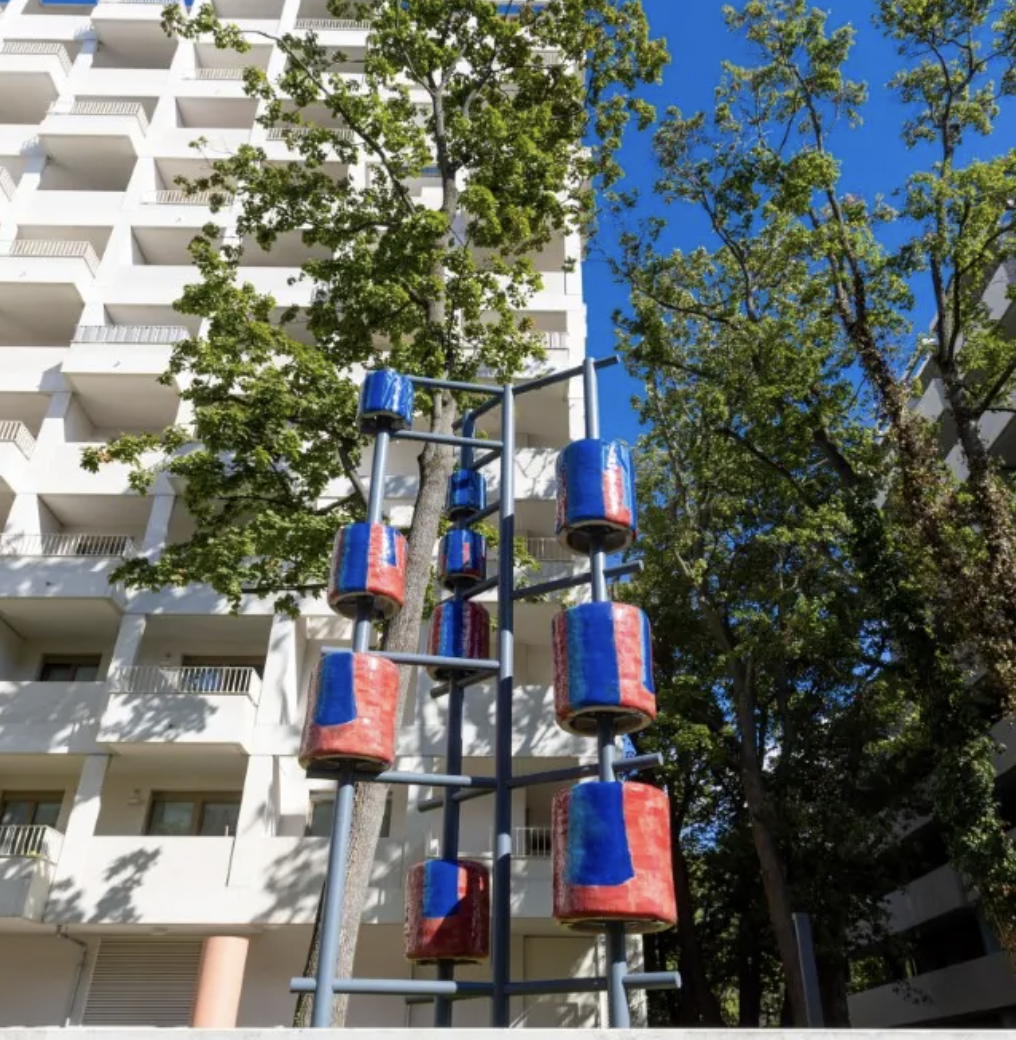
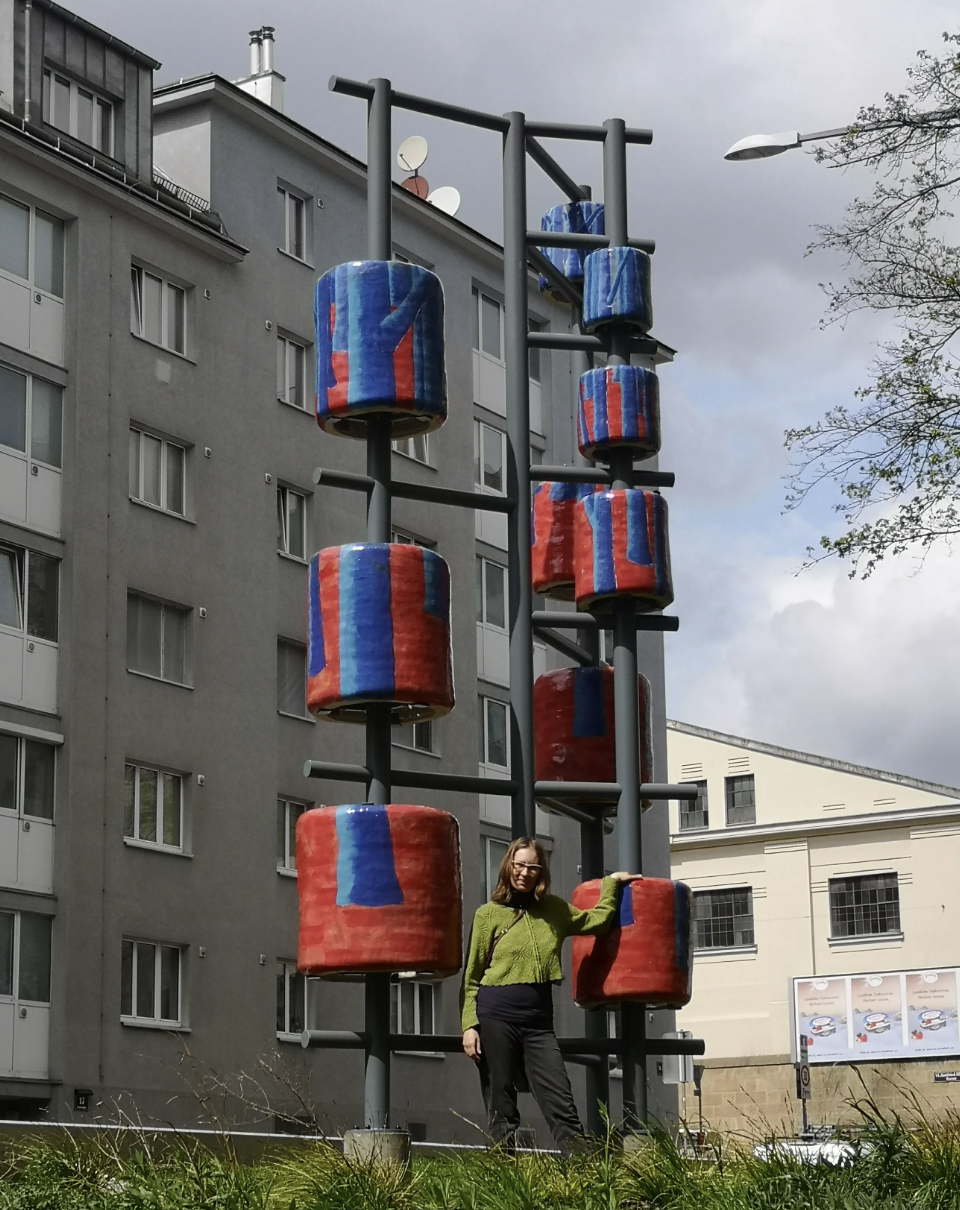
I first got to know Oktavia Schreiner and her work at the Glasgow School of Art, where we both did our Masters, and it has been a pleasure to see her practice evolve over time ever since. Oktavia makes sculptural installations in ceramic and woo. Giving objects their own presence, relationships and quiet rituals within a space.
Her work has since been shown at venues including Tramway in Glasgow, the Traklhaus in Salzburg and Galerie Brunhofer in Linz. Alongside her own practice, she also works on collaborative and curatorial projects such as New Rituals, Neue Rituale.
Seeing her work develop over the years has been a real privilege, and I'm delighted to feature her here.
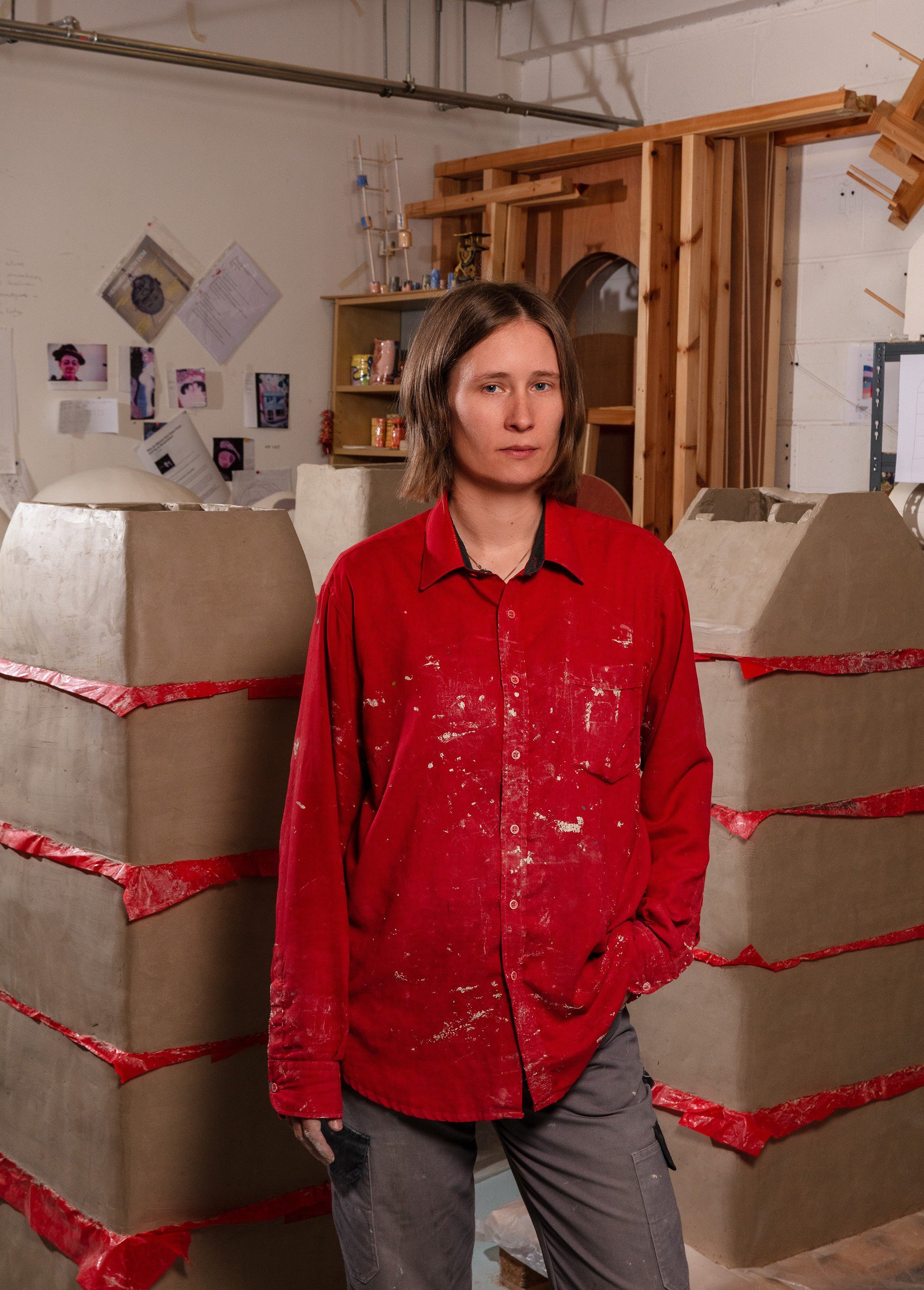
BIO -I am a visual artist working primarily with ceramics, often combined with wood or metal. My sculptures are symmetrical, creating a sense of calm and order. In contrast, the images I paint on the ceramics with glazes are full of tension and strangeness. They depict architectural structures that have fallen out of balance and landscapes and natural forms that take on a peculiar life of their own. I draw inspiration from scientific, literary, or mythological texts, as well as from dreams and memories.
My interest in storytelling has its roots in a childhood marked by frequent moves between countries and communities. This experience made me aware of how much meaning depends on perspective and context – a theme that continues to run through my work.
The tension and oddness that emerge on my surfaces have, in recent years, carried over into paintings of the female body. I focus on images and ideas that shape what it means to be a woman – culturally, historically, and socially – and on the traces they leave in everyday life.
Our Q&A for Octavia is here…
1 - Could you explain how you got to where you are now?
I started my undergraduate degree in ceramics when I was 19. The decision to study
ceramics was not very thought through. I just went to the open day of the art school and the
leader of the ceramics department seemed to give the students the most freedom and I liked
their attitude, so I applied to it and got in. It was exhilarating to study art. It felt like waking up
from a long sleep. But I did not like working in clay. I didn't think I was good at it. I was
impatient and embarrassed. Instead, I did film and photography and performance and
conceptual work. Although I felt like an imposter, I stayed for a Master's degree in the
ceramics department. Then, for my degree show piece, I somehow felt grown-up enough to
actually use clay. I had learned a lot from just watching others do it over the years and
suddenly it was easy. It was easy also because I was by then able to appreciate the patience
clay requires, the rhythm one has to follow to stay between wet and dry, coolness and heat. I
discovered that all these limitations grounded and focused me. That was eleven years ago,
and I have worked almost exclusively with clay since.

2 – In your opinion, are the creative industries relevant today? Please explain your reasons.
I am not sure what to say about the whole creative industries. I would say, however, that I
think human creativity is extremely important. I believe good ideas cannot come from
complete chaos or isolation. They need to bounce off something. AI, for example, can have
good ideas, but it cannot come up with ideas in the same way humans can — by bouncing
off the stable limitations of a human existence. I think this is what artists and other creative
people do: we look at and draw from what it means to be and feel human. As we become
increasingly dependent on AI in many areas of our lives, I think it is crucial that we retain this
space of human autonomy.
3 – Who or what have been your biggest influences as you have progressed through your career?
Having my daughter influenced my career the most. In the best and worst way. The most
amazing thing I discovered after having her was the realisation that art is not the most
important thing in my life anymore. That was terrifying at first. But eventually it gave me a lot
of freedom, as now I can fail and know that not all is over. It made me braver in my art
making.
But of course the downside is there as well. Although things have improved slightly in the
last years, so much in the art world is not made for parents, or at least not for mothers or
others who are not free to do whatever they want all the time. Events are at bedtime,
residencies don't accommodate children, emails need to be answered within the day or hour,
and projects are expected to be much bigger than their budget, which means working for no
income. That all compromises my ability to make my art career financially sustainable.
4 – If you could go back 10–20 years, what would you tell your younger self?
If I could go back 20 years, I would say to my younger self: If the ship is sinking, climb in the
lifeboat and you won’t drown.
If I could go back 15 years, I would say: Focus on the process and the feeling in your body
while you make art. The bravest and best work you can make will feel the most exciting in
your body while you make it.
5 – If you could go forward 10–20 years, what do you hope to have done or achieved?
In 20 years, I would like to still show my art to audiences and hope to make a living from it.
But if not, I will still be making.
An important part of Oktavia's practice is her email newsletter, The Leaky. It's an open window into the studio, where she shares how ideas begin, how the work takes shape, and how her art and life weave together to shape an ever-evolving practice.
She would be delighted if you joined her on this journey.
Follow the link here to sign up - THE LEAKY
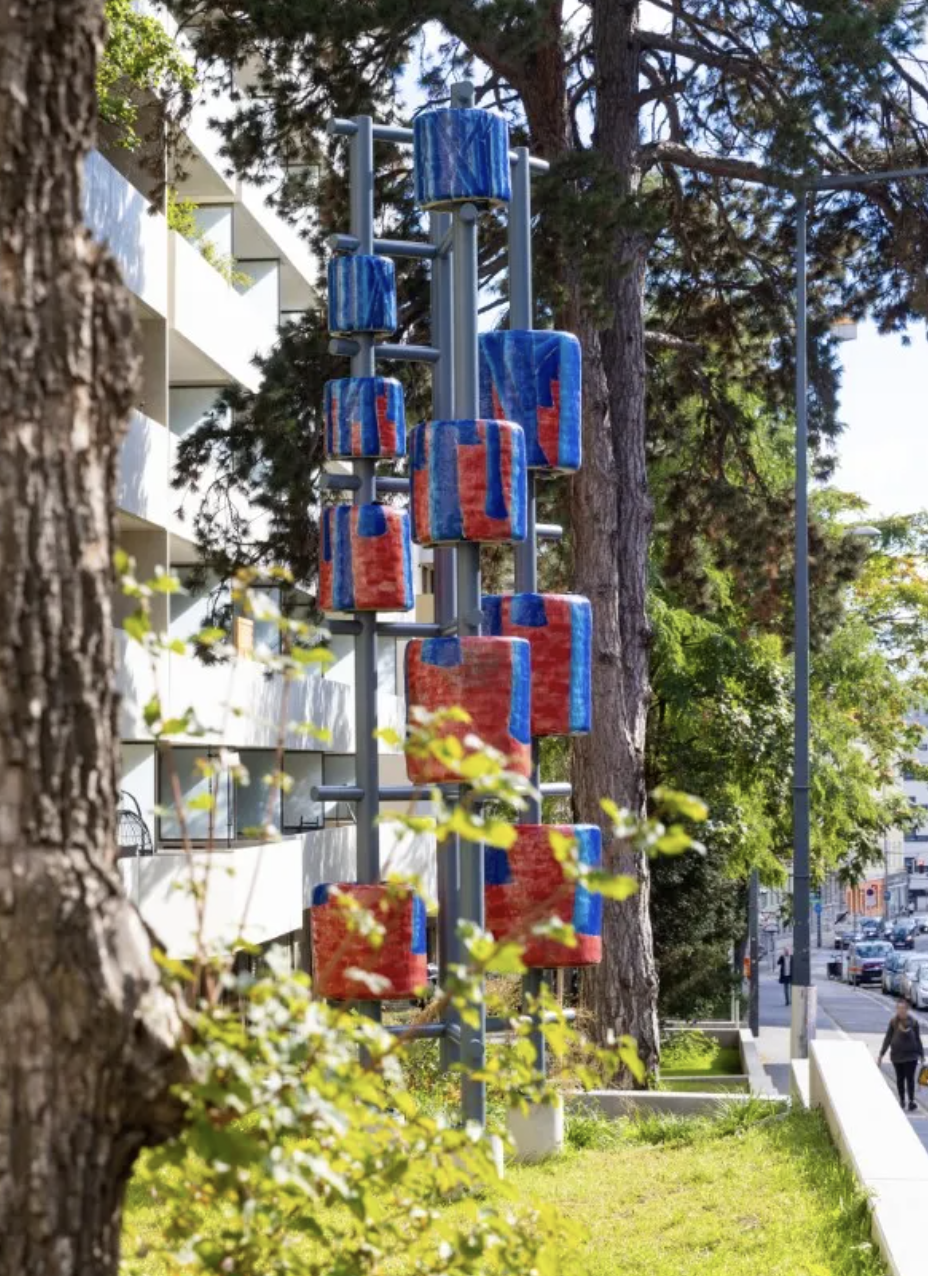
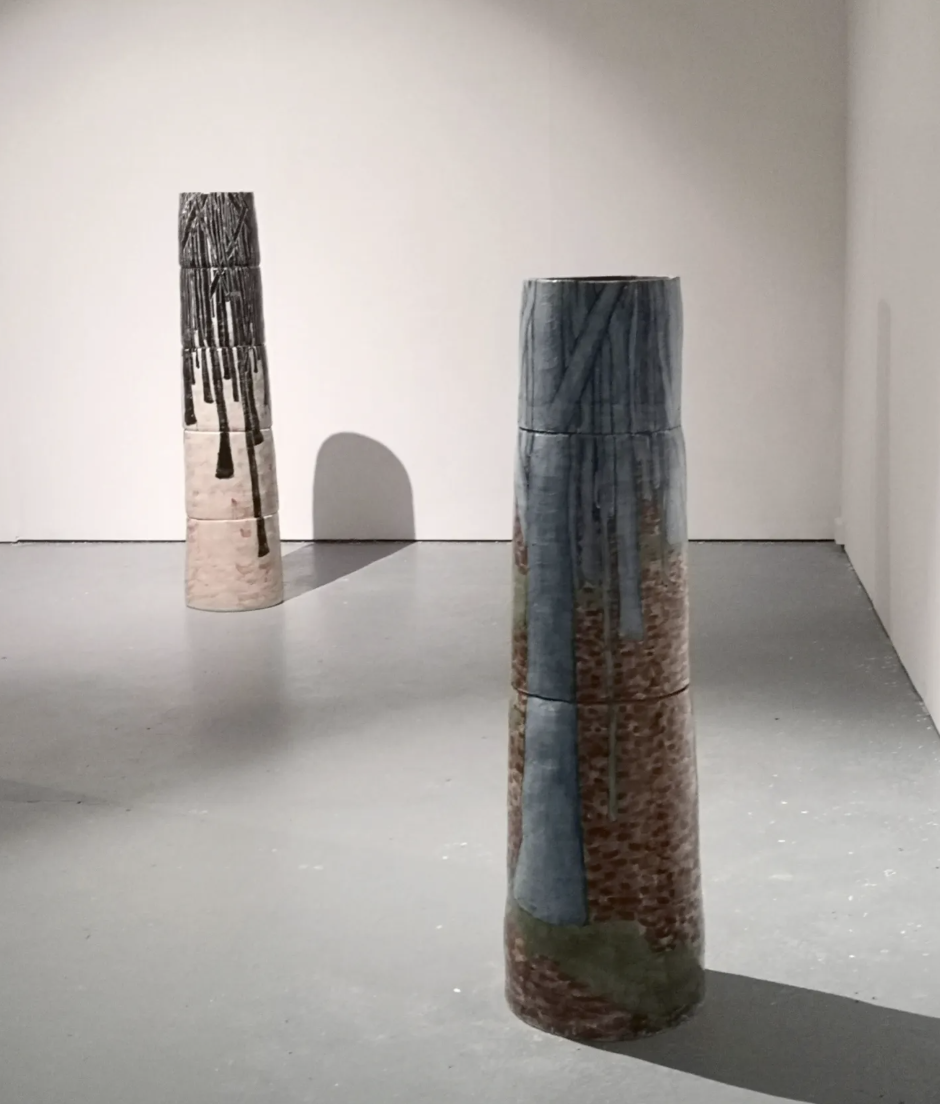
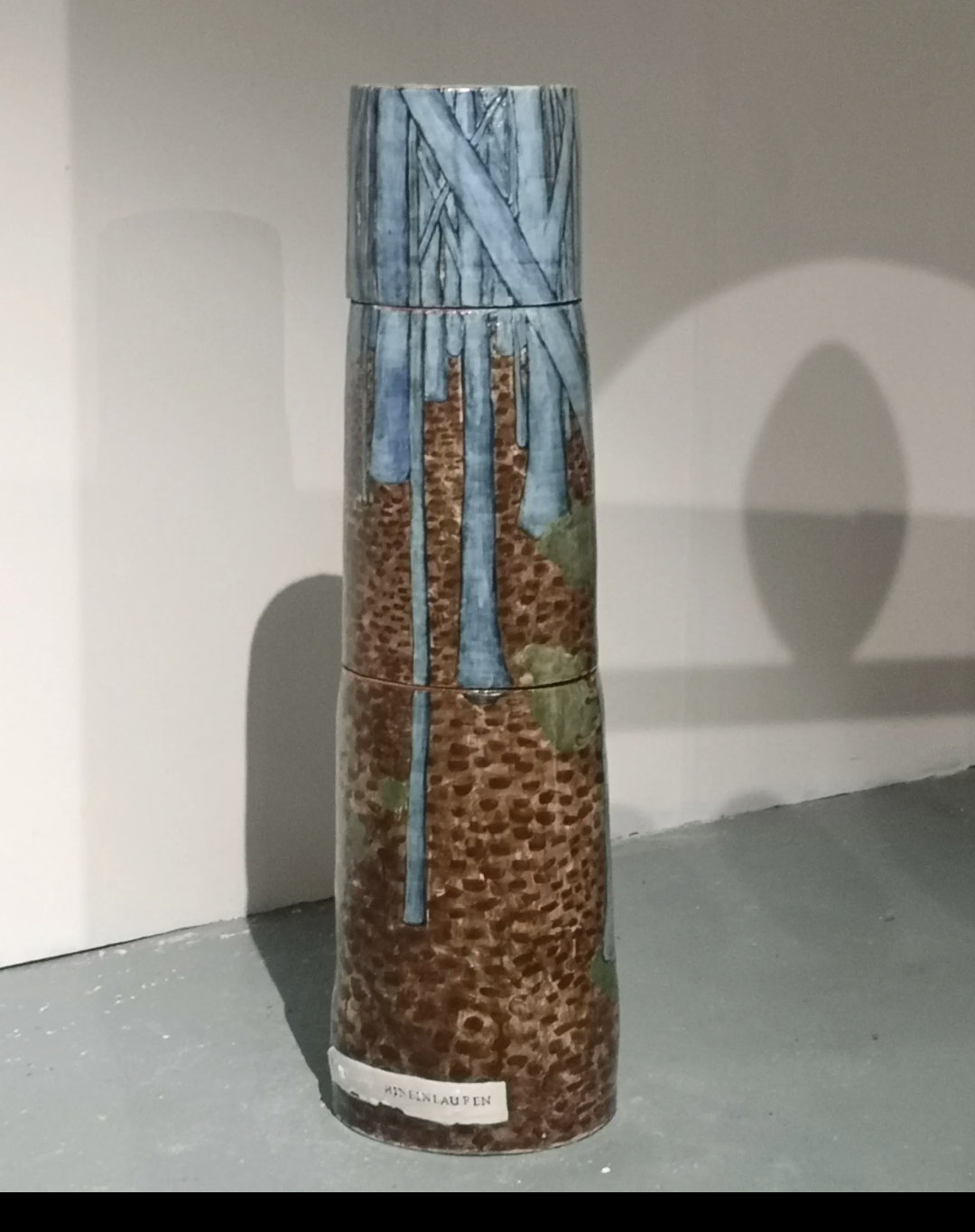
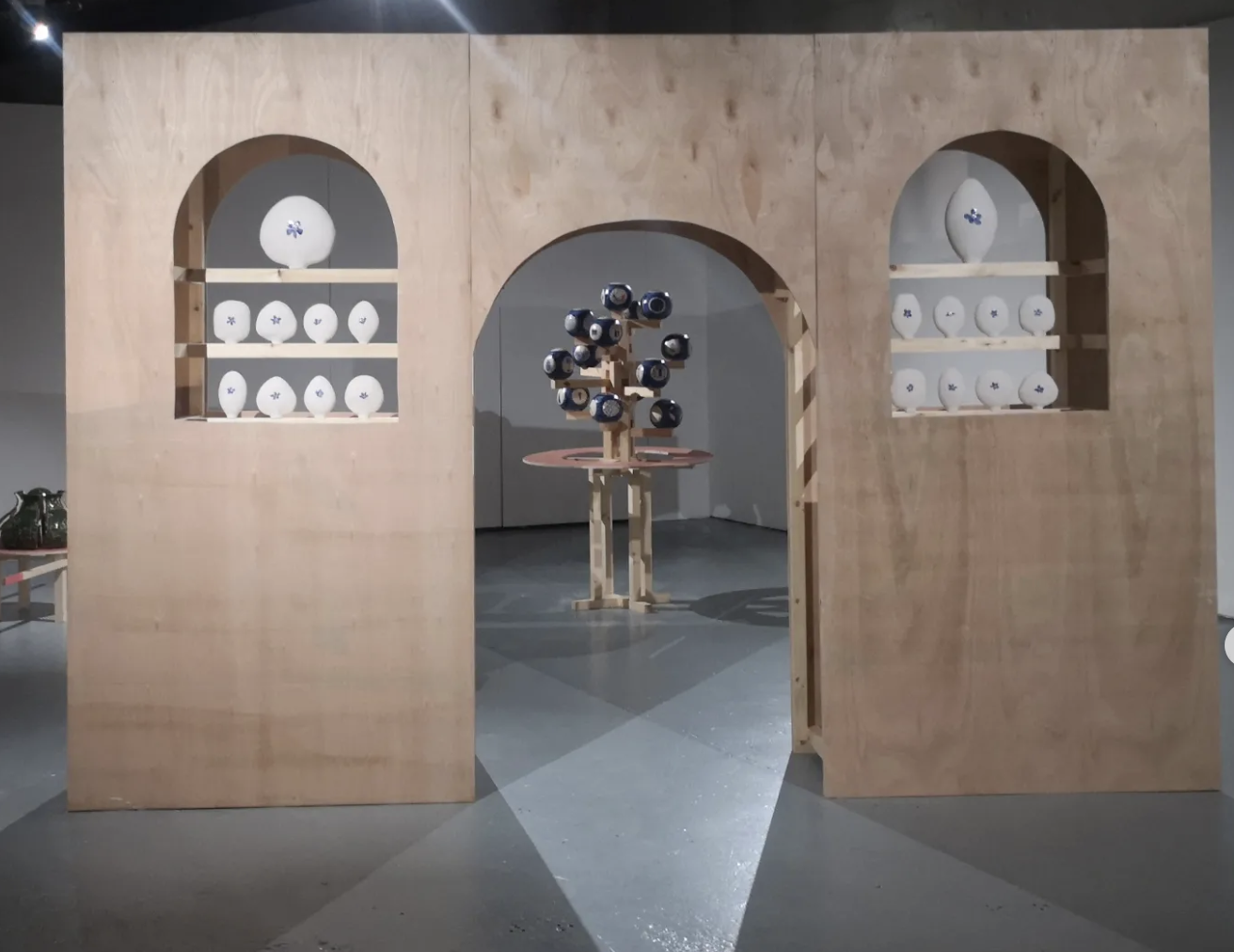
As a potter, mother and nature artist myself I was intrigued and absolutely love this work by Oktavia, so I asked her for more details, and its great that she has been long-listed for an art prize too !
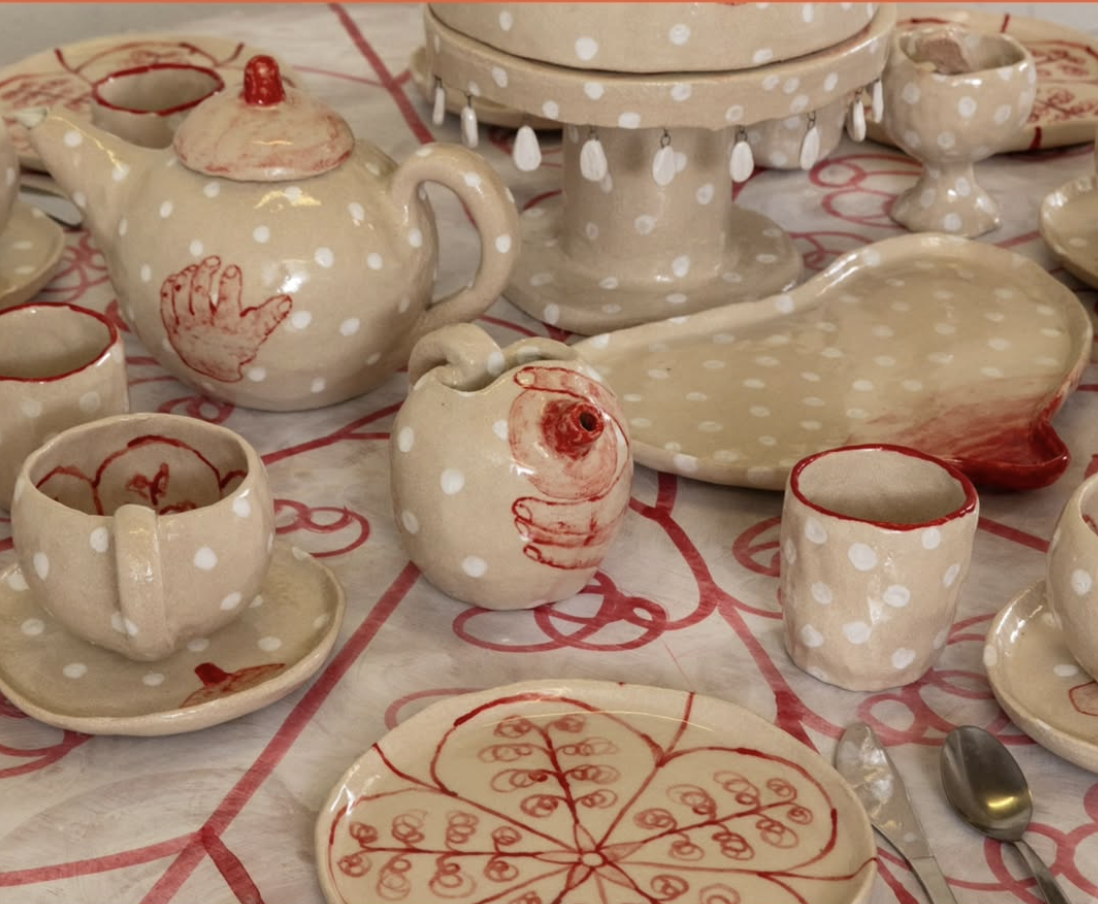
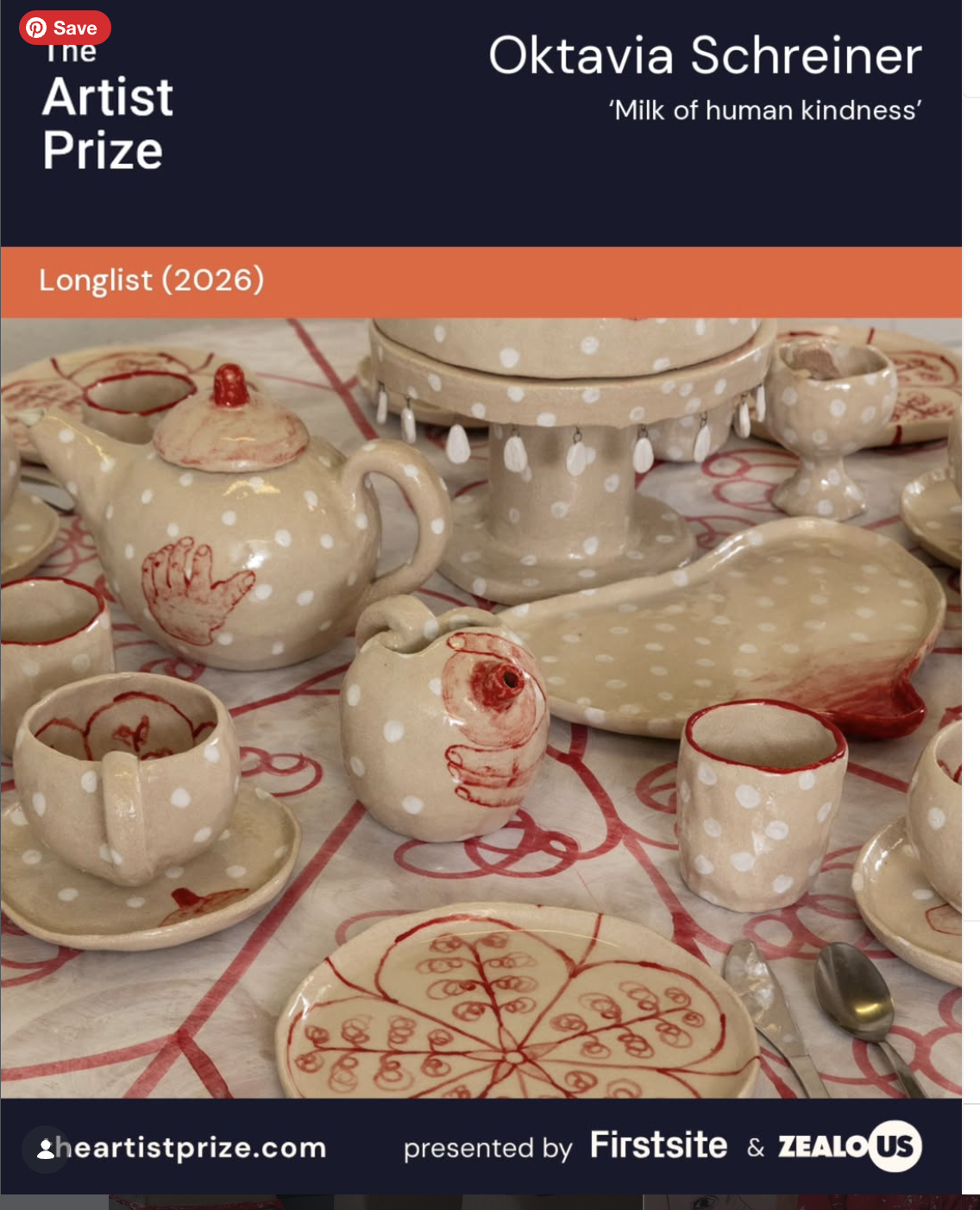
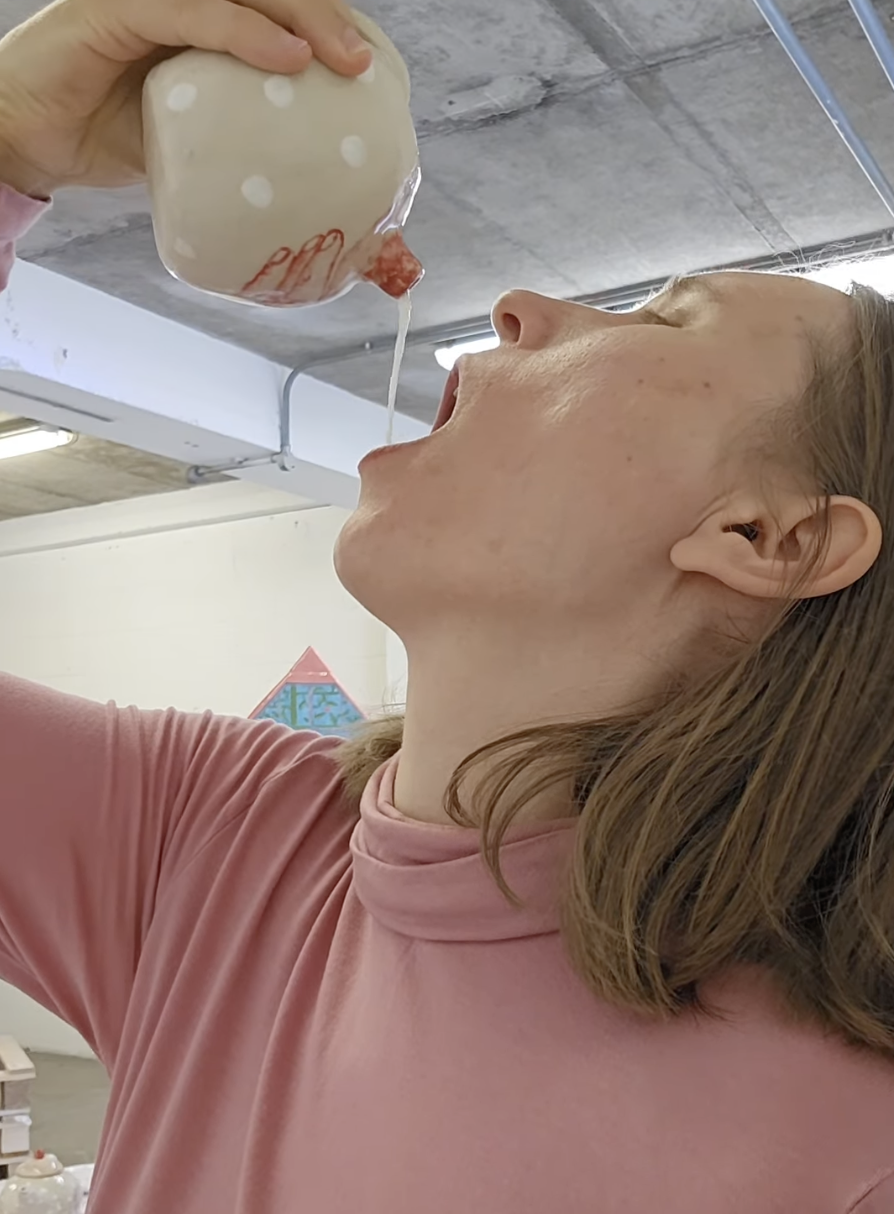
This sculptural installation consists of a fully functional ceramic tea set for five, displayed on a painted wooden table. Drawings and sculptural details reference breasts, breastfeeding and nourishment, including anatomical diagrams of milk production, nipple-shaped handles and a milk jug pouring through a nipple-shaped spout. Associated with femininity, domesticity and hospitality, the tea set is disrupted through imagery that combines bodily function, intimacy and care. Breasts are paired with infant, supportive, sensual and gesturing hands, while references to historical representations of breastfeeding connect contemporary experiences of caregiving to longer cultural histories. The title, borrowed from Macbeth, refers to Lady Macbeth's fear that Macbeth is “too full o' the milk of human kindness”. The installation reflects on how nurturing and compassion have been gendered, idealised and devalued, proposing care and interdependence as forces that sustain collective life.