

Artists Aren't the Business Plan or Your Profit Margin - Know the Cost Before It Costs You
The Creative Hub Isn't Always Built for the Creatives
Walk into almost any "creative hub" these days and you'll see the same pitch on the wall: community, collaboration, a home for makers. Beautiful signage. A café in the lobby. A mission statement about nurturing local talent.
Then you try to make something there.
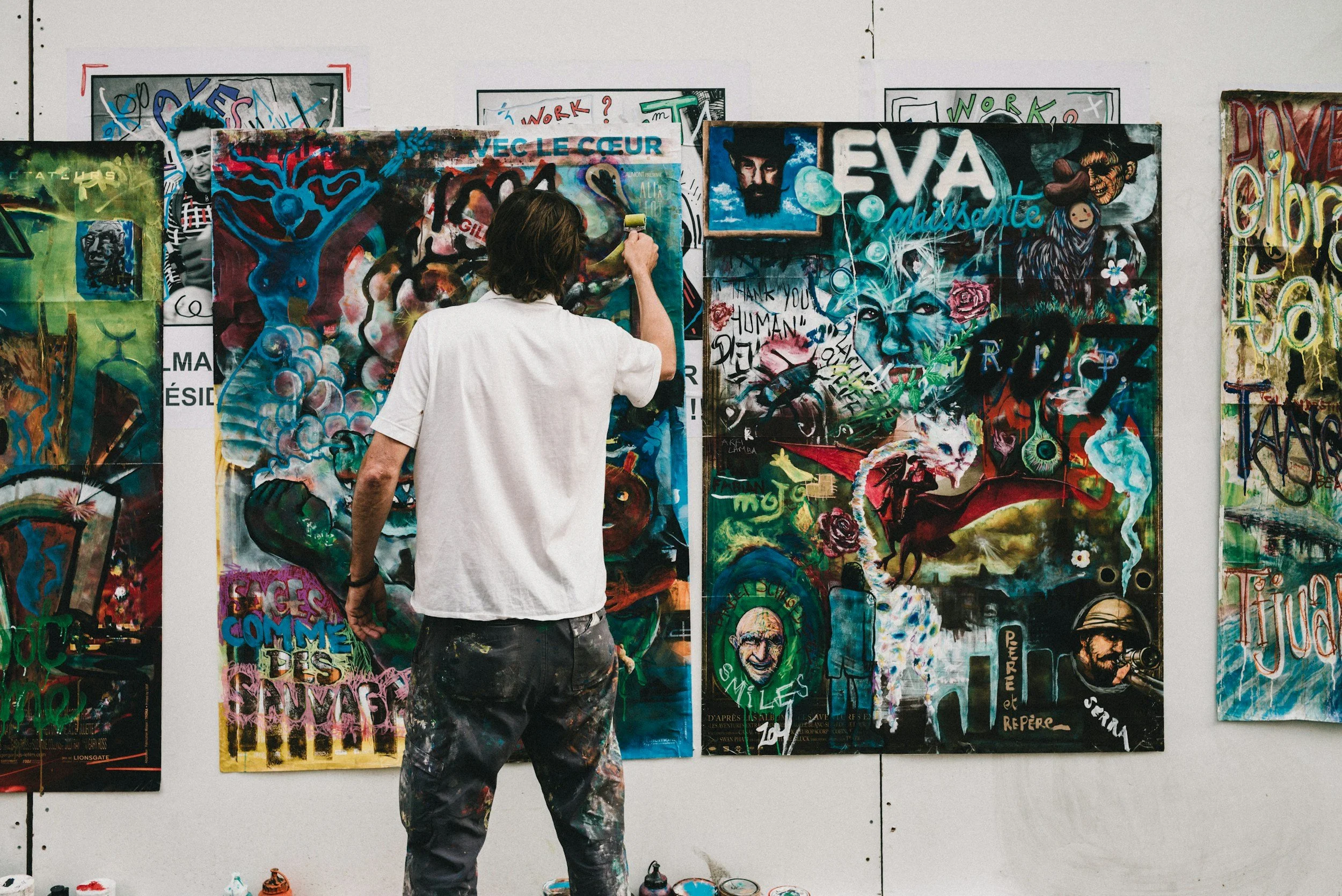

The alarms don't work properly, and nobody seems in a hurry to fix them. There's no hot water to wash materials in. The building is freezing in winter and like a sauna in summer, despite whatever was promised at sign-up. The toilets are filthy. Lights are motion censored to save money so you must keep moving to get any light, or cooling fans or heating switched off while people are still working, because nobody checked the actual hours anyone's in there. Someone goes through the artists' rubbish “to check for recycling” when there is GDPR sensitive materials in there. The parking gets sold off to other companies, so artists can't park, and classes can't run, because there's nowhere for anyone to leave a car. You start to notice that the person who designed the floor plan, and who's still making these calls, has never spent a twelve-hour day standing at an easel or worked in an isolated studio space and it shows.
This isn't a rant against ambition or against the idea of creative hubs themselves. It's an observation about who's making the decisions inside them, and how often that person's expertise is in leasing square footage, not in running a working space for artists.
The Gap Between the Brochure and the Building
Creative hubs are, often, real estate plays with good branding. That's not automatically a bad thing, artists need affordable space, and someone must find the building, secure the financing, and keep the lights on. The problem shows up when the people doing that work assume that running the business of a creative space is the same as understanding what the space needs to function as a creative space.
A few signs this gap exists:
Studios designed for photos, not for practice. Gorgeous natural light, exposed brick, a wall perfect for an Instagram reel, but no ventilation for solvents, no water access near the clay, no soundproofing near the print shop. It looks like a studio. It doesn't work like one.
Rules written by people who've never needed the thing they're restricting. No after-hours access "for insurance reasons," strict no-guest policies that ignore how collaborative work happens, storage limits that assume everyone works small and dry.
Community programming that serves marketing more than members. Open studios timed around press coverage rather than the actual rhythms of a working practice. Artist talks scheduled to impress potential tenants, not to build actual peer connection.
Pricing and lease structures built for turnover, not tenure. Month-to-month terms that make it hard to invest in a space, or "affordable" rates that quietly climb once they realise there are many artists looking for space.
None of these are conspiracies. They're what happens when the operating logic of a space comes from spreadsheets and occupancy targets rather than from time spent working in a studio.
The Fine Print Tells the Real Story
Beyond the physical space, some of the clearest evidence of this gap sits in the paperwork and the day-to-day power dynamics of a hub, the parts that never make it into the brochure.
No footfall, but you're still promised "exposure." Part of the pitch is often a thriving public space, people wandering in, buyers discovering you. Plenty of these hubs sit in units with barely any passing trade, tucked behind a business park or down a service road. The exposure they sold you never had a chance to exist, but the price was set as if it did.
Charges for services that don't really exist. A "facilities fee," a "community charge," a "maintenance contribution" , stacked on top of rent for things that, on inspection, amount to very little: a shared kettle, a noticeboard, a WiFi router that drops out weekly. It's easy to bundle in charges when nobody's checking what they're paying for.
Licences instead of leases. This is one of the more telling choices a hub can make. A lease gives an artist real occupancy rights and legal protection. A licence agreement gives almost none of that, it can often be ended with short notice, and it sidesteps the protections that come with a proper tenancy. It also makes it far easier to raise prices month to month, because there's no fixed term locking anything in. Artists end up with the instability of a rolling agreement but the responsibilities of a long-term tenant.
Bullying dressed up as "management." Passive-aggressive emails about studio mess, or signage with demanding instructions, thinly veiled threats about renewal when someone raises a complaint. When the person managing the space holds all the leverage, the licence, the keys, the sign-off on any future rate rise, disagreements stop being conversations and start being risks.
Claiming to be a safe space while ignoring what that requires. Some hubs market themselves as inclusive, SEND-aware, or mental-health-conscious spaces, good for recruitment, good for funding applications, with no training for staff on how to have a hard conversation with someone who's struggling. No consideration that a strict, punitive approach to "professionalism" might directly conflict with the needs of the very people they claim to welcome. The label gets used, but the responsibility that comes with it doesn't.
None of this is illegal, necessarily. Licences are a normal legal instrument. Service charges are normal in commercial property. But normal isn't the same as honest, and there's a real difference between a space that uses these tools transparently and one that uses them because they're harder for artists to challenge.
Why This Keeps Happening
Part of it is structural. Creative hubs are expensive to open and expensive to run, so the people with the capital and the property management background are often the ones steering. Artists get consulted, sometimes generously, but consultation isn't the same as decision-making power. A survey at the planning stage is not a seat on the board.
Part of it is also that studio needs are genuinely hard to anticipate if you haven't lived them. Ventilation, storage, noise, timing, materials handling, these aren't things you learn from a real estate course. They're things you learn from years of trying to finish a piece in a space that either helps you or fights you the whole way.
What Actually Works
The hubs that function well tend to share one thing: an artist, or several, with real authority over the day-to-day operation of the space, not just an advisory role, but actual decision-making power over layout, scheduling, access, and community programming. Someone who must answer to the practical reality of "does this space let people make work," not just "does this space rent."
That can look like:
Artists on staff in operational roles, not just as tenants or token board seats
Flexible, practice-informed policies on access and hours, built from actual studio experience rather than liability minimization
Programming that centres peer feedback and shared practice over PR-friendly open houses
Lease and pricing structures that reward staying and building community, not just filling units
None of this is radical. It's just recognizing that running a space for artists requires input from artists at the level where decisions get made, not just at the level where good intentions get announced.
The Ask
If you're evaluating a creative hub, as an artist looking for space or as someone thinking about supporting one, it's worth asking a few blunt questions, here we have a link to a form you can use for this..
https://form.jotform.com/261862452579064
The answers tell you more than any mission statement.