
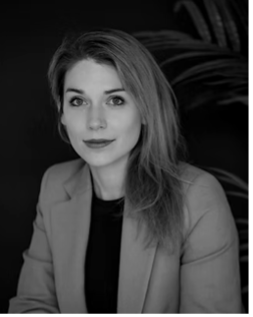
This month with our theme being centred around print, we thought we would ask an experienced artist and print maker Katherine Loudoun, to tell us about her work, and how so found this practice…
Artist Statement
My practice explores the construction of space, perception and image-making through print. Working primarily with etching, engraving, lino and screen printing, I am interested in the relationship between control and chance that printmaking offers. The medium demands precision, planning and technical skill, yet remains open to accident and unpredictability through the behaviour of ink and material processes.
A recurring theme within my work is the creation of fictional landscapes. Drawing on the traditions of the eighteenth-century picturesque, I use fragments of historical sites, photographs, drawings and printed imagery to construct imagined environments that exist somewhere between observation and invention. These landscapes are not intended as records of specific places but as spaces where memory, narrative and visual culture intersect. Through layering, repetition and transformation, I create new worlds that blur the boundaries between the real and the imagined.
I frequently move imagery between analogue and digital processes. Drawings, paintings and photographs are translated through multiple stages before returning to print. This continual reconstruction allows me to investigate how images evolve through reproduction and material change.
Recent work explores the visual language of machines and the growing presence of artificial intelligence. Hand-printed images are subsequently reinterpreted through AI, creating a dialogue between maker and machine. Occupying a space between original and reproduction, history and technology, my practice examines how images are constructed, transformed and understood in a rapidly changing visual culture.
contact;
Website : https://www.kloud-art.uk/
Instagram : https://www.instagram.com/kloudart/?hl=en
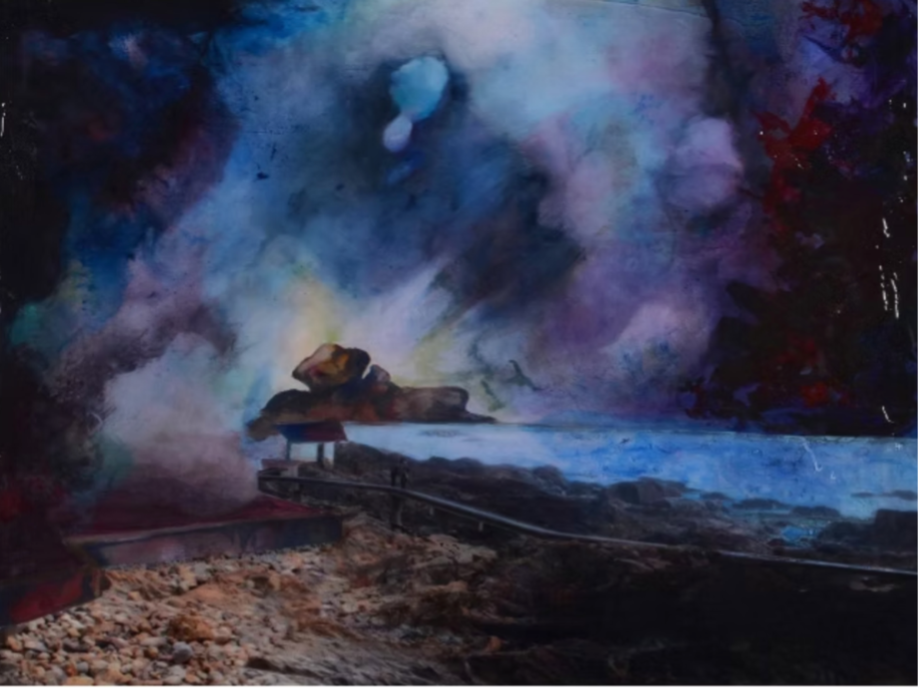
Katherine Loudoun, (2014) Seascape, Oil Painting, epoxy resin and mixed media photography
1. Could you explain how you got to where you are now?
I began studying Architecture at the Bartlett, UCL which is why much of my work keeps coming back to notions of space. I realised around Easter in the first year that all my drawings were overly rendered. I was trying very hard and was doing well, but it didn’t seem to fit the way I make work creatively. I was trying to fit into a mould or house style. I changed courses to study Fine Art at Loughborough University and, over those three years, explored everything I could, from darkroom photography and printmaking to welding, and integrated my dance practice into my artwork. At Cambridge University, I undertook my Postgraduate Certificate in Education and followed this up with a Master’s in Education, with an action research project on the use of digital platforms in art teaching (pre-COVID).
I am currently Head of Art at a very liberal independent school in Surrey and am in my 11th year of teaching. Teachers are called by their first name, and there is no school uniform. Living in Farnham, I am trying to network through various channels, from Surrey Artists’ Open Studios to putting on pop-up exhibitions such as Merge with Nichola Rodgers.
Over the past five years, I have focused on learning a variety of processes in depth, including mixed-media painting, screen printing, etching, lino printing, and, more recently, wood engraving. Last year I had a studio, but I made the decision to use this money to fund an MA online at Falmouth University and move my studio into my house. I prefer making work at sporadic times, and this suits me far better. I have also been branching out in terms of teaching adults and have, in the past year, run three workshops on gel plate printing and lino printing.
2. In your opinion, are the creative industries relevant today? Please explain your reasons.
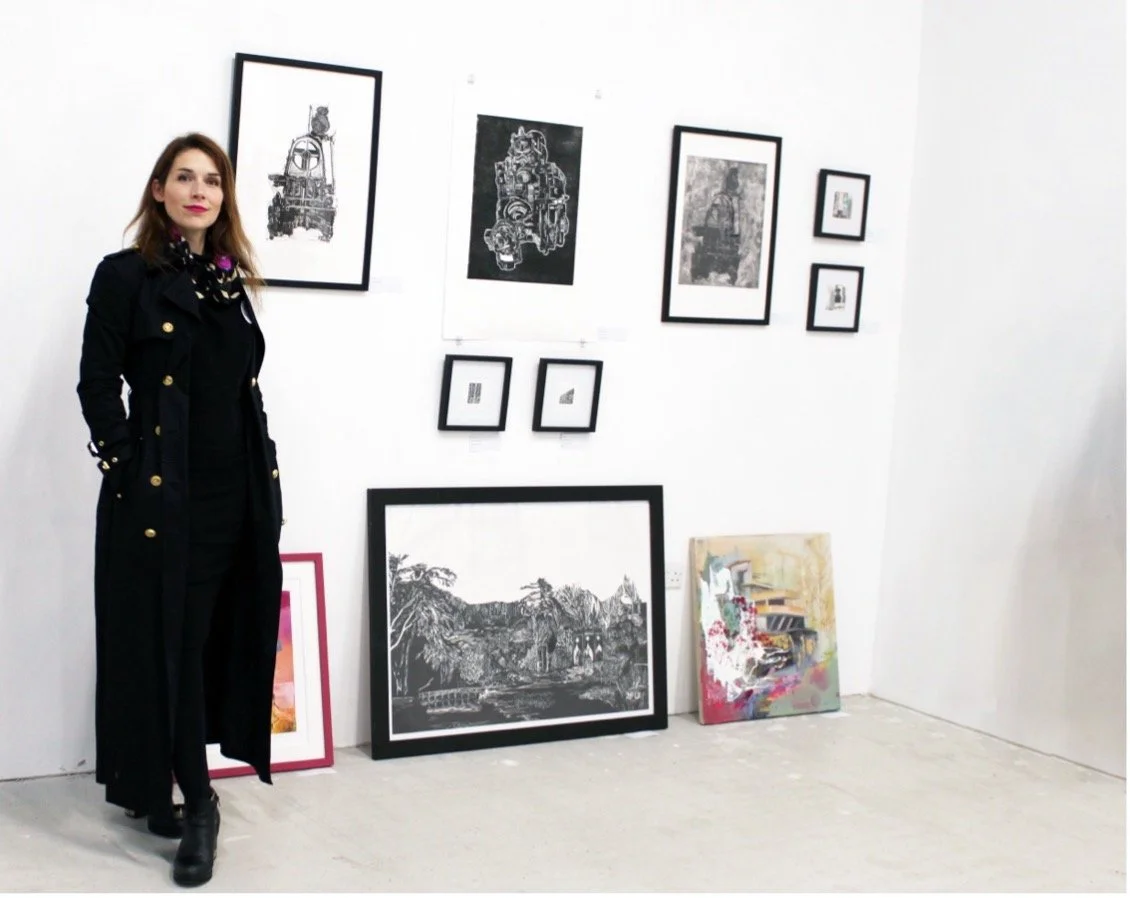
‘Merge’, Brightwells Creative Space, Farnham. October 2026
Personally, I feel the routes that creative people take may be less conventional these days. We no longer have one job for life, and many people juggle several jobs, roles, or businesses.
I believe that, with advances in technology, the individual is empowered to be a lot more entrepreneurial than was possible many years ago. Likewise, from an educational point of view, careers advice in schools has become a lot better than it was 20 years ago. At this point, for teenagers, I believe an insight into the creative industries is pivotal to understanding what the adult world is, or could be, like. They need to understand this to see who they could be in the future and then, and only then, navigate how they could get there.
3. Who or what have been your biggest influences as you have progressed through your career?
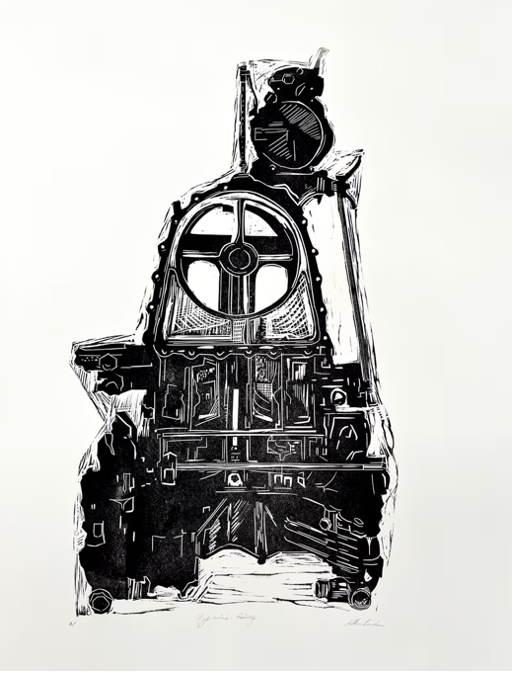
Katherine Loudoun, (2026) Hydraulic Relief, lino on somerset paper
I went to a fairly strict dance school, one where we were called ‘an army’ at the regional and national competitions we used to win. I was never the best, but I was good enough to be among the numbers that won, although I was at the back most of the time. Most of those friends went on to professional dance schools and had careers in dance. For me, it gave me a drive to improve and an ability to keep trying to be seen, something which is very useful in art. The performance aspect of being aware of oneself has been less helpful in terms of navigating the art world. It can make you question yourself and your actions a lot more, but it has been very helpful in my teaching career.
In terms of personal influences, a previous colleague and friend of mine taught me a lot about how to pursue your own dreams in art. His positivity and can-do attitude were a little infectious. It helped give me the drive to keep going and to block out those who hold the opinion that ‘you can never make money as an artist’. I am expanding my practice and slowly putting the steps in place to build not only my artistic network, reputation, and skillset, but also to think more about the long-term end goal 10 to 20 years into the future. I am simply putting pieces together, collecting my materials and resources, and my time will come soon. I am pleased to say that he has now retired and is pursuing his art career full-time.
4. If you could go back 10-20 years, what would you tell your younger self?
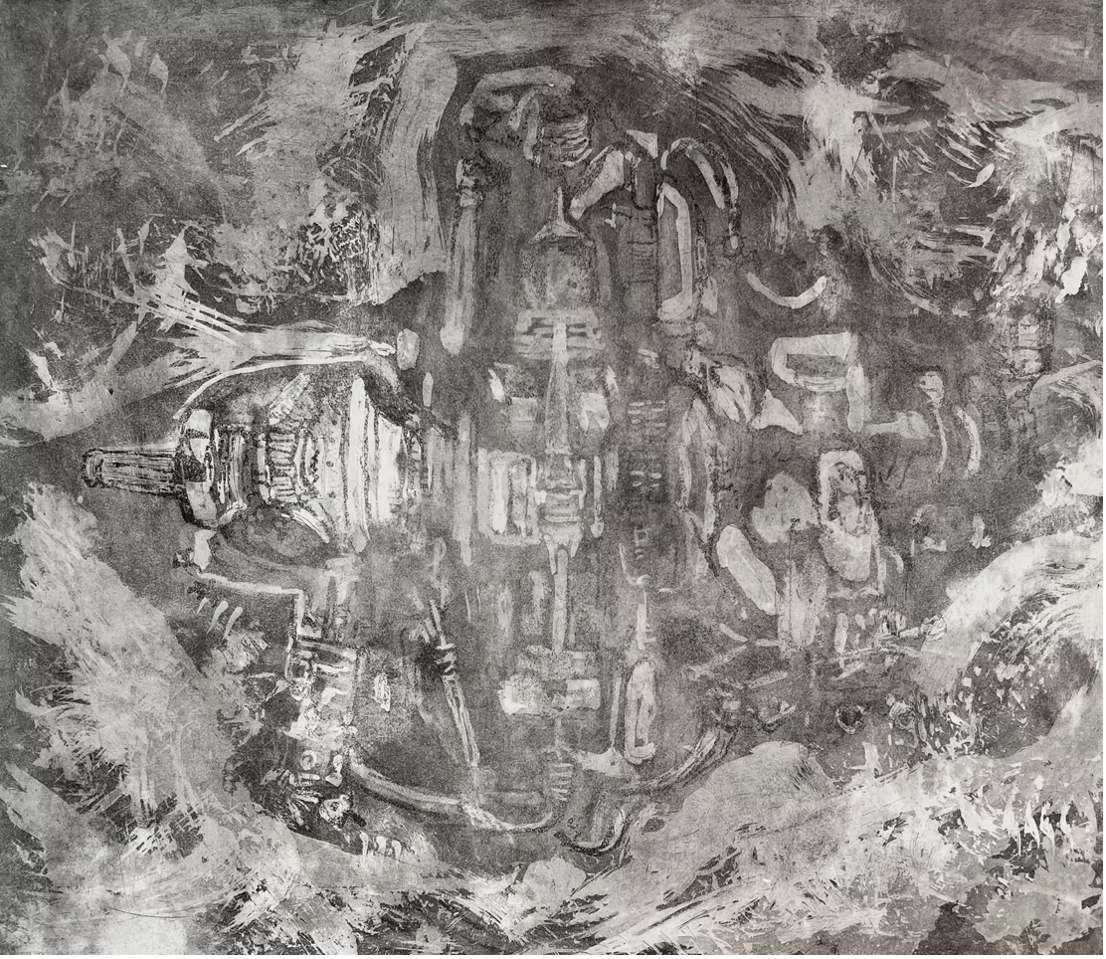
Katherine Loudoun, (2026) The shifting Anthropocene artefact, Oil Painting, Etching with sugar lift and Aquatint Artist proof on Fabriano Rospina Biano 285gsm (Work in progress) 42cm by 36cm June 2026
Just to contextualise, ten years ago I had just started my second year of teaching in a state-funded boarding school where I had full control over the curriculum and buckets of enthusiasm. I wasn’t making much art at this time and, if I had the money, I wish I had started going on more printmaking courses then. I thought I knew a lot about printmaking; I knew very little and am still striving to learn new skills many years later. I was very career-oriented (and likely still am).
I would say the most pivotal point I would like to reflect on was when I was 19 and dropped out of University College London to study Architecture. University fees were tripling, and it seemed unlikely I would be going to university at all. Not that I regret leaving architecture, but I was trying too hard. I was trying to prove something and didn’t have the maturity to be on the course then. I always chose the project, building site, or brief that was overly ambitious or overcomplicated. When you’re taking a subject you’ve never undertaken in a classroom or school context, it is hard to know the limitations or expected standard when you already have high standards for yourself.
When talking to my younger self, I think I would tell her: it’s not about you in a particular moment, or what you look like doing something; it’s about the mark or record you leave behind after you’re gone. Most of your life will be the journey getting there, so don’t shut your eyes and miss ‘the dance or performance’ that is the main part while wishing you were somewhere else or managing disappointments. Highs come with the lows. Have an impact beyond your own ego, educate others, and enjoy the process of learning. Let others place value on your art; let it belong to someone for whom it will bring joy. Make art if it gives you happiness, but don’t let the meaning of making art tie you down. Don’t make art as a performance for others; do it for yourself.
5. If you could go forward 10-20 years, what do you hope to have done or achieved?
I would like to think that I may have begun teaching in higher education, perhaps through links with a gallery showing my work, although I’m fully aware that having gallery representation is not the be-all and end-all of making it in the art world. I hope that the MA is able to give me a greater focus on research in my practice. One day, I hope to give the art side of my life more emphasis, but until then I am building on my skills and approaching it with a lighter touch than I know I am capable of achieving at a later date, when time allows.
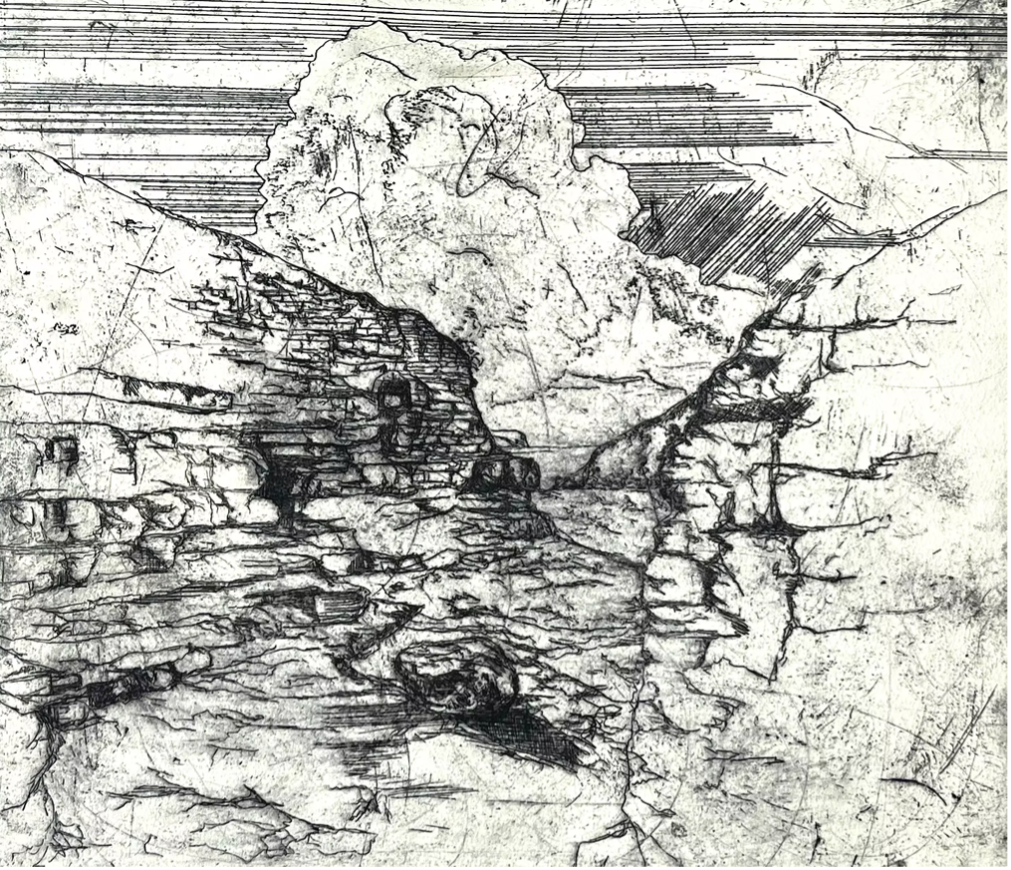
Katherine Loudoun (2026) Langton Matravers, variable edition etching on somerset paper.
See more of her work on her website here -Website : https://www.kloud-art.uk/
Instagram : https://www.instagram.com/kloudart/?hl=en